Scientists have uncovered why some amphibian populations rebound after being devastated by a deadly fungal disease that has wiped out frogs and toads around the world. The groundbreaking research, a collaborative effort led by University College London (UCL), the Zoological Society of London (ZSL), and Imperial College London, reveals that the critical factor determining survival and recovery lies in the precise timing of an amphibian’s immune system maturation. These pivotal findings, published in the esteemed journal Nature Chemical Biology, offer a crucial insight into the ecological resilience of these vulnerable species and hold potential implications for human health.
A Global Amphibian Crisis: The Scourge of Chytridiomycosis
The amphibian world has been grappling with an unprecedented crisis for decades, largely driven by a devastating fungal pathogen known as Batrachochytrium dendrobatidis (commonly referred to as Bd). This fungus is the causative agent of chytridiomycosis, a highly infectious and often fatal disease that has led to catastrophic population declines and extinctions across hundreds of amphibian species globally. The fungus targets the skin of amphibians, a vital organ responsible for respiration, hydration, and electrolyte balance. By colonizing and damaging the skin, Bd disrupts these essential physiological processes, ultimately leading to organ failure and death.
The life cycle of amphibians presents a unique vulnerability. While tadpoles and larval stages possess skin that is relatively resistant to Bd infection—primarily because it lacks the keratinized structures that the fungus feeds upon—this protection vanishes upon metamorphosis. As amphibians transform into their adult form, their skin develops keratin, rendering them highly susceptible to the fungus. This transition period, from aquatic larva to terrestrial or semi-aquatic adult, has historically been a period of mass mortality events, decimating entire populations and pushing many species to the brink of extinction. The scale of this crisis is staggering, with estimates suggesting that chytridiomycosis has been responsible for the decline of at least 30% of amphibian species worldwide since the 1980s, making it one of the most significant conservation threats to vertebrate biodiversity.
Unraveling the Mystery of Resilience: A Tale of Two Toad Populations
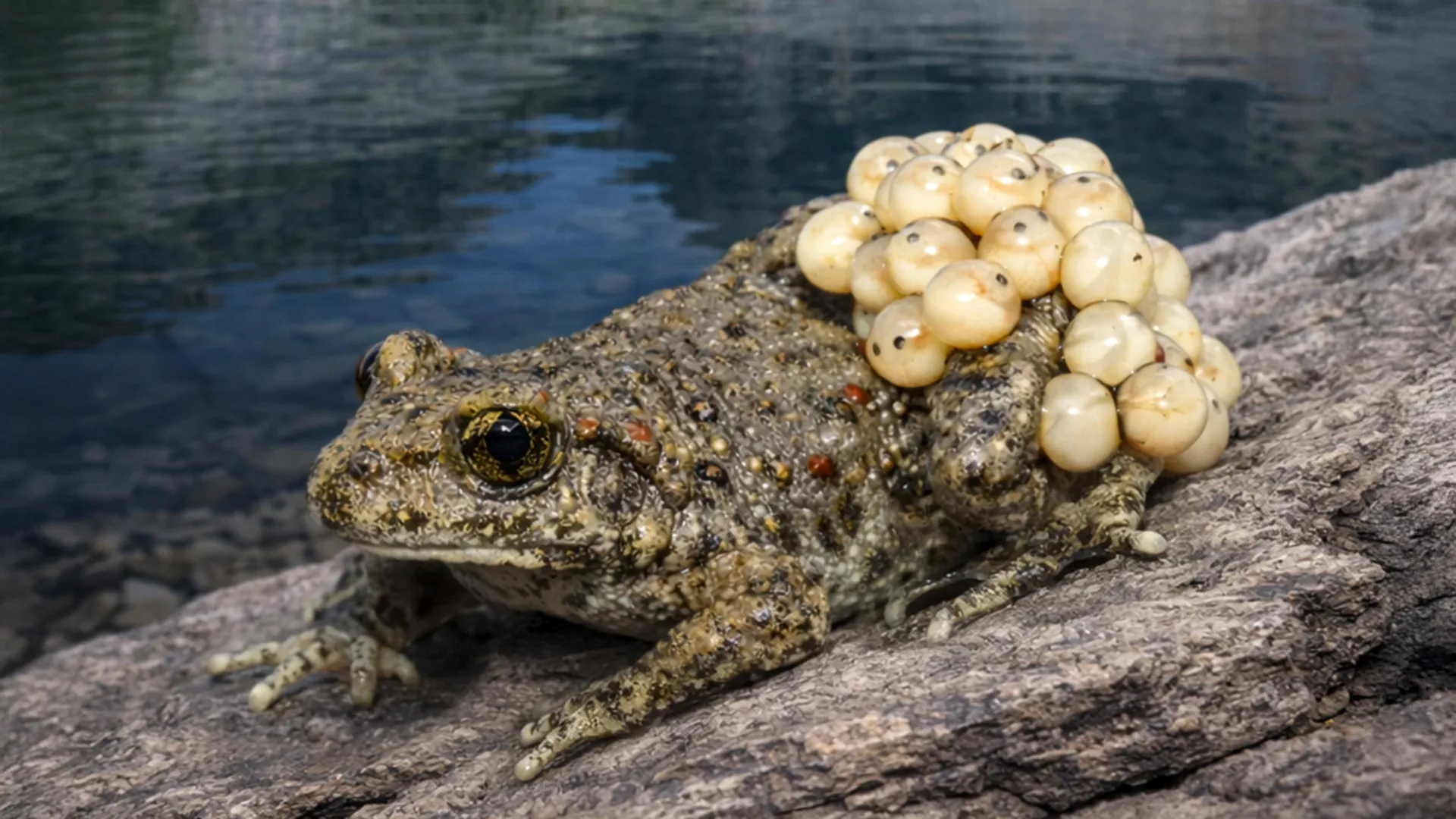
To understand the mechanisms behind population recovery in the face of this persistent threat, the research team focused on common midwife toads (Alytes obstetricans) in the Pyrenees region of France and Spain. This species is known to be susceptible to Bd, and the researchers selected four lakes that had all experienced severe outbreaks of the disease. The chosen study sites presented a stark contrast: at one lake, the midwife toad population was in a severe state of decline, on the verge of disappearing. In stark opposition, the populations at the other three lakes had demonstrated remarkable resilience, exhibiting significant rebounds and recovery, even though the Bd fungus remained present and detectable in their aquatic environments. This divergence in population trajectory provided a critical natural experiment to investigate the underlying biological differences.
The Critical Role of Early Immune Maturation
The core of the research focused on understanding the amphibians’ innate immune defenses, specifically the production of antimicrobial peptides (AMPs). These naturally occurring chemical compounds are secreted from amphibian skin and serve as a primary line of defense against a wide range of pathogens, including bacteria and fungi. The researchers hypothesized that differences in the timing and efficacy of AMP production during the early developmental stages might explain the varying population outcomes.
Through meticulous analysis, the team discovered a profound difference in immune development between the recovering and declining toad populations. Toads from the rebounding populations exhibited a significantly earlier onset of AMP production. Crucially, these protective peptides were being synthesized and released while the toads were still in their tadpole stage. This meant that by the time they underwent metamorphosis and their skin became susceptible to Bd, their immune systems were already robustly equipped with a sophisticated arsenal of antimicrobial defenses.
In stark contrast, the toads from the struggling population demonstrated a delayed and less vigorous production of these vital peptides during their tadpole phase. Consequently, when they transitioned into adulthood, their immune systems were not adequately prepared to combat the onslaught of the Bd fungus, leaving them vulnerable and contributing to the continued population collapse.
Expert Commentary: Timing is Everything for Amphibian Survival
Dr. Phillip Jervis, the lead author of the study and affiliated with UCL Chemistry, ZSL Institute of Zoology, and Imperial College London, emphasized the significance of these findings. "Our study shows that species that have declined heavily from this disease can still recover," he stated. "They possess the biological tools to fight off infection; the critical factor is the timing of their immune development. The disease particularly impacts toads and frogs as they transition from tadpoles to adults. Achieving mature immunity during the tadpole stage provides these toads with a crucial survival advantage, enabling their populations to persist and recover."
Dr. Jervis further elaborated on the potential factors influencing this crucial developmental timing. "The next step is to investigate what specific factors prevent these immune systems from maturing early," he explained. "This could be influenced by a combination of genetic predispositions and environmental factors. For instance, environmental cues such as water temperature or the presence of predators like trout could play a role. The presence of trout, a significant threat to tadpoles, might drive them to develop into adults more rapidly as an escape mechanism, inadvertently reducing the time available for their immune system to fully mature before encountering Bd."
A Wealth of Undiscovered Chemical Defenses
The research also unveiled an astonishing diversity of antimicrobial peptides. Employing advanced mass spectrometry techniques, the scientists analyzed the complex mixture of peptides secreted from the skin of the midwife toads. This sophisticated analytical approach, which measures the mass of molecules with exceptional precision, allowed researchers to identify and characterize short chains of amino acids that constitute these peptides.
The analysis revealed a staggering number of previously unknown immune peptides. Out of a total of 1,152 distinct peptides identified, a remarkable 1,145 had never been documented by science before. This finding underscores the vast, unexplored chemical repertoire of amphibian skin and its potential as a source of novel bioactive compounds.
Furthermore, the study confirmed a strong correlation between the diversity of AMPs produced during the tadpole stage and survival rates. Tadpoles that generated a broader spectrum of peptides, indicating a more mature and diversified immune defense system prior to metamorphosis, were significantly more likely to survive and thrive even in the continued presence of Bd outbreaks. Conversely, populations with a narrower range of peptides during their larval development continued to experience high mortality rates.
Implications for Human Health: A Potential Boon for Medicine
Beyond its critical implications for amphibian conservation, this research holds significant promise for the field of human medicine. Professor Alethea Tabor, the senior author from UCL Chemistry, highlighted the potential of these newly discovered peptides. "We discovered a far greater diversity of peptides than we ever expected," she remarked. "Our immediate goal is to understand how these peptides function in controlling pathogens and to identify which specific ones possess potent antimicrobial activity."
Professor Tabor drew parallels to historical breakthroughs in medicine. "Many life-saving medicines for humans have originated from the natural world. Penicillin, for instance, was discovered from a fungus," she noted. "These amphibian peptides represent novel leads that could potentially be developed to benefit human health. This is particularly pertinent given the escalating global challenge of antimicrobial resistance, which necessitates the urgent discovery of new strategies and compounds to combat infectious diseases."
The sophisticated analytical techniques employed in the study, particularly tandem mass spectrometry at UCL Chemistry, allowed researchers to break down peptides into smaller fragments, measure these fragments with high accuracy, and reconstruct the precise three-dimensional structure of each molecule. This intricate process enabled the team to not only identify but also sequence hundreds of novel compounds, a feat that was technologically challenging until recent advancements.
Dr. Kersti Karu, a co-author from UCL Chemistry, commented on the evolving capabilities in molecular analysis. "The ability to analyze hundreds to thousands of molecules simultaneously has only become feasible in the past decade," she stated. "This powerful approach is more commonly applied in human health research, such as distinguishing cancerous cells from normal tissue. However, its application is increasingly expanding into diverse areas of biological investigation, including the study of wildlife health and ecology."
The research received crucial financial support from the UK’s Natural Environment Research Council (NERC) and the Leverhulme Trust, underscoring the national and international recognition of the importance of this scientific endeavor. The findings not only illuminate a critical aspect of amphibian survival but also open new avenues for understanding host-pathogen dynamics and the discovery of novel therapeutic agents. As amphibian populations continue to face unprecedented threats, this research provides a beacon of hope, suggesting that resilience can be built through the intricate mechanisms of the natural world, with potential benefits extending far beyond the amphibian realm.