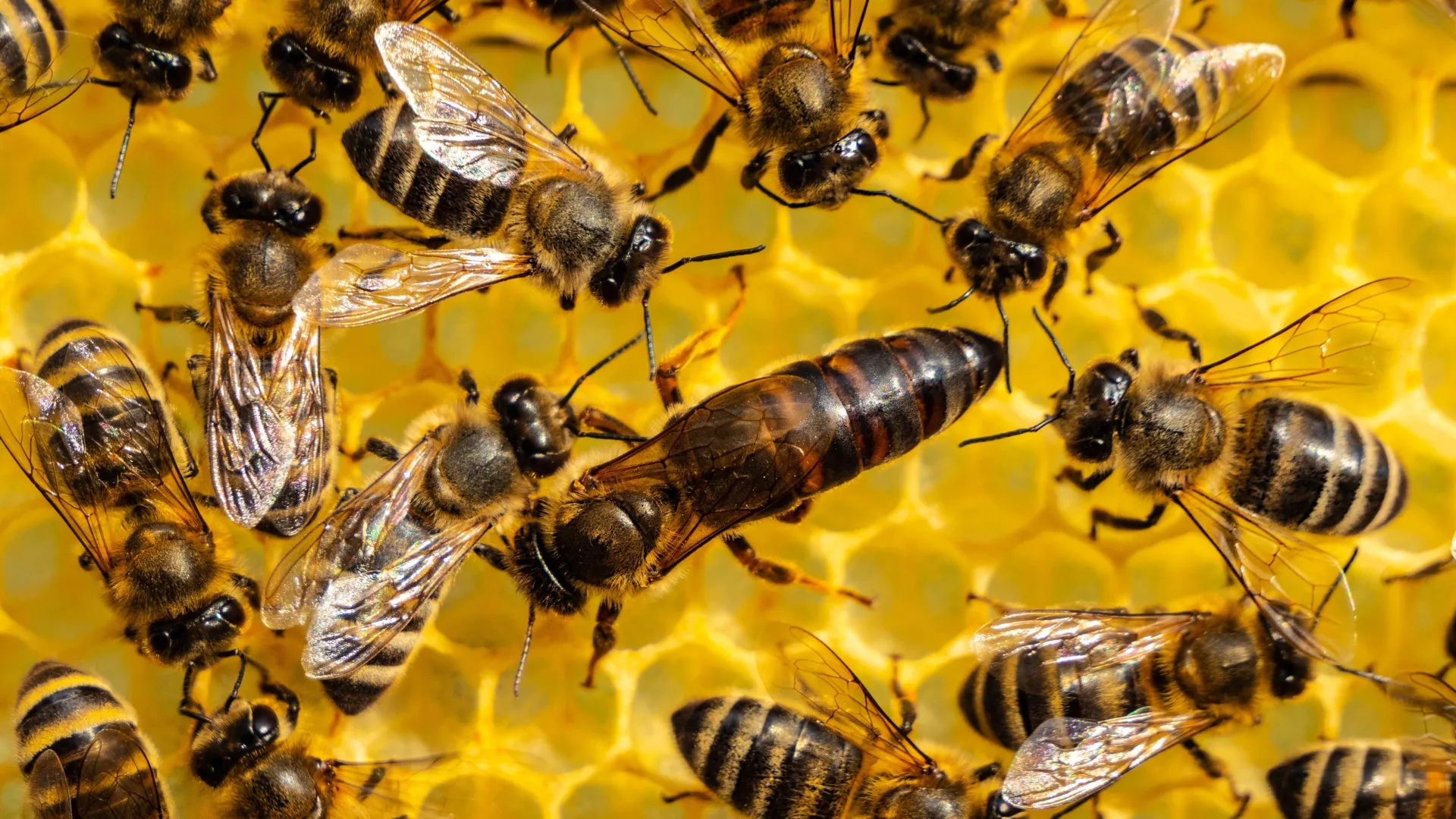
For decades, the prevailing scientific understanding of how a honeybee colony elevates a developing larva to the status of queen was elegantly simple, almost akin to a magical recipe: abundant royal jelly, and the transformation was assured. This nutrient-rich secretion, produced by worker bees, was long considered the sole determinant of a larva’s destiny, capable of initiating profound physiological changes that distinguish a fertile, long-lived queen from her sterile, short-lived worker sisters. However, a groundbreaking new study is dismantling this long-held notion, revealing a far more intricate and sophisticated biological process orchestrated by the entire colony. Far from being a passive recipient of a special diet, a future queen is now understood to be the product of a meticulously engineered environment, a testament to the complex social and biological engineering inherent in honeybee societies.
The Royal Nursery: A Micro-Environment of Innovation
The research, published in the prestigious journal Nature, unveils the critical role of specialized nursery chambers, known as queen cells, in the development of a new queen. These structures, often colloquially referred to as "royal cribs," are not merely protective casings but are actively constructed and maintained by a distinct group of young worker bees. These "queen cell builders," as the study identifies them, employ unique building materials and practices that create a micro-environment vastly different from the hexagonal cells where worker bees are reared.
"The old idea was relatively simple: take an egg, move it into a queen cell, feed it royal jelly, and you get a queen," explained Boris Baer, entomologist and director of the Center for Integrative Bee Research (CIBER) at the University of California, Riverside, whose laboratory was instrumental in this work. "What we found is that there’s an entire machinery behind this process. It’s much more sophisticated than we imagined." This "machinery" involves not only specialized nutrition but also precise environmental controls, highlighting a level of biological intentionality previously underestimated.
The Queen’s Advantage: A Developmental Leap
The stark differences between a queen bee and a worker bee are undeniable. Both originate from genetically similar eggs, yet queens achieve significantly larger size, faster maturation, and a lifespan that can extend for several years, in stark contrast to the mere weeks of a worker bee’s existence. Crucially, the queen is the sole reproductive female within the colony, responsible for laying all the eggs that perpetuate the species. For years, the focus of scientific inquiry into this dramatic divergence in development was almost exclusively on royal jelly, a substance exceptionally rich in proteins, lipids, and vitamins, believed to be the potent trigger for queen differentiation.
The new findings, however, indicate that nutrition alone cannot account for the remarkable transformation. The research team employed a sophisticated array of scientific tools, including thermal imaging to monitor temperature gradients, advanced behavioral monitoring to observe worker interactions, materials science techniques to analyze the composition of the queen cells, and detailed chemical analysis of the wax and other substances involved. This multi-faceted approach allowed them to meticulously examine the developmental environments of potential queens.
Queen Cells: More Than Just Wax
The study revealed that queen cells possess a distinct, elongated, peanut-like shape, a significant departure from the familiar hexagonal cells of worker brood. Moreover, the wax used to construct these royal chambers exhibits unique physical and chemical properties. It is demonstrably less dense and more flexible than ordinary hive wax, enabling it to better retain heat and moisture. This ability to maintain a stable, warm, and humid internal environment is crucial for the accelerated development of queen larvae.
Further analysis of the wax composition uncovered differences in its fatty acid profiles and the presence of specific chemical signals. These molecular distinctions suggest that the queen cell provides a unique developmental milieu, actively contributing to the queen’s physiological development beyond mere structural support.
Empirical Evidence: The Impact of the Environment
To definitively assess the impact of these specialized chambers, the researchers conducted a critical experiment. They raised queen larvae in two distinct conditions: one group within naturally formed queen cells, and another group within cells constructed from standard worker wax. Both groups were provided with identical diets, ensuring that nutrition was not a variable. The results were stark and compelling. Larvae housed in worker wax exhibited a significantly higher mortality rate and, for those that survived, developed into demonstrably smaller, and presumably less robust, queens. This empirical evidence strongly supports the hypothesis that the surrounding physical environment of the queen cell is as vital to successful queen development as the dietary intake of royal jelly.
The Unsung Architects: The Queen Cell Builders
The investigation also shed light on the identity of the specialized workers responsible for the creation and maintenance of these critical royal nurseries. Dubbed "queen cell builders," these bees are typically younger than many other individuals within the hive. Their dedication to the nascent queens is evident in their physiological and behavioral adaptations. The study observed that these builders maintain higher internal body temperatures while tending to the queen cells, a phenomenon that may directly contribute to the accelerated development of the queen. A queen bee can reach sexual maturity in approximately 16 days, a stark contrast to the roughly 21 days required for worker bees. This rapid maturation is a significant advantage, particularly in scenarios where a colony faces an urgent need for a new leader, such as after the loss of an existing queen.
Rather than simply repurposing existing wax, these specialized builders actively engage in the collection, modification, and enrichment of materials destined for the royal chambers. Their own biological processes appear to shift, with different pathways related to wax production becoming more active. This suggests a deliberate biological adaptation to their unique role. To further confirm this selective material procurement, the researchers introduced trace amounts of graphite into the general honeycomb. Over time, the presence of darkened wax within the queen cells provided visual confirmation that the queen cell builders were indeed selectively gathering and transforming materials from elsewhere in the hive, demonstrating a deliberate act of resource management for queen development.
A Royal Court: The Sophistication of Colony Reproduction
The intricate nature of this process led Baer to draw an analogy to a royal court. "You can think of it as something like Buckingham Palace," he stated. "There is a dedicated group of bees focused entirely on raising the queen, and if they don’t get it right, the colony cannot reproduce." This perspective underscores the high degree of organization and intentionality within the colony. The successful reproduction and survival of the entire hive hinge on the meticulous execution of this specialized developmental process.
The study’s observations were consistent across both Asian (Apis cerana) and European (Apis mellifera) honeybee species, suggesting that this sophisticated strategy for queen rearing evolved long ago and is a widespread characteristic of honeybee societies. This collaborative endeavor brought together a diverse team of experts from various disciplines, including animal behavior, physiology, chemistry, materials science, and genomics. The project was spearheaded by former UCR postdoctoral researchers Yu Fang and Yahya Al Naggar, embodying the CIBER philosophy of interdisciplinary collaboration to address complex biological questions.
Broader Implications: Engineering Life Itself
The implications of this discovery extend far beyond the realm of apiculture and entomology. The findings suggest that the development of organisms may be influenced not only by their genetic makeup and nutritional intake but also by the specific physical and social environments they experience. For many years, the queen bee served as a seemingly straightforward biological paradigm: special food begets a special insect. This new research paints a far more nuanced and compelling picture. A queen bee does not emerge solely from the potent effects of royal jelly; rather, her development is the result of a concerted and engineered effort by the entire colony, a testament to their capacity for environmental manipulation and social organization.
"This work highlights how much sophistication exists inside insect societies," Baer concluded. "Honeybee colonies are not simply collections of individuals. They function as integrated biological systems capable of engineering their own environments." This understanding of honeybee colonies as complex, integrated biological systems capable of proactive environmental engineering opens new avenues for research into social insect behavior, evolutionary biology, and the fundamental principles governing development across the natural world. The meticulous construction of the queen’s nursery is a profound example of how collective action and specialized roles can shape the very trajectory of life within a complex social structure.