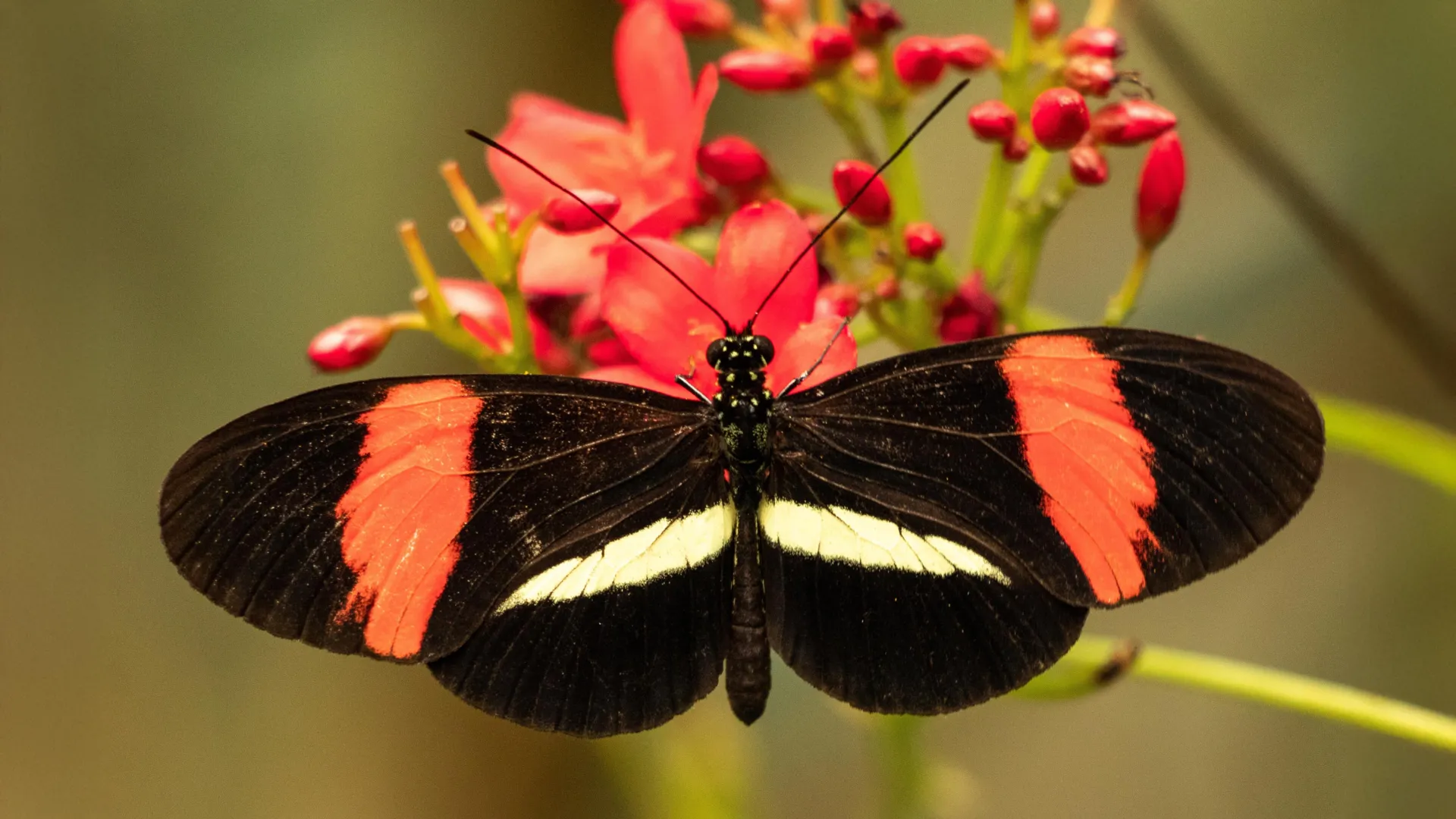
A groundbreaking study led by researchers at the University of Bristol has unveiled an astonishing biological adaptation in a group of tropical butterflies, suggesting they may possess an evolved mechanism to significantly slow down the aging process, thereby extending their lifespans to an unprecedented degree within their species. Published on June 16 in the prestigious journal Nature Communications, the research focuses on the Heliconius tribe, a diverse lineage of butterflies native to the lush rainforests of Central and South America. These remarkable insects are now being recognized not only for their longevity but also as a potential cornerstone for future investigations into the fundamental biology of aging.
An Unprecedented Lifespan in the Butterfly Kingdom
The typical lifespan of an adult butterfly is notoriously brief, often measured in mere weeks. However, the Heliconius tribe shatters this norm. The University of Bristol-led study revealed that certain species within this group can live up to three times longer than their closest relatives, with some individuals observed to survive for nearly a full year. This remarkable longevity is exemplified by Heliconius hewitsoni, a species that achieved an astonishing maximum lifespan of 348 days. In stark contrast, a closely related species, Dione juno, had a maximum lifespan of just 14 days, illustrating a staggering 25-fold difference in survival duration within a relatively short evolutionary divergence. This finding strongly indicates that the Heliconius butterflies have developed a unique strategy for extending their lives, offering invaluable clues about how aging can be decelerated in the natural world.
The Curious Case of Slowed Biological Decline
Further intensifying the intrigue surrounding these butterflies, the research team, in collaboration with scientists from the Smithsonian Tropical Research Institute in Panama, uncovered evidence that at least one species, Heliconius hecale, exhibits minimal to no measurable physical deterioration as it ages. To quantify this phenomenon, researchers employed a grip strength test, a standard metric for assessing physical performance. The results were striking: older H. hecale butterflies demonstrated grip strength comparable to their younger counterparts, showing no discernible signs of age-related decline. This stands in sharp contrast to Dryas iulia, a closely related species with a significantly shorter lifespan, which exhibited a clear and measurable decline in physical performance with advancing age. These observations strongly suggest that Heliconius butterflies may largely circumvent the typical physical deterioration that accompanies aging in most animal species.
The comprehensive research methodology involved a multifaceted approach, integrating data from established butterfly houses, extensive mark-release-recapture studies conducted in natural habitats, and controlled experiments within insectaries. This synergistic approach enabled the researchers to meticulously compare lifespan and aging patterns across the entire Heliconiini tribe. The consistent findings across these varied methodologies highlighted that Heliconius butterflies, as a group, exhibit longer average and maximum lifespans, lower baseline mortality rates, and demonstrably slower rates of aging compared to their related species that do not engage in adult pollen feeding.
The Pivotal Role of Pollen Feeding in Longevity
For decades, scientists have recognized the unusually long lives of Heliconius butterflies, but the underlying cause has remained a subject of intense scientific debate. A prominent hypothesis centers on their distinctive and rare ability to feed on pollen as adults. While most butterfly species subsist primarily on nectar, adult pollen feeding is an exceptional dietary habit. To rigorously test this theory, the researchers conducted a direct comparison between Heliconius hecale, a known pollen-feeding species, and its non-pollen-feeding relative, Dryas iulia. The experimental results strongly supported the dietary hypothesis, revealing that H. hecale maintained its body mass and muscle performance for a significantly extended period and, crucially, did not exhibit the age-related physical decline observed in D. iulia.
However, the narrative of longevity in Heliconius butterflies is more nuanced than a simple dietary explanation. An unexpected yet significant finding was that the butterflies’ longevity advantage persisted even when pollen was deliberately removed from their diet. H. hecale continued to live substantially longer than its pollen-deprived relative, even when both were fed an equivalent nectar-based diet. This observation indicates that while adult pollen feeding plays a role, it is not the sole determinant of their extended lifespan. Instead, it suggests a complex interplay between nutritional factors, specifically the benefits derived from pollen, and profound evolutionary adaptations that have independently contributed to their remarkable longevity. This dual contribution highlights a sophisticated evolutionary strategy for survival and extended life.
Heliconius Butterflies: A New Frontier in Longevity Research
The implications of this research extend far beyond the realm of entomology. Long-lived species across the animal kingdom have consistently provided invaluable insights into the biological mechanisms that underpin healthy aging. The findings concerning Heliconius butterflies position them as a highly promising new model system for investigating how ecological shifts, such as the evolution of adult pollen feeding, can profoundly influence and promote extended life.
Dr. Jessica Foley, the lead author of the study and a researcher at the University of Bristol’s School of Biological Sciences, articulated the significance of these findings. "As the most species-rich animal class, insects are renowned for their extraordinary morphological and ecological diversity," Dr. Foley stated. "They also exhibit extreme variation in longevity, with maximum lifespans ranging from just a few days in adult mayflies to several decades in the reproductive castes of some ants and termites. This represents a roughly 5,000-fold difference within the class, compared with around a 100-fold difference in lifespan observed in mammals."
She elaborated on the unique position of Heliconius butterflies within this spectrum of insect longevity: "Heliconius butterflies are among the longest-lived butterflies, but what makes them particularly remarkable is that they appear to have evolved not only longer lifespans, but also slower aging. This allows them to live significantly longer than closely related species from which they diverged relatively recently in evolutionary time."
The potential impact of this discovery is substantial. "The exciting implication of this lifespan extension," Dr. Foley continued, "is that it provides a powerful opportunity to identify the mechanisms that underpin longevity. By comparing long-lived Heliconius butterflies with their short-lived relatives, we have a natural evolutionary experiment that can help reveal how lifespan is extended, making them a highly promising new model for research into the biology of aging and longevity."
Context and Chronology of the Research
The journey to this discovery involved years of meticulous observation and data collection. The University of Bristol initiated its comprehensive study into butterfly longevity approximately five years ago, with initial hypotheses focusing on dietary factors and environmental influences. The collaboration with the Smithsonian Tropical Research Institute, a hub for tropical biodiversity research, began three years prior to publication, providing crucial access to field sites and expert knowledge in Panama’s rich ecosystems.
The initial phase of the research, spanning roughly two years, involved extensive fieldwork and the establishment of controlled insectary environments. During this period, researchers meticulously documented the lifespans of numerous Heliconius species and their close relatives. The mark-release-recapture studies, a cornerstone of ecological research, were instrumental in tracking individual butterflies and gathering data on their survival rates in their natural habitats.
The subsequent two years were dedicated to laboratory analysis, including the controlled dietary experiments and the physiological assessments, such as the grip strength tests. The integration of data from these diverse methodologies allowed for a robust and cross-validated understanding of the aging processes. The decision to publish in Nature Communications, a highly selective journal, underscores the perceived novelty and significant scientific impact of the findings. The publication date of June 16, 2023, marks the culmination of this extensive scientific endeavor, opening new avenues for research.
Broader Implications for Aging Research
The study’s findings carry profound implications for the broader scientific understanding of aging. By identifying a species that appears to have evolved to slow down its aging process, researchers gain a unique biological system to dissect the molecular and cellular mechanisms responsible for age-related decline. This could potentially lead to breakthroughs in understanding human aging and developing interventions to promote healthier lifespans.
The identification of pollen feeding as a significant, though not exclusive, contributor to longevity in Heliconius butterflies also opens new avenues for nutritional research. While the specific compounds within pollen responsible for these effects are yet to be fully elucidated, the discovery suggests that complex micronutrient profiles, beyond simple sugars found in nectar, may play a crucial role in extending lifespan and maintaining physiological function. Future research will likely focus on isolating and analyzing these beneficial components.
Furthermore, the study highlights the power of comparative biology in uncovering fundamental biological principles. By examining the evolutionary divergence between long-lived and short-lived relatives, scientists can pinpoint the genetic and physiological changes that confer longevity. This "natural experiment" provided by evolution is invaluable for understanding the genetic architecture of aging. The Heliconius butterfly, with its clear differences in lifespan and aging rate among closely related species, presents an ideal subject for such genetic analyses. Identifying the genes and pathways that have been modified in Heliconius could offer targets for therapeutic interventions aimed at slowing aging in other species, including humans. The potential for a 5,000-fold difference in lifespan within insects, compared to a 100-fold difference in mammals, also suggests that insects may harbor biological secrets far exceeding those found in mammalian models, making them an increasingly vital area of study for longevity research.