The long-held narrative of the North American predator known as the American cheetah, or Miracinonyx trumani, has undergone a radical scientific revision. New research led by the University of California, Santa Cruz (UCSC), and published in the journal Current Biology on September 4, demonstrates that the animal was not a cheetah at all, but rather a specialized, highly adaptable member of the puma lineage. By analyzing nuclear paleogenomes and stable isotopes from fossils spanning 23,000 to 31,000 years ago, scientists have dismantled the long-standing misconception that this Ice Age predator was a close relative of the African cheetah, revealing instead a creature that was far more versatile than its physical appearance suggested.
A Case of Evolutionary Convergence
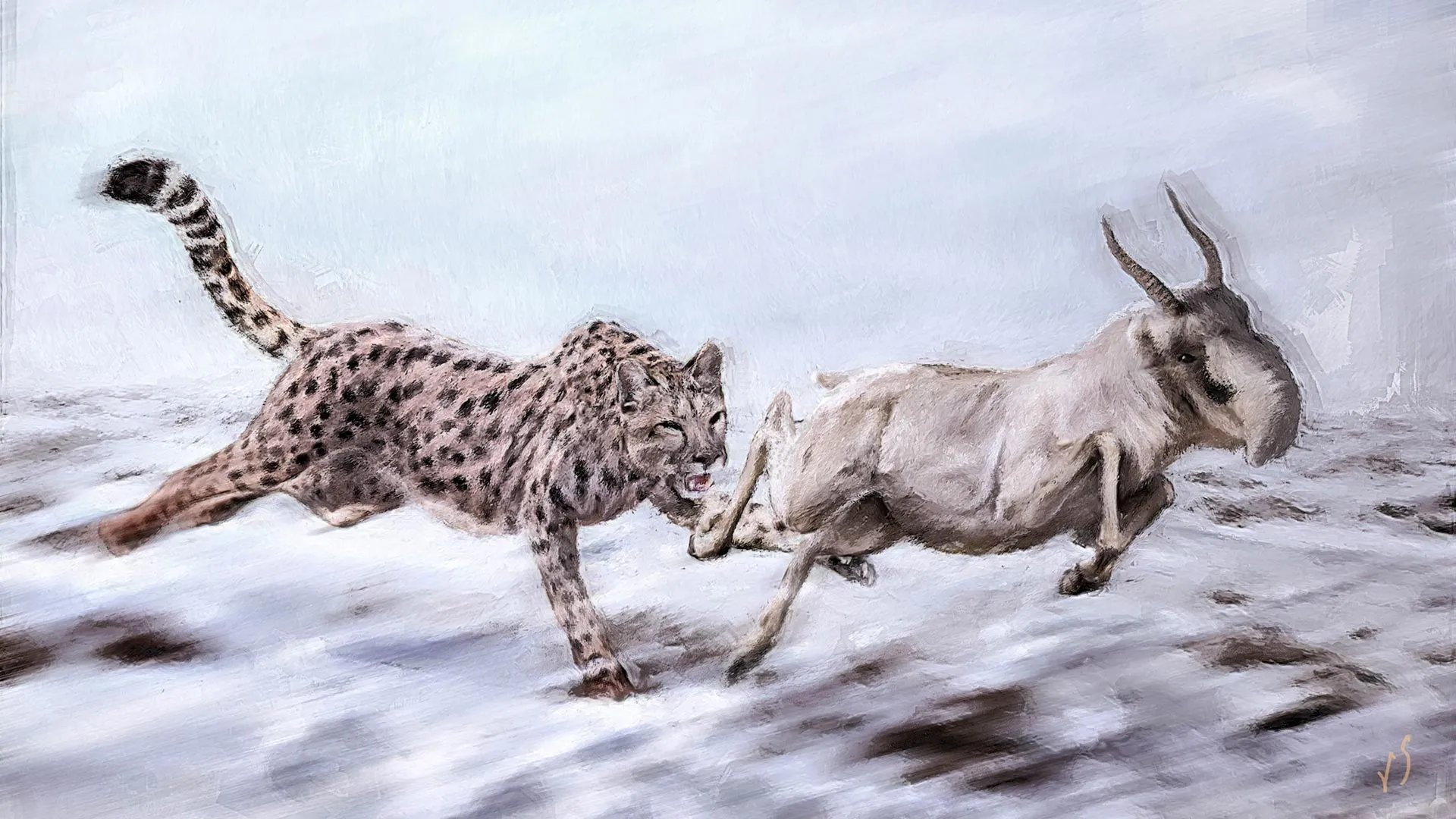
For decades, the physical resemblance between M. trumani and the modern African cheetah (Acinonyx jubatus) dominated the discourse in paleontology. The extinct American cat possessed a slender frame, long limbs, and a build that appeared optimized for high-speed terrestrial pursuit. This morphology led many researchers to classify the animal as a cheetah, fitting it into the evolutionary niche of a specialized, sprinters-only predator.
However, the genomic data confirms that M. trumani is a sister species to the modern puma (Puma concolor), having diverged from that evolutionary lineage approximately 2.6 million years ago. Its "cheetah-like" morphology is now classified as a classic example of evolutionary convergence, where distinct species evolve similar physical traits in response to analogous environmental pressures. While both the African cheetah and the American Miracinonyx developed elongated limbs and narrow bodies for speed, the new evidence indicates that M. trumani retained the robust, powerful forelimbs of a puma, allowing it to engage in more varied hunting strategies, including the ability to grapple with and subdue prey that would be beyond the capabilities of a modern cheetah.
Ecological Plasticity: From Grasslands to the Arctic
The findings significantly expand the known geographic and ecological range of M. trumani. Previously thought to be restricted primarily to temperate grasslands—where they likely hunted pronghorn and other ungulates in environments similar to the modern Great Plains—the new study identifies their presence 20 degrees of latitude further north than previously recorded.
In the Arctic Yukon, the role of M. trumani shifted dramatically. Stable isotope analysis of fossilized remains recovered from the Tr’ondëk Hwëch’in and Vuntut Gwitchin Traditional Territories suggests that these cats functioned as tertiary consumers, shifting their diet to include anadromous fish, such as salmon. This dietary flexibility stands in stark contrast to the rigid specialization typically associated with cheetahs, which are strictly carnivores dependent on high-speed terrestrial hunting.
The researchers posit that this adaptability was facilitated by specific genetic mutations. "These cats were remarkably flexible, much like pumas are across their range today," says Molly Cassatt-Johnstone, the lead author and a Ph.D. candidate in the Paleogenomics Lab at UC Santa Cruz. The genomic analysis identified loss-of-function mutations in genes responsible for regulating circadian rhythms, a biological adaptation that likely allowed the species to thrive under the extreme light cycles of Arctic summers and the profound darkness of northern winters.
Challenging the Ghosts of Predators Past
The reclassification of M. trumani has significant implications for one of the most popular theories in evolutionary biology: the "ghosts of predators past" hypothesis. This theory was developed to explain the extraordinary speed of the American pronghorn (Antilocapra americana), which can reach speeds of up to 55 miles per hour. For years, scientists argued that pronghorns evolved this exceptional velocity to escape the high-speed pursuit of the American cheetah.
If M. trumani was not a cheetah-like sprinter but a more versatile, generalist hunter, the selective pressure that drove the pronghorn’s evolution may need to be re-evaluated. While the predator likely still posed a significant threat, the "cheetah-like" speed requirement may be an oversimplification of the complex predatory-prey dynamics that defined the North American Pleistocene landscape.
Genomic Insights and Sensory Evolution
The study also provided unexpected insights into the sensory biology of these predators. The researchers discovered that M. trumani—along with every other felid lineage included in the study—lacked a functional gene responsible for producing a receptor for sour tastes. While cats are famously known for their lack of "sweet" taste receptors, the loss of sour taste perception in this context is significant. Sensory loss in animals is frequently tied to specialized diets; the reduction in taste receptor functionality suggests that as these predators evolved into highly specialized hunters, their sensory apparatus narrowed to focus on the nutritional signals most relevant to their survival.
The Slow Road to Extinction
The genomic data also provides a clearer picture of the species’ eventual decline. By examining fossils from Wyoming and the Yukon, researchers assessed the genetic diversity of these populations. Unlike many species that face extinction due to sudden, catastrophic inbreeding or drastic population bottlenecks, M. trumani showed no such markers.
Instead, the evidence points to a long, steady, and gradual decline that spanned from the early to the late Pleistocene. Senior author Beth Shapiro, a professor of ecology and evolutionary biology at UC Santa Cruz and co-director of the Paleogenomics Lab, notes that the lack of severe inbreeding suggests the decline was not an immediate collapse. "The decline was slow, not sudden, and that may be what left it unable to adapt when the climate shifted," Shapiro explains. This gradual attrition over hundreds of thousands of years suggests that the species was slowly losing its grip on the environment, perhaps due to a long-term reduction in prey availability or the inability to compete with other, more specialized predators as the climate became increasingly volatile toward the end of the last Ice Age.
Broader Implications for Paleontology
The collaborative effort, which included expertise from the University of Alaska Fairbanks (UAF), the Yukon Palaeontology Program, and Des Moines University, underscores a critical shift in how modern science interprets the fossil record. Relying on phenotype—physical appearance—to assign biological roles or evolutionary relationships can lead to substantial errors.
"This species of carnivore has this massive range, all the way from the Arctic to the Lower 48," notes co-author Matthew Wooller of UAF. "They’re demonstrating uber-specialization at two ends of their range, while also feeding on two completely different food sources."
The implications for the field of paleontology are profound. By moving away from the "American cheetah" label, researchers are now free to study M. trumani as an entity defined by its own evolutionary history rather than as a facsimile of a modern African cat. This shift encourages a more nuanced understanding of North American biodiversity during the Pleistocene, highlighting that extinction is often the result of complex, multi-millennial ecological shifts rather than isolated events.
As researchers continue to sequence the genomes of other extinct megafauna, the story of M. trumani serves as a cautionary tale: the labels we assign to the past often reveal more about our contemporary biases than they do about the actual lives of the animals we seek to understand. The adaptability of this puma-like predator, its capacity to hunt in diverse environments, and its long, quiet decline provide a vital new lens through which to view the resilience and fragility of life on a changing continent. The research provides a foundational framework for future studies into how predators adjust to climatic extremes and, ultimately, why some of the most versatile hunters in history eventually vanish from the record.