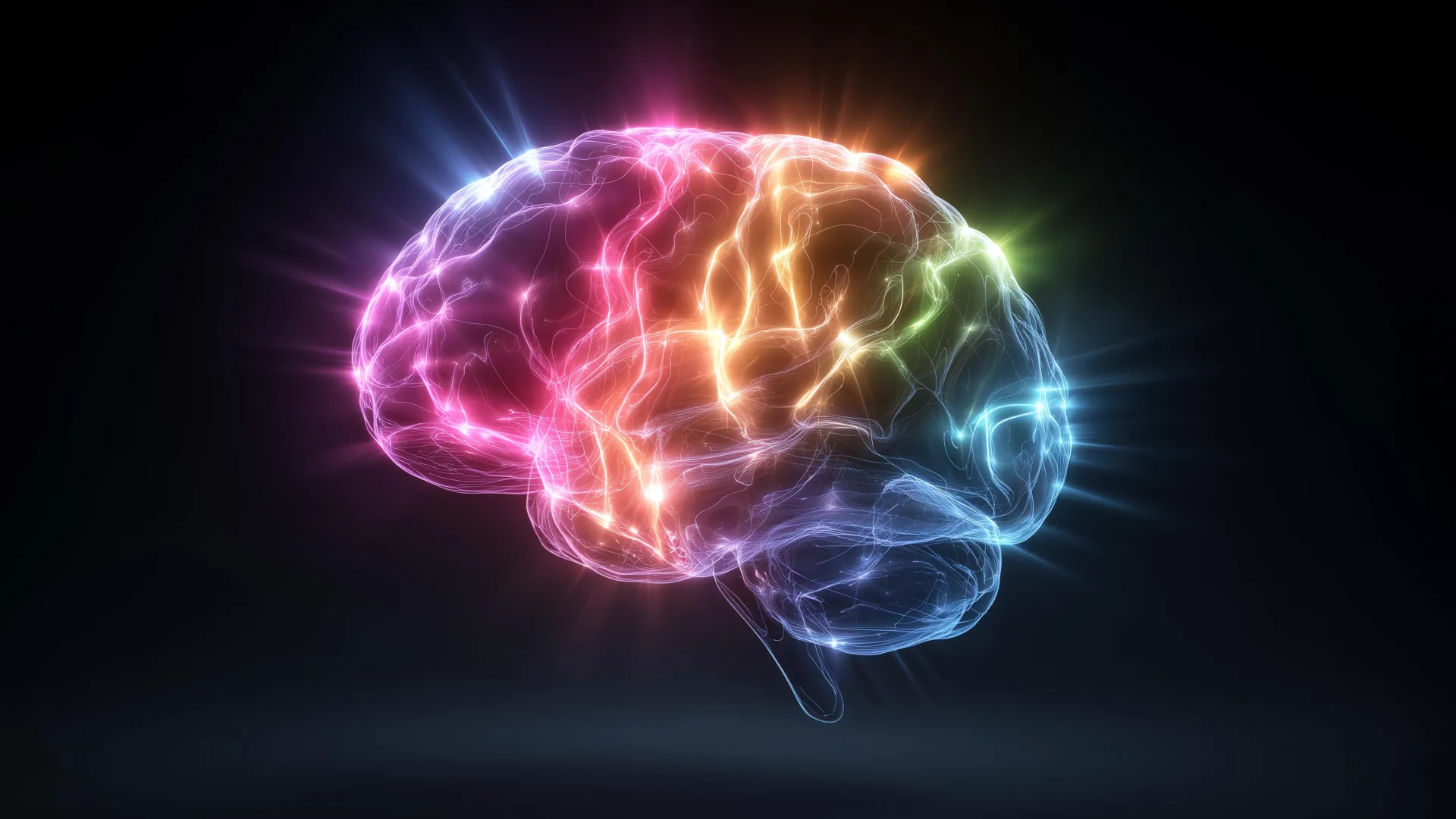
For decades, the standard model of cognitive neuroscience has relied on a linear, sandwich-like framework to explain human behavior. This model posits that the brain operates in three distinct stages: sensory perception, cognitive deliberation, and motor execution. Under this paradigm, an individual perceives an object, weighs options based on internal desires and intentions, and finally acts. However, according to Tom James, a professor in the Department of Psychological and Brain Sciences at Indiana University, this widely accepted sequence may be more of a useful narrative than a biological reality. In his recent article published in the Journal of Cognitive Neuroscience, titled "Sensorimotor Mechanisms of Decisions and Actions," James argues that the brain does not possess a centralized "decision-making" module, challenging the foundational assumptions of modern psychological research.
The Historical Context of the Sandwich Model
The "sandwich model" of cognition has dominated academic discourse since the mid-20th century, emerging alongside the rise of computational theories of mind. During the 1960s and 70s, the "Cognitive Revolution" reframed the brain as an information-processing system analogous to a computer. In this view, sensory input is the "input," the decision-making process is the "central processor," and the behavior is the "output."
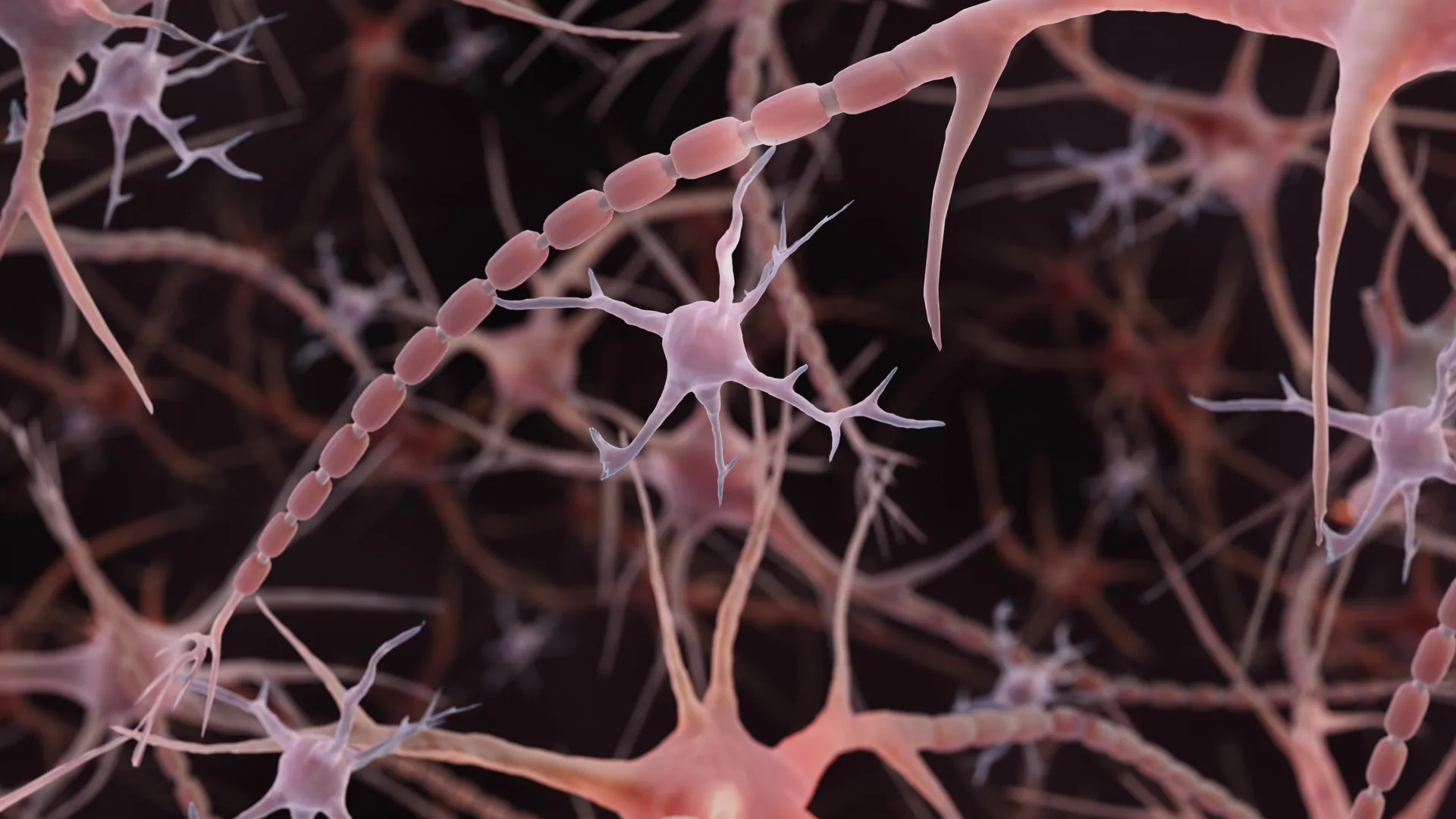
This model has provided a convenient shorthand for clinicians and researchers to categorize neurological disorders and behavioral patterns. For example, in studies of Parkinson’s disease or executive dysfunction, researchers often look for "deficits" in the cognitive stage—the hypothetical bridge between stimulus and response. However, James notes that while we can map sensory processing to specific neural pathways and motor activity to distinct cortical regions, the "decision-making" stage has remained elusive. Despite decades of functional magnetic resonance imaging (fMRI) and electroencephalography (EEG) research, neuroscientists have yet to isolate a physical neural structure that acts as a standalone "decider."
Physicalism and the Problem of Causality
To dismantle the traditional model, James utilizes a "physicalist" framework, a philosophical position often associated with philosopher Daniel Dennett. Physicalism asserts that all phenomena in the universe are fundamentally physical. If a decision is characterized as a "mental" or "nonphysical" event, it creates a logical impossibility: a nonphysical thought cannot, by definition, cause a physical contraction of muscle fibers.
If we accept that sensory processing and motor output are strictly physical processes governed by neural firing and chemical signaling, the introduction of a nonphysical "decision" creates a causal gap. This dilemma is not new; it mirrors the classic mind-body problem debated by René Descartes in the 17th century. Descartes proposed the pineal gland as the site of interaction between the soul and the body, a theory long since debunked by modern anatomy. James argues that modern neuroscience is essentially falling into the same trap by assuming a "central controller" exists somewhere in the frontal cortex, which he labels the "Cartesian Theater."
The Logic of Abstract Description
To illustrate why we perceive decisions despite their lack of a physical location, James invokes the concept of a center of mass (CoM). In physics, the center of mass is a mathematical point representing the mean position of matter in an object. While the CoM is an invaluable tool for engineers calculating the stability of a bridge or the trajectory of a projectile, the CoM itself exerts no physical force. One cannot "move" the center of mass without moving the entire object.
Similarly, James posits that "decisions" are abstract descriptors—useful linguistic shorthand for complex, decentralized physical events. When we say, "I decided to eat an apple," we are describing the end state of a myriad of simultaneous interactions involving hunger signals, visual stimuli, motor readiness, and environmental availability. The "decision" is not the cause of the act; it is a summary of the act.
The Robot Analogy: Intentionality Without a Controller
The most compelling evidence for James’s theory may lie in the field of robotics. Researchers have long constructed simple machines capable of "wall-following" behaviors. These robots are equipped with basic sensors and motor loops that respond to obstacles in real-time. When a robot turns to avoid a wall, an outside observer might intuitively describe the machine as having a "goal" or an "intention" to reach a destination.
However, the robot lacks any central processing unit designed to "make a decision." The behavior is purely emergent, arising from the interaction between the machine’s hardware and its environment. James argues that human behavior is likely governed by similar sensorimotor loops. By focusing on the interaction between the brain, the body, and the environment—a field known as embodied cognition—researchers can explain complex behaviors without needing to invent a "higher-level" executive function.
Challenging the Cartesian Theater
The reliance on a central controller leads to an infinite regress, a logical fallacy where every explanation requires a sub-explanation. If a "decider" exists in the brain, who decides what the decider does? Does the decider have its own internal decider? This hierarchy collapses into an infinite chain of "little men" (homunculi) inside the head.
James’s critique aligns with a growing body of data in connectionist neuroscience. Recent studies using high-resolution neural tracking suggest that motor preparation begins long before a subject reports having made a "conscious decision." In many experiments, neural activity patterns associated with an action appear in the motor cortex hundreds of milliseconds before the participant reports the intention to act. These data points suggest that the brain is a proactive system, constantly preparing for various possibilities rather than waiting for a single "choice" to be made by a central authority.
Methodological Implications and the Path Forward
Moving away from the sandwich model requires a paradigm shift in experimental design. Current cognitive neuroscience often relies on "subtraction methods," where researchers compare neural activity during a "control" task with activity during a "decision" task. If James is correct, these experiments may be fundamentally flawed because they assume that the difference between the two tasks is a discrete "decision-making process" that can be subtracted out.
Future research, according to James, must embrace the complexity of nonlinear systems. This involves:
- Simultaneous Data Collection: Moving beyond linear, step-by-step paradigms to capture continuous interactions between sensory inputs and motor outputs.
- Ecological Validity: Studying subjects in environments that mirror real-world complexity rather than isolated laboratory settings.
- Embodied Modeling: Developing computational models that account for the body’s role in shaping cognition, rather than treating the brain as a disembodied computer.
The Broader Impact on Cognitive Science
The implications of this research are profound. If the "decision-making" process is revealed to be a descriptive construct rather than a biological reality, it could reshape our understanding of agency, free will, and legal culpability. Many legal systems rely on the assumption of a rational, autonomous agent capable of making deliberate choices. If behavior is instead the result of decentralized, environmental, and physiological interactions, the legal and ethical definitions of "intent" may require substantial revision.
Furthermore, this perspective offers a more parsimonious explanation for neurological conditions characterized by impulsive or erratic behavior. Instead of searching for a "broken" decision-making center, clinicians may find more success in mapping how sensorimotor loops are disrupted by neurochemical imbalances or structural damage.
In conclusion, Tom James’s work serves as a necessary provocation for the field of neuroscience. By challenging the comfort of the sandwich model, he invites researchers to look closer at the continuous, messy, and interconnected reality of the brain. As we peel back the layers of the "Cartesian Theater," we may find that the human experience of choice is not a product of a hidden operator, but the elegant result of a body in constant, dynamic conversation with its world. While the language of decisions will remain a staple of human communication, the science of the future must look beyond the metaphor to understand the physical mechanisms of our existence.