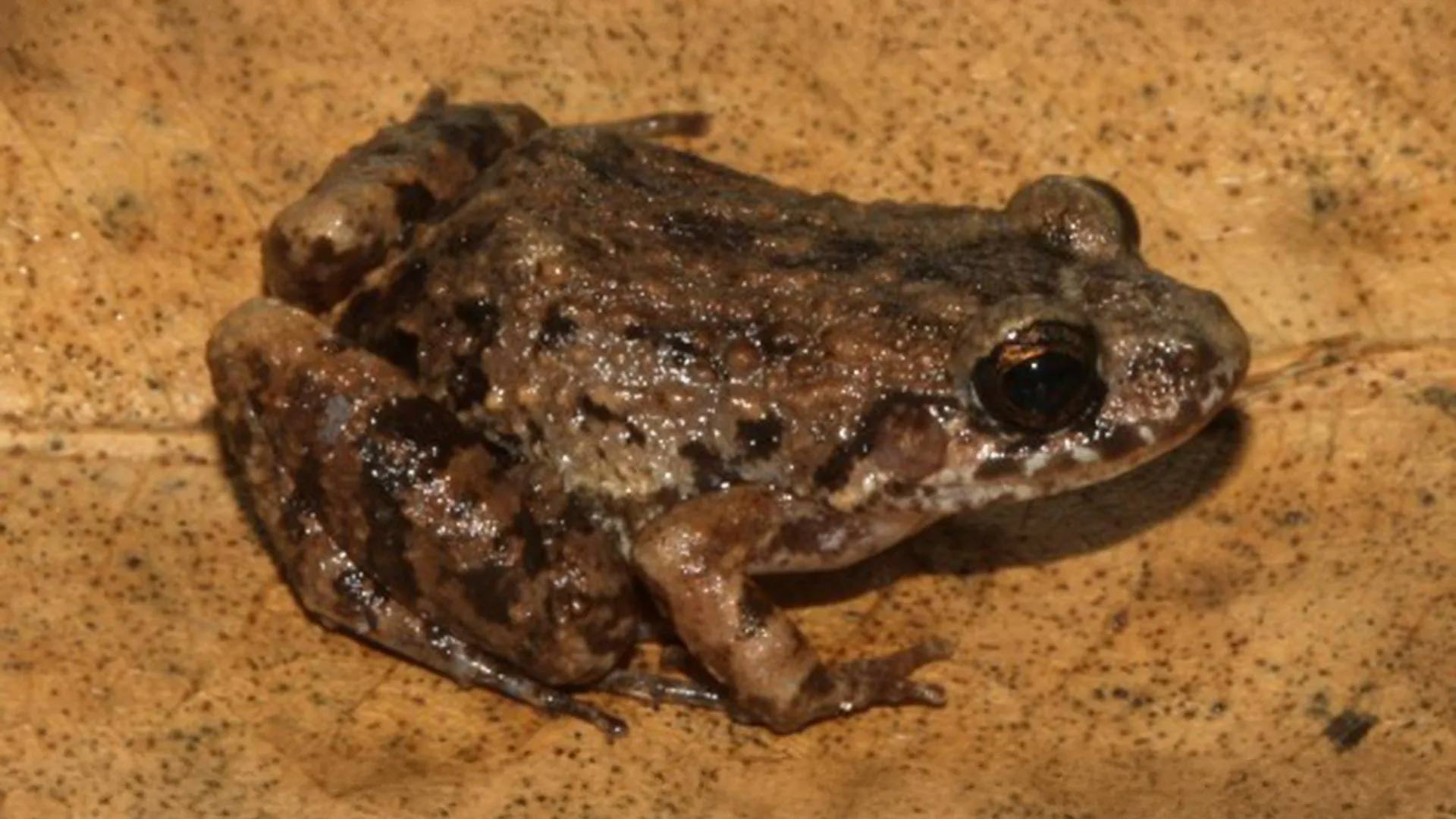
In the dense, seasonally inundated forests of the western Amazon, a small, unassuming amphibian has emerged as a significant indicator of the hidden complexity within the world’s largest tropical rainforest. Scientists have formally identified a previously unknown frog species, Adenomera varcena, which thrives in the floodplains of the Upper Juruá River in the Brazilian state of Acre. This discovery, published in the journal Ichthyology & Herpetology, serves as a poignant reminder that the Amazonian biological catalog remains incomplete, masking a profound level of cryptic diversity that is only now being brought to light by advanced molecular and acoustic analysis.
The research team behind this identification includes prominent herpetologists Célio F. B. Haddad of São Paulo State University (UNESP) and Thiago R. Carvalho of the Federal University of Minas Gerais (UFMG). Both researchers are affiliated with the Center for Research on Biodiversity Dynamics and Climate Change (CBioClima), a FAPESP-funded Research, Innovation, and Dissemination Center. Their work underscores a growing paradigm in modern biology: that the traditional reliance on physical appearance is insufficient to grasp the true scale of life in the tropics.
The Discovery and the Science of Cryptic Diversity
The classification of Adenomera varcena represents a triumph of integrative taxonomy. In the context of herpetology, "cryptic diversity" refers to the existence of distinct species that are morphologically indistinguishable to the human eye, even though they may possess vast genetic differences or unique ecological niches. For decades, the genus Adenomera has been a subject of intense study due to its widespread presence across South America. However, the discovery of A. varcena indicates that previous surveys likely underestimated the sheer number of lineages within this group.
The research process spanned several years, involving grueling field expeditions in the remote Moa and Crôa river basins near the city of Cruzeiro do Sul. To confirm that the specimen was indeed a new species, the team employed a multi-faceted investigative strategy:
- Molecular Phylogenetics: Comparing DNA sequences to isolate unique genetic signatures that deviate from known Adenomera species.
- Acoustic Analysis: Recording the mating calls of the males, which are often the primary reproductive isolating mechanism in amphibians. A. varcena produces a short, rhythmic call that is distinct from its closest relatives.
- Morphometric Assessment: Examining minute physical details, such as the absence of a characteristic dark spot on the underside of the forearm, a feature common in similar frogs but absent in this newly described species.
- Ecological Mapping: Documenting the specific habitat preference of the frog, which is restricted to seasonally flooded forests, an environment previously thought to be less hospitable to this specific genus.
A Habitat Under Pressure: The Ecology of the Floodplain
The specific epithet varcena was chosen to honor the unique ecosystem the frog inhabits—the Amazonian floodplain forests. These areas are subjected to massive seasonal fluctuations in water levels, a process that creates a highly dynamic environment. The adaptation of Adenomera varcena to this specific niche is of particular interest to evolutionary biologists. Most members of the genus Adenomera are adapted to terra firme, or dryland forests. The presence of A. varcena in a flood-prone zone suggests an evolutionary divergence that allowed the species to occupy a vacant ecological slot, though the precise mechanisms of this adaptation remain a subject for future inquiry.
The reliance on this specific habitat makes the species vulnerable to environmental shifts. The Amazon basin is currently experiencing unprecedented changes in rainfall patterns and flood cycles, driven by both global climate change and localized deforestation. As Professor Thiago R. Carvalho notes, the species’ dependence on specific flood dynamics suggests that any disruption to the hydrological cycle could have catastrophic consequences for its reproductive success. Because the breeding cycles of many amphibians are triggered by precise environmental cues—such as the onset of rain or the flooding of specific forest floors—a shift in the timing of these events could cause a temporal mismatch, leading to reproductive failure.
The Taxonomic Race Against Extinction
The identification of Adenomera varcena is not merely an academic exercise; it is a race against time. As the pace of anthropogenic habitat destruction in the Amazon continues to accelerate, the scientific community is increasingly concerned about the phenomenon of "silent extinction." This occurs when a species vanishes from the wild before it has been formally described or cataloged by science.
Professor Célio F. B. Haddad emphasizes that the current rate of taxonomic study is struggling to keep pace with the rate of ecosystem loss. "Species that haven’t yet been described are omitted from lists of threatened fauna and remain legally and environmentally vulnerable," Haddad explains. "Describing new species serves as a tool that aids in their protection. It provides the data necessary for environmental impact assessments and conservation policy."
When a species is officially recognized, it gains a "legal identity." It can be included in Red Lists, such as those maintained by the International Union for Conservation of Nature (IUCN), and it can become a focal point for habitat protection strategies. Conversely, a species that is not yet formally named exists in a policy vacuum, where its habitat can be cleared for agriculture or infrastructure without the specific protections that a threatened species might otherwise be afforded under Brazilian environmental law.
Broader Implications for Conservation Strategy
The discovery of A. varcena serves as a microcosm of the broader challenges facing tropical conservation. The collaboration involved a vast network of institutions, including the University of São Paulo (USP), the Federal University of Uberlândia (UFU), and the University of Ecuador (PUCE-Quito). This level of institutional cooperation is essential for the future of Amazonian research.
The implications of this study are twofold:
- Scientific Advancement: It forces a re-evaluation of the biodiversity of the western Amazon. If a genus as common as Adenomera hides undocumented species, it is highly probable that hundreds, if not thousands, of other species—from insects to small mammals—remain hidden in plain sight.
- Policy and Governance: The findings provide a clear mandate for the expansion of protected areas. By identifying "hotspots" of cryptic diversity, researchers can offer governments better data to prioritize land conservation. If an area contains multiple newly discovered, habitat-specific species, its value to global biodiversity increases exponentially.
Looking Ahead: The Future of Amazonian Herpetology
As the researchers continue their work, the focus is shifting toward understanding the life history of Adenomera varcena. Future studies are expected to examine the frog’s larval development, diet, and precise range. The team hopes that by filling these knowledge gaps, they can better predict how the species will respond to the ongoing climate crisis.
Furthermore, the discovery of A. varcena reinforces the necessity of maintaining robust biological collections. Many of the specimens used in this study were compared against historical records held in museums. Without these physical archives, the ability to confirm the uniqueness of a species would be severely hampered. The researchers advocate for continued investment in scientific infrastructure, noting that the ability to document the Amazon’s life forms is a foundational requirement for any credible long-term conservation strategy.
In conclusion, the emergence of Adenomera varcena from the flooded forests of the Juruá River is a testament to the resilience and mystery of the Amazon. It is a reminder that the rainforest is not merely a collection of known trees and animals, but a complex, evolving puzzle. Each new species discovered is a piece of that puzzle, helping scientists understand the evolutionary history of South America and the fragility of the systems that sustain it. For the global community, the lesson is clear: the more we know about the individual components of the Amazon, the better equipped we will be to protect the integrity of the whole. The race to catalog these hidden species is not just about filling out a taxonomic index; it is about securing the future of the planet’s most critical biological frontier.