In a remarkable convergence of environmental engineering and nutritional science, researchers at Southern Illinois University (SIU) Carbondale have unveiled a breakthrough system capable of converting non-edible plastic and agricultural waste into nutrient-dense, edible proteins, vitamins, and flavorings. This innovation, presented at the fall meeting of the American Chemical Society (ACS) in Chicago, offers a dual-pronged solution to two of the most pressing challenges of the 21st century: the global crisis of plastic pollution and the looming threat of widespread food insecurity. By leveraging the innate biochemical versatility of yeast, the research team is essentially "upcycling" carbon-rich waste streams into high-value food components, a process that could eventually sustain human life in the most extreme environments on Earth and beyond.
The Genesis of a Circular Bio-Economy
The impetus for this research originated from a challenge issued by NASA, which sought novel methods for food production in the resource-constrained environment of deep space. During long-duration missions to the Moon or Mars, traditional logistics—whereby food is shipped from Earth—become mathematically and economically untenable. Associate Professor Lahiru Jayakody and graduate researcher Sandhya Jayasekara began investigating the carbon cycle, recognizing that the fundamental building blocks of plastic, specifically polyethylene terephthalate (PET), are chemically similar to the carbon structures found in organic food sources.
"Microbes are very clever," Dr. Jayakody noted during the ACS symposium. "We are simply harnessing their evolutionary traits to solve the environmental problems we have created." By viewing plastic not as trash but as a carbon reservoir, the team transitioned from standard chemical recycling—which often relies on harsh solvents and energy-intensive processes—to a biological approach using genetically programmed microorganisms.
The Technical Process: Breaking Down the Barriers
The transformation of a rigid plastic soda bottle into a palatable food ingredient is a multi-stage biochemical odyssey. The process begins with a proprietary technique developed by SIU Carbondale Geology Professor Ken Anderson known as oxidative hydrothermal dissolution. This method subjects waste materials, such as PET plastic and agricultural residues like corn stalks and leaves, to high temperatures and pressures in the presence of oxygen and water. This "pre-treatment" stage effectively breaks down the recalcitrant chemical bonds of the plastic polymers, turning them into smaller, accessible molecules.
Once the waste is rendered into a feedstock, it is introduced to engineered yeast strains. In a controlled bioreactor environment, these microbes metabolize the carbon-rich compounds, synthesizing them into proteins, fats, and organic acids. This is not a novel concept in isolation—yeast has been used for decades to produce insulin and other pharmaceuticals—but the application of this technology to waste-derived feedstocks represents a significant advancement in synthetic biology.
From Microbes to the MicroBite
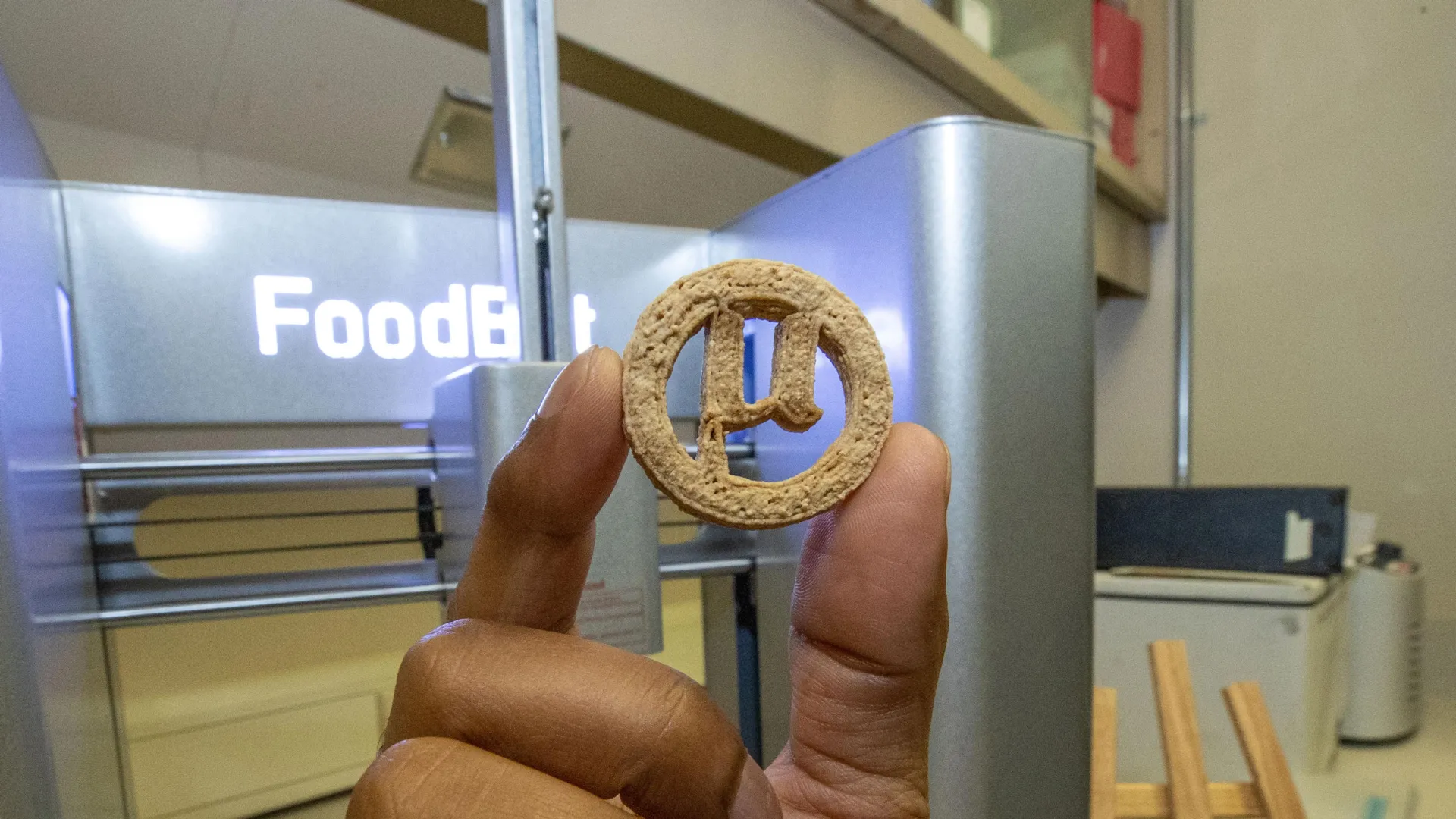
The culmination of this research is the development of the "µBite" (pronounced "micro-bite"), a 3D-printed cookie formulated from the yeast-derived proteins. In its current prototype stage, the cookie acts as a delivery vehicle for the microbial output, combined with starch, fiber, and natural sweeteners.
While the product has yet to undergo formal human clinical taste testing due to pending institutional review board approvals, initial sensory assessments have been promising. Test subjects, evaluating the product based on its aromatic profile and nutritional potential, have expressed a willingness to consume these products in emergency or resource-scarce scenarios. The research team is currently focused on enhancing the organoleptic properties—texture, mouthfeel, and taste—of the cookies to ensure they are palatable for everyday consumption, moving beyond the "emergency ration" classification.
Scaling Innovation: The Role of Synthetic Biology
The research team has successfully expanded the capability of the yeast strains beyond basic protein synthesis. Sandhya Jayasekara has spearheaded the development of strains capable of producing secondary metabolites. For instance, modified baker’s yeast can now synthesize vanilla flavoring from agricultural biomass, while other strains are engineered to convert ethylene glycol—a byproduct of PET degradation—into beta-carotene. This provides a crucial nutritional boost, as the human body converts beta-carotene into vitamin A, an essential nutrient often lacking in restricted diets.
The implications for this technology are profound. By integrating synthetic biology with waste management, the team is effectively creating a closed-loop system. The ultimate goal, according to the researchers, is to engineer yeast strains that produce all necessary components of the cookie—including the starch, fiber, and sweetener—directly within the bioreactor, thereby eliminating the need for supplementary additives.
Global Implications and Future Projections
The necessity for such innovation is underscored by dire projections regarding the global food supply. Data from the United Nations Food and Agriculture Organization (FAO) suggests that by 2050, the world population will reach nearly 10 billion, requiring a 35% to 56% increase in food production. Simultaneously, climate change and supply chain volatility threaten to exacerbate food insecurity for an estimated 30% of the global population.
Dr. Jayakody argues that the transition to microbe-based food production is not merely an interesting scientific experiment but a necessary evolution in agricultural strategy. By reducing reliance on arable land and traditional irrigation, bio-manufacturing could provide localized, decentralized food production. Potential deployment sites include:
- Disaster-Stricken Regions: Providing immediate, shelf-stable nutritional relief to areas where traditional supply chains have collapsed.
- Submarines and Naval Vessels: Enhancing the self-sufficiency of crews on long-term deployment without the need for massive food storage.
- Deep Space Exploration: Enabling autonomous food production on lunar bases or Mars colonies, where every kilogram of mass launched from Earth carries an exorbitant cost.
The Road to Commercialization
The research, supported by the NASA Deep Space Food Challenge and the National Science Foundation’s CAREER grant, is moving toward a critical transition phase. The team aims to move from laboratory-scale proof-of-concept to pilot-scale production within the next few years. This will involve optimizing the bioreactor efficiency, reducing the energy footprint of the oxidative hydrothermal dissolution process, and navigating the complex regulatory landscape surrounding "novel foods" and genetically modified organisms.
Industry analysts suggest that the success of the µBite project could trigger a broader shift in the food-tech sector. As consumer sentiment shifts toward sustainability, the prospect of eating products derived from "reclaimed" plastic may lose its stigma, provided the safety profiles remain robust and the flavor profiles achieve parity with traditional snacks.
Concluding Perspective
The SIU Carbondale initiative stands as a testament to the power of interdisciplinary collaboration. By synthesizing geology, biochemistry, and food science, the team has turned a glaring global liability—plastic waste—into a vital asset. While the widespread adoption of lab-grown, waste-derived foods remains a long-term prospect, the progress demonstrated by Dr. Jayakody and his team offers a compelling roadmap for a future where humanity’s most persistent waste products become the very fuel for its survival. As the global population continues to expand and the environmental costs of conventional agriculture mount, the "clever" nature of microbes may indeed provide the most sustainable path forward for food security in the 21st century.