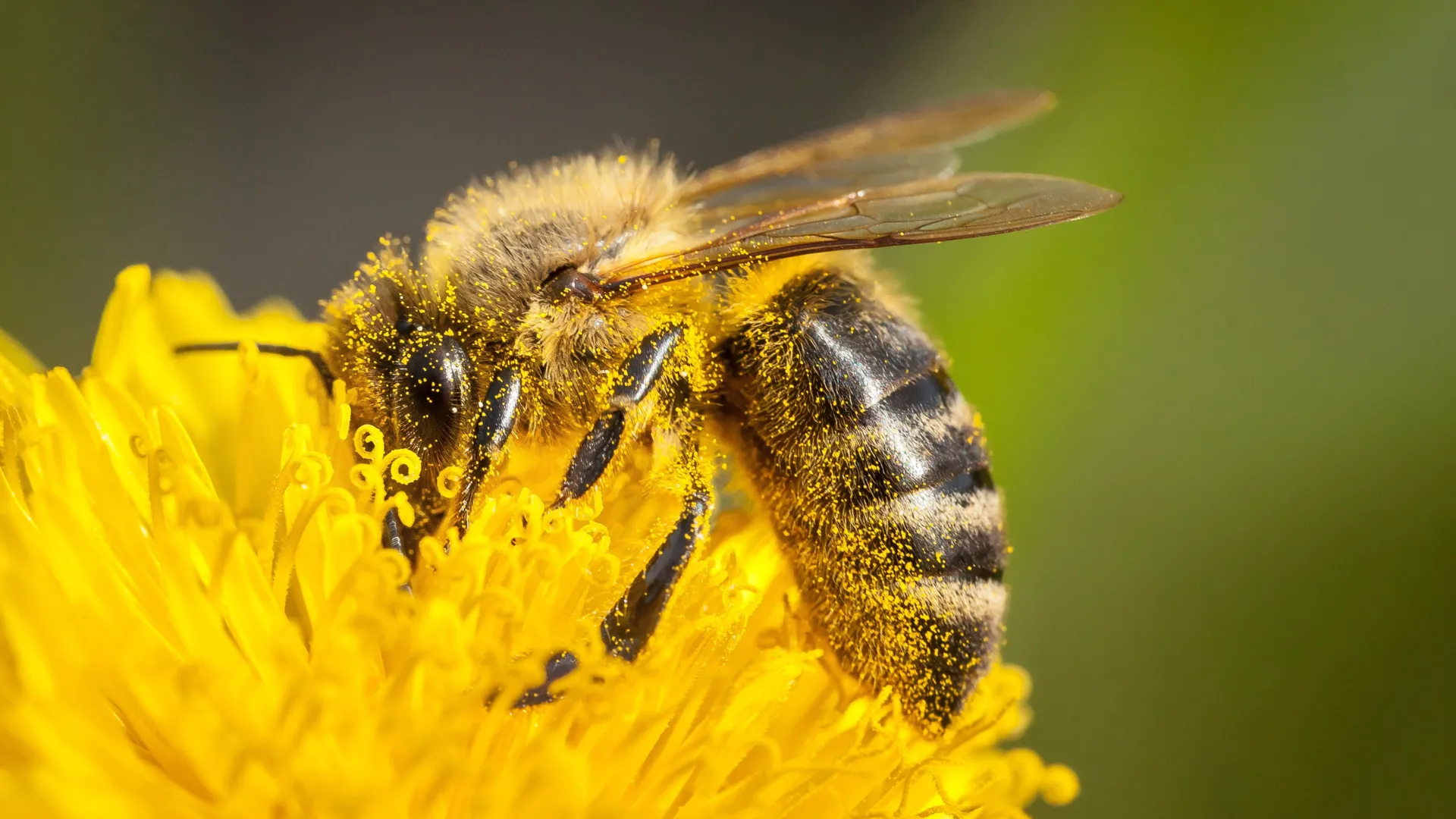
New research led by the University of Oxford has uncovered an unexpected ability in bees to modulate their dietary intake based on the precise balance of essential amino acids within their food sources, a discovery that fundamentally shifts our understanding of pollinator health and floral evolution. Published in the journal Current Biology, the study provides a critical analysis of why pollen, often viewed as the "superfood" of the insect world, is frequently nutritionally inadequate for bees. This physiological adaptation—where bees intentionally suppress their appetite when faced with imbalanced nutrient profiles—serves as a protective mechanism against the toxicity of excessive amino acid consumption.
The study, which represents a collaboration between the University of Oxford, the University of Southampton, Lancaster University, Newcastle University, and The Hebrew University of Jerusalem, suggests that the relationship between plants and pollinators is far more complex than the traditional mutualistic model implies. By analyzing the nutritional composition of 99 distinct UK flowering plant species across 26 families, researchers have illuminated a persistent "nutritional mismatch" that has significant implications for global agricultural policy, habitat restoration, and conservation strategy.
The Evolutionary Paradox of Pollen
To understand the significance of these findings, one must first recognize the biological nature of pollen. While nectar is produced by plants specifically as a sugary reward to entice pollinators, pollen is the male gamete—the reproductive material—of the plant. Its primary evolutionary objective is the successful fertilization of a receptive flower, not the nourishment of a foraging bee. Consequently, the nutritional makeup of pollen is optimized for plant reproduction, not necessarily for the physiological requirements of honeybees or wild pollinators.
Essential amino acids (EAAs) are the fundamental building blocks of proteins that organisms cannot synthesize internally; they must be acquired through ingestion. In the laboratory, researchers compared the EAA profiles of honeybee tissue against those found in diverse floral pollens. The data revealed a stark reality: most pollen samples did not align with the biochemical requirements of bees. When bees were provided with artificial diets that closely mirrored their own tissue composition—providing a "perfect" EAA balance—they demonstrated significantly higher food intake, increased body mass, and a more efficient protein-acquisition strategy.
Chronology of the Investigation
The research project unfolded in several distinct phases, beginning with the mapping of EAA profiles across a broad range of UK flora. By systematically quantifying the amino acid concentrations in nearly 100 plant species, the team established a baseline for what is available in the natural environment.
Following the initial analysis, the team moved to controlled laboratory trials using newly emerged worker honeybees. These experiments were designed to isolate the behavioral responses to specific nutritional imbalances. The researchers manipulated the levels of histidine—an EAA that is essential but required in only small quantities—relative to branched-chain amino acids (BCAAs) such as leucine and isoleucine, which are critical for growth and development.
The results were consistent and revealing: when bees encountered a high ratio of histidine, they significantly curtailed their total food consumption, including both protein and carbohydrates. This behavioral response suggests a post-digestive feedback loop. Much like the mechanism observed in mammals, such as rats, where excess histidine is converted into histamine to trigger satiety or appetite suppression, bees appear to possess a physiological "brake" that prevents them from consuming harmful levels of specific amino acids, even if they are simultaneously starving for others.
Nutritional Processing: The Hive as a Laboratory
One of the most striking aspects of the study is the distinction between individual honeybees and the collective behavior of the hive. While an individual bee may struggle with a poor-quality pollen source, the colony has evolved sophisticated processing methods to bridge the nutritional gap.
Honeybees collect pollen from a vast array of sources and store it within the hive as "bee bread." This mixture is then consumed by nurse bees, who metabolize the raw pollen and convert it into glandular secretions, such as royal jelly. The research team found that the EAA profile of royal jelly is significantly more aligned with the needs of developing larvae than raw pollen. This suggests that the hive acts as a nutritional refinery, balancing the deficiencies of individual plant species through the collective processing power of the colony.
Professor Geraldine Wright, the lead author of the study from the University of Oxford’s Department of Biology, noted the clear conflict of interest inherent in these findings. "Although pollen is often assumed to be a near-perfect food for bees, it is the male gamete of plants and, unlike nectar, it is rarely produced solely as a reward for pollinators. This creates a conflict of interest between the plant and the pollinator," Wright stated.
Implications for Wild Bees and Biodiversity
While honeybees benefit from their complex social structure and the ability to process food for their young, the study highlights a precarious situation for wild pollinators. Bumblebees and many solitary bee species do not benefit from the "refining" process provided by nurse bees. These insects typically provision their larvae with raw pollen collected directly from flowers.
In landscapes where floral diversity is restricted—often due to intensive monoculture farming or urban sprawl—wild bees may be trapped in a cycle of nutritional deficiency. If the available flora provides an imbalanced EAA profile, these bees may consume less overall food to avoid toxicity, leading to stunted growth, reduced reproductive success, and population decline.
Fact-Based Analysis: Beyond Floral Quantity
The findings carry significant weight for stakeholders in conservation and agriculture. For years, "pollinator-friendly" planting schemes have focused heavily on the sheer volume of floral resources, assuming that more flowers equal more food. However, this research indicates that the quality and diversity of the pollen are the true determinants of health.
If a gardener or farmer plants only one or two species of flowers to support local bee populations, they may be providing a "nutritional desert" where the amino acid profile is consistently deficient. The implications are clear:
- Diversity is Mandatory: Conservation efforts must prioritize a wide variety of plant species to ensure that bees can "mix and match" their diet to achieve a balanced nutritional profile.
- Seasonal Continuity: Providing flowers throughout the season is essential, but those flowers must represent a range of plant families to ensure a broad spectrum of amino acid availability.
- Restoration Strategies: Land managers should move away from single-species meadow seed mixes and toward complex, multi-species restorations that simulate the diversity of a natural ecosystem.
Conclusion and Future Directions
The discovery that bees possess an internal mechanism to regulate their intake based on amino acid balance is a breakthrough that reframes the challenges faced by pollinators in a changing environment. As global pollinator populations face threats from habitat loss, pesticides, and climate change, the nutritional aspect of their decline has often been overlooked.
By identifying the role of histidine and the significance of EAA ratios, the Oxford-led team has provided a new metric for evaluating the success of conservation projects. Future research will likely focus on the specific receptors and neural pathways that govern these feeding behaviors in bees, as well as testing which specific plant combinations provide the most optimal nutritional synergy. For now, the takeaway for landowners and policymakers is definitive: to support a healthy pollinator population, we must look beyond the color and volume of our meadows and focus on the complex, microscopic nutritional landscapes that define the survival of the bee.