

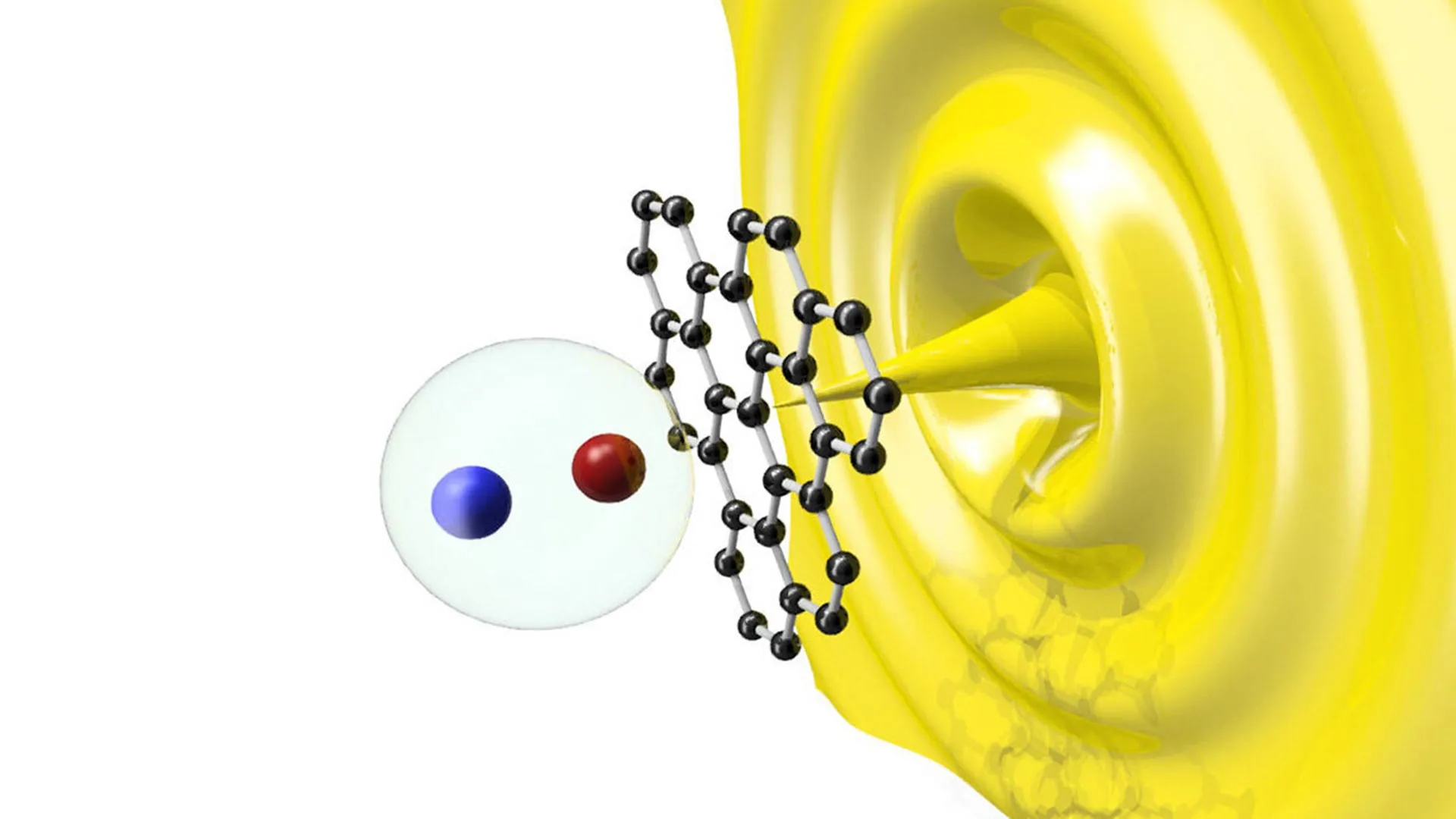
In a landmark achievement for the field of quantum mechanics, a research collective led by the Tokyo University of Science has successfully demonstrated matter-wave diffraction in a beam of positronium. This discovery, published in the journal Nature Communications, provides the first direct experimental evidence of wave-particle duality in a unique two-body system composed of an electron and its antimatter counterpart, the positron. The study, spearheaded by Professor Yasuyuki Nagashima alongside Associate Professor Yugo Nagata and Dr. Riki Mikami, marks the culmination of decades of theoretical anticipation and experimental refinement, filling a critical gap in our understanding of how exotic atoms behave at the quantum level.
The Quantum Foundation: Wave-Particle Duality and the Double-Slit Legacy
To appreciate the significance of the Tokyo University of Science’s breakthrough, one must look back to the early 20th century. In 1924, French physicist Louis de Broglie proposed a revolutionary hypothesis: if light waves could behave like particles (photons), then particles of matter should also exhibit wave-like properties. This concept, known as the de Broglie wavelength, suggested that any moving particle has an associated wavelength inversely proportional to its momentum.
The most famous verification of this theory is the double-slit experiment. When particles such as electrons are fired at a barrier with two slits, they do not simply pile up behind the openings like tiny bullets. Instead, they produce an interference pattern—a series of alternating light and dark bands—on a detector. This pattern is the hallmark of wave behavior, proving that each particle passes through both slits simultaneously as a probability wave, or "quantum wave-function," before interfering with itself.
Over the last century, physicists have successfully demonstrated this effect using increasingly complex entities. After electrons, experiments confirmed wave behavior in neutrons, helium atoms, and even large organic molecules like "buckyballs" (C60). However, positronium remained a formidable challenge. Unlike standard atoms, which consist of a heavy nucleus orbited by light electrons, positronium is a "lepton-antilepton" system where both components have identical mass. This symmetry and the particle’s extremely short lifespan made it an elusive subject for diffraction studies until now.
The Nature of Positronium: An Exotic Atomic System
Positronium (Ps) is often described as the lightest "atom" in existence. It consists of one electron and one positron (the electron’s antimatter equivalent) bound together by electromagnetic force. Because they have equal mass, they orbit a common center of gravity, much like a binary star system.
The primary difficulty in studying positronium lies in its instability. When the electron and positron come into close contact, they undergo mutual annihilation, converting their mass into gamma-ray photons. Depending on the relative spins of the particles, positronium may last only 125 picoseconds (para-positronium) or up to 142 nanoseconds (ortho-positronium) in a vacuum. To observe wave-like diffraction, researchers had to create a beam of these short-lived atoms, direct them toward a target, and detect the resulting pattern all within a fraction of a microsecond.
Furthermore, because positronium is neutral, it cannot be easily manipulated by electric or magnetic fields once it is formed. This necessitated a highly sophisticated method for generating a "coherent" beam—one where the particles move with uniform energy and direction, a prerequisite for observing clear interference patterns.
Methodology: Engineering a High-Quality Quantum Beam
The breakthrough achieved by Professor Nagashima’s team relied on a novel multi-step process to generate a high-energy, neutral positronium beam. The experiment was conducted at the Tokyo University of Science under ultra-high vacuum conditions to prevent the positronium from colliding with air molecules and annihilating prematurely.
The process began with the creation of negatively charged positronium ions ($Ps^-$), which consist of one positron and two electrons. Because these ions carry a charge, the researchers could use electric fields to accelerate them to high velocities. Once the ions reached the desired speed, the team employed a precisely timed laser pulse. This laser performed "photodetachment," stripping away the extra electron to leave behind a fast-moving, neutral beam of positronium atoms.
The resulting beam boasted several technical advantages over previous experimental attempts:
- High Energy: The beam reached energies up to 3.3 kiloelectronvolts (keV). Higher energy translates to a shorter de Broglie wavelength, which is easier to resolve using atomic-scale gratings.
- Narrow Energy Spread: By carefully controlling the photodetachment process, the researchers ensured the atoms had nearly identical velocities, which is essential for a sharp diffraction pattern.
- Directional Precision: The beam was tightly collimated, meaning the atoms traveled in a nearly parallel stream rather than spreading out.
The Diffraction Experiment: Graphene as a Quantum Sieve
With a high-quality beam established, the researchers directed it toward a target consisting of a few layers of graphene. Graphene, a single layer of carbon atoms arranged in a hexagonal lattice, served as the "slits" for the experiment. The spacing between the carbon atoms in the graphene lattice is approximately 0.24 nanometers, which closely matched the de Broglie wavelength of the 3.3 keV positronium beam.
As the positronium atoms encountered the graphene, they did not behave as discrete balls of matter. Instead, their quantum wave-functions interacted with the periodic potential of the carbon atoms. Most of the positronium was blocked or scattered, but a portion passed through the lattice, undergoing diffraction.
The team used a specialized detector to record the positions of the surviving positronium atoms. The data revealed a clear and distinct diffraction pattern—specific peaks of intensity at angles that matched theoretical predictions for wave interference. This provided the definitive proof that the electron-positron pair was acting as a single, unified quantum wave.
Analysis of Results: A Unified Quantum Entity
A key finding of the study was the confirmation that positronium diffracts as a single object. Despite being composed of two distinct particles, the system moves and interferes as a whole. The electron and positron do not produce separate diffraction patterns; rather, the entire "atom" behaves as one wave-function.
"Positronium is the simplest atom composed of equal-mass constituents, and until it self-annihilates, it behaves as a neutral atom in a vacuum," explained Professor Nagashima. "Now, for the first time, we have observed quantum interference of a positronium beam, which can pave the way for new research in fundamental physics using positronium."
The researchers also compared the interference of positronium to that of single electrons. The results confirmed that the two-body system obeys the same fundamental laws of quantum mechanics as elementary particles, reinforcing the universality of wave-particle duality across different types of matter and antimatter configurations.
Expert Perspectives and Research Timeline
The path to this discovery was marked by years of incremental progress. Professor Nagashima has spent much of his career at the Tokyo University of Science specializing in positron and positronium physics. In 2020, he was awarded the Hiroshi Takuma Memorial Prize for his contributions to the field. His laboratory has long been at the forefront of developing techniques to manipulate exotic particles.
Associate Professor Yugo Nagata, who received the Young Scientist Award of the Japanese Positron Science Society in 2023, noted the broader implications of the milestone. "This groundbreaking experimental milestone marks a major advance in fundamental physics," Nagata stated. "It not only demonstrates positronium’s wave nature as a bound lepton-antilepton system but also opens pathways for precision measurements involving positronium."
The project was supported by significant funding from JSPS KAKENHI, the Japanese government’s primary grant system for scientific research. This support allowed the team to develop the ultra-high vacuum chambers and high-precision laser systems required to manage the nanosecond-scale life of the positronium atoms.
Future Implications: From Materials Science to Gravity
The successful demonstration of positronium diffraction is not merely a theoretical victory; it has profound practical and scientific implications for several fields.
1. Non-Destructive Surface Analysis
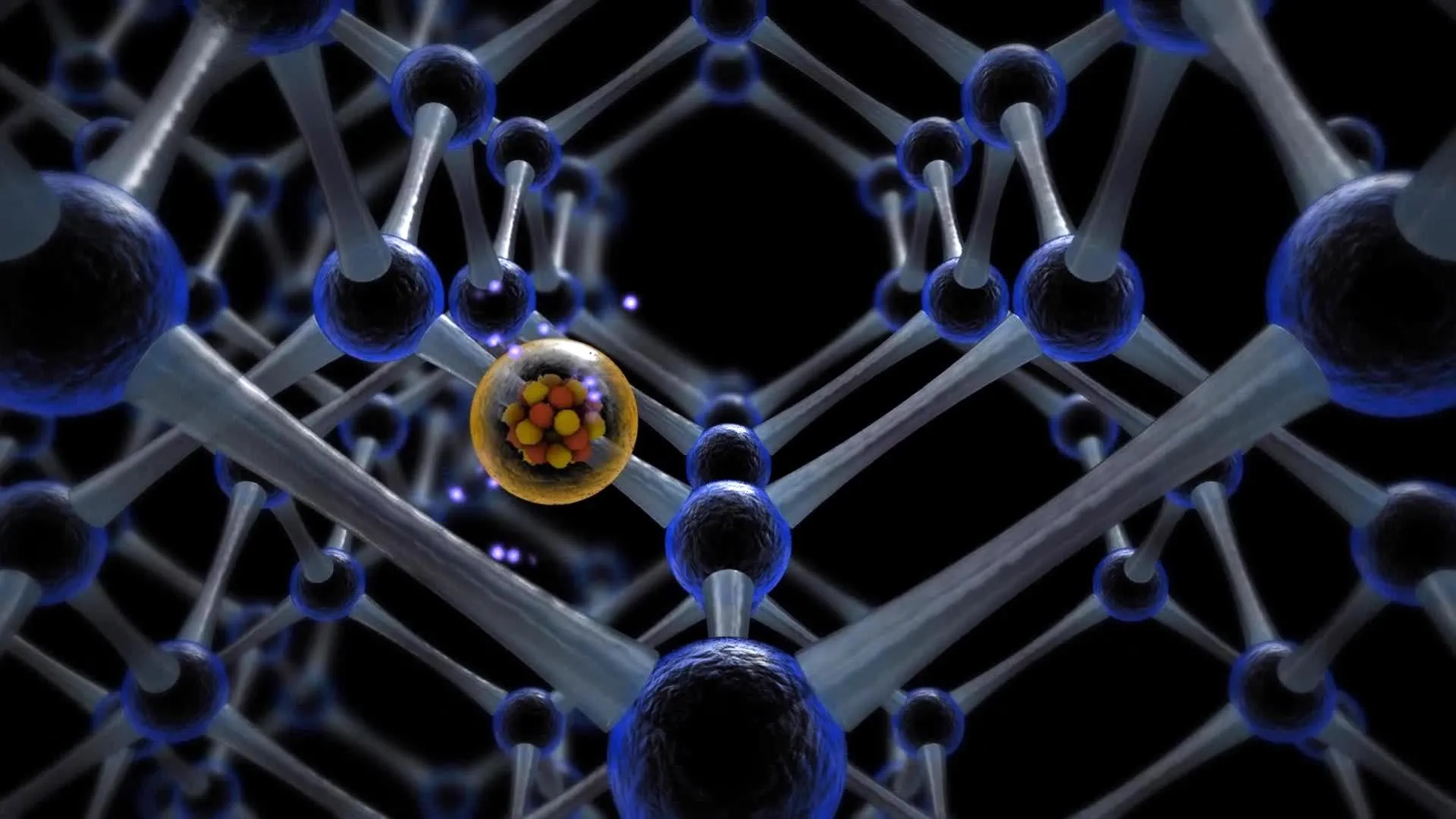
Because positronium is electrically neutral, it can penetrate the surface of materials without being deflected by the strong electromagnetic fields of the atoms’ nuclei. This makes it an ideal candidate for "positronium diffraction spectroscopy." This technique could allow scientists to study the surfaces of insulators or magnetic materials that are difficult to analyze with traditional electron beams. Since positronium stays near the surface before annihilating, it provides high-resolution data on the topmost atomic layers without causing structural damage.
2. Testing Antimatter and Gravity
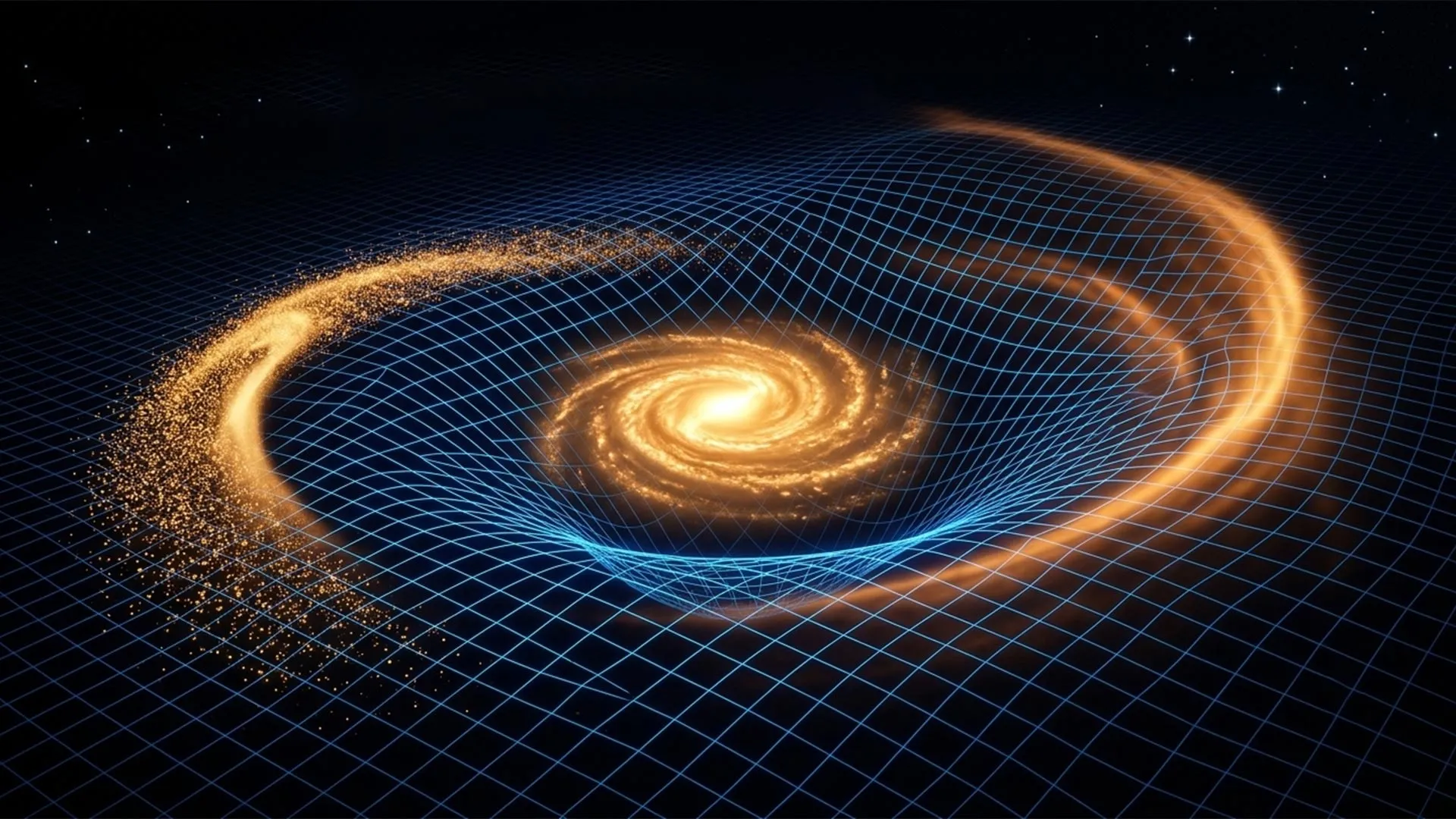
One of the most enduring mysteries in physics is how antimatter interacts with gravity. While Einstein’s General Theory of Relativity predicts that matter and antimatter should fall at the same rate (the Weak Equivalence Principle), direct measurements have proven extremely difficult.
The ability to create a coherent, diffracting beam of positronium opens the door to "interferometry" experiments. By measuring how a diffraction pattern shifts in a gravitational field, scientists may finally be able to determine if antimatter experiences gravity differently than normal matter. Because positronium is its own "anti-atom" (composed of both matter and antimatter), it provides a unique testbed for these fundamental questions.
3. Advancing Quantum Sensing
The techniques developed by the Tokyo University of Science team to control and observe positronium could be adapted for new types of quantum sensors. The sensitivity of interference patterns to external forces makes them powerful tools for detecting minute changes in electromagnetic fields or local gravity.
Conclusion
The observation of matter-wave diffraction in positronium is a transformative moment in experimental physics. By successfully navigating the challenges of particle instability and beam coherence, Professor Nagashima and his colleagues have provided a vivid confirmation of the quantum nature of one of the universe’s most exotic systems.
As the scientific community digests these findings, the focus will likely shift toward utilizing positronium beams for high-precision measurements of the fundamental constants of nature. For now, the research stands as a definitive testament to the enduring validity of wave-particle duality, proving that even in the fleeting, high-energy world of antimatter, the rules of the quantum realm remain absolute.















Leave a Reply