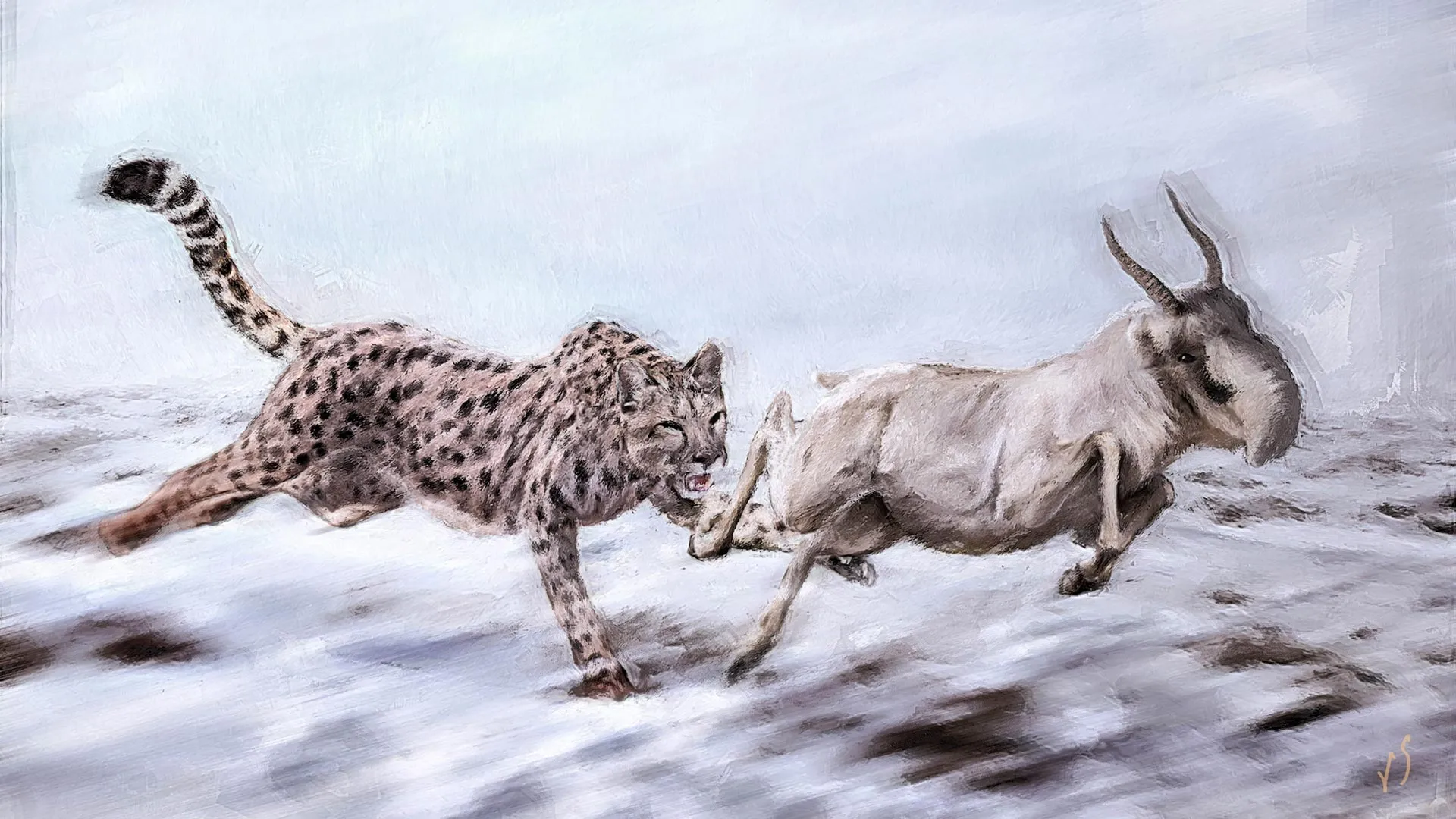
For decades, paleontologists have been captivated by the mysterious Miracinonyx trumani, a feline predator that roamed North America during the Pleistocene epoch. Often referred to as the "American cheetah" due to its remarkably similar skeletal structure to the modern African cheetah (Acinonyx jubatus), this cat was long believed to be a high-speed pursuit specialist that forced the evolution of the modern American pronghorn’s blistering pace. However, groundbreaking research published on September 4 in the journal Current Biology has dismantled this long-standing narrative, revealing that the animal was not a cheetah at all, but a versatile, highly adaptable cousin of the modern puma (Puma concolor).
Led by scientists at the University of California, Santa Cruz, the study utilized nuclear paleogenomes and stable isotope analysis to rewrite the history of this extinct predator. The findings not only clarify the evolutionary lineage of M. trumani but also expand its known geographical range by 20 degrees of latitude, demonstrating that these cats were far more ecologically flexible than previously imagined.
Unmasking the Evolutionary Imposter
The confusion regarding M. trumani dates back to its initial classification, which relied heavily on morphology—the study of physical form. With a slim build, long front legs, and a weight averaging 150 pounds, the cat possessed proportions that appeared perfectly suited for high-speed chases across the open, arid grasslands of Pleistocene Wyoming and Florida. Paleontologists theorized that this predator acted as the primary selective pressure for the American pronghorn, a species that today remains the second-fastest land animal in the world. This "ghosts of predators past" hypothesis suggested that the pronghorn’s speed was an evolutionary relic, a defense mechanism against a hunter that had long since vanished.
The genomic evidence now suggests a different story: evolutionary convergence. This phenomenon occurs when unrelated species independently evolve similar physical traits due to shared environmental pressures. While M. trumani looked like a cheetah, its DNA tells a divergent story. The research team, by sequencing high-coverage genomes from fossils aged between 23,000 and 31,000 years, confirmed that the species was a sister lineage to the modern puma, having diverged approximately 2.6 million years ago. Unlike the specialized, obligate pursuit hunter of the African plains, M. trumani was a generalist predator capable of both sustained chases and ambush tactics, utilizing its powerful forelimbs to grapple and hold prey.
Adapting to the Arctic: A Shift in Diet and Biology
Perhaps the most startling discovery of the study is the species’ presence in the Arctic Yukon. Far from the temperate grasslands of the south, these cats occupied a vastly different ecological niche in the far north. Stable isotope analysis of fossilized remains indicates that these northern populations were tertiary consumers, relying heavily on anadromous fish—specifically salmon—to survive the brutal Arctic winters.
This dietary shift is mirrored by significant genetic adaptations. Molly Cassatt-Johnstone, a Ph.D. candidate in the Paleogenomics Lab at UC Santa Cruz and lead author of the study, highlighted specific "loss-of-function" mutations found in the genomes of these northern cats. These mutations affect genes regulating circadian rhythms, suggesting that M. trumani evolved to cope with the extreme, volatile light cycles of the Arctic, where summer days and winter nights are characterized by near-constant sun or darkness.
Furthermore, the genomic analysis revealed a unique sensory trait: the loss of a functional gene responsible for detecting sour tastes. While domestic cats are known to lack a "sweet tooth," this is the first documented instance in the felid family of an inactivated sour-taste receptor. Scientists speculate that this loss may be an evolutionary byproduct of a highly specialized diet or a shift in the sensory requirements necessary for navigating a landscape dominated by aquatic prey.
The Long Decline: Genetic Diversity and Extinction
The research also provides a somber post-mortem on the species’ extinction. By comparing genetic diversity across populations in Wyoming and the Yukon, the team discovered that both groups possessed low genetic diversity—a common precursor to extinction in many species. However, unlike modern pumas, which often suffer from severe, sudden population bottlenecks and inbreeding, M. trumani showed no such markers.
Instead, the genomic record suggests a slow, steady decline that persisted from the early Pleistocene through the late Pleistocene. Senior author Beth Shapiro, a professor of ecology and evolutionary biology at UC Santa Cruz and co-director of the Paleogenomics Lab, emphasized that this slow erosion of genetic health likely left the species unable to pivot when the global climate shifted at the end of the ice age.
"The decline was slow, not sudden," Shapiro noted. This long-term contraction explains why fossil remains of M. trumani are relatively rare in the geological record. Without the rapid, acute population crashes that force rapid adaptation or lead to immediate extinction, the species simply faded over millennia, losing its foothold as the environment became increasingly hostile to its specific lifestyle.
Broader Implications for Paleontology
The reclassification of M. trumani serves as a cautionary tale regarding the limitations of morphological study. For decades, the label "American cheetah" inadvertently funneled research toward a narrow understanding of the animal’s behavior. By assuming a cheetah-like lifestyle, scientists likely overlooked the nuances of the cat’s broader, more flexible ecological role.
Matthew Wooller, a co-author and professor in the College of Fisheries and Ocean Sciences at the University of Alaska Fairbanks, characterized the species as a master of extremes. "These cats were demonstrating uber-specialization at two ends of their range, while also feeding on two completely different food sources," Wooller observed. The ability to pivot from a grassland generalist in the south to a fish-reliant specialist in the north highlights the remarkable plasticity of the puma lineage, a trait that clearly contributed to the puma’s own survival into the modern era while its cousin faltered.
The research was a collaborative effort involving experts from the Yukon Palaeontology Program, the University of Alaska Fairbanks, and Des Moines University. Specimens recovered from the Yukon Territory were analyzed with deep respect for the Tr’ondëk Hwëch’in and Vuntut Gwitchin First Nations, whose traditional territories encompass these significant paleontological sites.
A New Chapter in North American History
As scientists continue to integrate genomic data into the study of ancient life, the narrative of North American megafauna is becoming increasingly complex. The "American cheetah" is no longer a ghost of the past that forced the evolution of the pronghorn through high-speed pursuit; it is now recognized as a resilient, flexible cat that managed to colonize the Arctic and adapt to an aquatic diet, even as it succumbed to a long, drawn-out decline in genetic diversity.
This study underscores the danger of assigning rigid identities to extinct creatures based on physical appearance alone. By stripping away the misleading "cheetah" label, researchers have not only restored the animal’s identity as a distinct member of the puma family but have also provided a more accurate model of how species navigate environmental change. As climate shifts continue to impact modern ecosystems, the slow, silent extinction of M. trumani offers a compelling, if sobering, reminder of how environmental stressors can quietly erode the biological resilience of even the most adaptable predators.