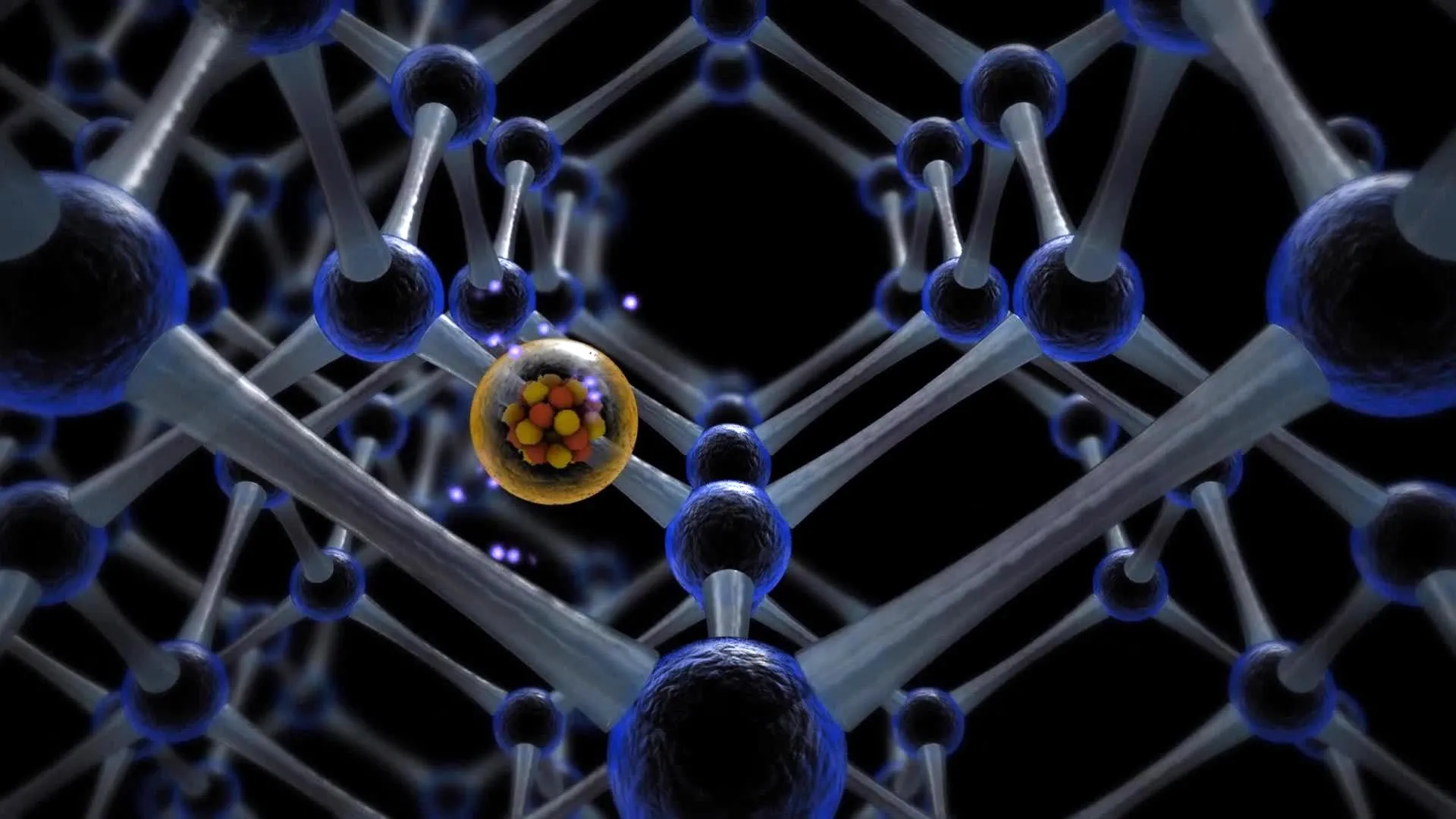
In a major milestone for subatomic physics, researchers working with the ALICE experiment at the European Organization for Nuclear Research (CERN) have published a groundbreaking study offering the sharpest look yet at the internal architecture of atomic nuclei. The international collaboration successfully executed the first multidimensional measurement of incoherent J/ψ (pronounced "JAY-sigh") photonuclear production, tracking both interaction energy and momentum transfer simultaneously. This breakthrough methodology allows particle physicists to map the distribution, fluctuation, and density of gluons—the fundamental glue of the cosmos—at sub-femtometer scales.
The findings, recently published in the prestigious journal Physical Review Letters, provide compelling new evidence pointing toward gluon saturation, a theoretical state of matter predicted by quantum chromodynamics (QCD). At the same time, the data present a significant challenge to long-standing conventional frameworks such as nuclear shadowing. Daniel Tapia Takaki, a professor of physics and astronomy at the University of Kansas (KU) and a leading figure in the ALICE collaboration, co-led the research alongside academic partners at the Czech Technical University in Prague. This collaborative effort underscores the complex, multinational nature of modern high-energy physics research, which increasingly relies on shared institutional expertise, student exchanges, and massive computational grids to process petabytes of collision data.
The Core Physics: Why Gluons Matter to the Mass of the Universe
To understand the profound implications of the ALICE collaboration’s latest measurements, one must examine the foundational mechanics of the visible universe. For generations, standard educational curricula have emphasized that quarks—specifically up and down quarks—are the fundamental building blocks of protons and neutrons, which in turn make up the nuclei of all atoms. However, this elementary picture tells only a fraction of the story. While quarks possess intrinsic mass, their combined mass accounts for merely a tiny percentage—roughly one to two percent—of a proton or neutron’s total weight.
The vast majority of the mass of ordinary matter, spanning everything from the cells in the human body to the heavy iron cores of distant stars, originates entirely from dynamic energy. This energy is carried by gluons and the powerful interaction fields managed by the strong force. Gluons act as the exchange particles, or vector bosons, of the strong interaction, binding quarks together within hadrons. Despite their critical role in generating mass and governing nuclear stability, the collective behavior of large numbers of gluons packed densely inside an atomic nucleus remains one of the least understood frontiers in the Standard Model of particle physics.
When quarks and gluons—collectively known as partons—are confined within a single nucleon like a proton, their dynamics are well-studied. However, when hundreds of nucleons are tightly bound inside a heavy atomic nucleus, such as the lead nuclei utilized at the Large Hadron Collider (LHC), the overlapping gluon fields create extreme physical conditions. Unlocking how these fields interact, fluctuate, and distribute themselves is essential for answering fundamental questions regarding how matter acquires its structure and weight.
Turning the LHC Into a High-Resolution Gluon Microscope
To peer inside these tightly packed nuclear environments without destroying the fundamental integrity of the system, the ALICE collaboration leveraged a specialized experimental technique known as incoherent J/ψ photonuclear production. This innovative method repurposes the high-energy infrastructure of the LHC, transforming the multi-kilometer particle accelerator into a sophisticated subatomic microscope.
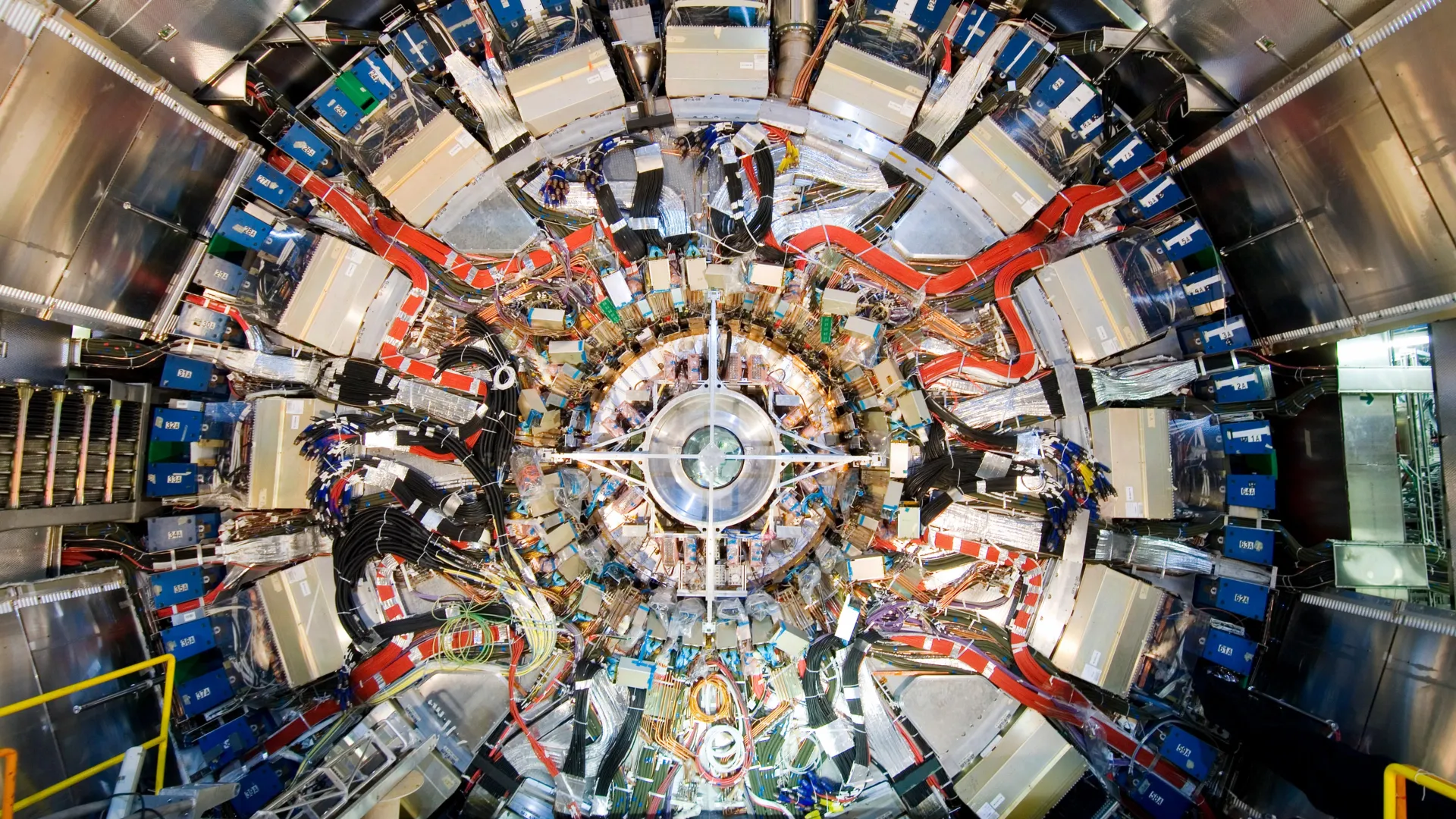
The data for this study were gathered during the highly productive Run 2 operational phase of the LHC. During these runs, exceptionally fast-moving lead nuclei were accelerated to near-light speeds and directed along intersecting beams. Rather than executing head-on collisions, which typically result in a chaotic spray of hundreds of subatomic particles and the shattering of the colliding nuclei, the researchers focused on ultra-peripheral collisions. In these encounters, the heavy lead ions pass in close spatial proximity to one another without physically colliding.
Despite missing a direct physical impact, the extremely fast-moving, highly charged lead nuclei generate intense electromagnetic fields that accompany them along their trajectories. These surrounding electromagnetic fields effectively behave as dense beams of high-energy virtual photons. When a high-energy photon emitted by one lead nucleus strikes the opposing nucleus, it interacts with the internal gluon fields, briefly producing a neutral particle designated as the J/ψ meson—a bound state comprising a charm quark and an antiquark.
The subsequent production and decay of the J/ψ particle serve as an exceptionally sensitive probe of the target nucleus’s internal gluon structure. While traditional experimental measurements average out gluon distributions across the entirety of a nucleus, the incoherent production channel isolates localized variations. By tuning the momentum transfer of the interaction, the research team could dynamically adjust the focal length of their experimental microscope.
The ALICE collaboration successfully probed regions inside lead nuclei at spatial resolutions of 0.6, 0.3, and 0.2 femtometers. The finest of these resolutions corresponds to structural features roughly one-quarter the size of an individual proton. To contextualize this level of precision for a macroscopic perspective, if an atomic nucleus were scaled up to the physical dimensions of a major professional football stadium, the experiment’s highest resolution would be capable of distinguishing fine features only a few yards wide on the playing field.
Chronology and Collaborative Framework
The path leading to these recent discoveries spans several years of meticulous data collection, calibration, and theoretical modeling. The institutional partnership between the University of Kansas and the Czech Technical University in Prague formed a cornerstone of the analytical work, facilitating cross-border research exchanges for both graduate students and senior physicists.
- 2015–2018 (LHC Run 2): The ALICE detector records trillions of heavy-ion collision events at the CERN facility in Geneva, Switzerland. Among these datasets are the ultra-peripheral lead-lead collision events necessary for photonuclear studies.
- 2019–2021: Following the conclusion of Run 2, physicists begin the arduous task of data reconstruction, background noise filtering, and isolation of the rare J/ψ photoproduction channels from the massive influx of raw data.
- 2022–2023: Theoretical frameworks, including energy-dependent hot-spot models pioneered in part by Tapia Takaki and his international colleagues, are refined to match preliminary multidimensional distributions of momentum transfer and photon-nucleus energies.
- Late 2023–2024: The collaboration finalizes its measurements across a broad energy spectrum ranging from 20 billion to 633 billion electron volts (GeV). Statistical analyses reveal unexpected suppression patterns at the smallest spatial scales.
- Late 2024 / Early 2025: The findings are peer-reviewed and formally accepted for publication in Physical Review Letters, marking a major breakthrough in modern nuclear physics instrumentation and interpretation.
Confronting Nuclear Shadowing With Gluon Saturation
The primary scientific takeaway from the ALICE study centers on a striking, unexpected anomaly discovered when analyzing the production rates of J/ψ particles across varying photon-nucleus energies and momentum transfers.
For decades, the dominant theoretical model used to explain how gluons behave inside heavy nuclei has been "nuclear shadowing." Within this established framework, gluons residing inside individual nucleons within a nucleus partially overlap and obscure one another. Much like sequential layers of thin cloud cover blocking the direct rays of the sun, this overlapping phenomenon reduces the effective probability of specific particle production processes occurring. Nuclear shadowing has historically proven successful in accounting for a wide array of lower-resolution experimental observations gathered at previous accelerator facilities.
However, when the ALICE collaboration applied their multidimensional measurement techniques to probe the deepest, highest-resolution regions inside the lead nuclei, the data defied simple nuclear shadowing predictions. Specifically, at the smallest spatial scales explored in the experiment, the production rate of J/ψ particles exhibited a significant suppression, registering a statistical significance of approximately three standard deviations.
This unexpected suppression poses a severe challenge to conventional nuclear shadowing models, indicating that standard overlapping mechanisms alone are insufficient to account for the observed physical patterns. Instead, the experimental results align remarkably well with an alternative, highly anticipated phenomenon known as "gluon saturation."
Predicted by quantum chromodynamics—the foundational theory governing the strong nuclear force—gluon saturation describes a dynamic equilibrium state within extreme high-energy environments. As researchers probe deeper into the nucleus, the density of gluons increases exponentially. Eventually, these particles become so densely packed and numerous that they begin interacting strongly with one another, effectively canceling each other out, merging, or rebinding. This self-limiting collective behavior places a physical ceiling on how many gluons can possibly occupy a given spatial region.
The observation of signatures consistent with gluon saturation marks a vital stepping stone in confirming how quantum chromodynamics operates under extreme conditions of high parton density. Furthermore, the data support the "hot-spot" model of nuclear structure, which posits that gluons are not uniformly distributed throughout a nucleus but instead cluster into localized domains of extreme density that evolve dynamically as collision energy increases.
Broader Impact and Future Implications for Nuclear Physics
The publication of these findings by the ALICE collaboration has immediate ramifications for the global nuclear physics community, influencing both theoretical frameworks and the design of future particle accelerator facilities.
By demonstrating that incoherent J/ψ photonuclear production can successfully map internal gluon structures down to fractions of a femtometer, the CERN experiment has established a new benchmark for precision nuclear tomography. The techniques developed and validated during LHC Run 2 provide a robust experimental roadmap for upcoming campaigns at the Large Hadron Collider, as well as future facilities such as the Electron-Ion Collider (EIC) currently under construction at Brookhaven National Laboratory in the United States.
The EIC, scheduled to begin operations in the next decade, will be specifically tailored to perform precision electron-proton and electron-nucleus collisions, allowing physicists to further isolate and scrutinize the spatial distribution of quarks and gluons. The insights gained from the current ALICE study will directly inform the experimental parameters and theoretical expectations for the EIC, accelerating humanity’s quest to fully comprehend the origins of mass and the limits of the strong force.
Ultimately, as physicists continue to refine their "gluon microscope," the veil surrounding the subatomic mechanisms that construct our universe continues to lift. The transition from blurry macroscopic averages to sharp, multidimensional maps of gluon saturation represents a triumph of modern international collaboration, advanced computational analysis, and ingenious experimental design.