

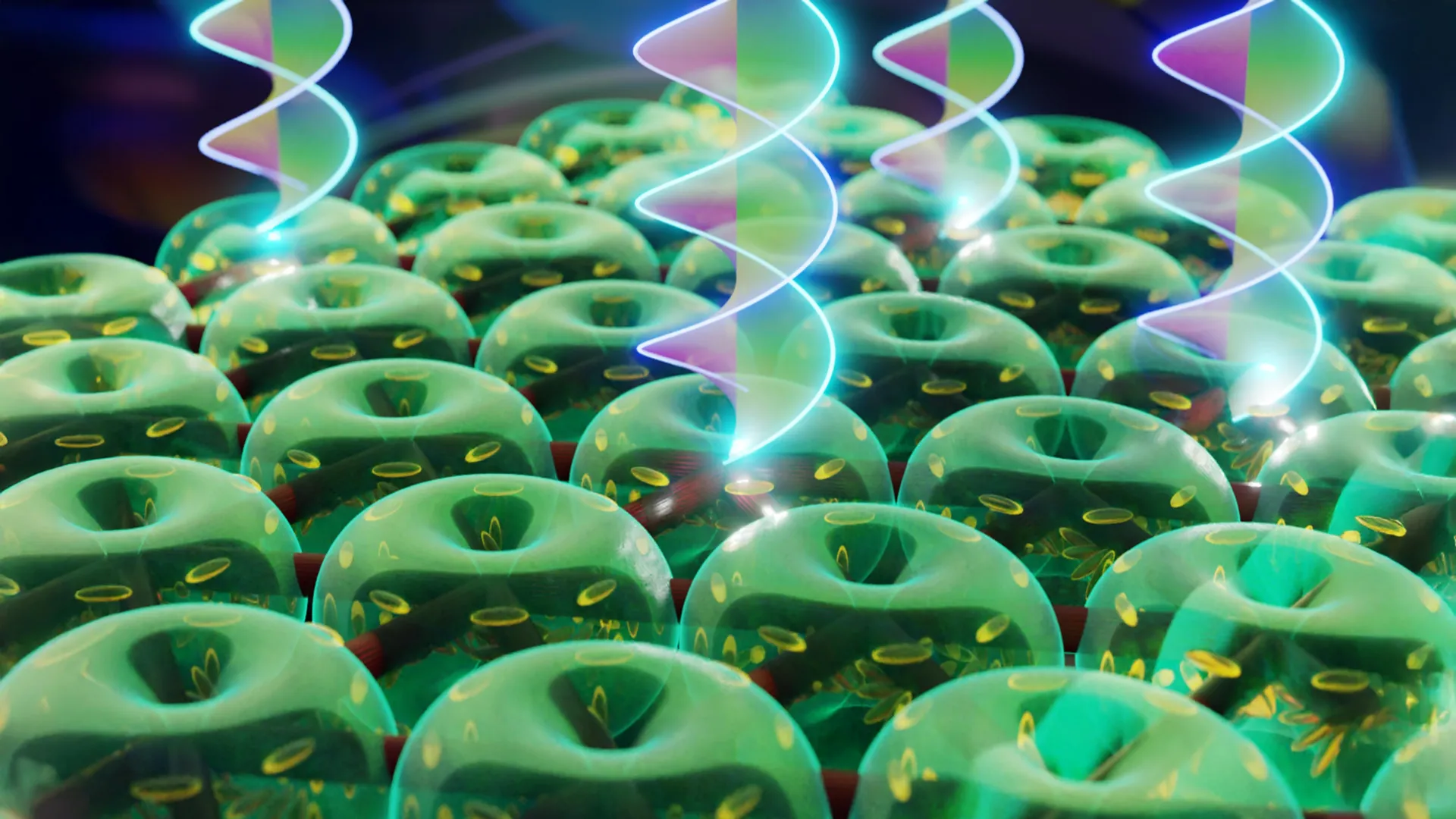
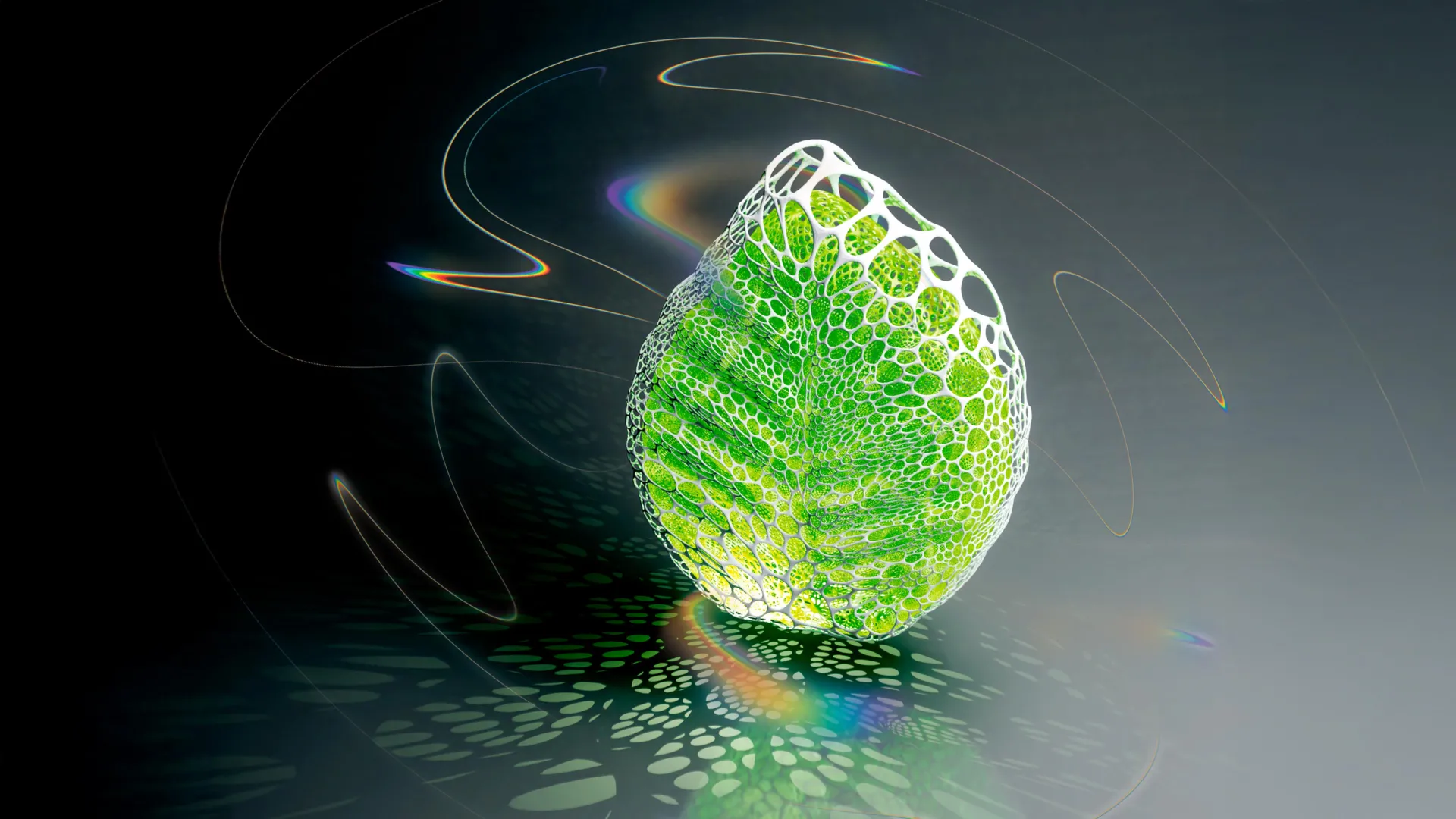
In a landmark achievement for the fields of photonics and quantum mechanics, an international collaboration of scientists has successfully demonstrated the creation of stable "optical tornadoes"—swirling vortices of light—within microscopic structures. This breakthrough, published by researchers from the Faculty of Physics at the University of Warsaw, the Military University of Technology in Poland, and the Institut Pascal CNRS at Université Clermont Auvergne in France, represents a significant shift in how structured light is generated and controlled. By utilizing self-organizing liquid crystals and synthetic magnetic fields, the team has managed to confine light in its most stable energy state, a feat that paves the way for the next generation of miniature, scalable light sources for quantum computing and high-speed optical communication.
The research addresses a long-standing challenge in modern physics: the difficulty of producing and maintaining structured light states without the need for massive experimental setups or incredibly complex, expensive nanostructures. These "optical tornadoes" are essentially light waves that twist around their axis of propagation, creating a spiral-like phase and rotating polarization. While such states have been observed before, they have typically been transient or relegated to high-energy "excited" states, making them difficult to harness for practical, long-term applications.
The Evolution of Optical Manipulation
To understand the magnitude of this discovery, one must look at the history of optical trapping. For decades, scientists have sought ways to manipulate light with the same precision that they manipulate electrons in a circuit. In traditional electronics, electrons are confined and guided by electric and magnetic fields. In the realm of photonics, light is typically guided by physical barriers like fiber optic cables or etched silicon pathways.
"Our solution combines several fields of physics, from quantum mechanics, through materials engineering, to optics and solid-state physics," explains Professor Jacek Szczytko from the Faculty of Physics at the University of Warsaw, who led the research group. Professor Szczytko notes that the inspiration for this project was drawn directly from atomic physics. In an atom, electrons occupy specific energy levels. The researchers sought to replicate this behavior with photons by creating "optical traps" that could confine light in a manner analogous to how an atomic nucleus confines electrons.
Defining the Optical Vortex
At the heart of this research is the "optical vortex." Dr. Marcin Muszyński, the first author of the study affiliated with both the University of Warsaw and the City College of New York, describes these structures as light waves that exhibit a unique spatial architecture. Unlike a standard beam of light, where the electric field oscillates in a single plane or rotates uniformly, an optical vortex possesses orbital angular momentum (OAM).
"The light wave twists around its axis, and its phase changes in a spiral manner," says Dr. Muszyński. "Moreover, even the polarization—the direction of oscillation of the electric field—begins to rotate." These properties are not merely aesthetic; they allow light to carry significantly more information than traditional binary pulses and enable the physical manipulation of microscopic objects, often referred to as "optical tweezers."
Liquid Crystals: A Self-Organizing Solution
The most innovative aspect of the study lies in the material used to create these vortices. Rather than relying on traditional lithography to etch complex patterns into silicon—a process that is both costly and difficult to scale—the team turned to liquid crystals. These materials exist in a state between liquid and solid, possessing the ability to flow while maintaining a high degree of molecular order.
Joanna Mędrzycka, a nanotechnology student at the University of Warsaw who co-prepared the samples with Dr. Eva Oton from the Military University of Technology, explains the role of "torons" within the liquid crystal. Torons are microscopic defects or structures that form naturally within certain liquid crystal configurations. They can be envisioned as DNA-like spirals that have been bent into a ring or "doughnut" shape.
"These structures act as microscopic traps for light," Mędrzycka explains. Because the liquid crystal molecules are arranged in these precise, self-organizing spirals, they dictate how light propagates through the medium. This eliminates the need for externally fabricated nanostructures, as the material essentially builds its own optical architecture.
Engineering a Synthetic Magnetic Field for Light
A significant hurdle in photonics is that photons, unlike electrons, are neutrally charged. This means they do not respond to magnetic fields. To circumvent this, the researchers had to create what they call a "synthetic magnetic field."
Dr. Piotr Kapuściński of the University of Warsaw explains that this was achieved through "spatially variable birefringence." Birefringence is a property where a material has a different refractive index for different polarizations of light. By carefully controlling the orientation of the liquid crystal molecules, the team created an environment where light "bends" as if it were a charged particle moving through a magnetic field.
"We call it ‘synthetic’ because its mathematical description resembles the behavior of a magnetic field, even though physically it isn’t there," says Dr. Kapuściński. This bending effect, similar to electrons moving in cyclotron orbits, is what allows the light to be captured and spun into a stable vortex.
Achieving Stability in the Ground State
The crowning achievement of the research was the observation of these vortices in the "ground state." In physics, the ground state is the lowest-energy state of a system. Most previous attempts to create optical vortices resulted in light inhabiting "excited states," which are inherently unstable and prone to decaying or losing their structured shape over time.
Professor Guillaume Malpuech from Université Clermont Auvergne and CNRS, who developed the theoretical model alongside Professor Dmitry Solnyshkov and post-doc Daniil Bobylev, emphasizes the importance of this stability. "For the first time, we managed to obtain this effect in the ground state. This is significant because the ground state is the most stable and the easiest for energy to accumulate in."
By placing the liquid crystal toron inside an optical microcavity—a structure consisting of two highly reflective mirrors—the researchers were able to trap the light and force it to interact with the synthetic magnetic field repeatedly. This confinement, combined with the natural energy-minimizing properties of the ground state, resulted in a highly stable, self-sustaining optical tornado.
Integration of Laser Technology
To verify the practical utility of these vortices, the team introduced a laser dye into the system. This allowed them to observe "lasing" within the vortex. Professor Szczytko notes that because the light naturally "chooses" the ground state due to its low energy losses, achieving laser action became significantly easier.
The resulting emission was not just a simple flash of light; it was coherent, had a well-defined energy, and maintained its spiral structure. This confirms that the system can function as a miniature, structured laser source, which is a critical component for future optical circuits.
Theoretical Implications: Photons as Quarks
Beyond the immediate technological applications, the research has profound theoretical implications. Professor Dmitry Solnyshkov pointed out that the approach draws from advanced concepts involving "vectorial charge."
"In a way, we’ve managed to make photons behave not even like electrons, but like quarks, the charged particles which make up protons," Professor Solnyshkov remarked. This comparison highlights the complexity of the light-matter interaction achieved in the lab and suggests that liquid crystal microcavities could be used to simulate high-energy physics phenomena that were previously inaccessible in a tabletop experiment.
The Future of Photonic and Quantum Technologies
The success of this experiment marks a shift toward the use of self-organizing materials in high-tech manufacturing. Professor Wiktor Piecek from the Military University of Technology concludes that the use of liquid crystals could democratize the production of advanced photonic devices.
"This discovery shows that instead of relying on complex nanotechnology, we can use self-organizing materials," Professor Piecek stated. "In the future, this may enable simpler and more scalable photonic devices."
The potential applications are vast:
- Optical Communication: Using the orbital angular momentum of light to encode more data into a single beam, potentially breaking current bandwidth limits.
- Quantum Computing: Stable ground-state vortices could serve as "qubits" or carriers of quantum information that are less susceptible to environmental noise.
- Micro-Manipulation: Miniature "tornado" sources could be integrated into lab-on-a-chip devices to sort biological cells or manipulate nanoparticles with unprecedented precision.
- Miniature Lasing: The ability to create ultra-small, structured light sources could lead to new types of high-resolution imaging and sensing.
By bridging the gap between liquid crystal chemistry and quantum optics, the Warsaw-led team has provided a blueprint for a new era of light-based technology. The transition from bulky laboratory equipment to self-assembling, microscopic optical traps represents a pivotal moment in the quest to master the "whirlwinds" of light.










Leave a Reply