The quest to fortify the human body against a warming planet has led researchers to a dimly lit room at the University of Ottawa’s Human and Environmental Physiology Research Unit. Here, older volunteers are undergoing a rigorous, albeit uncomfortable, process: immersing themselves in 40-degree Celsius water for two hours at a time, daily, for a full week. While the experience is undeniably taxing, preliminary data suggests that these controlled, intense heat exposures may be the key to unlocking physiological adaptations that could save lives as heat waves become more frequent and lethal in the era of climate change.
For decades, the science of heat acclimation—the process by which the body learns to regulate its internal temperature more efficiently through repeated stress—has focused almost exclusively on elite athletes, military personnel, and outdoor industrial laborers. However, as global temperature records are shattered with alarming regularity, the demographic most susceptible to heat-related mortality—individuals aged 60 and older—has become the primary focus of cutting-edge physiological research.
The Biological Mechanism of Heat Stress

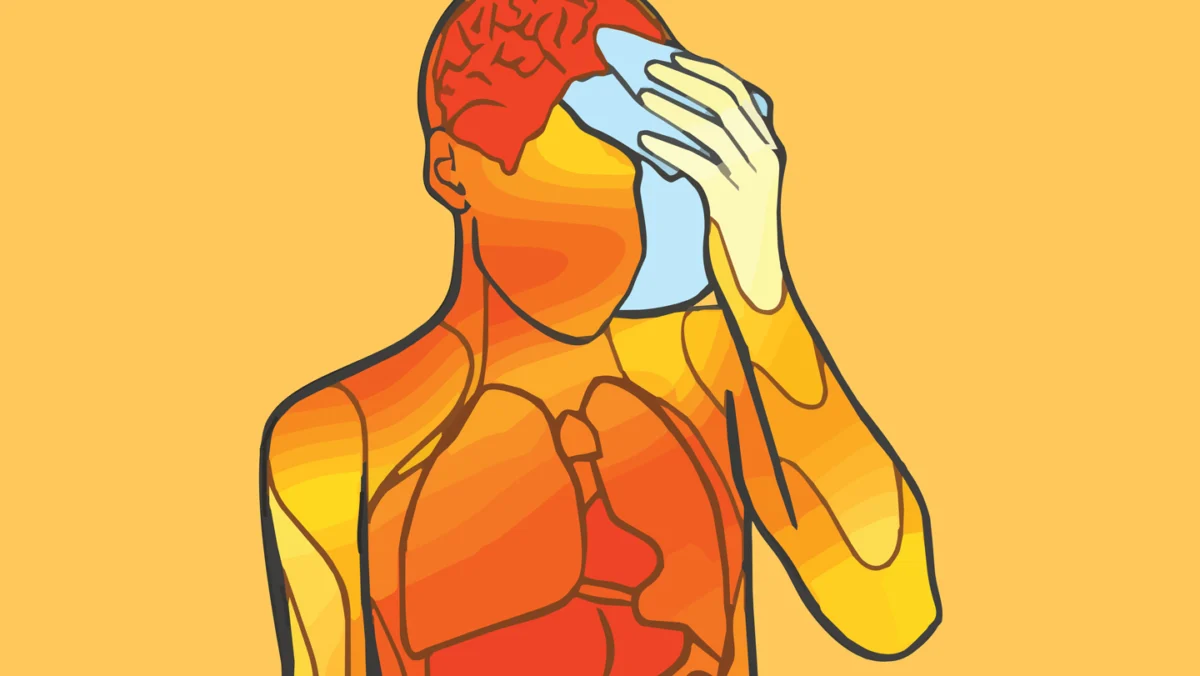
Extreme heat presents a multi-systemic threat to the human body. Under normal conditions, the body maintains a core temperature of approximately 37 degrees Celsius. When the environment forces this core temperature to rise, the body initiates a complex cooling cascade. The hypothalamus, serving as the body’s internal thermostat, signals the sweat glands to increase output, allowing evaporation to cool the skin. Simultaneously, peripheral blood vessels dilate, shunting warm blood from the core to the surface of the skin where heat can be dissipated into the environment.
In younger, healthy individuals, these processes are robust. However, as people age, these adaptive mechanisms naturally decline. The sweat response becomes more sluggish, and the cardiovascular system, which must work significantly harder to pump blood to both the skin for cooling and to the muscles for movement, becomes less efficient. When these age-related declines are combined with chronic health conditions or medications that further impair fluid balance, the result is a heightened risk of heat exhaustion, heat stroke, organ failure, and death.
A Week of Controlled Stress
The protocol being tested by Caroline Li-Maloney, a Ph.D. candidate at the University of Ottawa, involves systematic hot water immersion. Participants in their 60s, 70s, and 80s sit in large silver tubs, maintaining a consistent core body temperature of 38.5 degrees Celsius. By maintaining this elevated temperature for an hour after the initial immersion, the body is essentially "tricked" into believing it is experiencing an extended heat wave.

The results, documented in recent studies, are compelling. After only seven days of this protocol, both young and older participants showed significant physiological improvements. These included an earlier onset of sweating, more rapid vasodilation, and a reduction in heart rate—often by as much as five beats per minute—under heat stress. Furthermore, the participants exhibited a reduction in resting core temperature, effectively creating a "buffer zone" that allows them to remain in higher temperatures for longer before their bodies hit critical, dangerous levels.
Cellular-Level Protection
Beyond the visible physiological changes like sweating and heart rate, the benefits of acclimation extend to the cellular level. Integrative physiologist Jeremy McCormick and his team have identified that repeated heat exposure triggers an increase in the production of heat shock proteins. These molecular chaperones serve a vital function: they stabilize and repair cellular proteins that have been damaged or denatured by the stress of high temperatures.
This discovery is significant because it suggests that heat acclimation is not merely a cardiovascular adaptation but a systemic reinforcement of the body’s internal machinery. By pre-loading the body with these protective proteins, older adults may be better equipped to survive the sudden, intense heat waves that frequently overwhelm hospital emergency departments.

Global Context and the "Minimum Mortality Temperature"
The urgency of this research is underscored by global mortality statistics. In June alone, heat-related events were estimated to be responsible for over 10,000 deaths across Europe. Critical care physician Abderrezak Bouchama, who studies heat physiology at Saudi Arabia’s King Abdullah International Medical Research Center, notes that every population possesses a "minimum mortality temperature"—the ambient temperature at which death rates are at their lowest.
In cooler climates, such as the United Kingdom, this threshold is relatively low, often in the high teens or low twenties Celsius. In historically hotter regions like Kuwait, India, and Thailand, populations have adapted to much higher thresholds. Bouchama’s research comparing residents of Mecca with international pilgrims highlights the disparity between the acclimated and the non-acclimated. Even when exposed to the same environment, those who have spent their lives in hot climates exhibit significantly higher resilience than visitors, demonstrating that the body is capable of long-term adjustment to its environment.
The Challenge of Seasonal Loss

One of the most concerning findings in recent research is the transitory nature of these adaptations. Molecular biologist Elaine Lee, of the University of Connecticut, has found that heat adaptations appear to be "lost" during colder months. This creates a dangerous vulnerability during the first heat waves of late spring and early summer, when the body has yet to regain the protective physiological changes of the previous season.
This "seasonal reset" explains why early-season heat waves are often statistically deadlier than those occurring in mid-summer. As climate change shifts the timing and frequency of these events, the window for natural acclimation is narrowing, and the intensity of heat events is increasing. This leaves a significant portion of the global population—particularly the elderly—constantly playing catch-up with a rapidly changing climate.
Clinical Implications and Future Safety Protocols
While the potential for using hot water immersion as a public health intervention is immense, experts urge caution. The clinical trial environment provides constant monitoring, but the prospect of at-home acclimation protocols for vulnerable, older, or mobility-impaired individuals presents significant risks.

Physiologist Jessica Mee of the University of Worcester warns that, without medical supervision, the very act of trying to acclimate could lead to the life-threatening conditions these protocols are meant to prevent. Issues such as pre-existing heart disease, high blood pressure, or cognitive impairment could turn a beneficial exercise into a medical emergency. Consequently, the next phase of research must focus on how to safely scale these findings into accessible, manageable, and safe routines for the general public.
The Potential for Proactive Public Health
If research continues to validate the safety and efficacy of these protocols, health authorities may eventually consider "heat conditioning" as a standard recommendation for vulnerable populations, similar to how seniors are encouraged to participate in strength training to prevent falls. Instead of relying solely on passive cooling methods like air conditioning—which is often unavailable, unaffordable, or prone to failure during power grid collapses—proactive physiological acclimation could provide a layer of biological defense.
The anecdotal evidence is already promising. Participants in Li-Maloney’s study who completed the protocol have reported increased confidence in managing hot environments. One participant, upon traveling to Thailand during a period of extreme heat, noted that while her fellow travelers were struggling, she felt remarkably comfortable—a testament to the latent adaptability of the human body, even well into one’s later years.

As scientists continue to refine these protocols, the focus remains on the ultimate goal: mitigating the devastating human toll of a warming world. By understanding and harnessing the body’s own, often dormant, capacity to adapt to extreme temperatures, we may be able to offer a vital shield against the increasingly severe environmental challenges of the 21st century. The path forward will require not only more research into the mechanics of heat adaptation but also the development of standardized, safe, and accessible frameworks that can translate laboratory success into real-world protection for those who need it most.