A microscopic organism discovered within the bubbling, volatile waters of California’s Lassen Volcanic National Park has fundamentally shifted our understanding of the thermal limits of complex life. Published in the journal Cell on September 22, the study describes a newly identified amoeba, Incendiamoeba cascadensis, capable of sustained growth at temperatures as high as 63 degrees Celsius (145 degrees Fahrenheit). This discovery not only establishes a new benchmark for eukaryotic heat tolerance but also invites a rigorous re-examination of how complex cells—those containing nuclei and organelles—can survive in environments once thought to be the exclusive domain of simpler life forms like bacteria and archaea.
The Limits of Eukaryotic Complexity
For decades, biological consensus held that eukaryotes were significantly more thermally sensitive than their prokaryotic counterparts. While archaea and bacteria have been documented thriving in hydrothermal vents and geothermal pools at temperatures exceeding 120 degrees Celsius, the ceiling for eukaryotes—a category that encompasses everything from single-celled amoebas to humans—was generally thought to be capped around 60 degrees Celsius.
The discovery of Incendiamoeba cascadensis, or the "fire amoeba," challenges this paradigm. By successfully replicating at 63 degrees Celsius, the organism has surpassed the previous record held by specific heat-hardy fungi and algae. More impressively, the researchers noted that the organism can enter a state of suspended animation, allowing it to survive exposure to temperatures as high as 70 degrees Celsius, a feat that would denature the proteins and disrupt the cellular membranes of almost any other known eukaryote.
A Chronology of Discovery: 2023–2026
The identification of this organism was the culmination of a three-year research project led by microbial ecologist Angela Oliverio of Syracuse University and her graduate researcher, Beryl Rappaport. The project was designed to address a persistent gap in microbial ecology: the lack of genomic and physiological data regarding eukaryotes that thrive in extreme heat.
The timeline of the study began in early 2023, when the team initiated a systematic sampling program in the geothermal hot springs of Lassen Volcanic National Park. The park, characterized by its hydrothermal activity and volcanic topography, provided the ideal laboratory for natural selection.
- 2023–2024: Researchers collected water and sediment samples from various tributaries, specifically targeting sites with extreme thermal gradients.
- Early 2025: The team transitioned to controlled laboratory environments, attempting to cultivate samples at varying temperatures. Initial cultures were capped at 57 degrees Celsius—the then-accepted upper limit for amoebic growth.
- July 2025: During a field mission, samples were collected that showed cellular activity beyond standard laboratory thresholds.
- Late 2025 – Early 2026: The researchers successfully isolated I. cascadensis and began high-temperature stress tests, confirming the organism’s ability to divide and reproduce at 63 degrees Celsius.
- September 2026: The peer-reviewed findings were published, confirming the taxonomic classification of the new species and detailing its unique physiological adaptations.
Physiological Adaptations and Cellular Resilience
The mechanism behind the fire amoeba’s survival remains a subject of intense investigation. Preliminary analysis of the organism’s genome suggests that it has evolved sophisticated chemical defenses to stabilize its internal structures. At the high temperatures found in Lassen’s springs, proteins typically lose their shape and clump together, a process known as denaturation that is usually fatal.
Incendiamoeba cascadensis appears to utilize specialized surface chemistry on its proteins to prevent this aggregation. By maintaining structural integrity even when thermal energy is high enough to tear apart the molecular bonds of other cells, the amoeba sustains its metabolic functions.

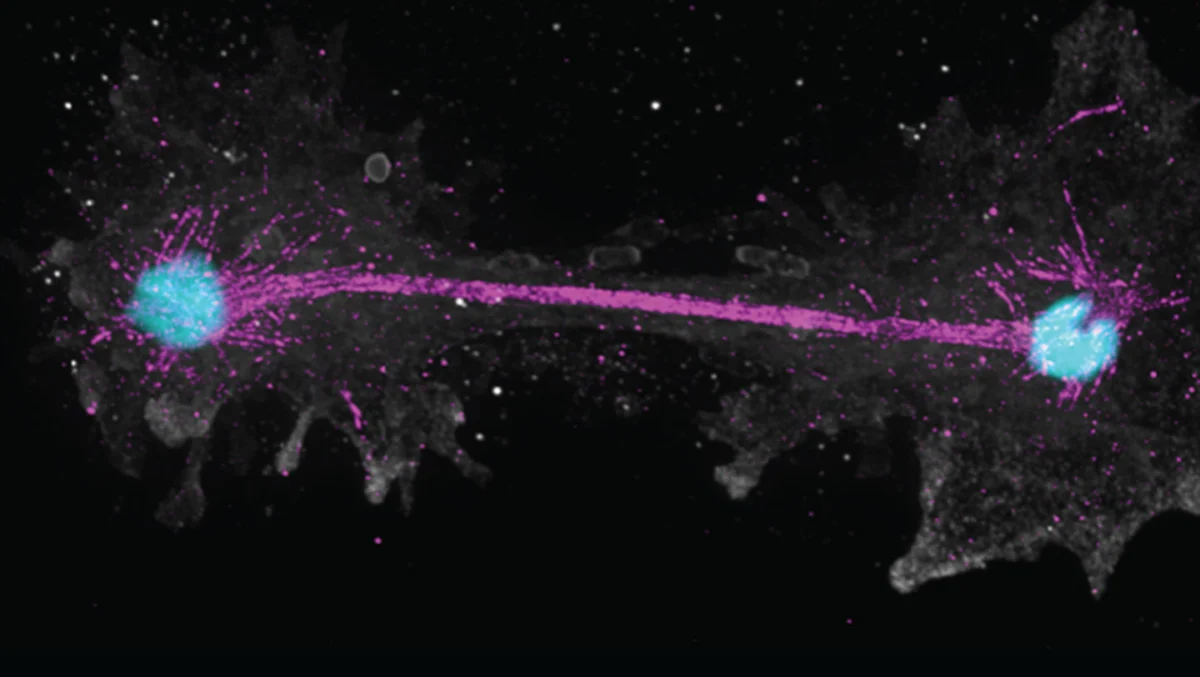
Furthermore, the amoeba exhibits a unique form of phenotypic plasticity. It can transition between two distinct morphological states. The first is a slower, more deliberate form optimized for foraging for nutrients in the hot spring environment. The second is a rapid-movement form, which researchers believe acts as a survival mechanism, allowing the amoeba to migrate quickly toward cooler, more stable micro-climates if the water temperature fluctuates beyond its threshold. This "bimodal" behavior suggests a highly evolved strategy for surviving the unpredictable environmental swings common to volcanic hydrothermal systems.
Expert Perspectives and Scientific Implications
The scientific community has received the report with significant interest, as it forces a recalibration of the "habitable zone" for complex life. Angela Oliverio’s team has emphasized that this discovery may be the tip of the iceberg. "As far as we know, there is no reason why 63 degrees is the hard limit," says Oliverio. The team posits that if an organism as complex as an amoeba can evolve to thrive in such conditions, there may be undiscovered eukaryotes in other extreme environments—such as deep-sea vents or industrial cooling systems—that have pushed these boundaries even further.
Dr. Beryl Rappaport, the lead author of the study, noted that the discovery underscores the importance of unconventional sampling. "We were looking for something different, and by pushing the boundaries of our culture conditions, we found that nature is often more resilient than our current models predict," she stated.
Beyond the immediate biological interest, the findings have potential implications for biotechnology. Enzymes and proteins capable of remaining stable and active at 63 degrees Celsius are highly valuable for industrial applications, including synthetic chemistry, bioremediation, and the production of biofuels, where heat-resistant catalysts are frequently required to accelerate reaction rates.
Future Research Directions
The discovery of Incendiamoeba cascadensis initiates a new chapter in extremophile research. Future studies are expected to focus on the following areas:
- Proteomic Mapping: Identifying the specific protein-folding chaperones that allow the amoeba to resist thermal damage.
- Environmental Distribution: Investigating whether I. cascadensis is endemic to Lassen Volcanic National Park or if it occupies similar niches in other geothermal regions globally, such as Yellowstone or Iceland.
- Evolutionary History: Sequencing the genome of the fire amoeba to determine how recently it diverged from its mesophilic (moderate-temperature) ancestors. This could reveal whether its heat tolerance is an ancient, conserved trait or a relatively recent evolutionary adaptation to the volcanic activity of the Cascades.
Broader Impact on Life’s Definition
The resilience of the fire amoeba serves as a poignant reminder that our definition of "extreme" is relative. While the human body suffers heatstroke at temperatures only slightly above 40 degrees Celsius, this single-celled organism perceives 63 degrees Celsius as a comfortable habitat for cellular division.
As planetary scientists continue to search for life on other worlds, particularly on icy moons like Europa or Enceladus, or in the deep crusts of Mars, the discovery of I. cascadensis provides a crucial data point. It confirms that the transition from simple to complex life is not necessarily constrained by the same thermal barriers previously assumed. The "fire amoeba" stands as a testament to the versatility of eukaryotic life, proving that even within the rigid constraints of biology, there is always room for the unexpected. As the research continues, the scientific community expects that the boundary of what we consider "habitable" will continue to expand, potentially altering the search for life both here on Earth and across the cosmos.