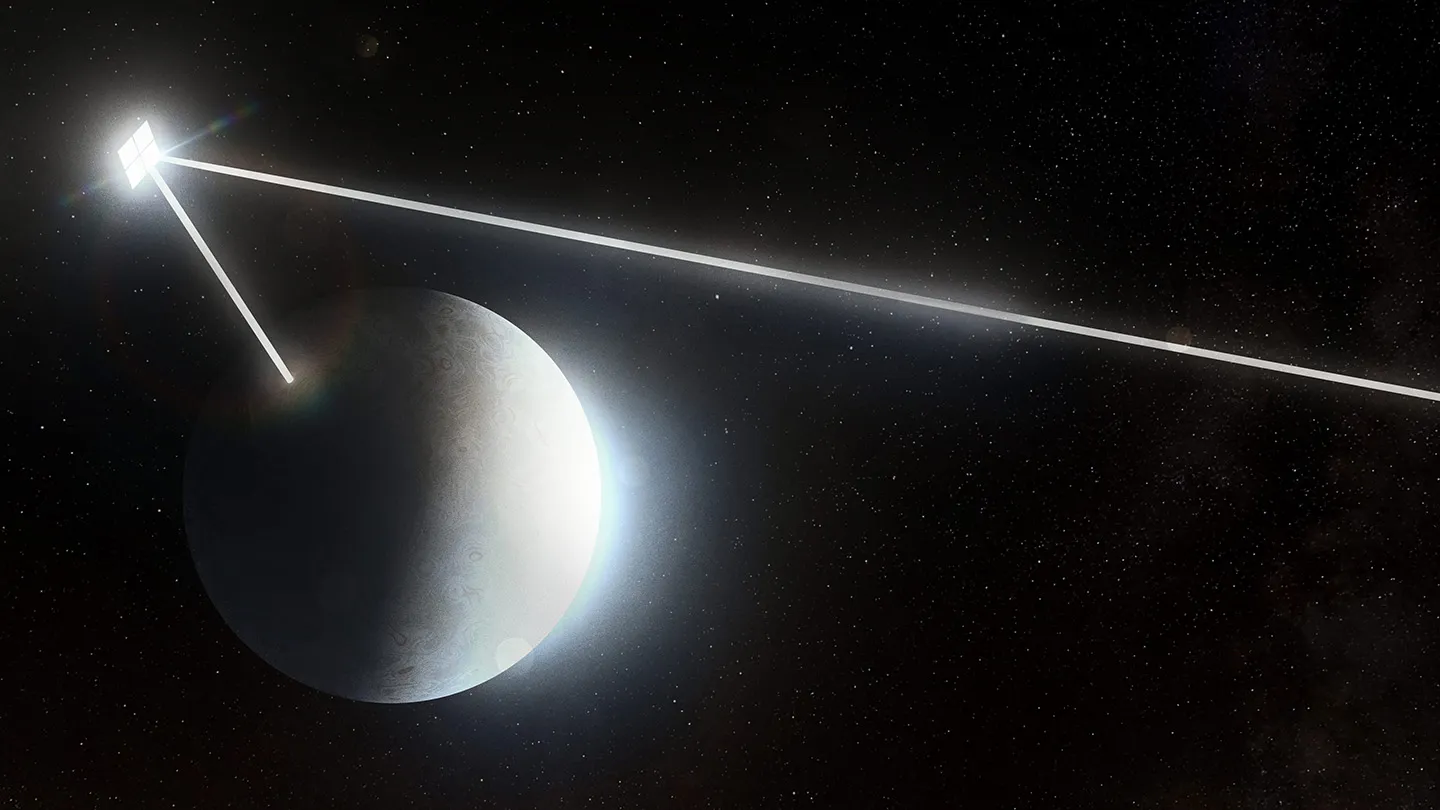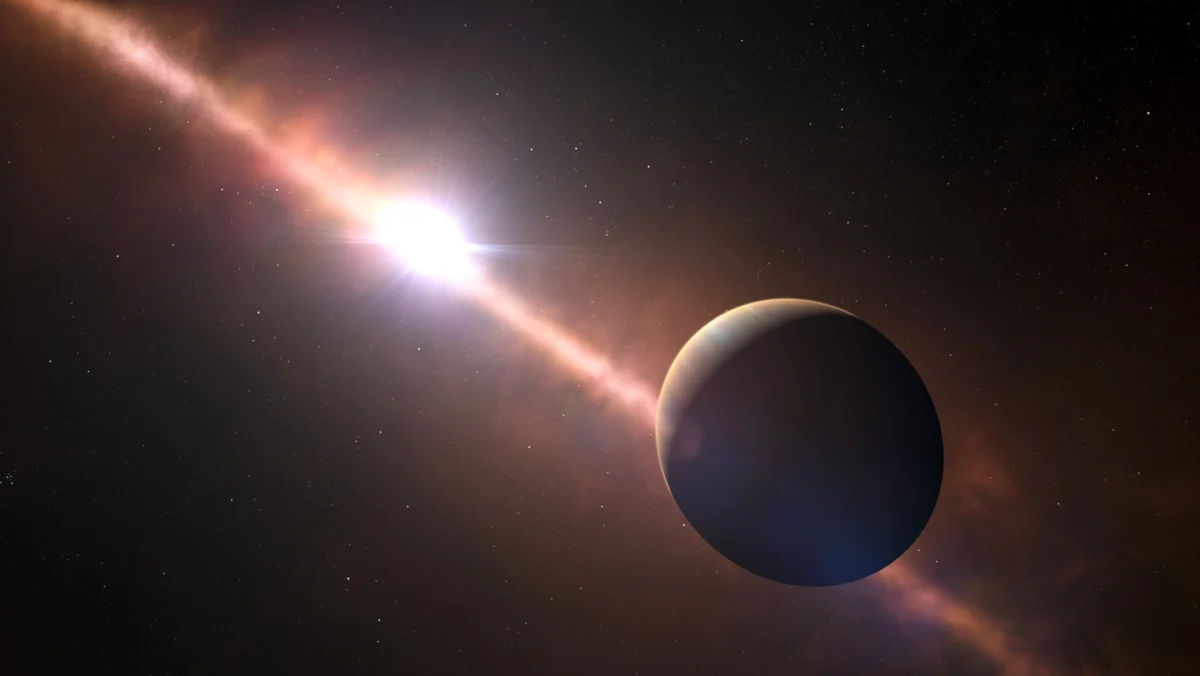
The target of this groundbreaking observation is Beta Pictoris b, a massive gas giant orbiting a star approximately 63 light-years from Earth. By capturing these radio signatures, researchers have confirmed that the planet possesses a magnetic field thousands of times stronger than that of Earth. This discovery serves as a critical piece of the puzzle in planetary science, as magnetic fields are essential for shielding atmospheres from the erosive effects of stellar radiation, thereby influencing a planet’s long-term habitability.
A Chronology of Discovery
The journey toward this detection began years ago as astronomers sought to refine their understanding of planetary formation and evolution. Beta Pictoris b, a young planet only about 20 million years old, has long been a favorite subject for observation. Because the system is relatively young and the planet is still cooling, it remains luminous in infrared light, making it an ideal candidate for direct imaging.
However, moving from infrared imaging to radio detection required a leap in instrumentation sensitivity and data processing. For decades, the primary challenge in detecting exoplanetary radio emissions was the overwhelming background noise produced by the host stars and the limitations of terrestrial radio telescopes. The breakthrough was facilitated by long-term monitoring campaigns and sophisticated signal-processing algorithms that could filter out stellar interference. Astronomers had long hypothesized that if a planet is sufficiently massive and rotating quickly—much like Jupiter—it should generate a significant magnetosphere capable of producing auroral radio emissions. The confirmation of this hypothesis at Beta Pictoris b validates decades of theoretical modeling regarding planetary dynamo effects.
The Science of Magnetospheres and Radio Emissions
To understand why this discovery is so profound, one must look at the mechanism of planetary radio bursts. On Earth, our magnetic field interacts with the solar wind, funnelling charged particles toward the poles where they collide with the atmosphere to create the aurora borealis and australis. These collisions, and the acceleration of electrons within the magnetosphere, release radio waves.
Jupiter, the largest planet in our solar system, is a prolific radio source due to its enormous magnetic field and the volcanic activity of its moon, Io, which injects particles into the Jovian magnetosphere. Scientists theorized that gas giants outside our solar system, particularly those as young and massive as Beta Pictoris b, would exhibit similar, albeit much more intense, behavior.
The detected radio waves provide a diagnostic tool for researchers. By measuring the frequency and intensity of these signals, scientists can infer the strength of the magnetic field. A magnetic field that is thousands of times stronger than Earth’s suggests that the planet’s interior dynamics are driven by high-pressure, metallic-hydrogen layers, providing a direct window into the internal composition of a world that we cannot physically visit.
Data and Methodology: Separating Noise from Signal
The observation was not a singular event but the culmination of rigorous data collection. Astronomer Yvette Cendes, who has been at the forefront of this research, acknowledges the inherent difficulty in the process. The "radio signal" is often faint and buried under layers of cosmic noise. The team utilized advanced interferometry techniques, combining data from high-resolution radio arrays to map the emissions with enough precision to distinguish the planet’s signal from that of the host star.
Supporting data from this study indicates that the radio emissions are likely linked to the planet’s rotation period and the interaction between its magnetosphere and the stellar wind of Beta Pictoris. These findings align with the "cyclotron maser instability" theory, which posits that electrons accelerated along magnetic field lines produce the specific radio frequencies observed. While the detection of a single planet is a milestone, the methodology used here creates a template for future surveys. By applying these techniques to other known gas giants, astronomers hope to build a census of planetary magnetic fields across the galaxy.
Official Responses and Academic Context
Within the astronomical community, the reception of the news has been one of tempered excitement. Researchers emphasize that while the detection does not point to extraterrestrial technology, it validates the "Radio Search for Exoplanets" as a legitimate and high-yield branch of modern astrophysics.
"We are essentially looking at the outer shell of a planet’s defenses," noted one independent planetary scientist familiar with the study. "If we want to understand how atmospheres persist over billions of years, we have to understand the magnetic shield. Beta Pictoris b has provided us with the first look at a high-energy planetary magnetosphere in action."
The team behind the discovery has been cautious to manage expectations, noting that radio signals from exoplanets are inherently transient. They depend heavily on the alignment of the planet’s magnetic poles, the intensity of the stellar wind, and the observing geometry of the telescopes on Earth. This means that consistent monitoring is required, and the field is now shifting from "detection" to "characterization."
Broader Implications for Exoplanetary Science
The implications of this discovery extend far beyond the study of a single gas giant. For years, the search for life in the universe has been focused on atmospheric biomarkers—oxygen, methane, and ozone. However, the presence of these gases is not sufficient for habitability if a planet lacks a magnetic field. Without a shield, the atmosphere is stripped away by stellar winds, as happened to Mars billions of years ago.
By establishing that we can detect magnetic fields from great distances, astronomers have added a new, critical filter to the search for Earth-like worlds. Future missions, such as the Square Kilometre Array (SKA), will be optimized to detect these signals with much greater sensitivity. If we can map the magnetic environments of rocky, Earth-sized planets, we will significantly narrow down the list of candidates that are truly capable of supporting liquid water and, by extension, life.
Furthermore, this discovery refines our understanding of planetary evolution. It suggests that gas giants can maintain powerful magnetospheres early in their lives, which may help regulate the delivery of volatiles and organic compounds to inner, terrestrial planets within the same system. The "Beta Pictoris model" provides a baseline for comparing how different stars interact with their planetary systems, contributing to a more holistic view of galactic architecture.
Conclusion: A New Window into the Cosmos
The detection of radio waves from Beta Pictoris b is a landmark event that bridges the gap between theoretical astrophysics and observational reality. It reminds us that our solar system is not unique in its physical processes; the same laws of physics that govern Jupiter’s radio emissions are at work across the galaxy.
As we move forward, the focus will undoubtedly shift toward developing a more robust catalog of radio-emitting exoplanets. Every new signal detected offers a chance to test our models of planetary interiors and magnetospheric dynamics. While the allure of finding artificial radio signals remains a powerful driver of public interest, the scientific discovery of natural radio emissions from a distant world is, in its own right, a testament to the sophistication of modern astronomy. We are no longer just looking at the light of distant stars; we are now beginning to listen to the magnetic heartbeat of the worlds that orbit them. This new era of "radio planetary science" promises to rewrite our understanding of how planets are born, how they protect themselves, and ultimately, what makes a world habitable in the vast expanse of space.