From the weathered wooden panels of a suburban garden fence to the iconic, monumental ironwork of the Eiffel Tower and the sprawling structural steel of the Golden Gate Bridge, exterior surfaces across the globe share a common, relentless enemy. Paint and protective membranes exposed to the elements inevitably degrade. For generations, civil engineers, materials scientists, and industrial maintenance teams have operated under the consensus that this gradual erosion is driven primarily by a duo of environmental culprits: mechanical stress and chemical corrosion. Mechanical stress typically manifests as the persistent, abrasive kinetic energy of falling rain and flowing water droplets, which slowly strip away molecular bonds over years of exposure. Chemical damage occurs concurrently, driven by environmental pollutants, acidic precipitation, and saline moisture that eat away at underlying substrates.
However, a groundbreaking collaborative study published in the prestigious scientific journal Nature has upended this conventional understanding. An international team of researchers has identified an entirely new, previously overlooked mechanism responsible for coating deterioration: the electrical charge carried by falling water droplets. This invisible electrical phenomenon acts on a microscopic scale, delivering tiny, localized electrostatic discharges that continually puncture and weaken protective layers. The discovery not only rewrites fundamental textbooks regarding weather-induced material fatigue but also opens the door to the next generation of ultra-durable industrial coatings.
The Genesis of a Discovery: Uncovering Triboelectric Droplets
The research initiative was spearheaded by Hans-Jürgen Butt, director at the Max Planck Institute for Polymer Research in Mainz, Germany. Butt and his colleagues collaborated closely with academic experts from the University of Bonn, the South China University of Technology, the Massachusetts Institute of Technology (MIT), and Johannes Gutenberg University Mainz. The team set out to investigate anomalies observed in fluid dynamics and surface physics that could not be fully explained by traditional erosion models.
The foundational hypothesis grew out of prior investigations conducted by the Max Planck research group several years ago. At the time, scientists were examining the complex physics governing how individual water droplets acquire static electrical charges as they slide or roll across solid surfaces. This phenomenon, often described as a form of droplet-based triboelectricity or "friction electricity," proved to be vastly more complex than historical physical models suggested.
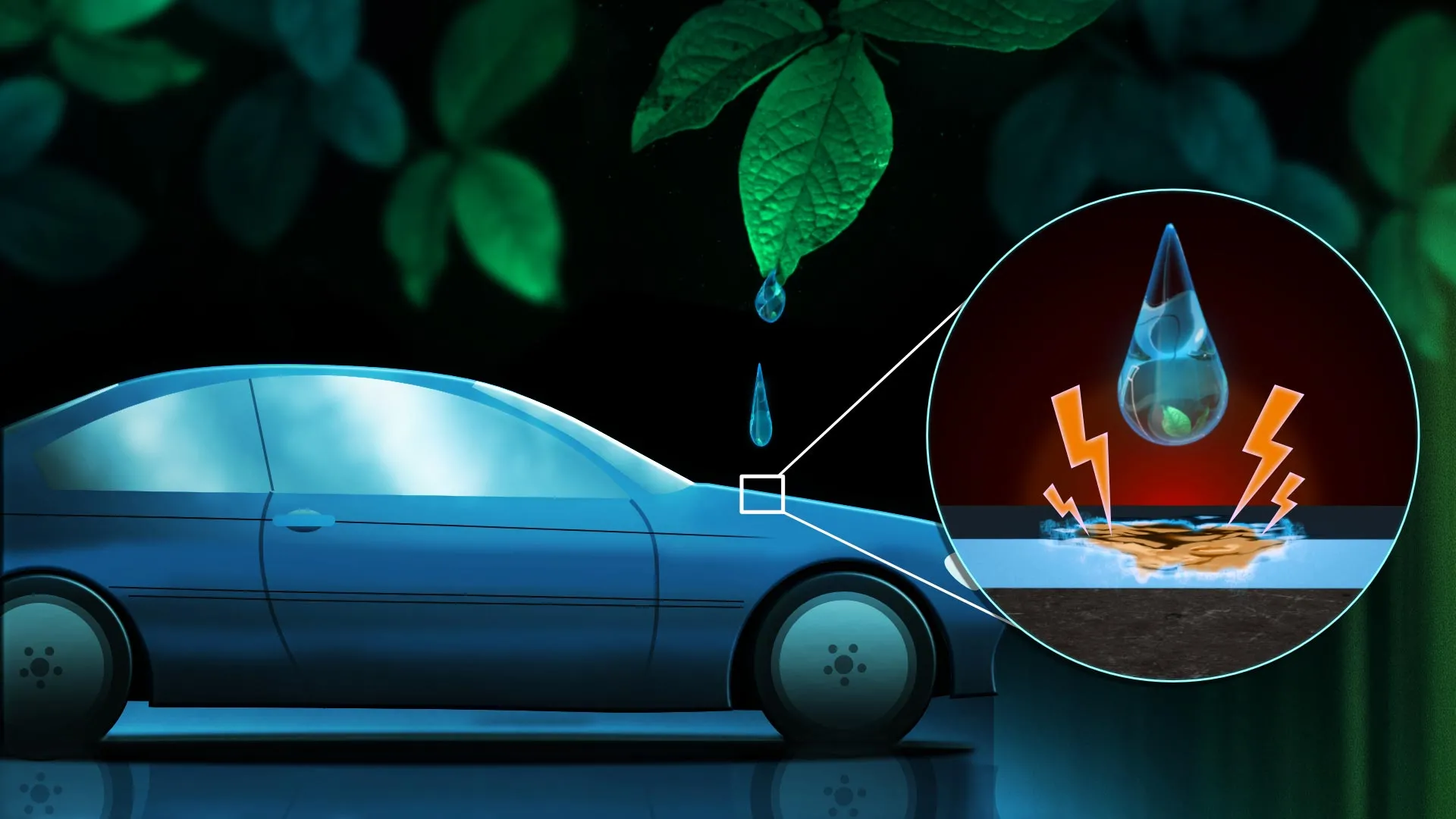
"A few years ago, we investigated the physics behind how water droplets become charged as they surfaces," explains Rüdiger Berger, group leader within the Physics at Interfaces department at the Max Planck Institute. "This is a kind of friction electricity in droplets and is physically much more complex than previously assumed. When such charged droplets strike a coating, they discharge locally and can puncture the layer in specific spots like a small flash of lightning—with consequences for the coating’s durability."
In practical terms, as a raindrop or drop of condensation travels across a leaf, a pane of glass, or an architectural panel, it gathers static electricity through contact electrification. When that same droplet eventually breaks free and impacts a protective surface elsewhere, the accumulated charge does not merely dissipate harmlessly. Instead, it discharges instantaneously at the exact microscopic point of impact. This localized electrical discharge acts akin to a microscopic bolt of lightning, creating minute structural flaws that compromise the integrity of the coating over millions of successive impacts.
Rigorous Laboratory Testing and Empirical Methodology
To substantiate this novel theory and measure the precise physical damage inflicted by charged droplets, the research team designed a controlled laboratory experiment. The primary objective was to isolate electrical discharge from mechanical impact and chemical interaction, quantifying the exact degradation caused by static electricity alone.
The experiment began with a pristine, uniform test surface evenly coated with polytetrafluoroethylene (PTFE)—widely known by its commercial name, Teflon. Celebrated for its exceptional non-stick and hydrophobic properties, Teflon serves as an ideal baseline material for observing surface alterations. In the initial phase of the test, researchers repeatedly dropped completely uncharged water droplets onto the Teflon surface. The drops fell under controlled velocity to simulate natural rainfall conditions. Remarkably, even after exactly 3,000 successive impacts by uncharged droplets, advanced microscopic examinations revealed zero visible changes, wear patterns, or structural modifications to the Teflon coating.
Following this control test, the experimental protocol was modified. Before allowing the water droplets to fall onto the Teflon target, the team directed them to roll across various common everyday materials. These intermediate contact surfaces included living houseplant leaves, rigid polyvinyl chloride (PVC) commonly used in construction, and polystyrene plastics frequently found in synthetic window frames and insulation panels.
As the water droplets migrated across these diverse substrates, they actively accumulated varying degrees of electrical charge via contact electrification. These now-charged droplets were then routed to fall onto the Teflon test surface under identical environmental and mechanical parameters as the initial control group.
The visual and structural results of this second phase were starkly different. Following the exact same threshold of 3,000 droplet impacts, high-resolution microscopic analysis exposed clear, undeniable alterations. Not only had the surface of the protective Teflon coating sustained measurable damage at the points of impact, but microscopic inspection also revealed subtle structural changes in the underlying metal substrate beneath the coating. The only variable introduced was the electrical charge carried by the water droplets, confirming that electrostatic discharge plays a critical, previously unquantified role in material degradation.
Material Variability and Charge Accumulation
A critical finding of the study was that the magnitude of the electrical charge acquired by a water droplet is not a universal constant; rather, it is intimately dependent on the chemical composition and texture of the material the droplet traverses prior to impact. Different surfaces yield vastly different electrostatic outcomes, illustrating the complex interactions between fluid dynamics and solid-state physics.
"The charge a droplet acquires as it slides depends heavily on the specific surface—we measured differences of up to a factor of ten," notes Zhongyuan Ni, the primary first author of the study. Despite these order-of-magnitude variations in accumulated electrical charge, Ni and his colleagues observed a striking consistency in the end result: "Regardless of this, we were able to detect changes in the coating in all experiments."
Whether a droplet rolled across organic foliage or synthetic polymers, the acquisition of a static charge was sufficient to induce microscopic pitting upon impact. This universal vulnerability suggests that virtually any environmental surface exposed to rain or condensation sliding down upstream materials is subjected to this electrostatic bombardment. Over time, as millions of charged droplets cascade down a structure—such as rainwater running down a glass skyscraper panel or an automated automotive paint finish—the cumulative effect of these localized electrical punctures weakens the protective barrier, allowing moisture and oxygen to penetrate the substrate and initiate accelerated corrosion.
Implications for Industry and Material Science
The publication of these findings in Nature marks a paradigm shift in how materials scientists approach the engineering of protective finishes. For decades, the multi-billion-dollar coatings industry has focused its research and development efforts on enhancing mechanical hardness, UV resistance, and chemical inertness. Anti-corrosion paints and polymer treatments have been formulated to withstand abrasive particle impacts and acidic rainfall, yet structural degradation has remained an inevitability of outdoor exposure.
By identifying electrostatic droplet discharge as a third pillar of environmental weathering alongside mechanical friction and chemical erosion, researchers have provided the scientific community with a missing piece of the puzzle. This deeper understanding paves the way for the formulation of advanced, next-generation coatings engineered specifically to dissipate or resist electrical charges rather than simply enduring physical wear.
Industry experts and manufacturing stakeholders have responded to the breakthrough with considerable enthusiasm. While commercial manufacturers have not yet released standardized product lines based directly on the Max Planck findings, materials science laboratories worldwide are actively reviewing their testing protocols. Incorporating electrostatic resilience into coating design could fundamentally transform maintenance schedules across numerous sectors.
Broader Impacts Across Infrastructure and Everyday Life
The practical applications of this discovery are vast, spanning historical preservation, automotive manufacturing, aerospace engineering, and residential maintenance.
Cultural Heritage and Historic Infrastructure: Historic monuments, stone architecture, and metal landmarks are exceptionally vulnerable to environmental weathering. Structures like the Eiffel Tower, statues crafted from bronze or marble, and ancient stone facades require constant, labor-intensive preservation efforts. Understanding that electrical discharges from rainwater contribute to microscopic surface pitting allows conservators to develop specialized, electrostatically stable sealants that protect invaluable cultural artifacts from premature decay.
Automotive and Aerospace Sectors: Modern vehicles rely on sophisticated multi-layer paint and clear-coat systems to maintain aesthetic appeal and prevent underlying body panels from rusting. High-speed driving in rainy conditions subjects vehicle finishes to millions of droplet impacts per hour. Developing clear coats that neutralize or disperse droplet-induced electrical charges could significantly extend the lifespan of automotive finishes, reducing warranty claims and maintenance costs.
Industrial and Residential Architecture: From massive suspension bridges and skyscraper curtain walls to residential roofing and everyday garden fences, exterior infrastructure stands to benefit immensely. By integrating anti-electrostatic properties into commercial paints and architectural membranes, building operators can dramatically reduce the frequency and cost of repainting cycles. This reduction not only saves capital for property owners but also lowers the environmental footprint associated with chemical solvent manufacturing, paint production, and frequent maintenance operations.
Looking Ahead: The Path to Longer-Lasting Surfaces
As the scientific community digests the implications of the Max Planck Institute’s research, the focus has shifted toward translating these theoretical insights into commercial solutions. Researchers are currently investigating how chemical modifications at the molecular level can alter surface capacitance and charge transfer dynamics. By engineering coatings that actively repel static buildup or safely bleed off electrical charges upon impact, scientists aim to neutralize the microscopic lightning strikes delivered by ordinary rainfall.
While a completely maintenance-free exterior paint remains an aspirational goal, the identification of droplet-induced electrostatic damage represents a monumental leap forward. By illuminating the hidden electrical life of water drops, researchers have equipped the world with the knowledge needed to build a more resilient, longer-lasting infrastructure for the future.