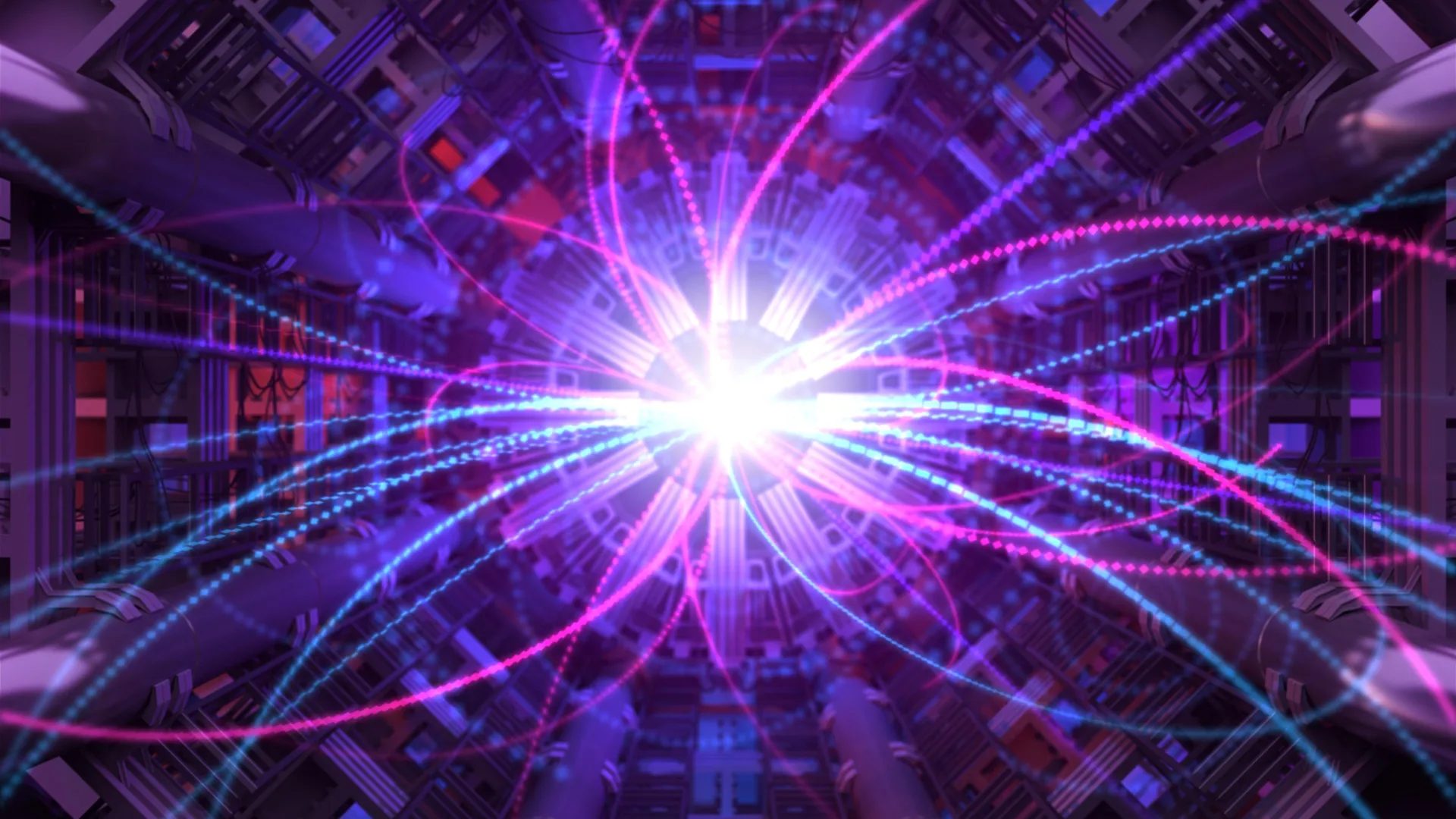
Physicists at the University of California, Santa Barbara (UCSB), working in collaboration with the Compact Muon Solenoid (CMS) experiment at the European Organization for Nuclear Research (CERN), have completed a groundbreaking search for microscopic quantum black holes. Utilizing data gathered from high-energy proton-proton collisions inside the Large Hadron Collider (LHC), the research team pushed experimental boundaries to test long-standing hypotheses about quantum gravity, extra spatial dimensions, and the fundamental structure of the universe.
Although the analysis ultimately yielded a null result—detecting no direct evidence of quantum black holes or theoretical sphalerons—the project successfully established strict new exclusion limits. Published in the journal Progress in High Energy Physics (PHEP), the findings significantly constrain the parameters of viable physical theories, narrowing the window where undiscovered forces and dimensions might hide. Furthermore, the study introduced an innovative machine-learning methodology that promises to reshape how physicists sift through vast oceans of particle collision data.
Main Facts and Experimental Scope
The core objective of the UCSB research team was to determine whether the immense energies generated inside the LHC could momentarily create microscopic, short-lived quantum black holes. Unlike their massive astrophysical counterparts, which devour stars and persist across cosmic timescales, these theoretical entities would evaporate almost instantaneously upon formation.
Led by UCSB postdoctoral researcher Tamas Vami and graduate student researcher Danyi Zhang, working under the guidance of physics professor Joe Incandela, the team analyzed a massive dataset collected by the CMS detector between 2016 and 2018. By examining collision signatures characterized by high sphericity and extreme aggregate energy levels, the researchers looked for the telltale decay patterns that would accompany the evaporation of a quantum black hole.
The absence of these signatures does not spell failure for the collaboration. In particle physics, a null result is a vital metric. By establishing that quantum black holes do not exist below an energy threshold of approximately 12 Tera-electronvolts (TeV) under the tested models, the researchers have effectively erased large swaths of theoretical territory from the map of modern physics.
Chronology and Background Context
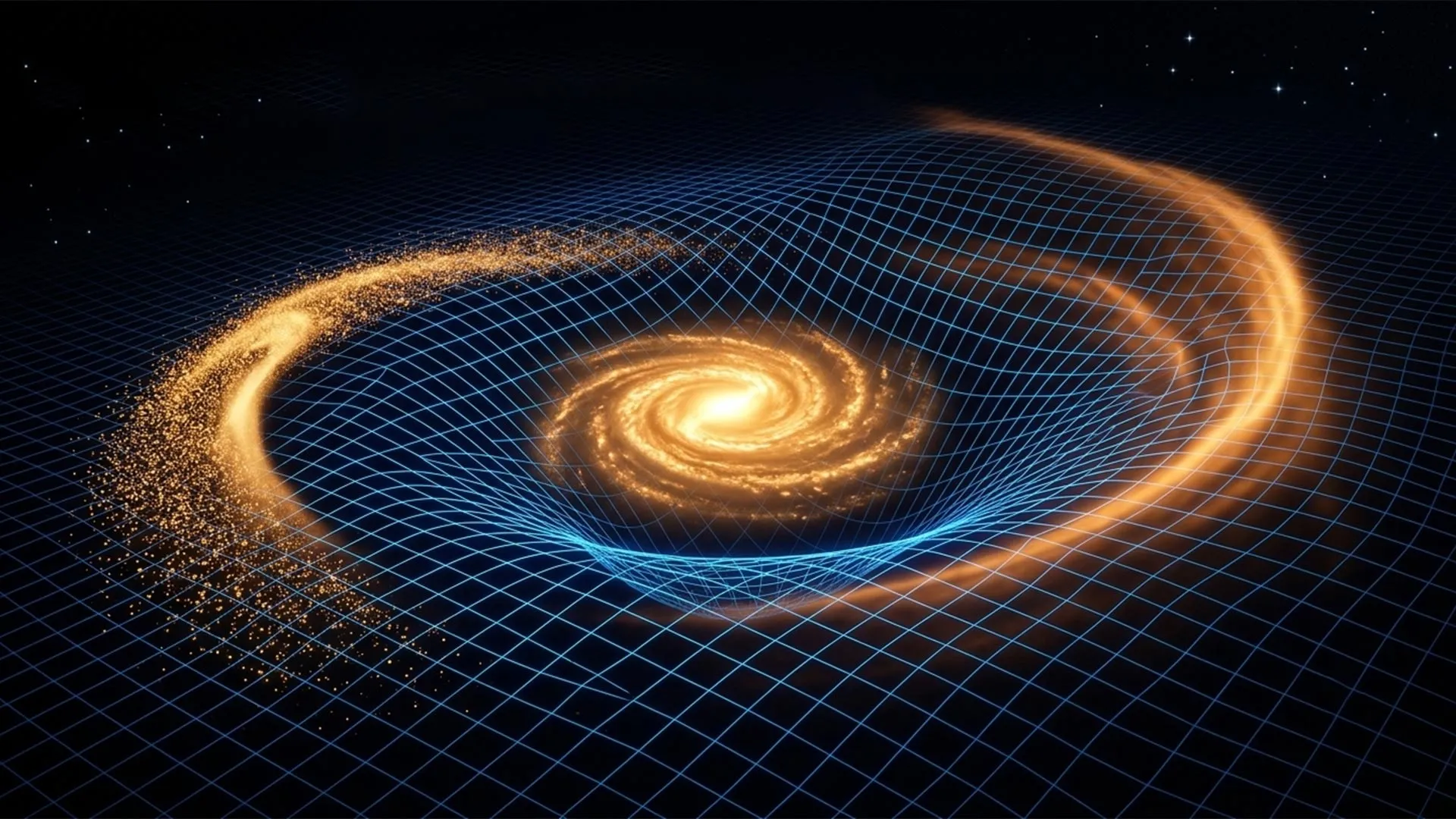
The theoretical foundation for creating man-made microscopic black holes dates back roughly two decades. In the early 2000s, theoretical physicists—including UCSB theorist Steven Giddings—began exploring the paradoxical intersection of quantum mechanics and general relativity. They proposed that if space possesses extra dimensions beyond the standard three spatial dimensions and one temporal dimension (3+1) described by Einstein, gravity could behave differently at subatomic scales.
For decades, the "hierarchy problem" has baffled physicists: why is gravity so staggeringly weak compared to electromagnetism and the strong and weak nuclear forces? One leading proposal suggests that gravity is not inherently weak, but rather that a portion of its force "leaks" into hidden extra dimensions. If true, the true energy scale of gravity—known as the Planck scale—might be vastly lower than previously assumed, dipping down into energy ranges accessible to particle accelerators like the LHC.
Between 2010 and 2013, during its first major operational run (Run 1) at energies of 7 to 8 TeV, the LHC began probing these exotic realms. Subsequent searches by both the ATLAS and CMS collaborations during Run 2 (2015–2018), operating at 13 TeV, utilized steadily increasing datasets. However, earlier iterations lacked the sophisticated analytical tools and sheer statistical volume now available to researchers. The latest UCSB study represents the culmination of years of data refinement, leveraging the full richness of the 2016–2018 CMS dataset to conduct the most rigorous search of its kind to date.
Innovative Methodology: Machine Learning Meets Phase-Space Distance
A major hurdle in modern particle physics is signal-to-noise separation. The LHC generates billions of proton-proton collisions per second, creating a staggering background of conventional subatomic interactions that can easily obscure rare, exotic events.
To overcome this challenge, the UCSB team incorporated a novel analytical technique known as "phase-space distance." Developed by UCSB particle theorist Nathaniel Craig and his collaborators, this method maps the geometric relationships of collision products across a multidimensional mathematical framework encompassing space, time, energy, and momentum.
This metric was integrated with a supervised machine learning system called a Support Vector Machine (SVM). Unlike "black box" algorithms that yield unexplained outputs, the SVM approach allowed researchers to transparently evaluate the mathematical criteria distinguishing potential signal events from standard background noise. According to the study, phase-space distance significantly outperformed traditional metrics like event sphericity, marking the first time this specific machine-learning architecture has been successfully deployed in a live particle physics data analysis.
Official Responses and Scientific Implications
The implications of the null result ripple across multiple domains of theoretical physics, providing essential feedback for model builders.
"Had we found evidence, we could have begun to directly study quantum gravity," noted Tamas Vami. "It’s a step toward unifying all of the known fundamental forces, which has been a goal of physicists for more than a century."
While the outcome was negative, researchers emphasize the inherent value of exclusion limits. Danyi Zhang framed the results in concrete, epistemic terms: "It’s not a dead-end. The result is an exclusion limit, which is a real, publishable statement: ‘If this thing existed with these properties, we’d have seen it. We didn’t, so we can rule it out here.’ That’s genuine knowledge about how the universe works."
Steven Giddings reflected on the broader quest to reconcile quantum mechanics with general relativity, calling it "the most profound problem in theoretical physics." Giddings noted that while theorists can generate abstract models independently, experimental data remains the ultimate arbiter of truth.
The constraints imposed by the study carry heavy consequences for string theory, which traditionally requires ten dimensions to remain mathematically consistent. Under the specific parameters evaluated by the UCSB team, the findings restrict the number of accessible extra spatial dimensions to no more than two, systematically trimming the branches of unproven theoretical constructs.
Expanding the Hunt: Sphalerons and Matter-Asymmetry
Beyond quantum black holes, the research team expanded their analytical scope to search for another exotic phenomenon: sphalerons.
Sphalerons are not particles, but rather theoretical, unstable configurations of particle fields that, like quantum black holes, would generate highly spherical energy patterns upon decay. Detecting sphaleron transitions could help solve one of cosmology’s greatest mysteries: the matter-antimatter asymmetry problem. Standard cosmological models dictate that the Big Bang should have produced equal parts matter and antimatter, which ought to have mutually annihilated, leaving a universe devoid of matter. The persistence of a matter-dominated universe implies an unknown symmetry-breaking mechanism, for which sphalerons are a leading candidate.
Much like their search for quantum black holes, the researchers uncovered no direct evidence of sphaleron processes, allowing them to place firm boundaries on the frequency of such theoretical transitions in high-energy environments.
Broader Impact and the Future of the LHC
The quest to bridge quantum mechanics and general relativity remains unfinished. Without the assistance of extra dimensions to amplify gravity, calculating the formation of micro black holes would theoretically require energy levels a million billion times greater than current LHC capabilities—a regime far beyond modern engineering limits.
Nevertheless, the work performed by Vami, Zhang, Incandela, Giddings, and Craig pushes the Standard Model of particle physics to its absolute limits. By sharpening experimental techniques and demonstrating the viability of phase-space distance machine learning, the team has laid the groundwork for future discoveries.
The timing of the publication coincides with a major operational pause at CERN. The Large Hadron Collider is currently undergoing an ambitious sequence of upgrades to transform into the High-Luminosity Large Hadron Collider (HL-LHC). When the facility resumes operations later this decade, it will deliver vastly higher collision rates and exponentially larger datasets, giving scientists an unprecedented window into the rarest phenomena of the subatomic world.
Until then, the systematic process of elimination continues. Each null result shrinks the map of where new physics can hide, guiding the international scientific community closer to the day when the deepest secrets of gravity, spacetime, and the origins of the universe are finally unlocked.