Every single second, the human bone marrow functions as a biological factory of staggering output, generating millions of fresh blood cells and immune components to sustain life. This perpetual cycle of regeneration relies upon a tightly regulated, delicate equilibrium. Hematopoietic stem cells (HSCs), supportive stromal cells, and an intricate web of systemic immune signals must communicate continuously to maintain homeostasis. However, as the human body ages, this pristine cellular choreography begins to fray. Chronic, low-grade systemic inflammation, the cumulative burden of aging, and somatic mutations gradually accumulate, eroding the cooperative networks that govern normal stem-cell renewal. When communication falters, mutated HSCs can slip past quality-control checkpoints and silently expand.
This insidious process gives rise to clonal hematopoiesis of indeterminate potential, commonly known as CHIP. Clinically silent in its early stages, CHIP is remarkably prevalent, detected in approximately 10 to 20 percent of adults over the age of 60 and climbing to nearly 30 percent in individuals over 80. While individuals harboring CHIP typically exhibit no overt symptoms, epidemiological tracking reveals that the condition carries profound hidden risks: it multiplies the likelihood of developing aggressive blood cancers tenfold and doubles the risk of cardiovascular disease and premature mortality.
When these rogue clones further destabilize the marrow, they can precipitate more severe disorders, such as myelodysplastic syndrome (MDS). MDS is characterized by inefficient blood-cell production and a gradual, progressive failure of the bone marrow to manufacture healthy tissue. Affecting up to 20 in every 100,000 adults over the age of 70, MDS represents a precarious pre-malignant state. In approximately 30 percent of cases, the disease inevitably transforms into acute myeloid leukemia (AML), a notoriously aggressive and frequently fatal malignancy.
Despite the staggering public health burden posed by CHIP, MDS, and AML, medical science has long struggled to pinpoint the exact contributions of the bone marrow microenvironment—the local ecosystem or "niche" in which these stem cells reside—to the genesis and progression of these diseases. Historically, cancer research focused intensely on the mutated hematopoietic cells themselves, largely overlooking the supportive tissue architecture surrounding them.
Mapping the Hidden Microenvironment: A Breakthrough Investigation
To unravel how mutated HSC clones manage to dominate the bone marrow landscape, an international consortium of researchers launched an extensive molecular and spatial analysis of human tissue samples. Co-led by Judith Zaugg, a senior group leader at the European Molecular Biology Laboratory (EMBL) and professor at the University of Basel, alongside Borhane Guezguez from the University Medical Center (UMC) Mainz, the team leveraged unprecedented technological capabilities to peer deep into the bone marrow ecosystem. The biological samples evaluated in the study were meticulously curated through the BoHemE cohort study, working in close collaboration with Uwe Platzbecker at the National Center for Tumor Diseases (NCT) Dresden.
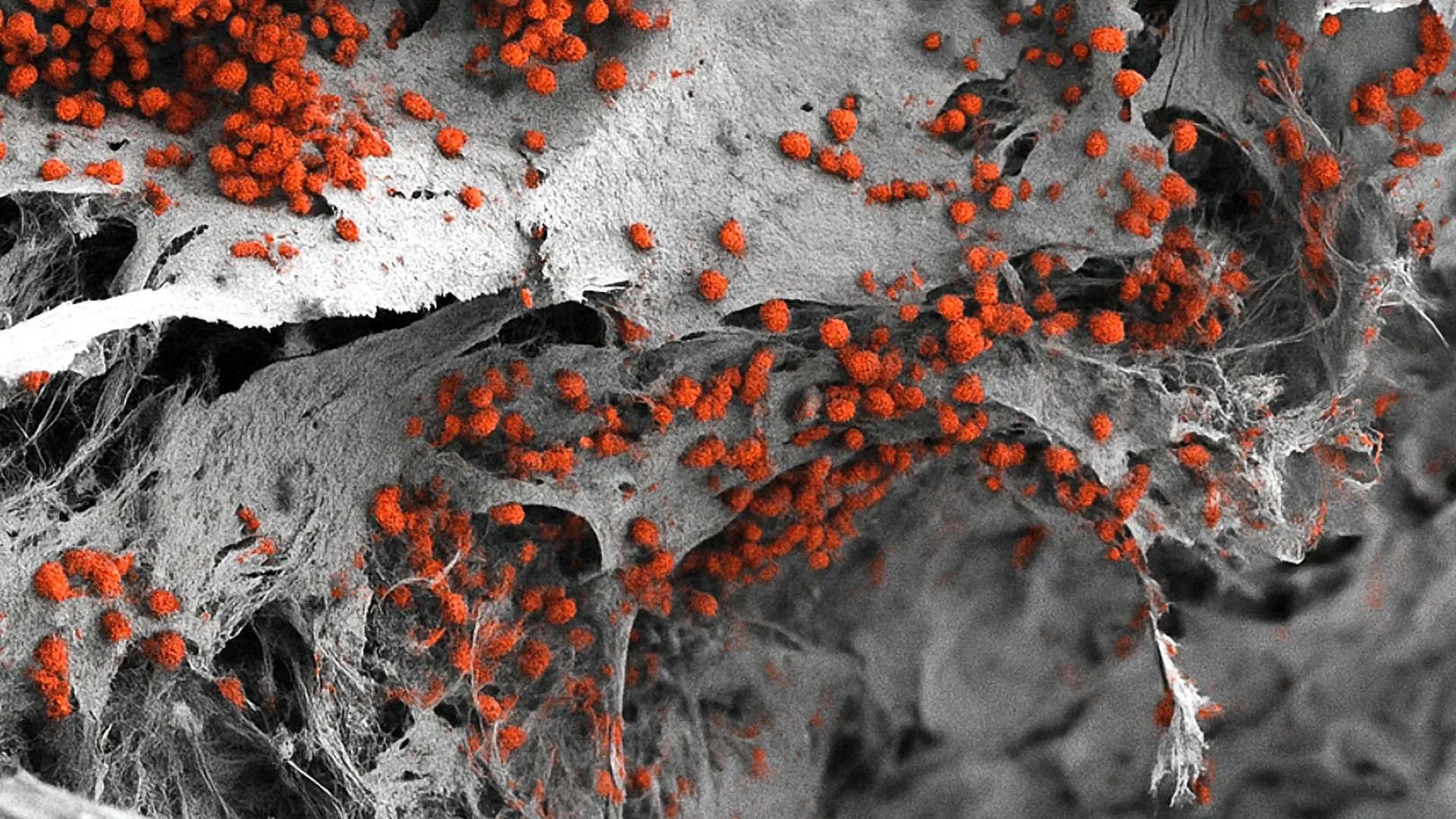
By deploying an advanced arsenal of single-cell RNA sequencing, high-resolution biopsy imaging, sophisticated proteomics, and complex co-culture models, the research team constructed a remarkably detailed, high-resolution map of the bone marrow microenvironment. This comprehensive mapping encompassed healthy donors, individuals with incidental CHIP, and patients suffering from advanced MDS.
The resulting data unveiled a startling cellular shift that occurs long before clinical pathology becomes apparent. The investigators discovered that a distinct population of inflammatory stromal cells gradually displaces the normal mesenchymal stromal cells (MSCs) whose primary biological mandate is to support healthy stem-cell function.
Reflecting on the unexpected nature of the discovery, Dr. Zaugg noted the profound structural alterations observed even in asymptomatic individuals. The presence of such advanced tissue remodeling during the earliest pre-clinical phases of clonal expansion underscores how fundamentally the marrow environment changes before overt cancer develops.
The Anatomy of Inflammatory Remodeling
Unlike their healthy, homeostatic counterparts, these newly identified inflammatory mesenchymal stromal cells—dubbed iMSCs—exhibit a radically altered functional profile. They secrete copious quantities of interferon-induced cytokines and chemokines into the local microenvironment. These signaling molecules act as molecular beacons, attracting and activating interferon-responsive T cells. Once drawn into the niche, these T cells intensify local inflammatory activity, creating a self-sustaining, feed-forward loop.
This chronic inflammatory cascade does more than simply signal distress; it actively disrupts normal blood formation, compromises regenerative capacity, and drives pathological vascular changes throughout the marrow matrix.
Intriguingly, when the researchers dug deeper to identify the precise spark igniting this inflammatory fire, they uncovered a surprising twist. Using an innovative computational method called SpliceUp—developed by co-lead author and EMBL alumnus Maksim Kholmatov, in collaboration with Pedro Moura and Eva Hellström-Lindberg from the Karolinska Institute—the team was able to cleanly separate mutated hematopoietic cells from non-mutated cells within single-cell datasets. SpliceUp achieves this by detecting subtle, abnormal RNA-splicing signatures unique to the mutated clones.
To the researchers’ surprise, the analysis revealed that the mutated hematopoietic cells in MDS were not directly driving the inflammatory response through cell-to-cell contact or direct signaling. Instead, the inflammatory network within the microenvironment had become an autonomous, dominant force, effectively hijacking the tissue and replacing the marrow’s normal regenerative architecture.
Karin Prummel, an EMBL postdoc and co-lead author, highlighted another profound functional deficit uncovered by the team: MDS stem cells exhibited a complete failure to stimulate stromal cells to produce CXCL12. CXCL12 is a critical signaling chemokine normally responsible for anchoring blood-cell precursors within the bone marrow niche. The absence of this vital homing signal helps explain why the bone marrow ultimately grinds to a halt in these patients.
Redefining Disease Progression: Inflammation as an Early Driver
These groundbreaking insights fundamentally reshape the medical understanding of how blood disorders initiate and evolve. By demonstrating that localized inflammation acts as an early, central driver of disease, the study repositions the bone marrow microenvironment from a passive backdrop to a primary therapeutic target.
For decades, therapeutic paradigms in hematology have concentrated almost exclusively on eradicating mutated stem clones using cytotoxic chemotherapy or targeted drugs. This research suggests that focusing solely on the mutant cells while ignoring the corrupted ecosystem that nurtures them may leave patients vulnerable to persistent disease or relapse.
The implications for clinical intervention are vast. The findings suggest that deploying anti-inflammatory therapeutics or precision drugs capable of modulating interferon signaling could help preserve bone marrow function in older adults living with CHIP. By integrating targeted anti-clonality treatments with therapies designed to repair or normalize the microenvironment, future physicians may be able to halt or significantly slow the perilous transition from CHIP to full-blown MDS or AML. Furthermore, the distinct molecular markers characterizing iMSCs and interferon-responsive T cells could eventually be utilized as early clinical biomarkers to screen and monitor individuals at elevated risk for hematologic malignancies.
Emphasizing the translational potential of the discovery, Dr. Guezguez emphasized that modern molecular profiling now allows medical science to detect pre-leukemic states years before any clinical symptoms manifest. Understanding the intricate crosstalk between stromal and immune cells provides the scientific foundation necessary to intercept disease progression before leukemia ever takes root.
The Broader Phenomenon of Inflammaging
Beyond the confines of hematology, these findings contribute vital empirical weight to the broader scientific understanding of "inflammaging"—the chronic, sterile, low-grade inflammation that accompanies advancing age and underpins a vast array of age-related maladies, including metabolic disorders, cardiovascular disease, and solid-tumor cancers.
The bone marrow, historically viewed strictly as a biological factory for blood production, is now recognized as both a victim and a profound driver of systemic inflammatory aging. By mapping how direct interactions between immune and stromal cells drive pathological tissue remodeling, this research provides a robust conceptual framework that can be applied to investigate similar inflammatory transformations in other myeloid malignancies and advanced leukemias.
Despite these significant strides, researchers acknowledge that crucial questions remain. Because the current study relies on cross-sectional data captured at a single point in time, future investigations must track these cellular dynamics longitudinally. Dr. Zaugg noted that this longitudinal perspective holds critical implications for modern therapies like hematopoietic stem cell transplantation, which replace malignant cells while leaving the native bone marrow niche largely intact. The research team is currently probing the extent to which the niche retains a biological "memory" of disease, a factor that could heavily dictate how successfully it welcomes and nurtures newly introduced, healthy donor stem cells.
Context and Collaborative Scope
This study was published alongside a complementary investigation examining the MDS bone marrow microenvironment in Nature Communications, led by Marc Raaijmakers from the Erasmus MC Cancer Institute in Rotterdam. Together, these dual publications offer the medical community a comprehensive, multi-faceted view of inflammatory tissue remodeling during the critical early phases of bone marrow failure and malignant evolution.
The extensive collaborative effort behind the EMBL-led study drew upon world-class expertise from institutions across the globe, including UMC Mainz, the University of Basel, the University Hospital Dresden, the Karolinska Institute in Sweden, The Jackson Laboratory in the United States, Sorbonne University in France, and German Consortium for Translational Cancer Research (DKTK) partner institutions such as the German Cancer Research Center (DKFZ) and NCT Dresden. Financial backing for the rigorous multi-year project was provided by the DKTK-CHOICE programme, an ERC grant (EpiNicheAML) awarded to Judith Zaugg, the Marie Skłodowska-Curie Actions (MSCA) funded ITN ENHPATHY, EMBO, the Swiss National Science Foundation, and the José Carreras Leukämie-Stiftung, collectively ensuring that this vital inquiry into the roots of blood cancer could be carried to fruition.