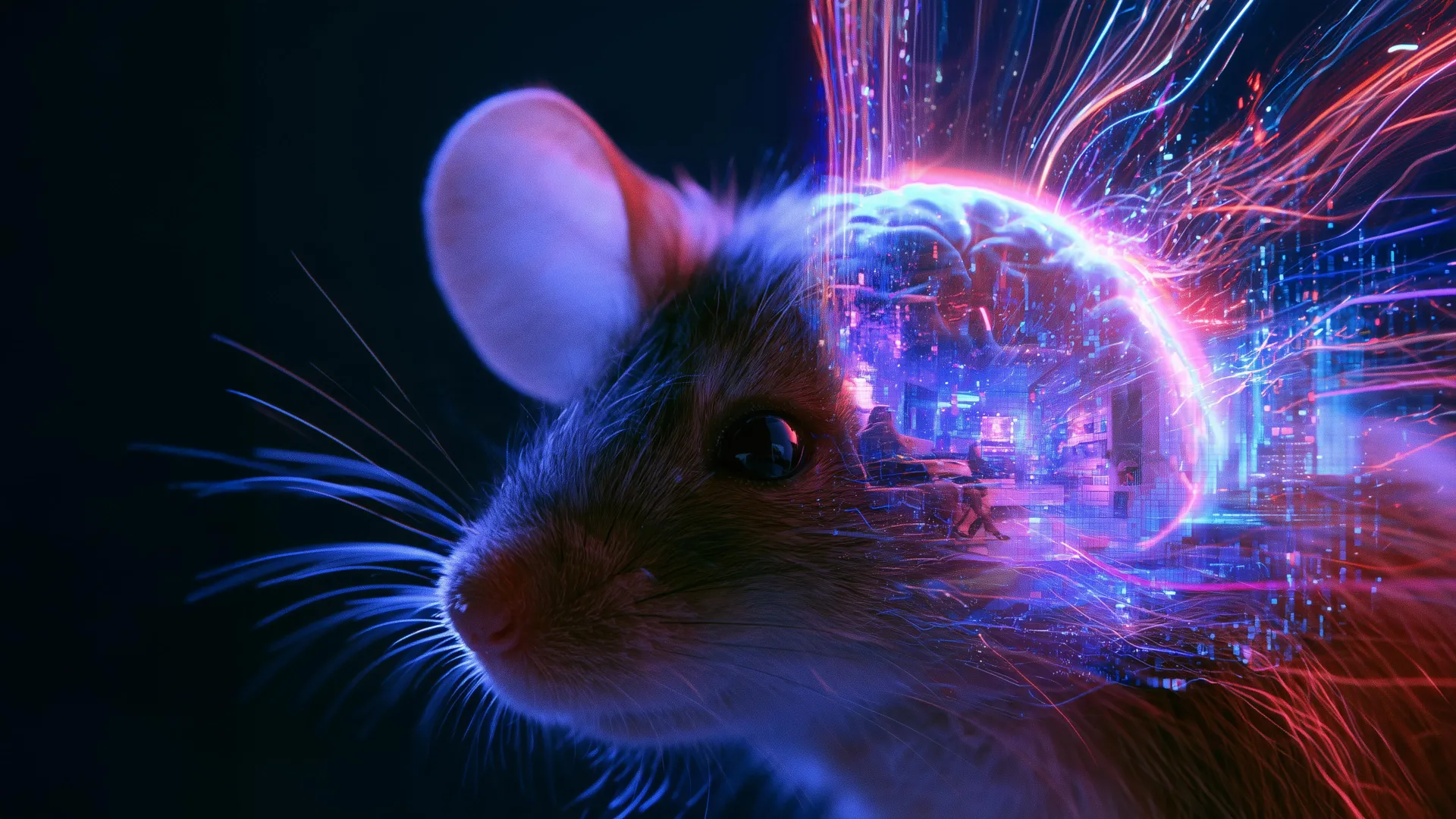
A Paradigm Shift in Neural Decoding
The quest to decode the brain’s visual pathway has long been a centerpiece of neuroscience. Historically, human-centric studies have relied heavily on functional Magnetic Resonance Imaging (fMRI). While fMRI has provided invaluable insights into the brain’s "where" and "what" in terms of broad functional localization, its resolution is inherently limited. It captures the blood-oxygen-level-dependent (BOLD) signal, which acts as a proxy for neural activity across thousands of neurons at once. Consequently, while fMRI can distinguish between a house and a face, reconstructing high-fidelity visual streams has remained elusive.
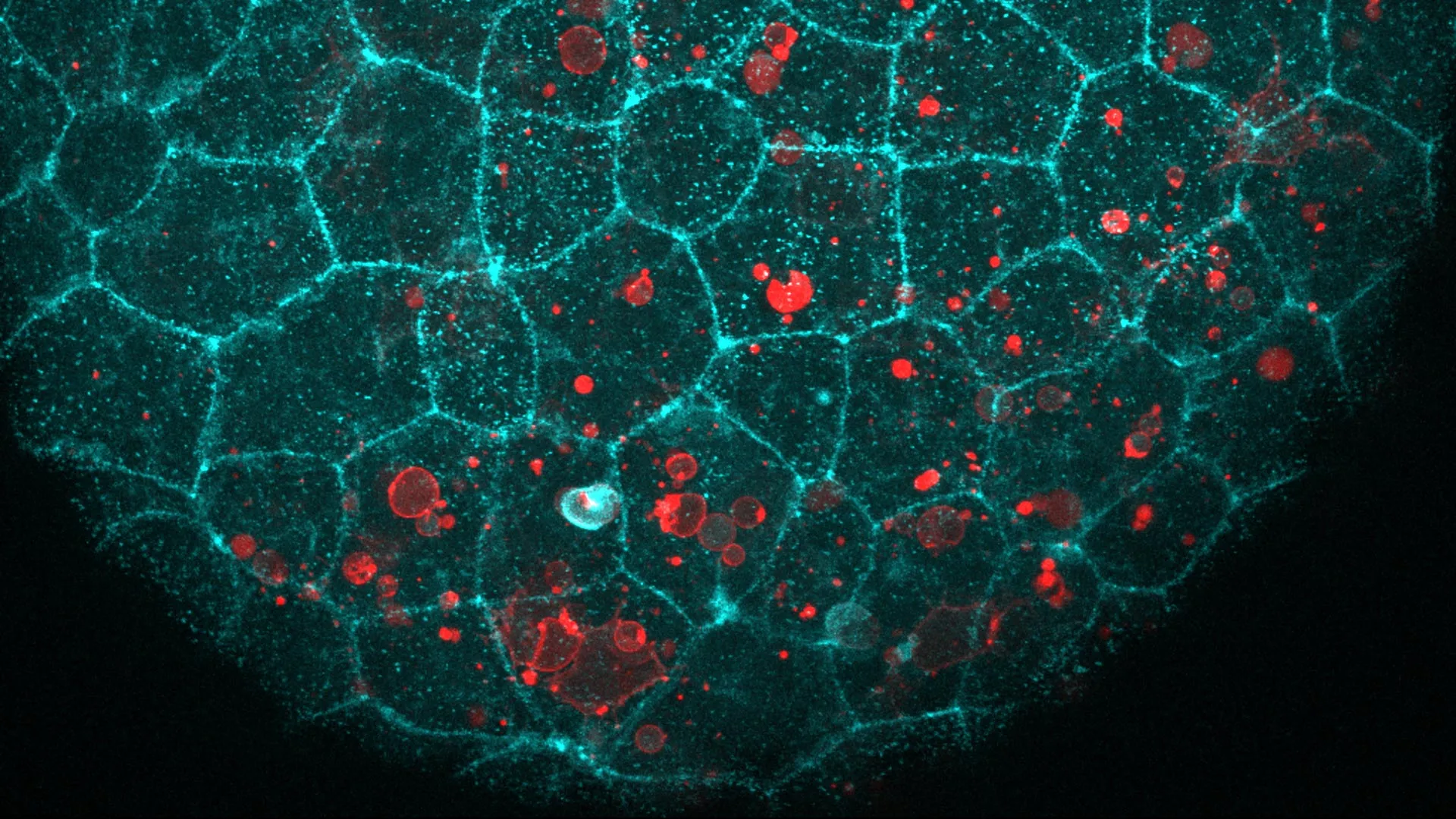
The UCL team, led by Dr. Joel Bauer of the Sainsbury Wellcome Centre, pivoted toward a granular approach. By utilizing microscopic imaging to monitor calcium levels—a direct indicator of individual neuron firing—the researchers bypassed the hemodynamic lag associated with fMRI. This method allowed the team to map the specific, rapid-fire responses of the visual cortex, transforming abstract biological data into a coherent, visual reconstruction that captures not just general shapes, but the temporal flow of motion.
Chronology of the Research Effort
The development of this technology did not occur in a vacuum; it is the culmination of years of collaborative progress in computational neuroscience.
- 2023: The Sensorium Competition served as the critical catalyst. During this event, researchers developed a dynamic neural encoding model designed to predict how individual neurons respond to visual stimuli. This competition established the benchmark algorithms that the UCL team would later refine.
- Early 2024: Dr. Bauer’s team began the integration phase, applying the Sensorium-derived models to live-subject data. They focused on refining the model to account for variables beyond visual input, such as the mouse’s physical locomotion and pupil dilation, both of which significantly influence visual perception.
- Mid-2024: The team executed the primary testing phase. They recorded the neural signatures of mice observing specific video sequences, using the calcium-imaging technique to track real-time activity.
- Late 2024: The validation stage saw the model successfully reconstruct a 10-second, previously unseen video clip using only the latent patterns of the mouse’s neural firing, confirming that the model had learned to "interpret" rather than simply "memorize" visual data.
Technical Methodology: From Neurons to Pixels
The reconstruction process is a masterclass in algorithmic refinement. The researchers operated under the assumption that the brain does not record the world like a camera; instead, it processes information through a lens of prior expectation and sensory filtering.
To begin the reconstruction, the team established a baseline: they calculated the expected neural response if a mouse were looking at a static, blank screen. They then observed the deviation between this predicted activity and the actual neural spikes recorded while the mouse viewed dynamic content. This "delta" or difference served as the input for an optimization algorithm.
The algorithm worked iteratively. It started with a blank canvas of pixels and adjusted them incrementally. At each step, it compared the simulated neural response of the model to the actual recorded activity of the mouse. Through thousands of minute adjustments, the pixels were shifted until the synthetic output induced a pattern of neural activity in the model that mirrored the actual brain activity observed in the live animal.
This process was enhanced by the inclusion of biological metadata. By accounting for the mouse’s pupil diameter—which dictates the amount of light entering the eye—and the animal’s physical movement, the researchers were able to filter out "noise" that would otherwise distort the reconstructed image. The team observed that the quality of the reconstruction had a direct, linear correlation with the number of neurons included in the dataset; the more biological data points available, the sharper the resulting imagery.
Supporting Data and Comparative Analysis
The evaluation of these reconstructions relied on pixel correlation, a mathematical standard for measuring similarity between two images. While the team successfully recreated the movement and primary features of the videos, the study acknowledged existing limitations. Specifically, the resolution of the reconstructed videos remains below high-definition standards, and the current field of view is constrained to the specific regions of the visual cortex being monitored.
However, the implications of these results are profound. By showing that the algorithm could reconstruct a 10-second clip it had never been trained on, the researchers proved that the brain’s internal representation of the world is stable enough to be extracted. This effectively bridges the gap between raw neural signal and semantic understanding.
Official Responses and Academic Context
The scientific community has noted the work for its implications regarding "neural alignment." Dr. Bauer emphasized that the current methods of understanding neuron groups are often too rigid for real-world application. "We wanted to have a better way of investigating how the brain interprets what we see," Bauer stated. "The current methods are not very generalizable to situations that haven’t been specifically tested. We wanted a method that can capture what is being represented in the brain and compare that to reality."
Other researchers in the field have suggested that this approach could provide the long-sought-after " Rosetta Stone" for cross-species perception. If scientists can decode the visual representation of a mouse, they may eventually be able to build a comparative framework to understand how a cat, a primate, or even a human perceives the same environment, accounting for the unique sensory hardware each species possesses.
Implications: The Brain as an Interpreter
Perhaps the most significant takeaway from this research is the philosophical shift in how we define "seeing." The study reinforces the theory that the brain is an interpretive organ rather than a recording device.
The visual processing pipeline—the series of biological filters between the retina and the visual cortex—actively warps, highlights, and suppresses information. It does not prioritize a pixel-perfect representation of reality; it prioritizes utility. For a mouse, this means focusing on movement, predators, and pathfinding; for a human, it might prioritize social cues or reading text.
The "error" or deviation between the world as it exists and the world as it is represented in the brain is, according to the research team, a feature rather than a flaw. This suggests that future iterations of this technology could be used to study neurodegenerative conditions or visual impairments. If scientists can visualize the "warped" version of the world as perceived by a brain with specific pathologies, they may identify the exact point at which the processing pipeline breaks down.
Looking Toward the Future
As the team looks toward the next phase of research, the focus is shifting toward scaling. Improving image resolution will require not only more advanced algorithms but also more dense neural recordings. The researchers are currently exploring ways to integrate data from larger populations of neurons simultaneously, which would involve advanced optogenetic sensors and high-throughput imaging hardware.
Furthermore, the team aims to extend the duration of the videos. Moving from 10-second snapshots to longer, more complex sequences will provide deeper insights into how the brain maintains a consistent perception of the world over time—a process known as temporal stability.
The ability to reconstruct a visual scene from the firing of cells in a mouse’s brain is a milestone that once belonged to the realm of speculative fiction. Today, it stands as a testament to the precision of modern neuroscience. While the road to full-scale, high-fidelity reconstruction of subjective experience remains long, the UCL study has undeniably provided the map for the journey ahead. By quantifying the gap between reality and perception, the research not only enhances our technological capabilities but also deepens our fundamental understanding of what it means to see.