The relentless pursuit of faster, more energy-efficient computing hardware has led scientists to the precipice of a profound paradigm shift. For decades, the architecture of conventional electronics has relied almost exclusively on the manipulation of electrical charge carried by electrons. However, as physical scaling limits approach the atomic level, traditional semiconductor technology faces insurmountable hurdles related to heat dissipation, energy consumption, and signal interference. To overcome these barriers, a global contingent of physicists and materials scientists is looking beyond electrical charge toward an intrinsic, yet largely unexploited, quantum property of electrons: spin.
Recent experimental breakthroughs are now accelerating this transition from theoretical physics to tangible engineering. A research team spearheaded by Professor of Physics Madhab Neupane at the University of Central Florida (UCF) has successfully identified definitive experimental evidence of altermagnetism—a newly recognized, hybrid magnetic state—within a specialized layered material known as Co1/4TaSe2. This landmark discovery promises to bridge the gap between theoretical quantum mechanics and next-generation computational hardware, laying a critical foundation for the burgeoning field of spintronics. By merging the most advantageous traits of ferromagnetism and antiferromagnetism while eliminating their respective drawbacks, this material could fundamentally transform how digital information is transmitted, processed, and stored in the decades to come.
The Physics of Magnetism: From Ferromagnets to Altermagnets
To understand the magnitude of the UCF team’s discovery, one must examine the conventional magnetic paradigms that have dominated materials science for more than a century. Standard electronics and data storage mechanisms heavily rely on ferromagnetism. In ferromagnetic materials—such as iron, cobalt, and nickel—the quantum mechanical property known as magnetic moments align uniformly in the same direction, generating a robust macro-scale magnetic field. While this predictable alignment is exceptionally useful for reading and writing data in hard disk drives and magnetic sensors, ferromagnetism introduces a severe vulnerability in modern integrated circuits. As engineers pack billions of transistors onto microchips smaller than a postage stamp, ferromagnetic components generate stray magnetic fields that bleed into surrounding circuitry. This electromagnetic interference distorts signals, increases error rates, and degrades overall system efficiency.
On the opposite end of the spectrum lie antiferromagnetic materials. In these substances, adjacent magnetic moments point in precisely opposing directions, effectively canceling one another out on a macroscopic scale. Consequently, antiferromagnets produce virtually zero stray magnetic fields, allowing for dense packing without the risk of cross-talk or component interference. Furthermore, antiferromagnets typically operate at much higher frequencies than ferromagnets, offering theoretical speeds orders of magnitude faster. Despite these appealing attributes, antiferromagnets have historically lacked the electronic characteristics required to generate, manipulate, and detect spin currents efficiently, rendering them impractical for active electronic device architecture.
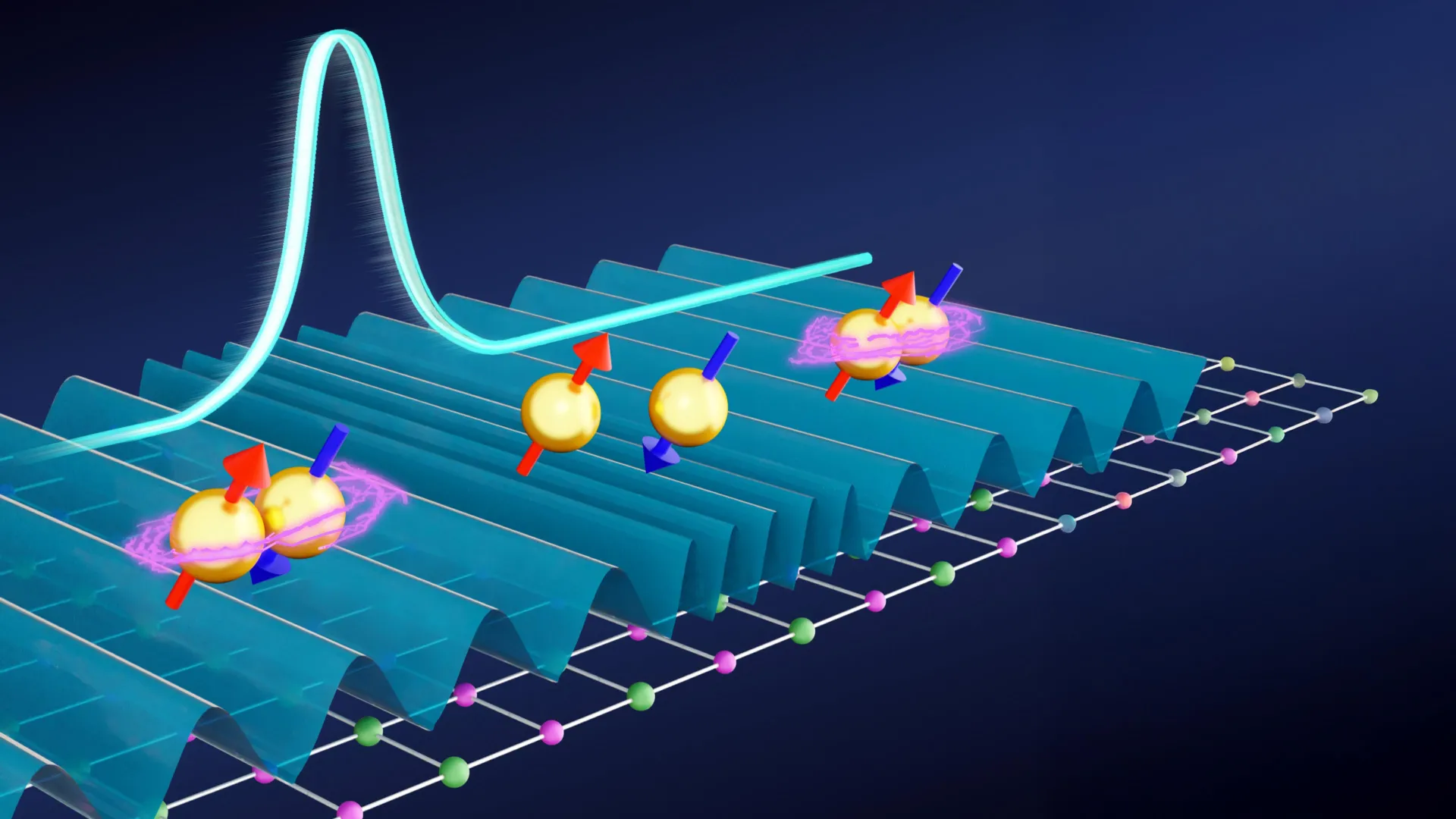
Altermagnetism represents a revolutionary middle ground that sidesteps these opposing limitations. First theorized comprehensively in recent years, altermagnets exhibit a unique alternating magnetic configuration where sub-lattice magnetic moments point in opposite directions, much like antiferromagnets. However, they possess a microscopic crystal symmetry that allows them to break time-reversal symmetry in momentum space without generating a net magnetic moment. The result is a material that operates cleanly without stray magnetic fields while simultaneously possessing the capacity to generate and detect spin currents. This dual functionality transforms altermagnets into the ultimate holy grail for spintronic engineering, combining the non-interfering nature of antiferromagnetism with the active utility of ferromagnetism.
Chronology and Experimental Methodology: Unmasking the Quantum Signature
Confirming the existence of altermagnetism in a physical sample required a meticulous, multi-stage scientific campaign that spanned advanced synthesis, surface characterization, and high-resolution spectroscopy. The investigative process began with the fabrication of ultra-high-quality crystals of Co1/4TaSe2, a layered material belonging to the transition-metal dichalcogenide (TMD) family. These materials feature magnetic cobalt atoms intercalated between weakly bonded atomic sheets of tantalum and selenium, creating a highly tunable platform for physical manipulation.
The chronology of the research highlights the rigorous validation protocols implemented by Neupane’s laboratory and their collaborators:
- Material Synthesis and Preparation: Collaborators synthesized pristine crystals of Co1/4TaSe2. Because photoemission techniques are exquisitely sensitive to surface imperfections, the team instituted stringent preparation protocols to ensure exceptionally clean, contamination-free surfaces capable of yielding uncompromised electronic signals.
- Initial Band Structure Mapping: The researchers deployed angle-resolved photoemission spectroscopy (ARPES), a sophisticated analytical technique that directs ultraviolet or X-ray photons onto a material to eject electrons. By measuring the kinetic energy and emission angles of these electrons, the team reconstructed the material’s electronic band structure, revealing a distinctive splitting within the energy levels.
- Spin-Resolved Verification: To confirm that the observed band splitting was indeed driven by altermagnetism rather than conventional spin-orbit coupling, the team transitioned to spin-resolved ARPES. This advanced iteration of the technique measures the spin polarization of the electrons.
- Theoretical Convergence: The resulting data demonstrated that the separated electronic states possessed opposite spin polarizations—a definitive signature of altermagnetic order. Once these empirical measurements consistently mirrored advanced theoretical predictions, the team verified the discovery of a genuine layered altermagnet.
"Our approach was to use higher-resolution methods that were insensitive to the electron’s spin to measure the splitting in the energy levels," explains Professor Neupane. "Then, we complemented this measurement with spin-resolved ARPES to conclusively tell if this looks like altermagnetism. The significance became clear once the experimental measurements consistently matched our theoretical predictions. Seeing those independent pieces of evidence converge gave us confidence that we had identified a genuine layered altermagnet."
Data Analysis and Material Versatility: Inside Co1/4TaSe2
Beyond confirming altermagnetism, the UCF study addressed a critical debate within the theoretical physics community regarding the spatial origin of altermagnetic states in layered systems. Prior to these experiments, theorists questioned whether the critical spin-polarized electronic states observed in TMDs originated exclusively at the exposed surface of the material or if they represented an intrinsic bulk property embedded deep within the crystal lattice.
Through rigorous depth-sensitive spectroscopic profiling, Neupane’s team determined that the altermagnetic order in Co1/4TaSe2 originates fundamentally from within the bulk material itself. This distinction is vital for device engineering, as surface-dependent phenomena are notoriously fragile and susceptible to environmental degradation, oxidation, and manufacturing defects. Bulk altermagnetism ensures structural robustness and stability under real-world operating conditions.
Furthermore, the physical architecture of Co1/4TaSe2 offers unprecedented versatility. Because the material is composed of weakly connected atomic planes, researchers can easily exfoliate, thin, or integrate it into heterostructures. This tunability allows scientists to apply mechanical strain, chemical doping, or electrostatic gating to modify the material’s properties dynamically, observing in real time how alterations influence both electronic transport and magnetic configuration.
Milo Sprague, the study’s lead graduate student researcher, emphasizes the broader scientific utility of this platform. "Evidence for altermagnetism in a versatile materials platform opens a lot of new possibilities," Sprague notes. "There’s currently a lot of debate in altermagnetic theory about how the spin-polarized electronic states interact with other magnetic phenomena. Now we have a material that we can easily modify to explore these new questions."
Broader Impact, Economic Implications, and Future Outlook
The implications of discovering a viable, bulk altermagnet extend far beyond the confines of academic physics, promising to reshape the commercial technology landscape. As silicon-based complementary metal-oxide-semiconductor (CMOS) scaling reaches fundamental physical boundaries governed by quantum tunneling and thermal dissipation, the semiconductor industry is desperately searching for post-silicon computational paradigms.
Spintronics—electronics that utilize the spin angular momentum of electrons alongside or instead of their electrical charge—offers a compelling pathway forward. Devices built on spintronic principles can perform logic operations and store data simultaneously, leading to non-volatile memory architectures that require zero standby power. However, commercializing spintronics has historically been bottlenecked by material constraints: ferromagnets cause unacceptable magnetic noise and thermal inefficiencies, while antiferromagnets are notoriously difficult to control externally.
Altermagnets elegantly solve this dilemma. By enabling the generation and detection of pure spin currents without generating stray magnetic fields, layered altermagnets like Co1/4TaSe2 pave the way for several transformative technological applications:
- Ultrafast Memory Devices: Altermagnetic storage media could achieve writing speeds hundreds of times faster than conventional magnetic RAM (MRAM) while consuming a fraction of the energy.
- Terahertz Computing Networks: The intrinsic high-frequency dynamics of altermagnetic spin transport could facilitate wireless communication and data processing in the terahertz frequency regime, exponentially accelerating data transfer rates.
- Energy-Efficient Microelectronics: Eliminating the Joule heating associated with massive electrical charge currents will drastically reduce power consumption in data centers, consumer electronics, and artificial intelligence hardware accelerators.
- Quantum and Neuromorphic Architectures: The tunability of layered TMD altermagnets provides a flexible foundation for emerging computational paradigms that mimic biological neural networks or interface with quantum processors.
Despite these promising horizons, significant hurdles remain before commercial integration can occur. Fundamental questions persist regarding the exact thermodynamic mechanisms that govern the formation of altermagnetism, why this state is favored over competing magnetic phases under specific environmental conditions, and how altermagnets interact with superconductivity and topological states. Theoretical physicists and experimentalists are now racing to map out these uncharted domains.
With financial support from the U.S. Department of Energy Office of Science (under Award Number DE-SC0024304), Neupane’s research group and their institutional partners are already expanding their investigations. By utilizing Co1/4TaSe2 and identifying additional altermagnetic candidates, the scientific community is well-positioned to unlock the full potential of spin-based electronics.
"As electronic devices continue to shrink, researchers need new materials that can operate faster while consuming less energy," concludes Professor Neupane. "There are many details to the theory of how altermagnets work that haven’t been explored or verified yet. Now that we have identified several platforms for answering these questions, more advanced studies into these materials are underway. If this approach proves viable, then layered altermagnets will be at the forefront of electronics development."