The pharmaceutical industry has long been defined by the pursuit of the "druggable" genome—a subset of proteins whose stable, pocketed 3-D structures allow small-molecule drugs to bind with predictable precision. However, the landmark success of tools like AlphaFold, while revolutionary, has highlighted a persistent limitation: a vast portion of the human proteome remains effectively invisible to structure-based design. Seattle-based biotechnology firm Talus Bio is now challenging this paradigm, announcing a breakthrough in high-throughput drug screening that eschews protein folding entirely in favor of a data-driven, structure-free approach.
The company’s new platform, Ptarmigan-1, represents a fundamental pivot from the industry-standard reliance on 3-D geometric modeling. By leveraging mass spectrometry data to identify where compounds engage proteins within cellular environments, Talus Bio aims to unlock "undruggable" targets, specifically transcription factors—proteins that govern gene expression but are notoriously difficult to target due to their inherently flexible, disordered nature.
The Problem of Intrinsic Disorder
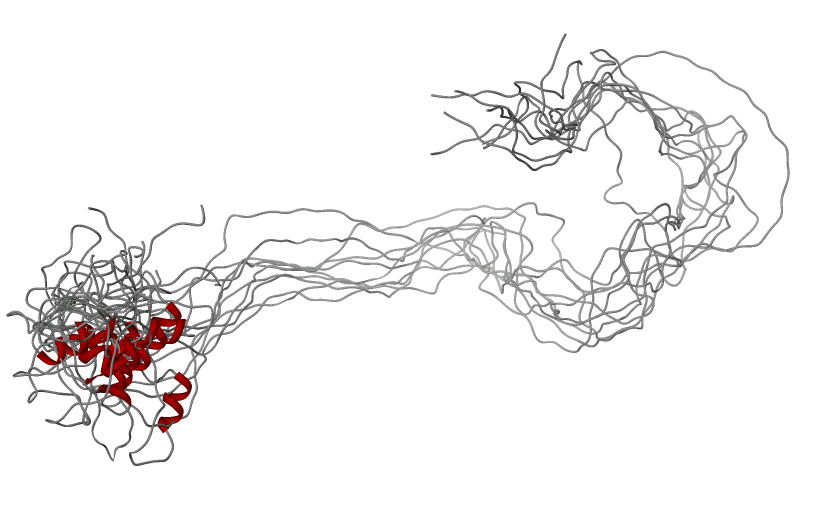
For decades, researchers have relied on the "lock and key" model of pharmacology, where a drug is designed to fit into a rigid cavity on a protein surface. However, this model falters when applied to proteins that do not possess a fixed conformation. Transcription factors, which are central to the development of numerous cancers, often exist as intrinsically disordered proteins (IDPs).
Lindsay Pino, Ph.D., Chief Technology Officer at Talus Bio, describes the futility of applying traditional structural prediction to these molecules: "If you try to fold a transcription factor, you just get a plate of spaghetti. You can’t do drug discovery on a plate of spaghetti."
Current data indicates that approximately 50% of the human proteome lacks a stable, permanent structure that traditional folding algorithms can utilize. This biological reality contributes to a significant clinical gap: despite the existence of over 20,000 human proteins, roughly 87% lack an approved small-molecule drug or even a known potent ligand. By ignoring the need to predict a protein’s 3-D shape, Talus Bio is effectively bypassing the bottleneck that has kept these high-value targets out of reach for traditional medicinal chemistry.
Chronology of a Computational Shift
The rise of structural biology in drug discovery has followed a distinct timeline. In the early 2020s, the deployment of AI-driven tools like AlphaFold and the subsequent release of massive protein structure databases provided an unprecedented view of the proteome. While these tools were transformative, they created a secondary, massive computational burden.
The process of "co-folding"—simulating how a specific drug candidate might interact with a specific protein structure—is computationally expensive. In a conventional virtual screening scenario involving a discovery-scale library of one million compounds, the costs and time requirements become prohibitive. Talus Bio CEO Alex Federation notes that such an experiment can cost between $100,000 and $1 million, requiring months of continuous compute time to process a single protein target.
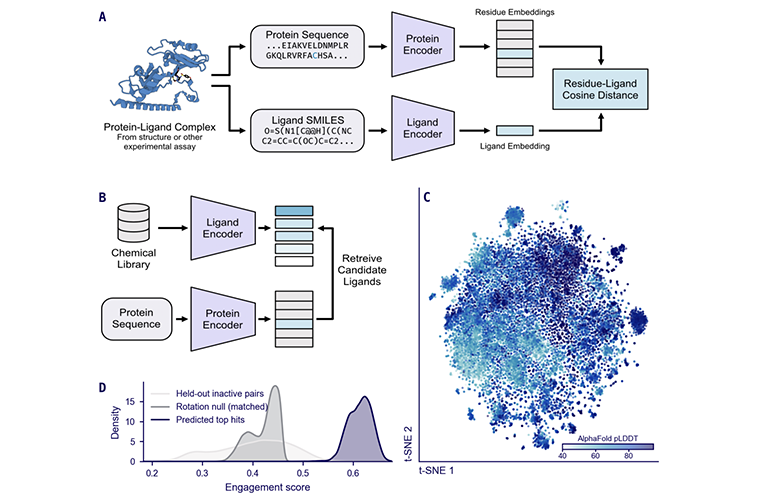
In July 2026, Talus Bio published a preprint detailing their alternative methodology. Instead of relying on simulated 3-D geometries, the team utilized deep learning models trained on experimental mass spectrometry data. This data captures the physical reality of target engagement inside living cells, effectively recording "what works" without needing to explain "why it fits" in terms of spatial coordinates.
Benchmarking Performance: Speed and Accuracy
The efficiency gains reported by Talus Bio are significant. In comparative benchmarks run on a single Nvidia H100 GPU, the Ptarmigan-1 model processed compounds at an average rate of 10 milliseconds per molecule. In contrast, Boltz-2, a leading open-source model designed for structural prediction and binding affinity, averaged 54 seconds per compound.
This 5,000-fold increase in speed has profound implications for the scale of drug discovery. A screen of one million compounds that would have historically required nearly two years of computational processing can now be completed in under three hours. In a recent validation exercise, the company utilized its pre-encoded compound library to scan all 20,431 human proteins against a 3.4-billion-compound library, achieving a comprehensive screening result in less than 24 hours using only 20 H100 GPU-hours.
The accuracy of the model was tested in a retrospective study involving the transcription factor STAT6. When tasked with identifying inhibitors from a set of Pfizer patents published after the training cutoff for competing models, Ptarmigan-1 achieved an area under the curve (AUC) of 0.94. For comparison, both the Boltz-2 model and standard docking simulations scored 0.58—a result barely exceeding statistical chance.
Implications for the Future of Drug Discovery
While Ptarmigan-1 excels at identifying binders for disordered proteins, Talus Bio maintains a nuanced view of the technology landscape. The company does not position its tool as a replacement for structural modeling but rather as a complementary front-end process. By using Ptarmigan-1 to rapidly narrow a library of billions of compounds down to a high-probability subset, researchers can then apply structural modeling to the "survivors" for fine-tuned refinement.
This tiered approach addresses the "computational expense" of discovery while ensuring that the most promising candidates are vetted with the highest degree of structural precision available.
The broader implications for the pharmaceutical industry are substantial. If successful in clinical translation, this platform could dramatically accelerate the pipeline for oncology and autoimmune disease therapeutics. The industry has spent decades identifying "good" targets that remained commercially and scientifically inaccessible due to the limitations of structural biology.
"We’ve been sitting on these targets we’ve known about for decades, that we know are good targets," Pino noted. "We just haven’t had the tools to find them yet."
Institutional Context and Industry Reaction
The shift toward structure-free screening reflects a maturing of AI in the life sciences. Where the first generation of AI in drug discovery focused on the "structure problem," the second generation—exemplified by Talus Bio—is increasingly focused on the "data problem." By prioritizing experimental evidence from mass spectrometry over the predictive simulations of protein folding, the company is aligning itself with a growing movement in bioinformatics that favors empirical, high-throughput biological data as the primary training input for machine learning models.
Industry analysts suggest that the success of such models could lead to a decentralization of the "undruggable" space. If the barrier to entry for screening complex proteins is lowered from millions of dollars and years of time to a matter of hours on modern GPU clusters, a wider array of biotech firms and academic labs may be able to pursue high-risk, high-reward targets that were previously the sole domain of the world’s largest pharmaceutical conglomerates.
As the industry moves toward 2027, the success of Ptarmigan-1 will be closely monitored. The transition from proof-of-concept to clinical utility remains the final, and most difficult, hurdle. However, by effectively turning the "spaghetti" of disordered proteins into a tractable dataset, Talus Bio has signaled that the next frontier of medicine may not be found by looking closer at 3-D shapes, but by looking more effectively at the raw data of cellular interaction.