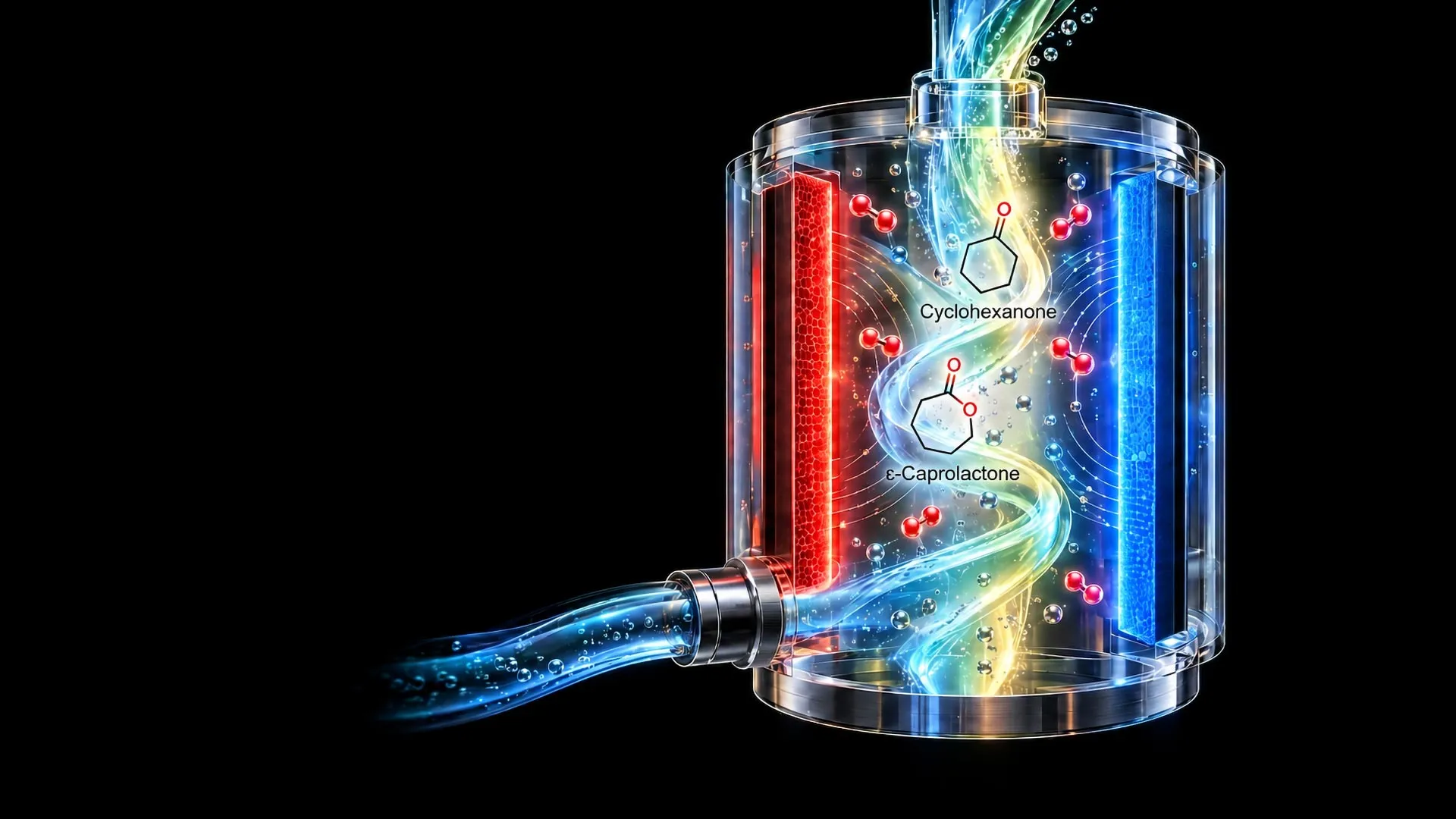
In a breakthrough that bridges the gap between laboratory physics and the vast reaches of the interstellar medium, a PhD student at the University of Sydney has successfully synthesized cosmic dust from scratch. By recreating the extreme conditions of the early universe inside a glass vacuum chamber, the research provides a transformative look at how the chemical precursors to life may have formed in the vacuum of space long before the Earth existed. Linda Losurdo, a candidate in materials and plasma physics within the University’s School of Physics, led the experiment, which effectively "reverse engineers" the particulate matter that floats between stars, offering a new roadmap for understanding the origins of organic chemistry in the cosmos.
The study, recently published in The Astrophysical Journal of the American Astronomical Society, details the creation of carbon-rich dust that mirrors the material found within the protective shells of comets, the rocky interiors of asteroids, and the fragments of meteorites that occasionally strike Earth. This "universe in a bottle" approach allows scientists to bypass the multi-year wait for space missions to return samples, providing an immediate and controllable environment to study the evolution of matter in the high-energy regions surrounding dying stars and nascent solar systems.
The Chemistry of Life: The Role of CHON Molecules
At the heart of the research is the synthesis of complex combinations of carbon, hydrogen, oxygen, and nitrogen. In the scientific community, these are frequently referred to as CHON molecules. These four elements are the fundamental building blocks of all known life, forming the basis of amino acids, proteins, and DNA. While these elements are abundant on Earth, their presence in the deep reaches of space has long suggested that the "seeds" of life may have been sown across the galaxy by the death of stars.
Ms. Losurdo’s laboratory-grown dust contains these CHON elements in complex organic structures that are nearly identical to those observed in interstellar space. By using infrared spectroscopy, the research team confirmed that their synthetic dust produced the same "molecular fingerprints" as the dust clouds observed by astronomers in distant nebulae. This correlation is a significant validation of the theory that complex organic chemistry does not require a planetary environment to begin; rather, it can occur in the highly energetic plasma of stellar outflows.
Replicating the Energetic Environments of Supernovae
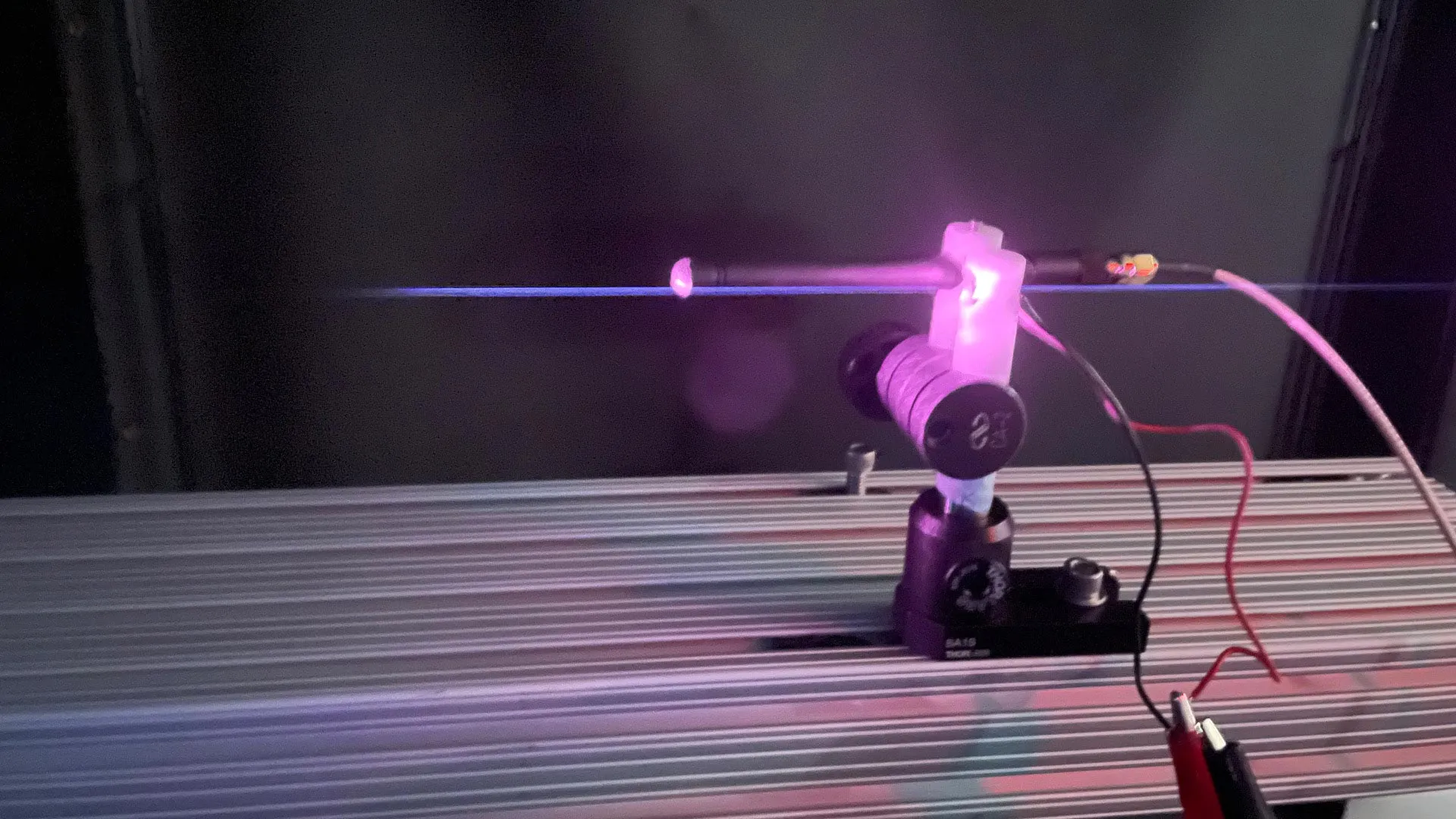
To simulate the harsh conditions of deep space, the research team utilized a sophisticated experimental setup involving vacuum technology and high-voltage electricity. The process began with the evacuation of air from glass tubes to create a near-perfect vacuum, approximating the low-pressure environment of the interstellar medium.
Once the vacuum was established, the researchers introduced a precise mixture of gases: nitrogen, carbon dioxide, and acetylene. These gases were selected because they represent the chemical precursors commonly found in the "puffed out" atmospheres of giant, aging stars and the debris fields left behind by supernovae. To trigger the chemical reactions necessary to form dust, the team applied an electrical potential of approximately 10,000 volts.
This intense energy transformed the gas into a state of matter known as plasma, specifically a "glow discharge." In this state, molecules are bombarded by ions and electrons, causing their atomic bonds to break apart and reform into increasingly complex arrangements. Over the course of an hour, the volatile gases condensed into solid particles. These particles settled onto silicon chips placed within the tube, forming a thin, shimmering layer of dust that, under microscopic examination, resembled the sparkling fragments of cosmic material found in carbonaceous chondrite meteorites.
Chronology of Cosmic Evolution and Earth’s Early History
The implications of this research are deeply tied to the timeline of our own solar system. Current astrophysical models suggest that from approximately 4.56 billion to 3.5 billion years ago, the young Earth was subjected to a period of intense bombardment known as the Late Heavy Bombardment. During this era, meteorites, micrometeorites, and interplanetary dust particles from the outer solar system crashed into the planet’s surface in staggering quantities.
Scientists have long hypothesized that these celestial impacts delivered the vast majority of Earth’s initial organic inventory. However, a persistent "missing link" has been the specific chemical pathways that allowed simple gases in space to become the complex solids found in meteorites. Ms. Losurdo’s experiment provides a plausible mechanism for this transition. By demonstrating that plasma-driven reactions can rapidly assemble CHON molecules into solid dust, the study suggests that the ingredients for life were likely pre-fabricated in the envelopes of distant stars and transported to Earth as ready-made chemical modules.
Official Perspectives: A New Tool for Space Exploration
Professor David McKenzie, a supervisor of the project and a co-author of the study, emphasized that this laboratory approach provides a level of detail that remote observation cannot match. While telescopes like the James Webb Space Telescope (JWST) can observe the light signatures of distant dust, they cannot manipulate the environment to see how those signatures change under different temperatures or radiation levels.
"By making cosmic dust in the lab, we can explore the intensity of ion impacts and temperatures involved when dust forms in space," Professor McKenzie stated. He noted that the experiment allows researchers to "read the record" of a meteorite’s journey. By comparing the chemical signatures of lab-grown dust with actual space rocks, scientists can determine the exact conditions—such as the heat of a supernova or the radiation of a cosmic nursery—that a specific fragment has endured over billions of years.
The scientific community has already recognized the significance of this work. Late last year, Ms. Losurdo received the award for best presentation at the international Annual Meeting of the Meteoritical Society, a prestigious gathering of experts dedicated to the study of planetary science and extraterrestrial materials.
Building a Global Fingerprint Library for Astronomers
One of the most practical outcomes of this research is the development of a comprehensive database of infrared signatures. Every chemical compound absorbs and emits light at specific frequencies, creating a unique spectrum or "fingerprint." Astronomers use these fingerprints to identify the composition of gas clouds thousands of light-years away.
The University of Sydney team plans to expand their experiments to create a variety of "analogue" dust types by varying the gas mixtures and energy levels. This will result in a library of spectral data that astronomers can use to interpret observations from current and future space missions. If a telescope detects a specific infrared signal in a star-forming region, researchers can look at the lab-grown library to find a match, thereby identifying not just the chemicals present, but the physical processes that created them.
This database will be particularly valuable for interpreting data from the JWST, which operates primarily in the infrared spectrum. As the JWST peers into the "dusty" regions of the universe where stars and planets are born, the ability to compare those observations with controlled laboratory samples will be essential for identifying the presence of life-essential molecules in other solar systems.
Broader Implications and the Future of Astrobiology
The success of the "universe in a bottle" experiment opens new doors in the field of astrobiology. If the building blocks of life are a natural byproduct of stellar evolution and are distributed throughout the galaxy as cosmic dust, the likelihood of similar chemical processes occurring on other habitable planets increases significantly.
The research also challenges the traditional view that the transition from inorganic to organic chemistry required the unique conditions of a planetary surface, such as Earth’s early oceans or hydrothermal vents. Instead, it suggests that the universe is a prolific "organic factory," churning out the complex structures necessary for biology in the cold, energetic vacuum of space.
Furthermore, the study highlights the importance of interdisciplinary research. By combining principles from plasma physics, materials science, and astronomy, the University of Sydney team has provided a new lens through which to view the ancient history of the solar system. The project received funding from the Australian Research Council and was supported by the University of Sydney node of Microscopy Australia, illustrating a robust institutional commitment to fundamental space science.
As the team continues to refine their methods, the focus will shift toward creating even more complex structures, including precursors to amino acids and nucleobases. By continuing to bridge the gap between the laboratory and the stars, this research brings us one step closer to answering the ultimate question: how a collection of dust and gas in the void of space eventually transformed into the complex web of life on Earth. Through the study of these microscopic particles, scientists are beginning to piece together a much larger story—one that suggests our origins are written in the very dust of the stars.