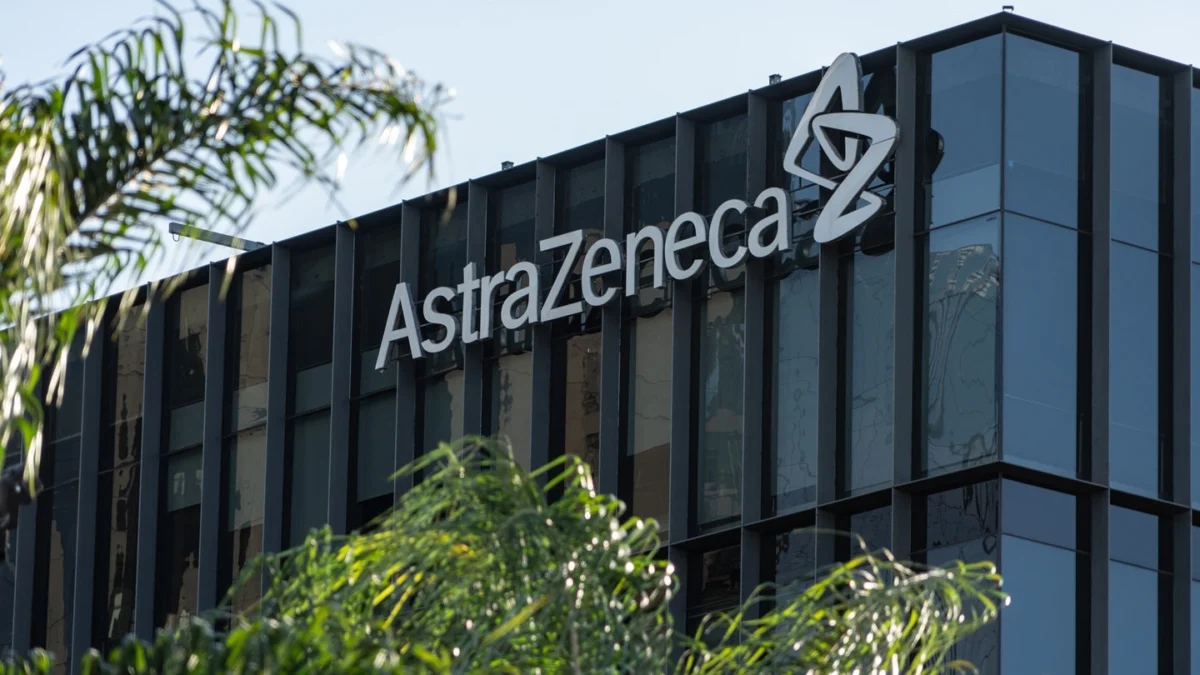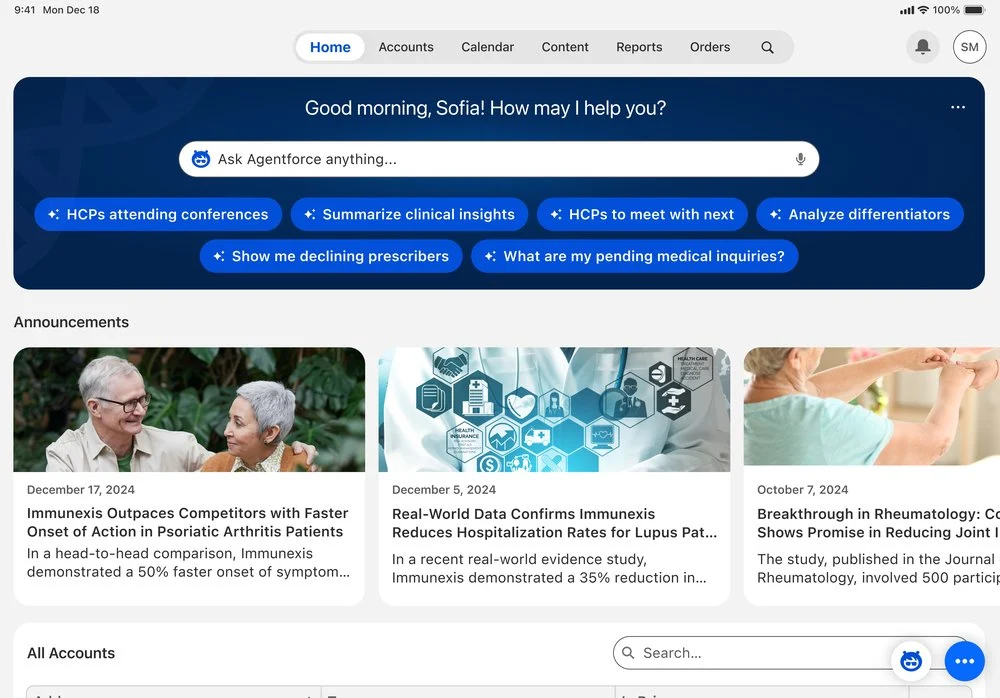
In a significant move underscoring the escalating competition in the life sciences technology sector, Salesforce announced that over 140 life sciences organizations have adopted its Agentforce Life Sciences platform. This declaration, made as Peter Gassner, CEO of rival Veeva Systems, addressed attendees at the Veeva Commercial Summit in Boston, signals Salesforce’s aggressive push into a market historically dominated by Veeva. Among Salesforce’s burgeoning client roster are industry titans such as Novartis, AstraZeneca, Moderna, and Merck Animal Health, indicating a substantial penetration into the pharmaceutical and biotechnology landscape.
Joe Ferraro, SVP and GM of life sciences at Salesforce, emphasized the breadth of adoption, stating, "The 140 represents customers across our entire portfolio, regardless of whether they are using it for patient engagement, clinical engagement, commercial engagement or medical engagement." This comprehensive engagement strategy positions Agentforce Life Sciences as an AI-native, end-to-end solution designed to streamline various facets of life sciences operations, from drug discovery and clinical trials to commercialization and patient support.
The Intensifying Battle for Life Sciences AI Dominance
The simultaneous announcements from Salesforce and Veeva highlight a critical juncture in the evolution of life sciences technology: the widespread embrace of agentic AI. Both companies are championing AI-driven platforms, recognizing the transformative potential of autonomous agents in enhancing efficiency, personalization, and compliance across complex industry workflows. Veeva’s CEO, Peter Gassner, echoed this sentiment at the Commercial Summit, proclaiming, "The Agentic Commercial model changes everything about how we approach commercialization," pointing to its impact on digital promotion, field team operations, and content approval processes.
The competition between Salesforce and Veeva is not new, but the focus on agentic AI marks a new frontier. Salesforce, a global CRM powerhouse, is leveraging its extensive AI development history to challenge Veeva’s long-held stronghold in specialized life sciences cloud software. Ferraro asserted Salesforce’s pioneering role in AI, contrasting it with what he described as slower innovation from legacy systems. "Salesforce has been pioneering AI for the last decade, whereas many legacy systems have been slow to innovate," he remarked, suggesting that customer demand and Salesforce’s early vision "really forced Veeva’s hand on this."
Salesforce’s Deep Roots in AI Innovation
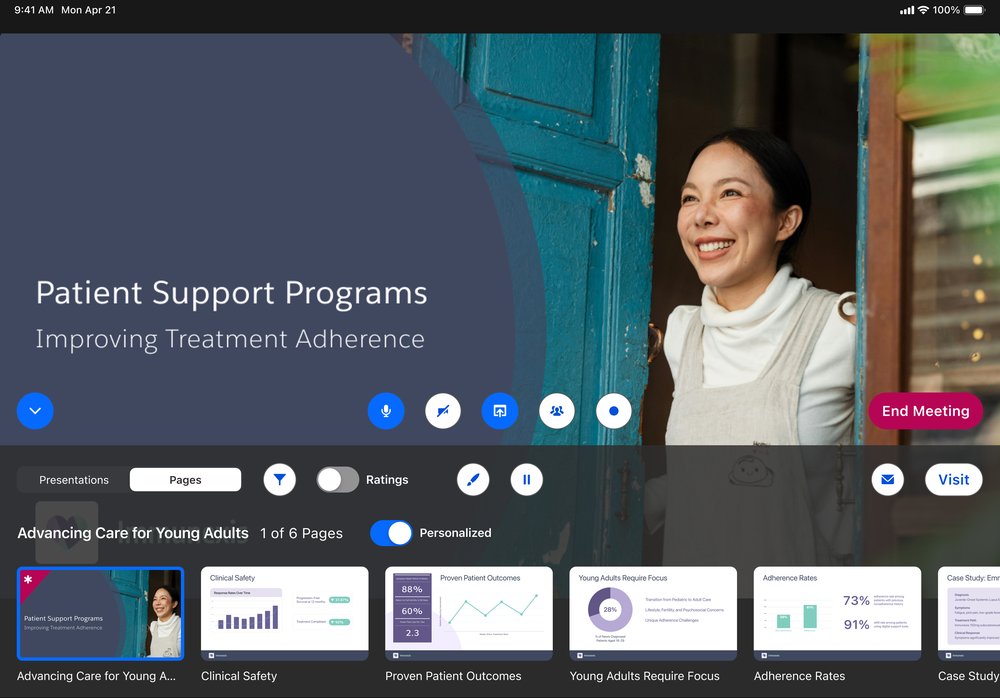
While the recent surge in AI interest, particularly following the launch of ChatGPT, has brought generative AI into the mainstream, Salesforce’s commitment to artificial intelligence predates this phenomenon by nearly a decade. CEO Marc Benioff famously declared Salesforce an "AI-first company" during an internal all-hands meeting in 2014, the same year the company acquired machine-learning startup RelateIQ for an estimated $390 million. This strategic acquisition laid foundational capabilities for future AI endeavors.
In 2016, Salesforce launched Einstein, its first CRM AI, at its annual Dreamforce conference. Einstein aimed to embed AI directly into the CRM experience, providing predictive analytics and intelligent recommendations across sales, service, and marketing functions. This continuous investment culminated in the unveiling of the Agentforce platform at Dreamforce in September 2024. Benioff branded Agentforce as "digital labor" and set an ambitious goal to empower one billion agents by the end of 2025, underscoring the company’s belief in the pervasive impact of autonomous agents.
This focus remains a central pillar of Salesforce’s growth strategy. During the company’s first-quarter fiscal 2027 earnings call on May 27, Benioff reported that Salesforce had processed a staggering 28.6 trillion AI tokens, representing a 152% quarter-over-quarter increase. He identified agentic AI as "the biggest growth opportunity" for the company since its pioneering move to bring CRM to the cloud, highlighting Agentforce’s impressive annual recurring revenue (ARR) of $1.2 billion. This financial performance provides tangible evidence of the market’s rapid embrace of Salesforce’s AI offerings. "We have thousands of engineers working on AI at Salesforce right now," Ferraro noted, contrasting this scale with Veeva’s capabilities and asserting Salesforce’s ability to "move a lot faster from an agentic standpoint."
Veeva’s Strategic Response: Falcon and Integrated Agents
Not to be outdone, Veeva Systems has also been actively developing and deploying its own suite of AI solutions. On May 27, Veeva announced Falcon, an agentic platform designed specifically for drug development. Falcon includes a set of standard agents that run within Veeva Development Cloud, spanning clinical, regulatory, and safety applications. Early-adopter availability for Falcon is slated for November 2026, showcasing Veeva’s commitment to integrating AI deeply into its core life sciences offerings. Gassner described Falcon as the company’s "first offering in agentic labor," emphasizing its strategic importance.
Veeva’s AI initiatives extend beyond Falcon. Its Vault CRM’s Free Text, Voice, and Pre-call agents went live in December 2025, aiming to boost productivity and customer-centricity for sales representatives. The company’s public roadmap for 2026 included Safety and Quality agents, and its 26R1 release introduced a Narrative Agent for Veeva Safety, designed to automate the creation of complex safety narratives. In a strategic move to bolster its conversational AI capabilities, Veeva acquired Ostro, an AI brand-engagement platform for life sciences, for approximately $100 million in March 2026. Ostro’s technology is crucial for providing compliant, Medical, Legal, and Regulatory (MLR)-approved responses to patient and HCP inquiries, ensuring accuracy and regulatory adherence. At its Commercial Summit, Gassner also previewed a Vault AI Tab, scheduled for August release, which will offer a conversational layer to query customer’s Vault data while respecting existing security permissions.
Architectural Philosophies: Headless AI vs. Deep Integration
A core differentiator in the competitive strategies of Salesforce and Veeva lies in their architectural approaches to agentic AI. Salesforce is heavily betting on what it terms "headless" AI. Ferraro elaborated on this concept, explaining it as "popping the top off the platform, exposing all the APIs, and exposing all the data models and workflows as MCP tools." MCP, or Model Context Protocol, is a standard introduced by Anthropic in 2024 and later donated to the Agentic AI Foundation, a Linux Foundation-directed fund, in December 2025.
Salesforce’s headless strategy means that instead of requiring users to operate solely within its proprietary interfaces, the company exposes its productized workflows as MCP servers. These servers can then surface within whatever AI tool a customer already utilizes, such as Anthropic’s Claude. "I was with a customer yesterday who has made a significant investment in Anthropic, and they are going to use our MCP service for Agentforce Life Sciences to bring all of those compliant workflows directly inside Claude," Ferraro recounted. This approach offers unparalleled flexibility, allowing life sciences companies to integrate Salesforce’s compliant AI capabilities into their existing, often diverse, technology stacks without significant re-platforming. It caters to organizations that have already made substantial investments in other AI models or platforms, promising a more open and interoperable AI ecosystem. Salesforce’s model layer strategy further reinforces this flexibility, supporting a range of Salesforce-managed and customer-supplied models for Agentforce.
In contrast, Veeva’s Vault AI Agents are designed to run predominantly within Veeva’s own applications, working in-context against its proprietary data, documents, and workflows. This "depth-inside-the-app" posture emphasizes seamless integration within Veeva’s established ecosystem, providing a highly controlled and optimized environment for its agents. While third-party connectors like CData exist to expose Veeva data to outside models, Veeva’s core philosophy leans towards a deeply integrated, "surface-it-here" approach. Regarding model choice, Veeva standardizes its agents, including Vault CRM’s, on Anthropic and Amazon models hosted on Amazon Bedrock. It offers model choice only for custom agents, where customers can opt for Veeva-hosted models or bring their own on Bedrock or Microsoft Azure AI Foundry. This distinction highlights a fundamental philosophical difference: Salesforce prioritizes broad interoperability and customer choice of AI frontend, while Veeva emphasizes a tightly integrated, purpose-built experience within its own comprehensive suite.
Accelerating Onboarding and Operational Efficiency
The practical benefits of agentic AI are already being realized by Salesforce’s life sciences clients, particularly in accelerating onboarding processes. Salesforce has observed that some of its smaller life science customers have completed onboarding within approximately one month, a significantly reduced timeline compared to traditional implementations. Companies like Chiesi Group and CSL are leveraging Agentforce Life Sciences to unify customer data and coordinate engagement across commercial and medical operations, demonstrating the platform’s ability to drive efficiency at scale.
Ferraro attributes part of this rapid onboarding success to the deployment of AI agents, which reduce the reliance on extensive consultant teams. "You get one forward-deployed engineer, and they can do the work of five or 10 previously, because they have Claude Code, or they have Codex, and they can point those tools at the Salesforce platform," he explained. As an example, Salesforce developed an MCP server within Agentforce Life Sciences capable of configuring the product itself. A task such as adding a quick action to an iPad app that launches a specific UI prompt – a process that would typically involve a human navigating through multiple nested configuration screens – can now be executed automatically by an agent, drastically cutting down setup time and complexity. This automation frees up valuable human resources to focus on more strategic tasks, thereby enhancing overall productivity.
Navigating the Regulatory Maze: Determinism and Compliance
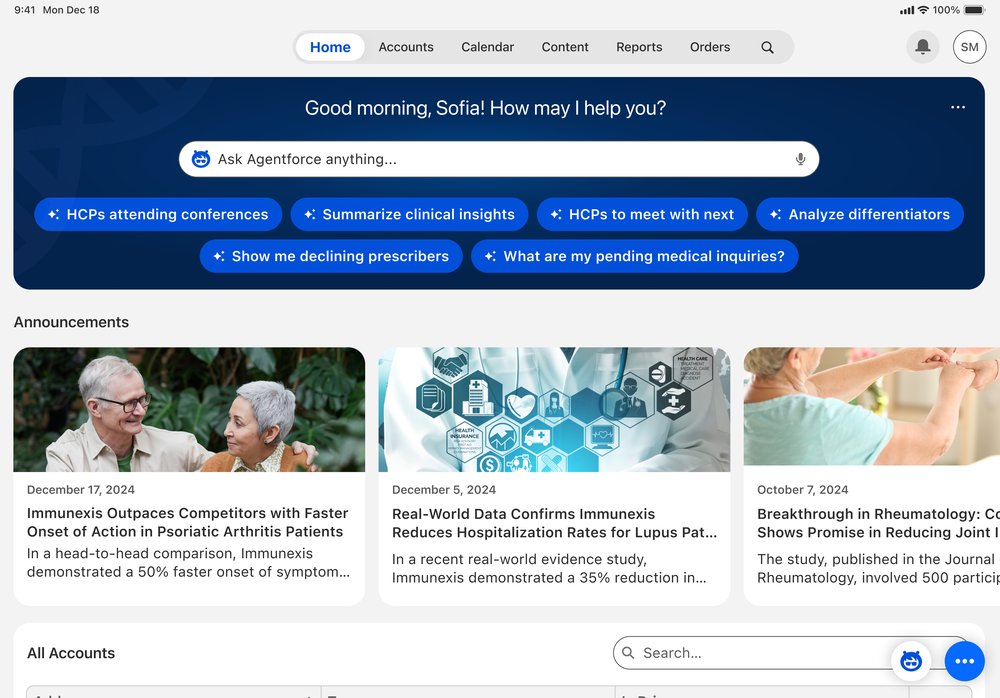
A paramount concern in the highly regulated life sciences industry is ensuring compliance and predictability, especially when dealing with probabilistic large language models (LLMs). LLMs are inherently designed to predict likely next tokens, making them excellent for summarization and content generation but posing challenges for workflows requiring absolute determinism – such as how often a sales representative can message a physician, the exact wording of a message, or the verification of patient consent.
Both Salesforce and Veeva have addressed this critical need for determinism in their agentic software. Salesforce employs a feature called Agent Script, which seamlessly weaves deterministic checks, approved templates, and consent status directly into the probabilistic layer of its AI agents. This mechanism ensures that while the model can synthesize information and surface insights, any regulated action is executed through a fixed set of tools backed by deterministic workflows and predefined, confined actions. "The model cannot go off script, because those tools are unavailable," Ferraro affirmed, emphasizing that "the tools are outside its toolbox." This hybrid approach allows for the benefits of generative AI while maintaining strict adherence to regulatory requirements.
Similarly, Veeva runs its standard agents in-context within its own applications, leveraging its tightly integrated data and workflows to ensure compliance. By operating within a controlled environment, Veeva can ensure that agents only access and act upon approved content and processes, mitigating the risks associated with probabilistic outputs in a regulated context. This shared commitment to embedding deterministic controls within agentic AI frameworks is crucial for fostering trust and enabling widespread adoption in the life sciences sector.
Broader Implications for the Life Sciences Industry
The intensifying competition between Salesforce and Veeva, driven by their respective agentic AI strategies, signals a broader transformation within the life sciences industry. The adoption of AI agents is poised to reshape how pharmaceutical companies conduct research, manage clinical trials, engage with healthcare professionals and patients, and navigate the complex regulatory landscape.
For life sciences organizations, the choice between Salesforce’s "headless" flexibility and Veeva’s deeply integrated ecosystem will depend on their existing infrastructure, strategic priorities, and comfort level with different vendor models. Salesforce’s approach might appeal to larger enterprises with diverse tech stacks and a desire for interoperability, or those looking to leverage existing investments in general-purpose AI platforms. Veeva’s integrated solutions, conversely, may be more attractive to companies seeking a unified, purpose-built platform with comprehensive, industry-specific functionalities and a single vendor relationship.
Ultimately, the proliferation of agentic AI promises significant advancements: faster drug development cycles, more personalized patient engagements, optimized commercial strategies, and enhanced operational efficiencies across the value chain. However, success will hinge on the ability of these platforms to maintain strict compliance with global health regulations, ensure data privacy and security, and deliver tangible, measurable improvements. The race to equip life sciences companies with intelligent, autonomous agents is not just a technological battle; it is a strategic imperative that will define the future of healthcare innovation and delivery.