Scientists at the U.S. Department of Energy’s Princeton Plasma Physics Laboratory (PPPL) have identified a potentially transformative method for achieving nuclear fusion ignition, marking a significant theoretical breakthrough in the decades-long global pursuit of practical, limitless clean energy. By fundamentally re-evaluating the sequencing of how plasma is heated and compressed, researchers have calculated that future reactors could dramatically reduce the immense energy thresholds required to trigger a self-sustaining fusion reaction. Published in the peer-reviewed journal Physical Review Letters, the findings challenge traditional operational frameworks that have guided plasma physics for more than 70 years and offer a more comprehensive roadmap for the design of commercial tokamaks and stellarators.
The overarching objective of controlled nuclear fusion research is to replicate the stellar processes that power the sun, merging atomic nuclei to release extraordinary amounts of energy without generating long-lived radioactive waste or greenhouse gases. The primary milestone on this path is achieving a "burning plasma"—a self-heating state where fusion reactions generate enough internal thermal energy to sustain the process independently, eliminating the need for continuous external heating systems. Historically, reaching this milestone has been guided by a rigid mathematical benchmark established in the mid-20th century, which engineers have treated as a monolithic mountain to be climbed by applying maximum density and heat simultaneously.
Historical Context and the Evolution of the Lawson Criterion
For more than seven decades, the foundational rule governing fusion feasibility has been the Lawson criterion. First formulated by British physicist John D. Lawson in 1957, this mathematical equation defines the precise intersection of plasma temperature, density, and energy confinement time required to achieve a net energy yield. For generations, the global fusion community has relied on the Lawson criterion to evaluate whether a specific reactor design possesses the capability to reach ignition.
However, while the Lawson criterion establishes the destination, it has historically lacked a detailed roadmap for the most efficient journey. Traditional fusion engineering strategies have typically focused on a direct, high-energy ascent: compressing the fuel gas into a dense plasma first, and subsequently pumping massive amounts of external auxiliary power into the system to drive temperatures up to ignition levels. This brute-force approach demands staggering amounts of electrical energy, creating severe engineering hurdles and inflating the projected capital costs of commercial power plants.
Seeking a more refined approach, PPPL physicists Luis Delgado-Aparicio, Masayuki Ono, and Jonathan Menard set out to expand the classic criterion. By integrating four critical physical processes into a unified mathematical model rather than analyzing them in isolated silos, the research team mapped an alternative topographical landscape of fusion ignition—one that bypasses the steepest energy barriers entirely.
Mapping the Mountain Pass and the Cordey Saddle
To conceptualize the new findings, lead researcher Luis Delgado-Aparicio employs a geographic analogy. Imagine the energy requirements for fusion ignition as a vast, towering mountain range. The ultimate destination—a self-sustaining burning plasma—lies on the opposite side of the peak. Traditional reactor designs attempt to scale the mountain directly from the front, demanding maximum expenditure of energy to conquer the highest elevation.
The PPPL calculations reveal an alternative route that bypasses the highest peak by navigating through a critical mathematical feature known in fusion physics as the Cordey saddle. Named after advanced confinement theory, the Cordey saddle represents a relatively accessible mountain pass situated along the boundary that separates plasma requiring external auxiliary heating from plasma capable of sustaining its own nuclear reactions.
To quantify and evaluate these various trajectories, the researchers utilized a standard metric designated as Q, which measures the ratio of fusion power generated by the reactor to the external heating power supplied to the system. For instance, a Q value of 5 indicates that the fusion reactions produce five times the amount of thermal energy injected by auxiliary heating systems. In an idealized plasma consisting solely of pure fusion fuel, the Cordey saddle mathematically occurs at approximately Q = 5.
However, real-world fusion environments are vastly more complex. The presence of minute trace impurities, intense magnetic fields, and radiative energy losses can shift the location of the Cordey saddle upward, demanding a higher Q value to successfully navigate the pass. Understanding these localized shifts is critical for engineers attempting to design viable, cost-effective magnetic confinement devices.
The Hidden Threat of Tungsten Contamination
Among the most striking revelations of the PPPL study is the profound impact of trace impurities, particularly tungsten. Because future fusion reactors must withstand continuous operational temperatures exceeding those found at the absolute core of the sun—often reaching tens or hundreds of millions of degrees Celsius—engineers have increasingly selected tungsten as the armored lining for the interior walls of next-generation magnetic confinement machines due to its exceptionally high melting point.
Despite its thermal resilience, the PPPL calculations demonstrate that tungsten represents a severe vulnerability if even microscopic quantities erode from the reactor walls and enter the core plasma. The team’s advanced models show that tungsten contamination at a concentration of just one part in 10,000 can approximately double the total pressure required to achieve fusion ignition.
When the researchers extended their mathematical analysis from two dimensions into a comprehensive three-dimensional framework, they discovered that the elevated pressure demands driven by tungsten contamination could easily exceed the stability limits of the plasma itself. If the plasma pressure crosses these critical thresholds, the magnetic confinement can fail, causing the plasma to destabilize and terminate the reaction. This finding underscores the necessity of accounting for wall-material interactions early in the conceptual design phase of any commercial fusion pilot plant.
Balancing Stability and Energy Losses
Paradoxically, the research also revealed that certain physical processes traditionally viewed as obstacles to ignition may actually serve an essential stabilizing function once a reactor is operational. For decades, plasma physicists have grappled with the persistent danger of thermal "runaway" instability—a potentially hazardous scenario where an increase in fusion reaction rates generates a sudden surge of internal heat, which in turn accelerates the reaction rate further in a self-reinforcing, uncontrolled feedback loop.
The PPPL team’s calculations indicate that natural energy losses within the plasma can act as an inherent stabilizing counterbalance to thermal runaway. While these ongoing energy dissipations increase the initial difficulty of reaching the Cordey saddle, they simultaneously provide a self-regulating mechanism. This natural moderation could allow a burning plasma to maintain a steady, predictable operating state without requiring constant, high-speed interventions from external control systems.
Furthermore, unlike nuclear fission reactors, which retain enormous quantities of long-lived fuel and residual heat for extended periods, magnetic confinement fusion systems hold only seconds’ worth of fuel at any given moment. Consequently, a loss of control or a containment failure simply results in the immediate cooling of the plasma and the instantaneous cessation of the fusion reaction, entirely precluding the possibility of a catastrophic core meltdown.
Technological Solutions: Liquid Lithium and Spin-Polarized Fuel
To help future reactors overcome the severe performance penalties revealed by their calculations, the PPPL study highlights several emerging technologies currently under active investigation. One of the most promising methodologies involves coating the interior plasma-facing components of the reactor with liquid lithium—a pioneering technique that PPPL researchers have spent years developing and testing.
Liquid lithium armor offers a dual advantage: it can effectively capture and suppress migrating tungsten atoms before they reach the core plasma, while simultaneously mitigating harmful heat losses through the chamber walls. By maintaining cleaner plasma conditions and stabilizing thermal gradients, liquid lithium coatings could substantially lower the effective energy threshold required to reach the Cordey saddle.
In addition to liquid lithium, the study points to the utilization of spin-polarized fuel as an advanced operational strategy. By preparing and aligning the nuclear spins of the fuel isotopes—such as deuterium and tritium—prior to injection, researchers can significantly increase the reaction cross-section, thereby boosting the overall fusion rate without requiring an escalation in auxiliary heating power.
Implications for Future Reactor Design and Commercialization
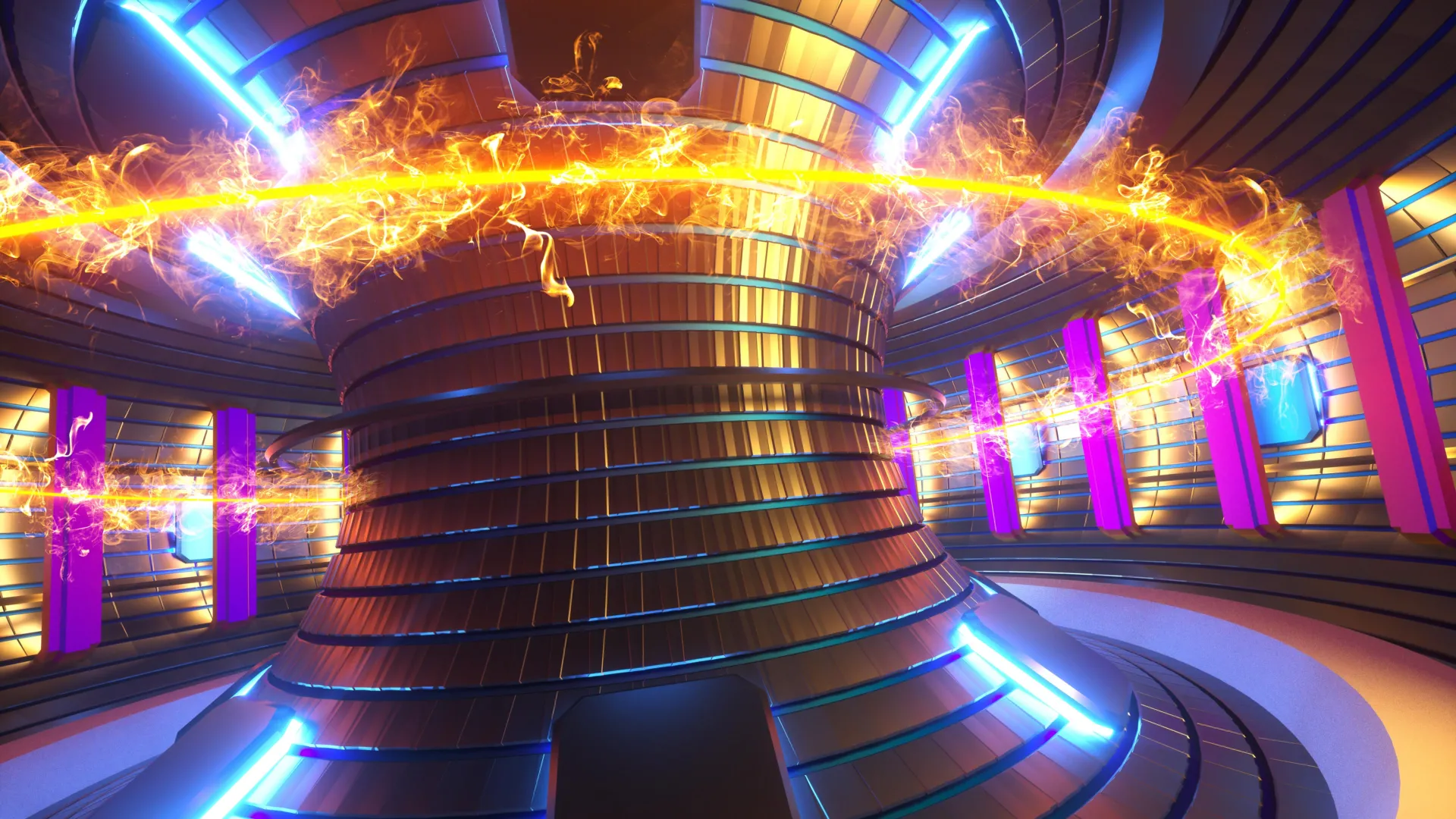
The findings published by Delgado-Aparicio, Ono, and Menard carry profound implications for both public research institutions and private-sector companies racing to bring fusion energy to the commercial electricity grid. The global fusion industry is currently dominated by two primary magnetic confinement architectures: tokamaks, which feature a distinctive axisymmetric doughnut shape, and stellarators, which utilize complex, twisted three-dimensional magnetic coils to achieve steady-state plasma containment.
By demonstrating that heating plasma prior to applying high levels of compression can circumvent the most punishing energy requirements, the PPPL study offers a clear strategic alternative to the prevailing "head-on" ascent models pursued by many commercial developers. Incorporating these four neglected physical processes into early-stage reactor design software allows engineers to stress-test their concepts before committing billions of dollars in capital expenditure to physical construction.
"Fusion experiments cost a great deal of money, and you do not want to make mistakes you could have caught beforehand," noted Masayuki Ono, emphasizing the economic imperative of robust, comprehensive physics modeling. "When you leave these effects out, you say the design will work fine. When you put them in, the picture changes, and it becomes quite important."
Next Steps and the Path to Experimental Validation
Despite the compelling theoretical strength of the new calculations, the proposed heat-first operational strategy remains to be validated through direct experimental execution. Existing fusion research facilities have not yet achieved the sustained plasma temperatures and confinement parameters associated with traversing the Cordey saddle under these specific sequences, precluding immediate empirical testing in physical hardware.
To bridge this gap, the PPPL research team is preparing to conduct extensive digital experiments. Utilizing high-performance, advanced computer-based plasma simulations, the scientists plan to model the dynamic behavior of plasmas subjected to pre-heating regimens to verify whether the predicted energetic advantages materialize under realistic operating conditions.
If these forthcoming computational studies confirm the validity of the mathematical models, the research will provide an indispensable foundation for the next generation of fusion pilot plants. As global investments in clean energy accelerate, optimizing the trajectory to ignition stands as a vital step toward transforming nuclear fusion from a theoretical scientific milestone into a reliable, commercially viable cornerstone of the world’s future energy infrastructure.