Proteolysis Targeting Chimera (PROTAC) technology has transitioned from a theoretical breakthrough in chemical biology to a validated clinical reality. In May 2026, the United States Food and Drug Administration (FDA) granted approval to vepdegestrant, marketed as Veppanu, for the treatment of patients with ER-positive, HER2-negative, ESR1-mutated advanced or metastatic breast cancer. This landmark regulatory decision represents the first time a targeted protein degrader has cleared the rigorous path to market, signaling a paradigm shift in how the pharmaceutical industry approaches "undruggable" protein targets. By utilizing the body’s own ubiquitin-proteasome system to achieve a "chemical knockdown" of disease-causing proteins, PROTACs have demonstrated the potential to circumvent the limitations of traditional small-molecule inhibitors.
However, the clinical success of vepdegestrant obscures the significant technical hurdles that persist for this modality. While the catalytic, event-driven mechanism of PROTACs allows them to maintain efficacy at significantly lower concentrations than stoichiometric inhibitors, their structural complexity—often pushing them beyond traditional "Rule of Five" (bRo5) chemical space—presents a formidable barrier to oral bioavailability. As the industry looks to expand the therapeutic reach of degraders into broader oncology and chronic disease indications, the ability to engineer these molecules for optimal oral exposure has become the defining challenge for early-stage drug development.
The Evolution and Mechanics of Targeted Protein Degradation
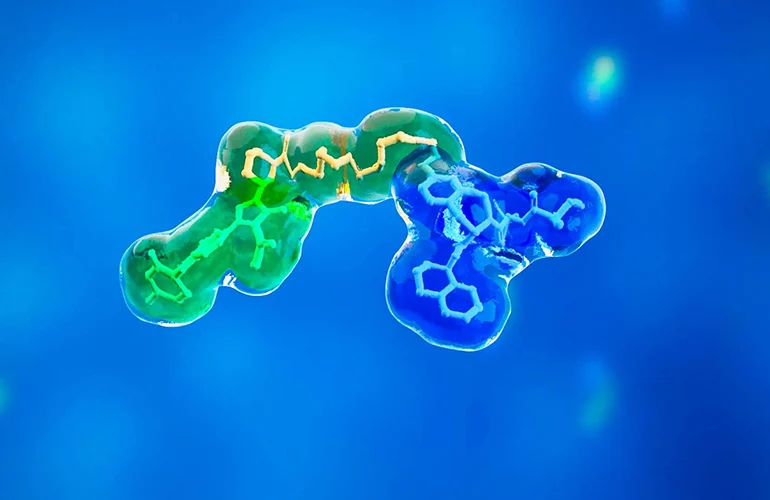
The journey toward the first approved PROTAC began in the early 2000s, pioneered by the labs of Craig Crews and Raymond Deshaies. Unlike conventional drugs that occupy an active site to block protein function, PROTACs are heterobifunctional molecules. They consist of a warhead that binds to the target protein, a ligand that recruits an E3 ubiquitin ligase, and a linker that connects the two. By bringing the target protein and the E3 ligase into close proximity, the PROTAC facilitates the polyubiquitination of the target, effectively marking it for destruction by the 26S proteasome.
This mechanism offers a distinct pharmacological advantage: the drug does not need to remain bound to the target to exert its effect. Once the target is tagged and degraded, the PROTAC is released to repeat the process, acting as a catalyst. This allows for sustained target suppression even after the drug has cleared the systemic circulation, a feature that theoretically permits lower dosing regimens. Nevertheless, this architectural sophistication introduces significant "developability" issues. Because a PROTAC must accommodate two separate binding moieties and a flexible linker, the resulting molecules frequently possess high molecular weights (often exceeding 700 Da), high polar surface areas, and a large number of rotatable bonds. These physical properties are antithetical to the classic Lipinski criteria for oral absorption, creating a critical bottleneck in the transition from hit-to-lead and lead-optimization phases.
Navigating the Beyond-Rule-of-Five (bRo5) Landscape
The pharmaceutical industry has long relied on Lipinski’s Rule of Five—which suggests that drugs are more likely to be orally active if they have a molecular weight under 500, fewer than five hydrogen-bond donors, fewer than ten hydrogen-bond acceptors, and a LogP under five—to guide candidate selection. PROTACs, by their very nature, routinely violate these guidelines. Consequently, relying on traditional medicinal chemistry heuristics often leads to false negatives, where promising compounds are discarded prematurely because they appear "undruggable" by conventional standards.
Recent industry analysis indicates that the focus must shift from binary rule-following to a more granular understanding of conformational behavior. Research published in 2024 has identified that the number of solvent-exposed hydrogen-bond donors (eHBD) is a more accurate predictor of permeability than total molecular weight. Specifically, maintaining an eHBD count of two or fewer has emerged as a successful threshold for maintaining oral bioavailability in PROTAC series. This necessitates a shift in design strategy: instead of merely trimming the molecule to fit within arbitrary size constraints, chemists are increasingly focused on "shielding" polarity through intramolecular hydrogen bonding and favoring rigidified, folded conformations that mask polar groups from the aqueous environment, thereby facilitating passive membrane diffusion.
The Criticality of Early-Stage DMPK and Bioanalytical Profiling
The path to a viable oral PROTAC candidate requires an integrated approach where Drug Metabolism and Pharmacokinetics (DMPK) is not an afterthought, but a central component of the initial design phase. Because oral bioavailability is the result of a complex interplay between dissolution in the gut, epithelial permeability, and metabolic stability in the liver and intestines, early-stage programs are now utilizing a "fit-for-purpose" strategy.
This involves the application of ultrasensitive bioanalytical assays capable of detecting minute concentrations of degraders in diverse biological matrices. A recurring theme in the successful development of compounds like vepdegestrant is the early identification of the "food effect." Because many PROTACs exhibit poor aqueous solubility, their performance can fluctuate wildly based on the gastrointestinal environment. By testing lead candidates in biorelevant media, such as fasted-state (FaSSIF) and fed-state (FeSSIF) simulated intestinal fluids, researchers can gain early insights into whether a compound requires a formulation strategy that leverages fed-state conditions to enhance solubility.
Linker Optimization and the E3 Ligase Dilemma
The linker represents the most malleable component of a PROTAC, yet it is also the most significant determinant of its physicochemical profile. Beyond merely providing the distance required for the E3 ligase to reach the target protein, the linker influences the molecule’s overall shape and metabolic vulnerability. Replacing standard polyethylene glycol (PEG) chains with more rigid, non-polar scaffolds, such as 1,4-disubstituted phenyl rings or macrocyclic structures, has been shown to improve both membrane permeability and proteolytic stability.
Furthermore, the choice of E3 ligase serves as a primary constraint on developability. While over 600 E3 ligases exist in the human genome, the field has been heavily reliant on Cereblon (CRBN) and Von Hippel-Lindau (VHL). CRBN-recruiting degraders are currently favored for oral applications, largely because the ligands associated with CRBN tend to be smaller and more easily optimized for drug-like properties. However, as the field matures, the search for "tissue-specific" E3 ligases—which could provide greater control over where the degradation occurs—is intensifying. The integration of structural biology with high-throughput screening allows teams to evaluate the impact of these ligases on the molecule’s overall conformation, ensuring that the quest for higher selectivity does not inadvertently destroy the molecule’s pharmacokinetic profile.
Addressing Metabolic Instability and Alternative Strategies
Even when a PROTAC achieves sufficient intestinal absorption, it often faces significant metabolic degradation during its "first pass" through the liver. Metabolic optimization is thus a critical pillar of lead optimization. By strategically placing fluorine atoms or using sterically hindered groups within the linker and the warhead, chemists can often block metabolic hotspots.
When structural modifications fail to yield a candidate with sufficient exposure, prodrug strategies offer a potential, albeit complex, solution. By masking polar groups with transient chemical moieties that are cleaved in the gut or liver, developers can temporarily improve a compound’s lipophilicity to aid absorption. However, this adds a layer of complexity to the regulatory submission, as the pharmacokinetics of the prodrug, the conversion rate, and the safety profile of the released "promoieties" must all be rigorously characterized.
For scenarios where the PROTAC architecture remains fundamentally intractable, the industry is increasingly looking toward molecular glues. While both modalities achieve targeted protein degradation, molecular glues function as small-molecule stabilizers of protein-protein interactions rather than as tethered bifunctional molecules. Their smaller size and simpler structure often provide a more traditional path to oral bioavailability. As noted by experts in the field, including those at organizations like WuXi AppTec, these modalities should be viewed as complementary tools in a broader protein-degradation toolkit rather than mutually exclusive competitors.
Implications for Future Drug Development
The approval of vepdegestrant serves as a validation of the PROTAC modality, yet it also highlights the steep learning curve associated with bringing these complex molecules to market. The overarching lesson for the industry is that oral bioavailability for PROTACs cannot be solved by a single discipline. It requires the seamless convergence of medicinal chemistry, structural biology, DMPK, and clinical pharmacology.
As the industry moves forward, the success of future degraders will depend on the ability of sponsors to identify oral liabilities at the earliest possible stage. By establishing robust, predictive platforms for permeability and metabolic stability, and by maintaining a clear focus on the "drug-like" thresholds of the E3 ligase-recruiter complex, the next generation of PROTACs may well move beyond oncology and into therapeutic areas where oral dosing is a prerequisite for patient compliance. The era of the "chemical knockdown" is undeniably here, but its long-term viability as a mainstream therapeutic modality rests on the ability of developers to master the nuances of oral exposure.