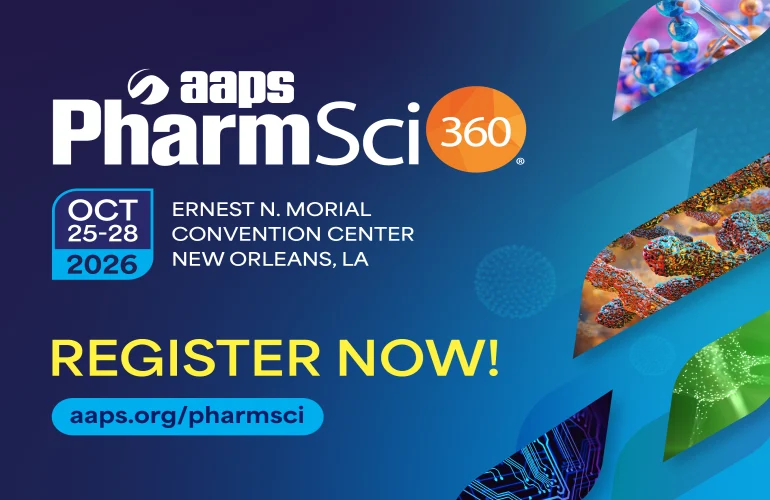
The American Association of Pharmaceutical Scientists (AAPS) has announced a significant evolution for its flagship 2026 PharmSci 360 conference, set to take place October 25–28, 2026, at the Ernest N. Morial Convention Center in New Orleans, Louisiana. Moving beyond the traditional scope of pharmaceutical manufacturing and clinical trial logistics, the 2026 iteration will feature two specialized, "Innovator-Curated" tracks. These tracks are designed to address the most pressing existential and technical challenges currently facing the global drug development landscape: the erosion of research integrity in the age of generative artificial intelligence and the high-stakes transition toward human-centric, non-animal testing methodologies.
A New Strategic Direction for PharmSci 360
PharmSci 360 has long served as a primary nexus for scientists, regulatory experts, and industry leaders to discuss the mechanics of drug delivery and therapeutic discovery. By introducing these specific curated tracks, the AAPS is signaling an industry-wide pivot toward accountability. The decision to highlight research reproducibility and New Approach Methodologies (NAMs) reflects a growing consensus that the traditional "black box" of preclinical research is undergoing a radical, technology-driven transformation.
The conference, which annually draws thousands of attendees, will utilize these tracks to foster a dialogue between academic researchers, pharmaceutical innovators, and federal regulators. The objective is to bridge the gap between emerging scientific capabilities and the often-slower pace of regulatory validation.
The Integrity Crisis: Addressing Reproducibility and AI
The first of these tracks, scheduled for Monday, October 26, tackles the "credibility gap." As the volume of scientific literature explodes—bolstered in part by the rapid adoption of AI-generated text and synthetic data—concerns regarding the reliability of foundational research have reached a boiling point. Brian Nosek, co-founder and executive director of the Center for Open Science, will anchor the program. His keynote is expected to provide a roadmap for navigating the "replication crisis" that has plagued preclinical oncology and pharmacology for over a decade.
The session agenda includes a rigorous examination of the mechanisms that enable scientific fraud. Experts will analyze how "paper mills"—entities that mass-produce fraudulent research for publication—have evolved to exploit the peer-review process. Furthermore, the track will delve into the ethical integration of generative AI. While Large Language Models (LLMs) offer unprecedented speed in literature synthesis and hypothesis generation, they also introduce the risk of "hallucinations" and the propagation of non-existent citations.
Maryam Zaringhalam of the Center for Open Science will moderate a pivotal symposium focused on the "evidence ecosystem." This discussion will look at how the National Institutes of Health (NIH) and various global publishing houses are implementing new screening technologies to flag problematic manuscripts before they enter the public record. For the pharmaceutical industry, the implications are profound: basing a multibillion-dollar drug development program on flawed preclinical data is a risk that companies can no longer afford to ignore.
The Shift Toward Human-Centric Innovation
Two days after the focus on integrity, the conference will shift its attention to the physical tools of discovery. Thomas Hartung, a professor at Johns Hopkins University and a leading voice in alternative testing, will curate a full-day track dedicated to NAMs. This session marks a transition point for an industry that has relied on animal models as the gold standard for safety assessment for nearly a century.
The track will feature deep dives into organ-on-a-chip technology, neural organoids, and computational AI-assisted chemical read-across. These technologies are no longer theoretical; they are rapidly becoming part of the regulatory toolkit. The timing of this track aligns with a concerted effort by the U.S. Food and Drug Administration (FDA) to modernize its regulatory framework. In March 2026, the FDA issued landmark draft guidance establishing the four core principles for submitting evidence generated through NAMs. This guidance provides a path for companies to use data derived from human-based systems to justify clinical trial applications.
Data, Funding, and Regulatory Momentum
The industry’s transition is supported by a significant injection of federal capital. The NIH has committed $150 million over a five-year period through its Complement-ARIE (Complement Animal Research In Experimentation) program. This funding is specifically aimed at standardizing human-based research technologies, ensuring that data generated in a private lab can be reliably used in a regulatory submission to the FDA.
The urgency for these alternatives is further underscored by scientific breakthroughs in organoid intelligence. In 2025, researchers led by Thomas Hartung and Lena Smirnova demonstrated that human neural organoids could exhibit synaptic plasticity—the foundational mechanism of learning and memory. This discovery suggests that laboratory-grown models are not just static structures but dynamic, functional systems capable of modeling complex human biological processes that were previously inaccessible without animal testing.
Implications for the Future of Drug Discovery
The inclusion of these topics at PharmSci 360 suggests that the pharmaceutical industry is entering a phase of "technological maturity." The reliance on animal models has historically been a bottleneck, both in terms of ethical concerns and the biological inaccuracy of mapping murine physiology to human clinical outcomes. By embracing NAMs, the industry aims to reduce the "failure rate" of drugs in human trials—a failure that often occurs because the initial animal models failed to predict human toxicity or efficacy.
Moreover, the emphasis on research integrity is a recognition that the digital transformation of science requires new guardrails. The industry is moving toward a model where "open science" is not just an academic ideal but a functional requirement for regulatory approval. If a pharmaceutical company cannot prove the provenance and reliability of the data underpinning its drug candidate, the FDA is increasingly likely to withhold approval, regardless of the drug’s apparent efficacy.
A Look Ahead at the Conference Schedule
The 2026 PharmSci 360 program is structured to provide a cohesive narrative across its four-day span. By starting with the foundational issues of trust and transparency, and concluding with the technical application of advanced human-based models, the AAPS is providing a comprehensive overview of the modern drug development pipeline.
Attendees can expect the following thematic flow:
- October 26: A focus on the "Data Foundation," covering AI ethics, scientific publishing, and the mitigation of research fraud.
- October 27: General sessions on pharmaceutical manufacturing and chemical engineering.
- October 28: A focus on the "Physical Future," covering NAMs, organoid intelligence, and the regulatory integration of non-animal safety data.
Analysis of the Regulatory Landscape
The shift toward NAMs represents a shift from "validation by history" to "validation by function." Historically, animal models were accepted because they had been used for decades, despite their known limitations. Under the new FDA framework, developers must prove that their non-animal models are "fit-for-purpose." This requires a higher degree of technical documentation, data transparency, and computational validation—all of which will be central topics of discussion during the Hartung-led track.
The involvement of the NIH’s Nicole Kleinstreuer, who will deliver the afternoon keynote on building trust in non-animal safety science, is particularly telling. Her role is to articulate how the federal government perceives the "trustworthiness" of data generated by private startups and biotech firms. For the attendees at PharmSci 360, this is a clear signal that the regulatory goalposts are moving. Companies that fail to adapt their R&D protocols to incorporate these high-fidelity, human-relevant models risk falling behind in a competitive landscape where speed to market is predicated on the reliability of early-stage evidence.
Conclusion
As PharmSci 360 approaches, the industry stands at a crossroads. The convergence of AI-driven research, a crisis of scientific reproducibility, and the technological promise of organ-on-a-chip models represents the most significant shift in drug development in decades. The AAPS, by curating these specific tracks, is not merely hosting a conference; it is providing a forum for the industry to define the standards that will govern the next generation of medicine. Whether these initiatives successfully create a more reliable and efficient R&D ecosystem will depend on the collaborative efforts of the researchers, regulators, and technology developers who gather in New Orleans this October. The stakes, both for the future of scientific integrity and for the efficacy of life-saving therapies, could not be higher.