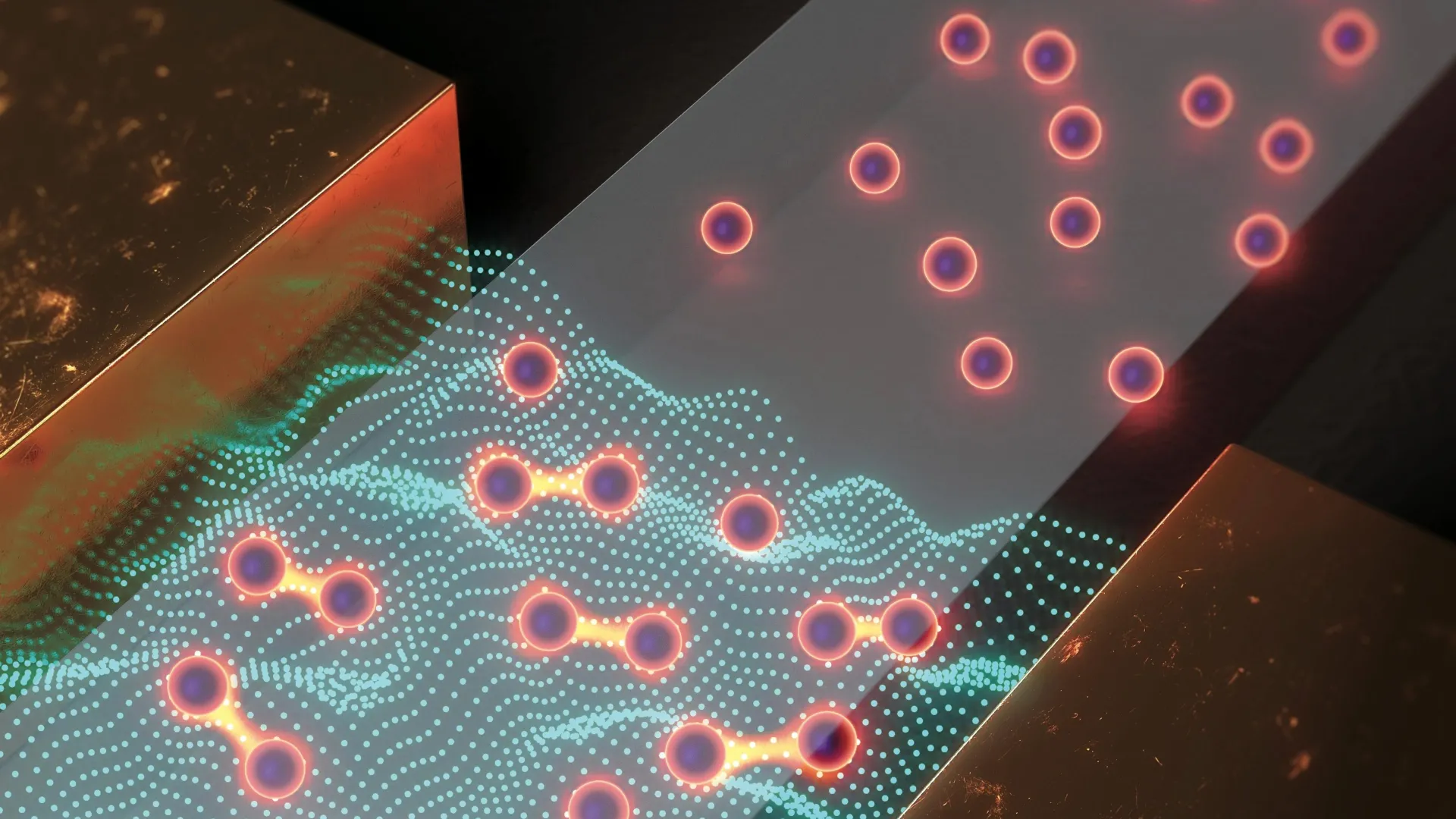
In a landmark development that promises to reshape the landscape of quantum engineering, physicists at the Max Planck Institute for the Science of Light (MPL) in Erlangen, Germany, have successfully driven individual molecules on a solid surface to the ultimate quantum limit of optical coherence. Published in the prestigious peer-reviewed journal Science, this achievement overcomes a foundational barrier that has stymied researchers for decades: the notorious instability and environmental noise inherent to material surfaces. By pioneering an ingenious self-cleaning methodology utilizing organic crystals and extreme cryogenics, the MPL Nano-Optics Division has unlocked unprecedented precision in studying and preserving fragile quantum states. This milestone not only bridges the gap between isolated quantum systems and surface-bound architectures but also lays a robust foundation for next-generation quantum computing, secure communication networks, and nanoscale material science.
The Core Breakthrough and Immediate Implications
At the heart of the MPL team’s discovery is the attainment of the Fourier limit—the absolute theoretical maximum for optical coherence time in a quantum emitter—by molecules resting directly on a substrate. In quantum mechanics, emitters such as single atoms, ions, or molecules interact with light to produce individual photons, store qubits of quantum information, and form entangled networks. However, maintaining the delicate superposition and phase coherence of these emitters requires an environment free from electromagnetic fluctuations, thermal agitation, and chemical impurities.
Historically, researchers have achieved this by isolating quantum emitters within a high-vacuum chamber or burying them deep inside ultra-pure solid-state matrices. While these methods successfully shield the emitters from environmental noise, they severely limit physical access. Scientists cannot easily manipulate, probe, or reposition a molecule floating in a vacuum or locked away inside the bulk of a crystal.
Placing quantum emitters directly on a surface has long been the theoretical holy grail for experimental physicists. A surface-bound architecture would theoretically allow researchers to utilize advanced scanning probe instruments—such as scanning tunneling microscopes (STM) and atomic force microscopes (AFM)—to physically touch, move, and alter individual molecules with atomic precision. Unfortunately, real-world surfaces are chemically active, structurally imperfect, and constantly bombarded by airborne contaminants. These factors introduce overwhelming "noise" that disrupts quantum behavior, causing coherence times to degrade hundreds or thousands of times faster than theoretical limits allow. By proving that a surface-bound molecule can achieve uncompromised coherence, the MPL team has essentially demolished the long-held assumption that surfaces are fundamentally incompatible with high-purity quantum optics.
A Chronological Timeline of the Nano-Optics Innovation
The road to this historic achievement spans years of meticulous inquiry within the Nano-Optics Division, led by Professor Vahid Sandoghdar. While the published paper represents the culmination of these efforts, the experimental timeline reflects a masterclass in multidisciplinary problem-solving, combining ultra-high vacuum engineering, physical chemistry, and laser spectroscopy.
The initial phase of the research focused on identifying a suitable host material that could simultaneously support organic molecules while providing an atomically smooth platform. The team turned to organic molecular crystals, a class of materials known for their relatively weak intermolecular bonding and favorable optical properties. However, even the cleanest commercially available crystals invariably harbor surface defects and adsorbed atmospheric hydrocarbons.
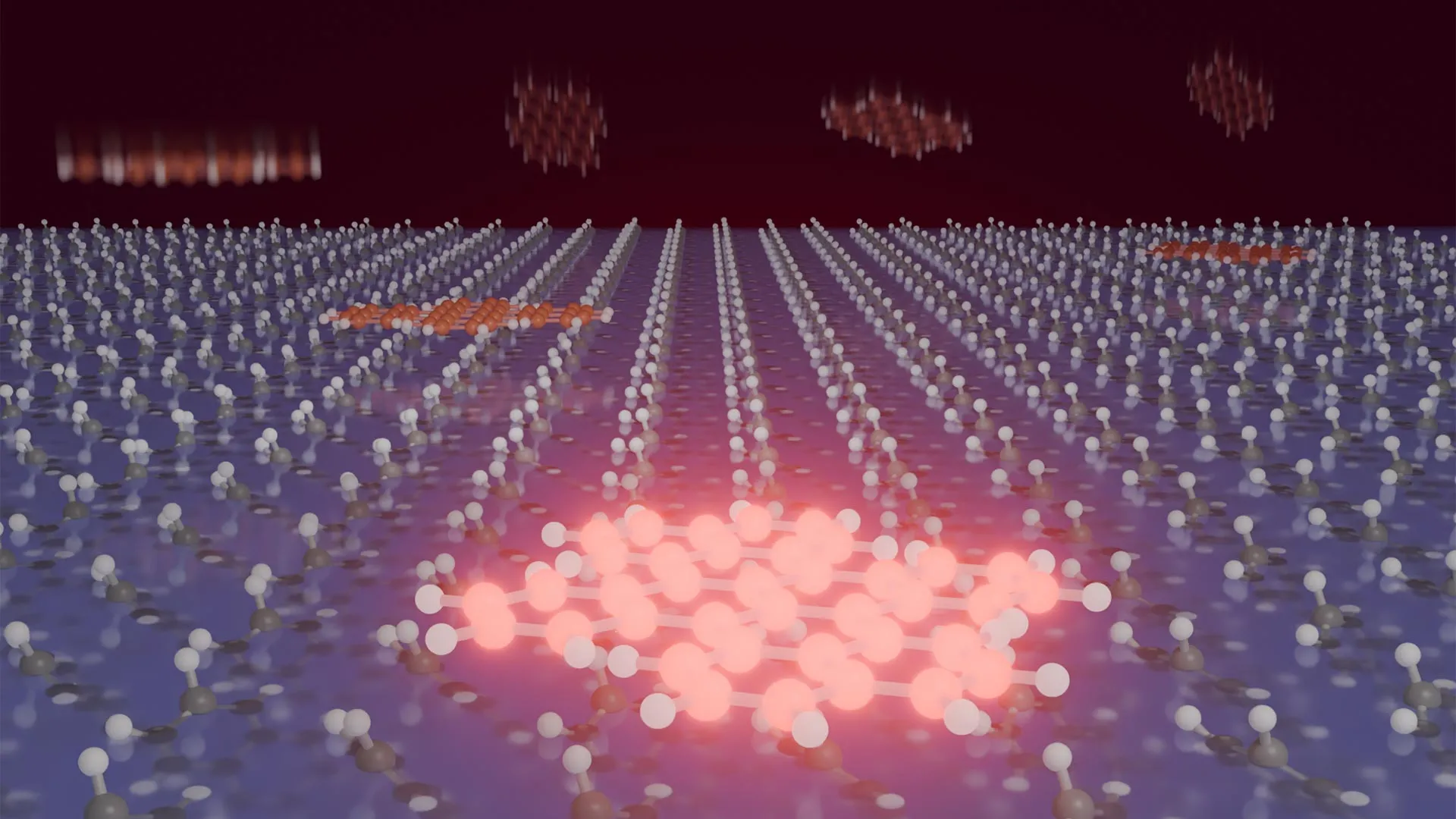
To overcome this contamination barrier, the research team devised a thermodynamic approach capitalizing on sublimation—the direct phase transition of a solid into a gas without passing through an intermediate liquid phase. Operating inside a specialized cryogenic vacuum chamber (cryostat) capable of maintaining temperatures close to absolute zero, the scientists exploited the natural, controlled evaporation of the crystal’s uppermost atomic layers. As these top layers sublimated into the vacuum, they systematically carried away accumulated surface impurities, effectively peeling away the contaminated outer shell to reveal a pristine, atomically flat layer beneath.
Following this sublimation-cleaning process, the cryostat was rapidly cooled to a few kelvins above absolute zero. This extreme thermal deceleration halted any further sublimation, locking the freshly revealed surface into a state of absolute structural and chemical stability. In the final preparation step, the researchers deployed a custom-fabricated micro-oven positioned inside the vacuum system. This micro-oven gently evaporated target molecules onto the ultra-cold crystal, allowing them to gently settle onto the immaculate substrate without incurring thermal or mechanical shock.
Analyzing the Data: Reaching the Fourier Limit
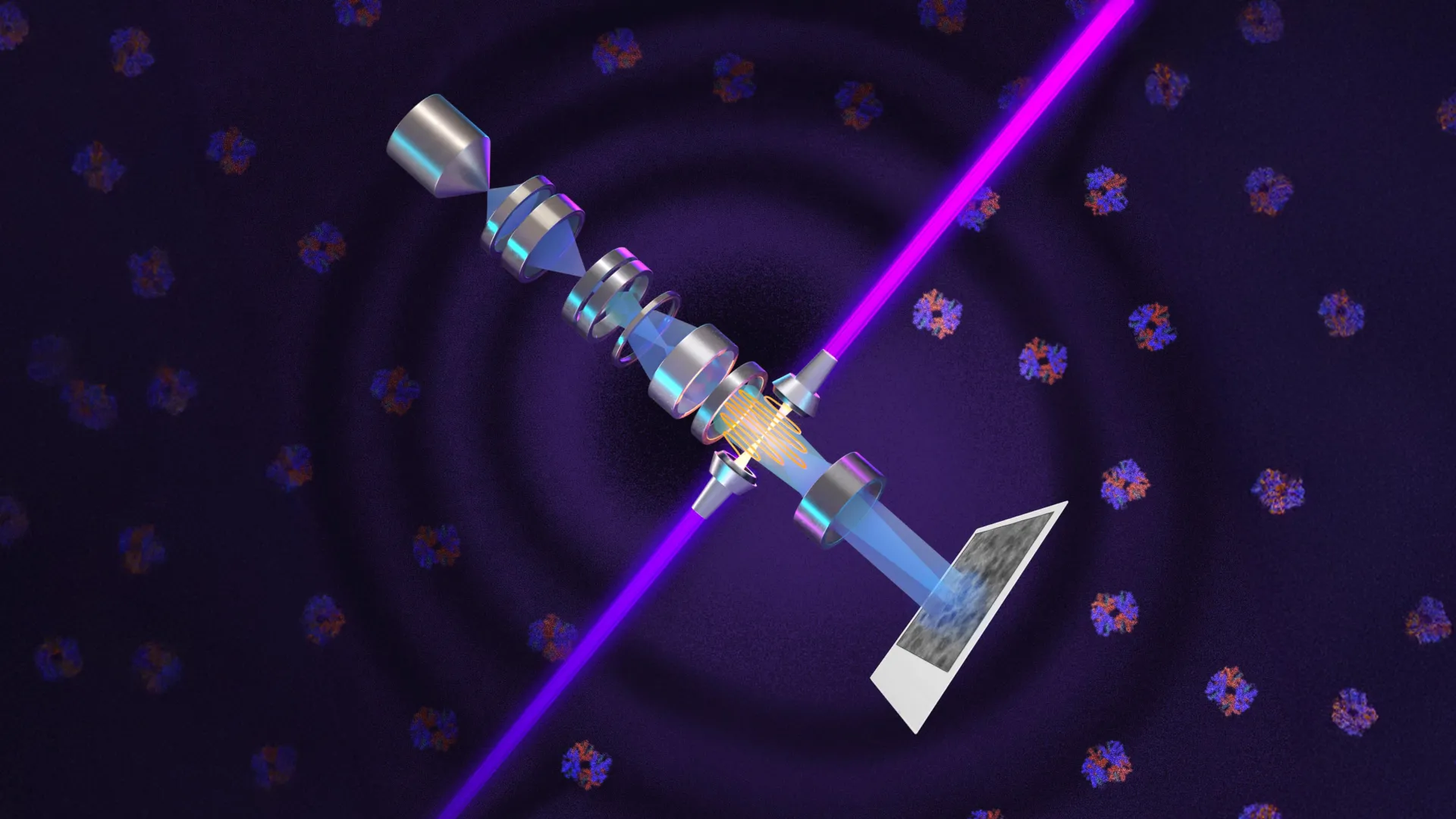
With the system stabilized, the research team employed advanced laser spectroscopy to probe the optical properties of the deposited molecules. The primary metric of success was optical coherence time—the duration for which a quantum emitter can retain phase memory before its wave function collapses due to environmental interactions.
Dr. Alexey Shkarin, a key researcher in the MPL Nano-Optics Division, elaborated on the evaluation criteria during post-publication briefings. "The quality of quantum emitters can be evaluated by their coherence times, which indicate how long they keep their quantumness," Shkarin noted. In an ideal universe devoid of environmental perturbations, a quantum emitter’s coherence time is bounded exclusively by its natural lifetime—the time it takes to spontaneously emit a photon and relax to its ground state. This fundamental boundary is known in physics as the Fourier limit.
In previous experiments involving surface-bound molecules, local electric field fluctuations and phonon interactions caused coherence times to plummet, falling orders of magnitude short of the Fourier limit. However, the data gathered from the MPL cryostat revealed a startling departure from historical precedent. The molecules deposited on the sublimation-cleaned crystal exhibited optical linewidths that matched theoretical predictions precisely. They had reached the Fourier limit. This empirical evidence confirmed that the local environment was sufficiently quiet, clean, and stable to preserve the quantum state for the absolute maximum duration permitted by the laws of physics.
Official Responses and Expert Perspectives
The scientific community has responded to the publication in Science with widespread acclaim, viewing the MPL breakthrough as a foundational pivot point for quantum optics.
Professor Vahid Sandoghdar, director at MPL and head of the Nano-Optics Division, emphasized that the implications extend far beyond mere observation. "Our future work will focus on combining this method with AFM and STM to gain local nanometer control over individual quantum emitters," Sandoghdar stated. By uniting their revolutionary surface-cleaning technique with the spatial manipulation power of scanning probe microscopy, the research team aims to bridge the gap between optical quantum physics and nanoscale mechanical engineering.
Independent physicists not involved in the study have echoed these sentiments, noting that the methodology provides a desperately needed tool for surface science. For decades, researchers have understood that surfaces alter molecular behavior, but studying these phenomena at the single-molecule level was clouded by background noise. By eliminating this noise, the MPL group has created an ultra-sensitive diagnostic platform.
Detailed observations during the study revealed that the underlying crystal substrate actively influences the resting molecules. The researchers noted that surface interactions forced molecules to adopt specific spatial orientations, subtly shifted their internal energy levels, and induced detectable modifications in their vibrational modes and molecular conformations. These nuanced interactions provide a treasure trove of empirical data for physical chemists modeling molecule-substrate dynamics.
Broader Impact and Future Technological Implications
The successful attainment of the quantum coherence limit on a surface carries profound implications for the commercial and academic development of quantum technologies. As global industries race toward scalable quantum computers, ultra-secure quantum key distribution networks, and highly sensitive quantum sensors, the demand for deterministic, integrated quantum hardware has never been more urgent.
Traditional quantum architectures often struggle with integration and scaling. Trapping individual atoms in complex laser arrays or etching quantum dots into solid-state semiconductors involves manufacturing challenges that limit component density. Conversely, organic molecules possess identical, highly reproducible optical properties and can, in theory, be densely packed onto surfaces. If engineers can harness surface-bound molecules as standardized quantum nodes, manufacturing complex quantum integrated circuits could become as straightforward as modern semiconductor fabrication.
Furthermore, the ability to merge ultra-clean optical cavities with scanning probe microscopy opens up avenues for dynamic quantum control. Imagine a future where a quantum state is optically initialized, read out, and mechanically manipulated in real-time using an atomic-scale probe tip. Such capabilities could give rise to novel quantum transistors, molecular switches, and localized sensors capable of detecting single-molecule chemical reactions with unprecedented fidelity.
As the MPL team prepares for the next phase of their research—integrating their cryogenic sublimation technique with advanced AFM and STM apparatuses—the foundational hurdles that once relegated surface-bound molecular quantum optics to the realm of theoretical impossibilities have officially fallen. This milestone marks the dawn of a new era in which the microscopic boundaries between chemistry, optics, and solid-state physics dissolve into a unified frontier of quantum discovery.