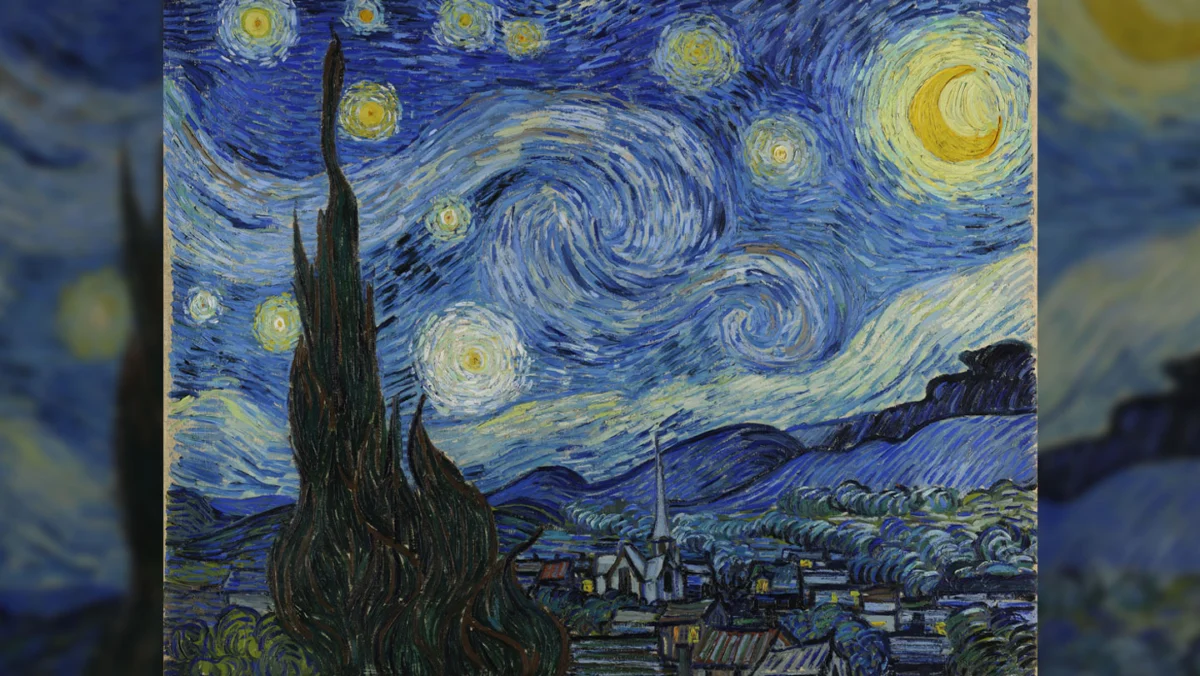
For over a century, Vincent van Gogh’s 1889 masterpiece, The Starry Night, has been interpreted as a quintessential triumph of expressionism—a window into the artist’s turbulent psyche rather than a literal transcription of the physical world. However, a new study published October 22 in the journal Scientific Reports challenges the long-held belief that the swirling, luminescent sky was purely an invention of the painter’s imagination. By applying advanced statistical modeling and astronomical simulation to the canvas, researchers led by Elijah Jeong-hyun Kim have identified a potential, precise date for the celestial arrangement depicted in the painting: July 22, 1889.
The Conflict of Chronology
Art historians have traditionally relied upon the artist’s own correspondence to date his work. In a letter to his brother Theo dated approximately June 18, 1889, van Gogh noted, "At last I have a landscape with olive trees, and also a new study of a starry sky." This documentation has long served as the bedrock for the consensus that the painting was executed in mid-June, shortly after the artist admitted himself into the Saint-Paul-de-Mausole asylum in Saint-Rémy-de-Provence.
The prevailing narrative suggests that the work was completed before a severe health crisis incapacitated the painter for roughly six weeks. Donald Olson, an astronomer at Texas State University known for his work in "celestial sleuthing" within art history, has long supported the June date, emphasizing that van Gogh’s own written testimony provides the most reliable timeline available. Yet, this traditional dating has historically created friction with astronomical reality. Previous attempts in the 1980s to map the stars in the painting to the night sky of June 1889 were met with skepticism; while some researchers identified the constellation Aries, others pointed to unfavorable weather reports from the region as evidence that the painting could not have been a direct observation, ultimately dismissing it as a "celestial composite."
A New Analytical Approach
Elijah Jeong-hyun Kim, the founder of the telescope-manufacturing firm SLLAB Inc. in Seoul, approached the painting without the constraints of historical bias. Leveraging his expertise in telescope alignment and celestial positioning, Kim utilized a statistical methodology known as Procrustes shape analysis. This technique allows researchers to quantify the similarity between the geometric configuration of stars on a canvas and the actual positions of celestial bodies in the night sky.
Kim’s research team argued that the stars depicted in the painting were not merely decorative but represented the Hyades star cluster, which manifests as a distinct, sideways "V" shape within the constellation Taurus. To validate this, the team utilized high-resolution computer simulations capable of calculating the precise coordinates of planets and stars in 1889 to the second. By cross-referencing these simulations with the lunar phase and the positioning of Venus, the team concluded that July 22, 1889, offered a far more accurate fit for the celestial configuration than the previously accepted mid-June dates.
To bolster their findings, the researchers performed a comparative analysis on another van Gogh work, Starry Night Over the Rhône, which is widely acknowledged to accurately depict the Big Dipper. The statistical matching between the star patterns in both paintings was found to be remarkably similar, providing a consistent framework for the argument that van Gogh was, at least in part, painting from direct observation.
Site Verification and Field Analysis
In June and July 2019, Kim traveled to Saint-Rémy-de-Provence to physically locate the vantage point from which van Gogh would have viewed the horizon. By overlaying the painting’s composition onto the actual topography, the team sought to confirm that the landmarks—the hills, the cypress tree, and the celestial alignment—matched the view from the asylum windows.
Kim described the experience of finding the precise location as a defining moment in his research. He maintained that the thrill of standing in the exact spot where van Gogh stood 130 years prior, observing how the moon, the Hyades, and Venus aligned perfectly with the artist’s depiction, provided compelling empirical evidence. The team’s report argues that the dichotomy between observation and imagination is a false one, suggesting that The Starry Night is a sophisticated hybrid of the two.
Scientific Skepticism and Academic Debate
Despite the technical rigor of the study, the findings have not been met with universal acclaim. Critics, including Donald Olson, point to significant discrepancies between the researchers’ methodology and the visual evidence on the canvas.
A central point of contention is the "field of view." Kim’s model assumes a relatively narrow focus to allow the Hyades to occupy a dominant portion of the sky. Olson argues that such a narrow field is incompatible with the wider, sweeping vista of the hills and cliffs depicted in the painting. "The authors’ assumed narrow field of view, essential for their theory that the stars of the Hyades fill most of the canvas, is inconsistent with the much wider field of view required to encompass The Starry Night’s round hills and cliffs," Olson noted.
Furthermore, the identification of specific stars remains a subjective endeavor. Olson suggests a practical test: if the painting truly depicts the Hyades, then Aldebaran—the brightest star in the cluster—should be immediately recognizable at the bottom left of the "V." However, he contends that most amateur astronomers, even when prompted, would struggle to identify Aldebaran among the stars in the painting, as other elements appear more prominent. This debate underscores the inherent difficulties in applying modern astrophysical tools to artistic works that were intentionally stylized.
The Broader Implications for Art History
The study serves as a catalyst for a broader discussion regarding the intersection of science and the humanities. For years, the study of art history has operated largely within the realms of stylistic analysis, provenance, and historical documentation. The introduction of astronomical modeling and computer-aided statistical analysis adds a new dimension to this inquiry, allowing researchers to peer into the artist’s environment with unprecedented precision.
If the July 22 date is accepted, it would necessitate a re-evaluation of the timeline of van Gogh’s mental and physical health during his final years. It would also refine our understanding of his working process, suggesting that even during periods of intense creative distortion, he maintained a tether to the objective reality of the night sky.
However, the findings also highlight the limits of scientific reductionism. While science can determine the position of a star or the phase of the moon on a specific night in 1889, it cannot fully account for the artist’s intent. Whether van Gogh was looking at the sky on July 22 or synthesizing memories of multiple nights, the enduring power of The Starry Night lies in its emotional resonance—an element that remains outside the reach of statistical analysis.
Ultimately, the work of Kim and his colleagues demonstrates that the mystery of The Starry Night is far from solved. As analytical technologies continue to advance, the dialogue between the precise sciences and the fine arts will likely grow more complex, offering new ways to appreciate the legacy of one of the world’s most enigmatic artists. The debate itself, pitting quantitative analysis against the subjective nature of artistic expression, serves as a testament to the continued relevance of van Gogh’s work in the modern era. Whether the painting represents a singular moment in time or an idealized synthesis of many, it remains a primary focal point for both art lovers and scientific researchers alike, bridging the gap between the terrestrial and the celestial.