In a landmark achievement that bridges decades of theoretical physics and cutting-edge engineering, an international collaboration centered in Vienna has successfully engineered the world’s first self-stabilizing nuclear clock. Unveiled after years of painstaking development, this revolutionary timekeeping device operates without relying on conventional atomic architecture, leveraging instead the fundamental properties of atomic nuclei. By maintaining continuous stability independently for more than 24 hours during initial demonstrations, the research team has propelled the field of metrology—the science of measurement—into a new era, opening unprecedented pathways for exploring the fundamental laws of the universe.
The development of this prototype marks the culmination of a scientific quest that has spanned decades. Traditional timekeeping relies on the oscillations of electromagnetic fields tuned to the energy transitions of electrons orbiting atomic nuclei, most notably in cesium and strontium optical atomic clocks. While these existing devices are marvels of modern engineering, capable of losing less than a single second over billions of years, they remain vulnerable to external perturbations. Electromagnetic interference, thermal fluctuations, and subtle environmental shifts can destabilize the electron states upon which they depend, requiring complex shielding and continuous calibration.
Nuclear clocks, by contrast, shift the foundational reference point from the electron shell to the atomic nucleus itself. Because atomic nuclei are more than 10,000 times smaller than entire atoms, they are vastly more compact and inherently insulated from many of the environmental disturbances that plague standard atomic clocks. This extraordinary resilience forms the theoretical backbone of nuclear metrology, promising a level of precision and long-term stability that pushes past the physical limits of current technology.
A Long-Sought Transition: Why Thorium Was the Missing Link
For years, the realization of a practical nuclear clock remained stalled by a formidable experimental barrier. While atomic nuclei possess distinct energy states, transitioning between those states typically demands monumental amounts of energy, often equivalent to high-energy gamma radiation. Such energetic transitions are nearly impossible to control with standard laboratory equipment, precluding their use in precision timekeeping instruments.
Thorium emerged as the solitary exception to this rule. Specific isotopes of thorium—specifically thorium-229—possess an exceptionally small energy gap between their ground state and their first excited nuclear state. This unique configuration is so finely tuned that it can be bridged using ultraviolet laser light. This rare property bridges the chasm between nuclear physics and laser optics, allowing researchers to manipulate the energy state of a nucleus using precise light frequencies in a manner previously reserved for electron clouds.
Despite this theoretical promise, proving the concept experimentally remained an elusive goal for generations of physicists. The exact energy required to trigger the thorium transition was known only within a broad range, making it akin to searching for a microscopic needle in a cosmic haystack. Overcoming this hurdle required a coordinated, multi-institutional effort combining advanced materials science and precision spectroscopy.
A Chronology of Breakthroughs: From Theory to Reality
The realization of the self-stabilizing nuclear clock is the product of a compressed yet intense timeline of breakthroughs that unfolded across 2024, transforming decades of theoretical speculation into empirical reality.
The first major domino fell in April 2024. A research team led by Professor Thorsten Schumm at the Institute of Atomic and Subatomic Physics at TU Wien, working in close partnership with a team led by Professor Ekkehard Peik at the Physikalisch-Technische Bundesanstalt (PTB) in Braunschweig, Germany, achieved the long-sought experimental identification of the thorium nuclear transition. For the first time in history, the researchers demonstrated definitively that ultraviolet laser beams could be used to directly excite thorium nuclei, successfully inducing the transition between energy states.
Building rapidly upon this foundation, the collaboration reached its second major milestone in the autumn of 2024. The scientists successfully integrated their custom-built thorium excitation apparatus with a conventional optical atomic clock. This crucial integration proved that thorium nuclei could indeed serve as a functional, highly precise timekeeping reference when anchored to an established system, effectively establishing the foundational operating principle of a nuclear clock.
However, while this demonstrated feasibility, the system still relied on external stabilization. A true breakthrough required the clock to be entirely self-contained, regulating its own frequency without depending on a secondary atomic reference. That final threshold was crossed when the Vienna team engineered a mechanism allowing the thorium apparatus to continuously correct and stabilize its own interrogating laser, culminating in the autonomous, self-regulating prototype that operated stably for over 24 hours without human intervention or external architectural support.
Engineering Autonomy: How the Self-Stabilizing Mechanism Operates
To achieve true operational independence, Professor Schumm and his colleagues at TU Wien had to design a closed-loop feedback system capable of locking a laser’s frequency to the natural resonance of thorium nuclei. The core of this system is an innovative, specially manufactured crystal embedded with thorium atoms, produced directly within the laboratories at TU Wien.
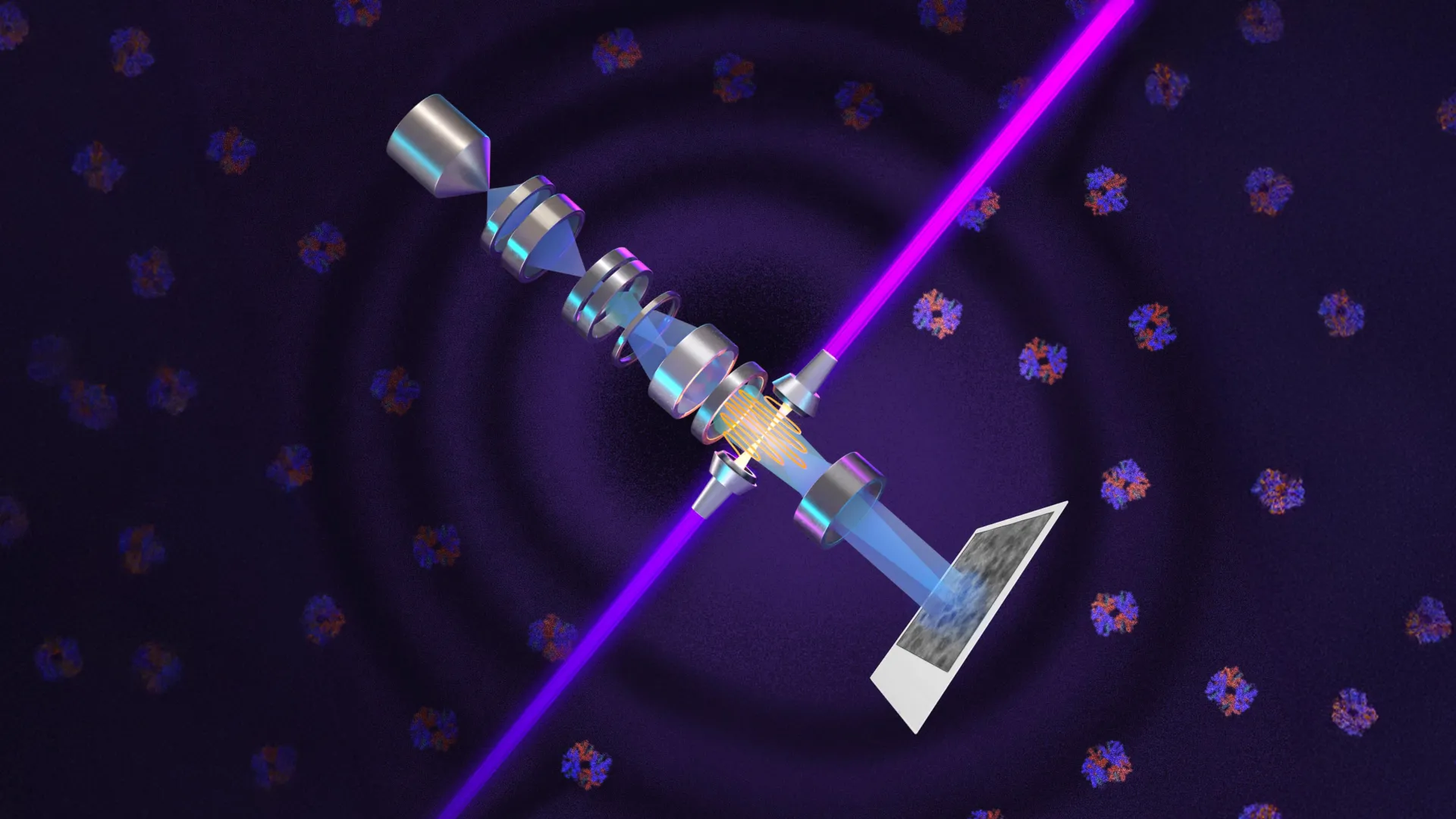
In this setup, a specialized laser shines onto the thorium-doped crystal, with its light oscillating at a specific, highly regulated frequency intended to serve as the clock’s "tick." Yet, even in state-of-the-art laboratory environments, microscopic thermal fluctuations, mechanical vibrations, and subtle environmental shifts can cause the laser’s frequency to drift, degrading its rhythm.
To counteract this, the system exploits the exact quantum mechanics of the thorium nuclei. Thorium nuclei will absorb laser light only when that light matches their precise resonance frequency with absolute fidelity. If environmental disturbances cause the laser to drift even slightly away from this optimal frequency, the rate of light absorption by the nuclei drops measurably.
The device’s feedback architecture detects this fluctuation in absorption in real time. Upon registering a drop, the system instantly triggers an automated adjustment, tuning the laser back to the exact frequency required to maximize absorption. This continuous, self-correcting loop ensures that the laser remains perfectly synchronized with the nuclear reference, allowing the clock to maintain a consistent, highly stable rhythm entirely on its own.
Performance Metrics and Initial Precision Data
Evaluating the performance of this first-generation prototype required rigorous testing over extended operational cycles. During continuous day-long testing phases, the research team measured the relative stability and precision of the self-stabilizing nuclear clock.
The early prototype achieved a relative precision of approximately $10^-15$, a metric that translates to a theoretical error of roughly one second over a span of 30 million years. While metrologists emphasize that this figure represents calculated performance metrics derived from a 24-hour operational window rather than a literal multi-million-year trial, it underscores the staggering accuracy already unlocked by an initial prototype.
To contextualize these figures within the broader landscape of modern timekeeping, the world’s leading optical atomic clocks currently achieve even higher levels of precision, often exceeding a relative precision of $10^-18$ (equivalent to an error of less than one second over the entire age of the universe). Consequently, the new nuclear clock does not yet surpass the absolute performance benchmarks set by decades of refinement in traditional atomic systems.
Nevertheless, the scientific community has greeted the results with widespread enthusiasm. Achieving a functional, self-stabilizing nuclear clock on the very first iteration is widely viewed as a watershed moment that parallels the early days of atomic clock development in the mid-20th century.
Expert Reactions and Perspectives from the Scientific Community
The successful demonstration of an independent nuclear clock has drawn high praise from physicists and metrologists worldwide, who view the achievement as opening an entirely new chapter in precision measurement.
"The great advantage of the new nuclear clock in Vienna is that, if you use atomic nuclei rather than atoms, much higher precision is possible in principle," noted Professor Thorsten Schumm during discussions regarding the implications of the team’s research. Addressing the current performance metrics compared to established optical standards, Schumm added, "This is not yet at the level of the world’s best optical atomic clocks, but for a first prototype, it is a fantastic result."
Independent researchers in the fields of quantum optics and atomic physics have echoed these sentiments, emphasizing that the primary significance of the work lies not merely in beating existing timekeeping records today, but in establishing a radically scalable platform for the future. By proving that nuclear transitions can be harnessed in a self-regulating, solid-state device, the Vienna and Braunschweig teams have transformed nuclear timekeeping from a theoretical proposition into an engineering reality.
Broader Implications and Future Horizons for Fundamental Physics
Beyond the immediate goal of building a superior clock, the advent of self-stabilizing nuclear clocks carries profound implications for a wide array of scientific disciplines. Timekeeping is foundational to modern technological infrastructure and scientific inquiry, influencing everything from global positioning satellite (GPS) networks and telecommunications synchronization to high-frequency financial trading.
However, the most profound impact of nuclear clocks may lie in fundamental physics. Because atomic nuclei are influenced by the strong and weak nuclear forces in ways that electron shells are not, ultra-precise nuclear timepieces serve as uniquely sensitive probes for fundamental physical constants.
Researchers suggest that a sufficiently precise nuclear clock could eventually be used to test whether fundamental constants of nature—such as the fine-structure constant or the mass of the electron—vary over cosmic timescales or in the presence of intense gravitational fields. This sensitivity could provide new empirical avenues for investigating dark matter, testing theories of quantum gravity, and searching for physics beyond the Standard Model.
Looking ahead, the research team at TU Wien and PTB Braunschweig is already laying the groundwork for the next generation of improvements. By integrating higher-power, narrower-linewidth lasers and refining the chemical and structural quality of the thorium-doped crystals, the scientists believe there is substantial room to optimize the device’s performance.
As these technological refinements proceed, the gap in precision between atomic and nuclear clocks is expected to narrow rapidly. With the world’s first self-stabilizing nuclear clock now operational and running independently, science has crossed a critical threshold, moving steadily toward a future where time—and the fundamental forces that govern our universe—can be measured with unprecedented fidelity.