The landscape of software development is undergoing a profound transformation, driven by the increasing sophistication of artificial intelligence. At the forefront of this evolution is OpenAI Codex, a powerful AI model initially known for its ability to translate natural language into code. While its basic function of generating code snippets and handling minor edits is widely recognized, strategic application can elevate Codex far beyond a mere code generator, transforming it into a highly capable AI coding agent that mirrors the capabilities of a skilled human software engineer. This advanced utility involves meticulous instruction following, deep contextual understanding, effective integration with command-line interface (CLI) tools, coordinated modifications across multiple files, and a crucial self-verification process before task completion.
The journey from a rudimentary code generation tool to a sophisticated AI coding agent is not automatic; it requires a deliberate approach to interaction and integration. The goal is to harness Codex’s underlying reasoning capabilities to tackle complex, long-horizon tasks, maintain alignment with overarching project goals, and consistently deliver reliable results. This perspective is not merely a matter of individual preference but is increasingly supported by recent advancements in AI research, OpenAI’s official guidance, and the evolving best practices within the burgeoning "vibe-coding" community—a term describing the collaborative development environment between humans and AI.
The Genesis of AI in Coding: From Autocomplete to Autonomy
OpenAI Codex emerged as a groundbreaking innovation, initially unveiled in 2021 as the AI model powering GitHub Copilot. Its core capability was to interpret natural language prompts and generate relevant code across a multitude of programming languages. This marked a significant leap from earlier AI-assisted coding tools, which primarily offered basic autocomplete functionalities. Codex demonstrated an unprecedented understanding of code structure, syntax, and common programming patterns, significantly boosting developer productivity by automating repetitive tasks and suggesting solutions.
The initial reception was overwhelmingly positive, with developers quickly recognizing its potential to accelerate development cycles and reduce mental overhead. However, its early usage often confined it to generating isolated code blocks or fixing minor bugs. The prevailing perception was that of an intelligent autocomplete tool, rather than a collaborative partner capable of complex problem-solving. This perception, while accurate for its initial deployment, undersold its latent capabilities. The evolution of AI models, particularly large language models (LLMs) like those succeeding Codex, has consistently pushed the boundaries of what these systems can achieve, moving from mere suggestion engines to proactive agents that can reason, plan, and execute multi-step processes. The challenge, therefore, lies in bridging the gap between its demonstrated capabilities and its full, untapped potential as a comprehensive coding agent.
Shifting Paradigms: Embracing the AI Coding Agent
The conceptual shift from viewing Codex as a simple code generator to an "AI coding agent" represents a significant paradigm change in human-computer interaction within software engineering. An AI coding agent is characterized by its ability to not only produce code but also to understand the broader context of a project, engage in planning, utilize external tools, manage project state, and validate its own output. This level of autonomy and integrated functionality distinguishes it from mere assistive technologies.
This evolution is critical as software projects grow in complexity. Manual coding, even with intelligent autocomplete, can become a bottleneck. An AI agent, however, can handle intricate tasks that involve:
- Contextual Awareness: Understanding the entire codebase, project architecture, and established coding conventions.
- Strategic Planning: Devising a step-by-step approach to solve a problem, especially for tasks requiring multiple changes across different files or modules.
- Tool Integration: Seamlessly interacting with development tools such as version control systems, testing frameworks, and deployment pipelines.
- Self-Correction: Identifying and rectifying errors in its own output, running tests, and iteratively refining solutions until they meet specified criteria.
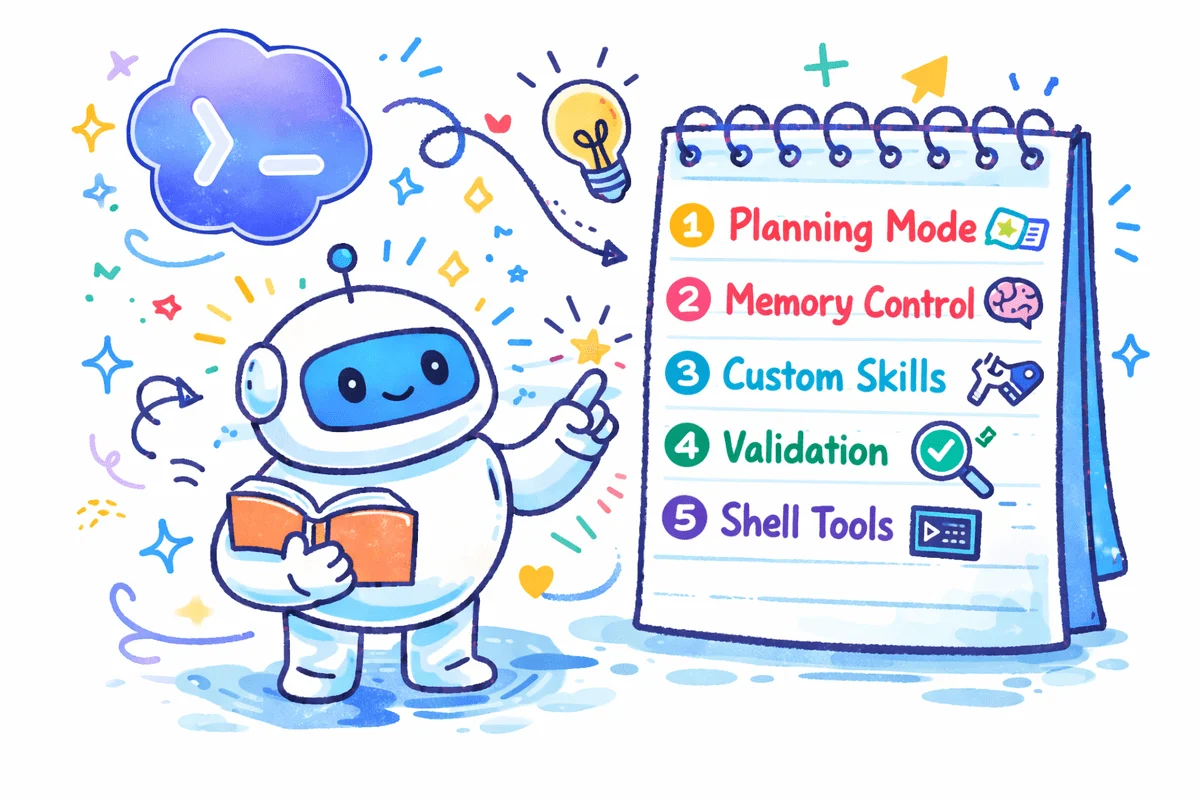
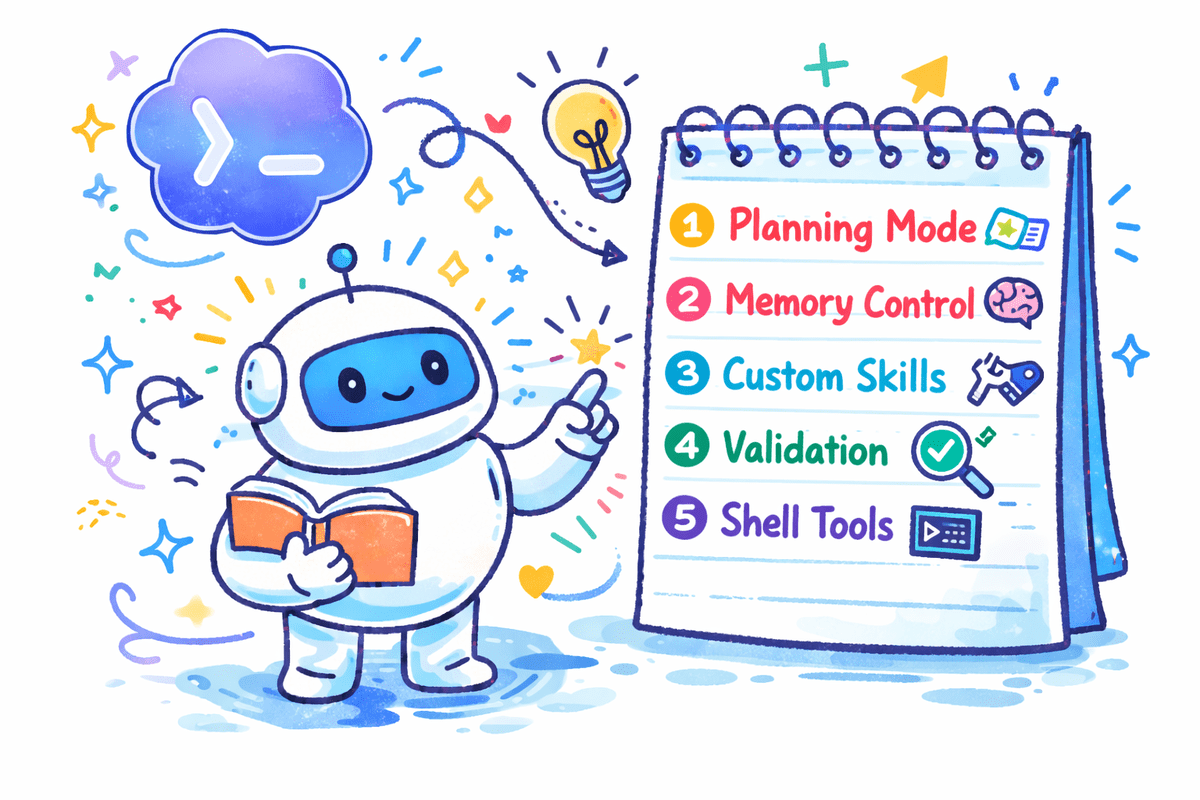
The following five strategies provide a practical roadmap for developers to unlock this advanced potential, moving beyond superficial interactions to cultivate a truly symbiotic relationship with OpenAI Codex.
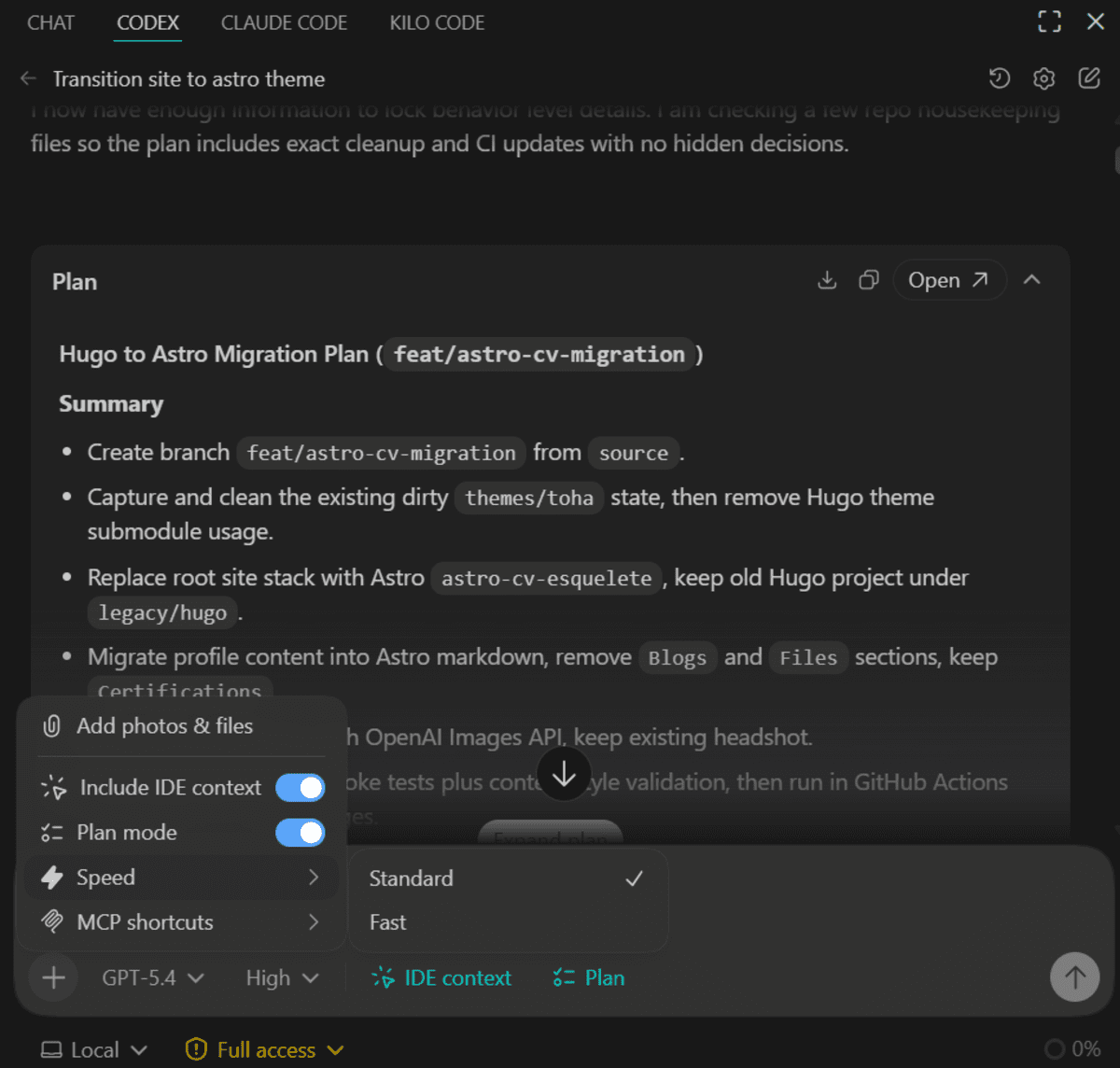
I. Orchestrating Complex Tasks with Planning Mode
One of the most significant advancements in leveraging AI for complex software development lies in the adoption of a "Planning Mode." OpenAI’s guidance strongly advocates for this approach when tasks are ambiguous, difficult to describe precisely, or involve multiple interconnected steps. Instead of immediately generating code, Codex is instructed to first formulate a detailed plan. This process involves:
- Context Gathering: Analyzing the available project information, existing code, and relevant documentation.
- Clarifying Questions: Engaging in a dialogue to resolve any ambiguities in the task description, much like a human engineer would consult with stakeholders.
- Step-by-Step Breakdown: Decomposing the overarching task into a sequence of manageable sub-tasks, identifying dependencies, and outlining the expected output for each stage.
This structured planning phase profoundly impacts the quality and reliability of the subsequent interaction. By explicitly instructing Codex to propose a plan, developers enable the AI to reason through the problem space more thoroughly. This makes it exceptionally well-suited for "long-horizon" tasks—projects where success is not determined by a single block of code but by the successful management of sequencing, adherence to constraints, establishment of checkpoints, and comprehensive validation across an extended workflow. The result is a more coherent and robust solution, minimizing the likelihood of misinterpretations or incomplete implementations that often arise from direct code generation prompts. Industry observations suggest that developers who adopt a planning-first approach report a significant reduction in rework and an increase in first-pass accuracy for complex feature implementations.
II. Establishing Project Context and Memory via AGENTS.md
Effective AI collaboration in a software project necessitates a shared understanding of the project’s ecosystem. The AGENTS.md file serves as a pivotal mechanism for establishing this common ground. Far from being a mere project overview, AGENTS.md functions as a comprehensive directive for Codex, detailing project-specific rules, preferred workflows, tool expectations, and other critical working instructions. OpenAI’s documentation explicitly states that Codex consults AGENTS.md before initiating any work, and its CLI offers an /init command to scaffold this file, which can then be refined and committed to the repository.
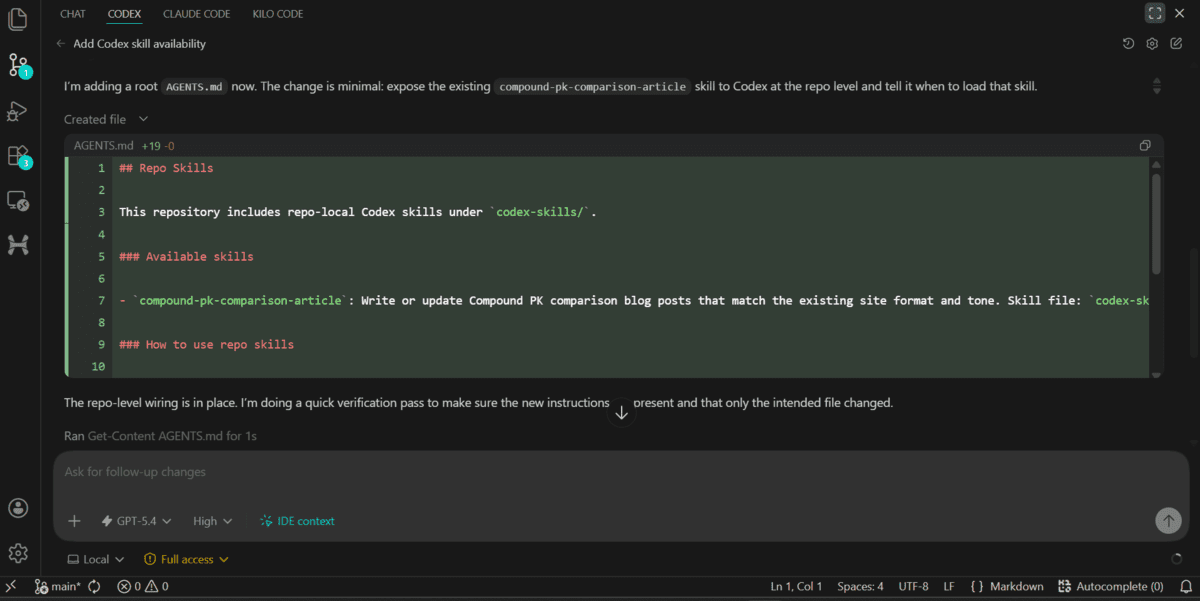
This file becomes invaluable in practice because it imbues Codex with an understanding of the project’s operational specifics. It defines which tools and skills are available, what coding standards should be adhered to, and how specific tasks should be executed. Crucially, AGENTS.md also facilitates a lightweight form of project memory. Unlike ChatGPT-style personal memory, this is a persistent, project-level context layer. OpenAI’s guidance for long-horizon tasks frequently references durable markdown files for plans, execution instructions, and documentation. Coupled with Codex’s ability to resume saved sessions, AGENTS.md provides a robust mechanism for carrying critical context forward across multiple sessions and extended development tasks, ensuring consistency and reducing the need for repeated instruction. This persistent context is vital for maintaining coherence in large, evolving codebases and multi-developer environments.
III. Customizing Workflows with Reusable Codex Skills
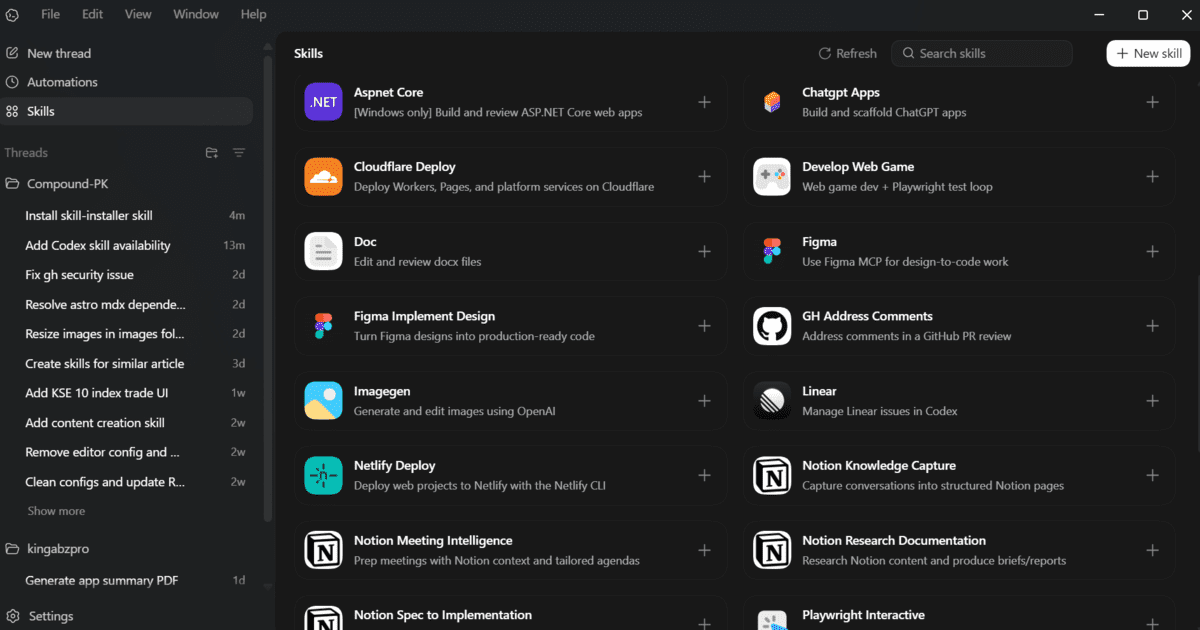
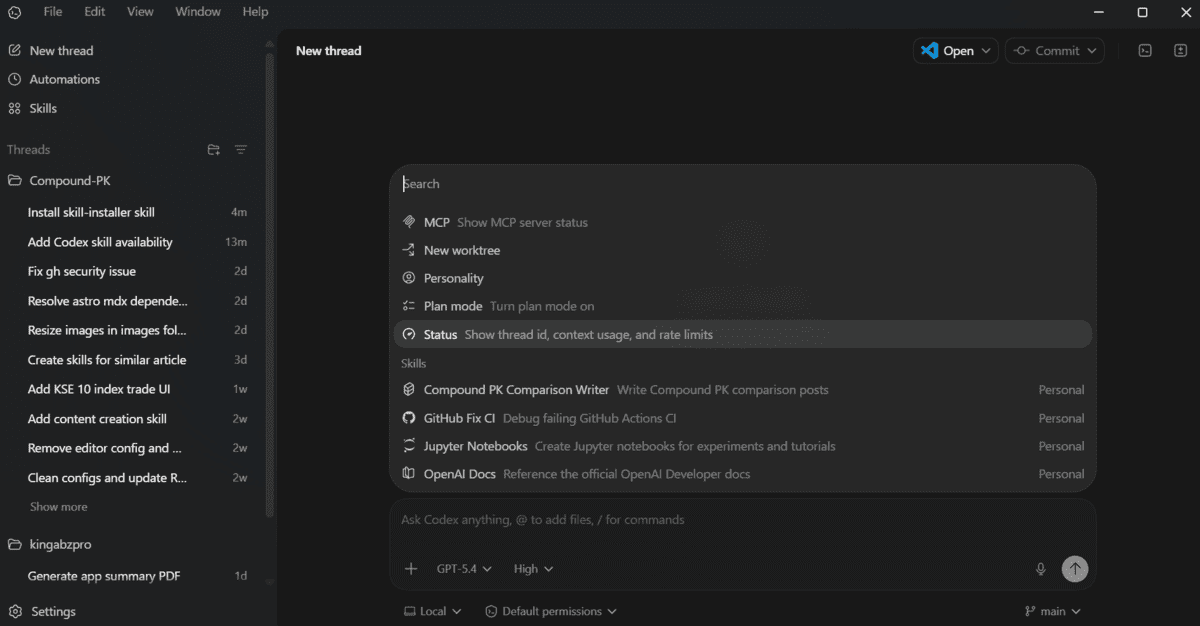
To truly tailor Codex to unique project requirements and accelerate repeatable processes, the concept of "skills" proves indispensable. OpenAI defines skills as reusable bundles of instructions, scripts, and assets, encapsulated within a SKILL.md file. These skills allow developers to codify and automate repeatable workflows, enforce conventions, and integrate domain-specific processes directly into Codex’s operational framework. Codex supports these custom skills across its application interface, CLI, and integrated development environment (IDE) extensions, providing flexible deployment options.
The utility of custom skills is further enhanced by Codex’s built-in system skills, such as $skill-creator and $skill-installer. These tools simplify the process of scaffolding new skills and integrating them into the local development environment. This capability is particularly powerful when a project’s workflow deviates from generic patterns. Instead of relying solely on default behaviors, developers can create bespoke skills that teach Codex how to interact with project-specific internal APIs, manage external tools, or execute custom publishing flows. For instance, a developer maintaining a website might create a skill to automatically format articles according to specific style guides, integrate with a content management system’s API for publishing, or even trigger deployment scripts. This level of customization significantly reduces manual intervention, ensures adherence to project-specific nuances, and dramatically improves efficiency for recurring tasks, transforming Codex from a general-purpose assistant into a specialized domain expert.
IV. Ensuring Quality Through Automated Verification and Validation
A critical aspect of any reliable software engineer, human or AI, is the ability to verify and validate their own work. For AI coding agents, explicitly instructing them to test, verify, and validate their output is paramount to achieving high-quality, dependable results. This practice has become increasingly vital with advanced iterations of large language models, which are engineered for stronger coding capabilities and more complex multi-step workflows. These models excel at verification loops, clear completion checks, and enhanced tool utilization across intricate tasks, demonstrating a greater propensity to iterate and refine their work until the desired outcome is achieved.
In practical terms, this means developers should instruct Codex to not only write code but also to perform a series of self-checks:
- Run Unit and Integration Tests: Execute existing test suites to confirm functionality and prevent regressions.
- Inspect User Interfaces (UI) and Web Pages: Utilize browser automation tools (e.g., Playwright) to visually and functionally verify UI changes and user experience.
- Behavioral Verification: Confirm that the implemented changes actually align with the specified requirements and exhibit the expected behavior.
- Iterative Refinement: Empower Codex to identify discrepancies, make necessary fixes, and continue the cycle of coding, testing, and verification until the task is properly completed.
By integrating these explicit validation steps into the prompting process, developers can significantly enhance the reliability of AI-generated code, transforming Codex into a more robust and accountable contributor to the development team. This approach reduces the burden of manual review and debugging, allowing human engineers to focus on higher-level architectural design and complex problem-solving.
V. Integrating with Existing Ecosystems via Shell Tools
One of the most direct and effective ways to transition OpenAI Codex from a mere code generator to a true coding agent is through its seamless integration with existing shell tools and command-line interfaces. The current Codex CLI and IDE workflows are fundamentally built around this principle: the AI agent can read files, modify code, and execute commands directly within the project environment. OpenAI’s prompting guidance explicitly recommends leveraging shell tools for terminal commands, acknowledging that a significant portion of real-world engineering work is inherently command-line driven.
This integration is crucial because it aligns Codex’s capabilities with established development practices. Whether interacting with version control systems like Git via gh for GitHub, managing deployments with tools like Vercel, or leveraging local utilities that bridge the codebase with external systems, shell tools form the backbone of modern development workflows. The primary advantage of this approach is its simplicity and efficiency. It often negates the need for complex abstractions like extra Model Context Protocol (MCP) servers or custom skills for tasks that can be handled directly by existing CLI tools. This translates to fewer tokens consumed, faster execution times, and a development setup that remains much closer to the standard local environment. By grounding the AI’s workflow in trusted, familiar tools, developers retain greater control and transparency, avoiding the introduction of unnecessary abstraction layers that could complicate debugging or maintenance. This strategy truly empowers Codex to act as an extension of the developer’s existing toolkit, rather than a separate, isolated entity.
Broader Implications for Software Development
The strategic application of OpenAI Codex as an AI coding agent heralds significant implications for the software development industry.
- Enhanced Productivity: Early adopters and industry reports consistently indicate substantial gains in developer productivity, with AI assisting in everything from boilerplate code generation to complex refactoring. This allows human developers to dedicate more time to innovative problem-solving, architectural design, and strategic decision-making.
- Evolving Developer Roles: The role of the human developer is shifting from purely writing code to becoming an orchestrator, overseer, and prompt engineer. Skills in crafting effective prompts, understanding AI capabilities, and validating AI output are becoming increasingly valuable.
- Accelerated Development Cycles: The ability of AI agents to plan, execute, and verify tasks can dramatically shorten development cycles, bringing products to market faster.
- Accessibility: AI coding tools can lower the barrier to entry for aspiring developers by providing intelligent assistance and reducing the initial learning curve.
- Challenges and Considerations: Despite the benefits, challenges remain. Debugging AI-generated code, ensuring its security and maintainability, and addressing potential biases are ongoing concerns. The ethical implications of AI in creative fields also warrant continuous scrutiny. Furthermore, reliance on AI for complex tasks necessitates robust human oversight to prevent propagation of errors or unintended consequences.
Expert Perspectives and Community Adoption
The growing adoption of these advanced strategies within the "vibe-coding" community—a diverse group of developers experimenting with AI-assisted workflows—underscores their practical efficacy. Experts within OpenAI and the broader AI research community continue to refine models and guidelines, pushing for AI systems that are not just intelligent but also reliable and deeply integrated into human workflows. The sentiment among many seasoned developers, as observed through anecdotal evidence and community discussions, suggests that while AI may feel like an "imposter" due to its rapid problem-solving capabilities, it ultimately serves as a powerful force multiplier when properly directed.

Conclusion
OpenAI Codex, when approached strategically, transcends its initial role as a simple code generator to become a powerful AI coding agent. By consistently implementing core practices such as leveraging Planning Mode for complex changes, managing project context through AGENTS.md, creating custom skills for repeatable workflows, explicitly instructing the AI to test and verify its own output, and seamlessly integrating with existing shell tools, developers can unlock unprecedented levels of efficiency and reliability. This holistic approach reduces friction in the development process, accelerates task completion, and fundamentally reshapes the interaction between human engineers and artificial intelligence, paving the way for a more collaborative and productive future in software development. The journey toward fully leveraging AI in coding is ongoing, but the path to transforming tools like Codex into indispensable partners is clear: thoughtful instruction, meticulous context management, and a commitment to rigorous validation.