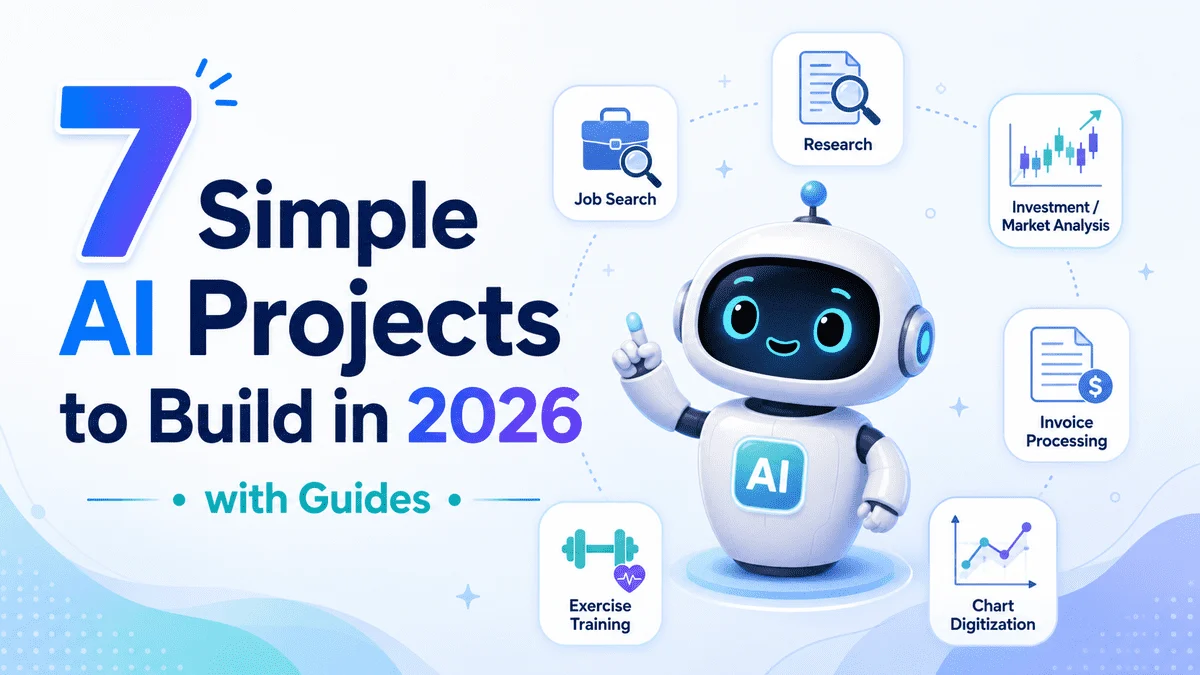
The landscape of artificial intelligence is rapidly shifting from theoretical advancements to practical, workflow-centric applications, heralding a new era of automation poised to reshape various industries by 2026. This transformative phase emphasizes the development of AI projects designed to solve tangible, real-world problems, moving beyond mere demonstrations of models or tools. The focus is squarely on integrating AI into daily operations to automate repetitive tasks across diverse sectors, including job searching, research, financial analysis, document processing, market intelligence, data visualization, and personalized assistance.
The Evolution of Practical AI: From Concepts to Concrete Solutions
The journey of artificial intelligence has seen significant milestones, from the early days of expert systems and symbolic AI to the more recent breakthroughs in machine learning, deep learning, and particularly, large language models (LLMs). These foundational advancements have now matured to a point where complex automation, once considered futuristic, is becoming increasingly accessible. The year 2026 is projected to be a pivotal period, witnessing the widespread adoption and refinement of AI solutions capable of handling intricate, multi-step workflows.
Key to this evolution are advancements in several areas: the proliferation of sophisticated LLMs, the emergence of multimodal AI capable of processing various data types (text, images, audio), and the development of agentic architectures. Agentic AI refers to systems where multiple specialized AI agents collaborate to achieve a larger goal, often mimicking human team dynamics. This paradigm shift enables AI to not just answer queries but to autonomously plan, execute, and adapt workflows. Furthermore, the increasing availability of powerful yet user-friendly AI development tools and APIs, such as OpenAI Agents SDK, Kimi K2.6, Claude Opus 4.7, Qwen 3.6 Plus, Olostep, Supermemory, n8n, Gradio, and Pandas, has significantly lowered the barrier to entry for developers and organizations. This democratization of AI development is allowing a broader spectrum of innovators to build bespoke solutions that directly address their operational bottlenecks.
Key AI Applications Driving Workflow Automation
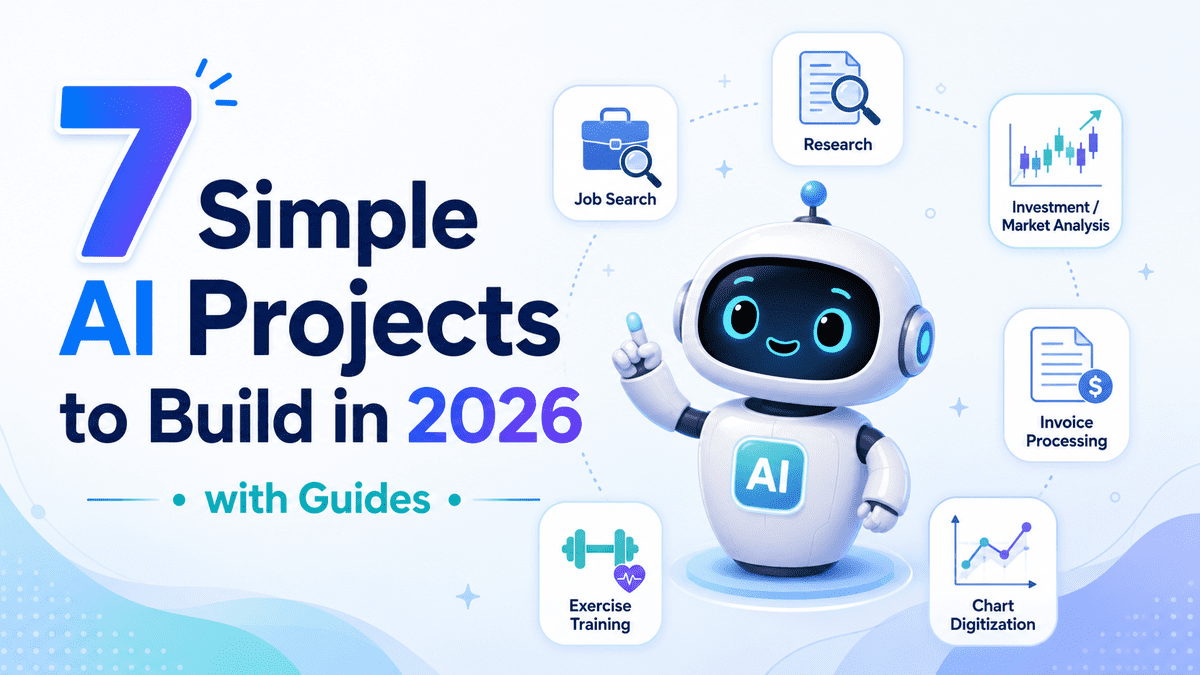
The following projects exemplify the current trajectory of AI development, offering blueprints for building intelligent systems that can drastically improve efficiency and decision-making. Each project represents a practical application, complete with guides, code, and step-by-step explanations, making them ideal for learning and adaptation.
1. Revolutionizing Recruitment: The AI Job Search Assistant
The job search process has long been characterized by its tedious and repetitive nature. Candidates often spend countless hours sifting through job boards, meticulously reading descriptions, manually comparing them against their resumes, and attempting to discern which roles align best with their skills and aspirations. This labor-intensive process is often inefficient, leading to candidate fatigue and missed opportunities.
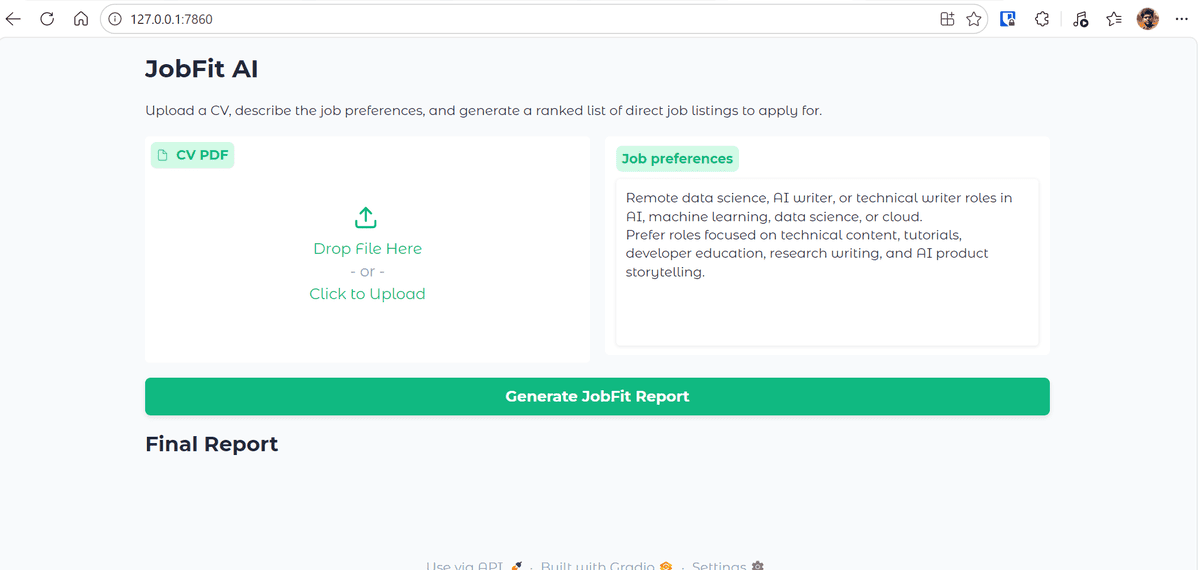
The advent of AI offers a powerful solution to this entrenched problem. Projects like "JobFit AI" are designed to automate and optimize the entire job search workflow. Such an assistant begins by intelligently analyzing a candidate’s CV, understanding their core competencies, experience, and career objectives. It then autonomously searches live job postings across various platforms, navigates selected job pages to extract detailed information, and critically, generates a ranked job-fit report. This report not only highlights suitable roles but also provides an assessment of compatibility, allowing candidates to focus their efforts on the most promising opportunities.
Industry observers note that AI job search assistants hold the potential to significantly improve the candidate experience, making the process less daunting and more strategic. For employers, while these tools directly assist job seekers, they indirectly contribute to a more efficient talent market by helping better-matched candidates find relevant roles faster. Technologies like Kimi K2.6 and Olostep, alongside the OpenAI Agents SDK and Gradio for user interfaces, are instrumental in building such sophisticated, context-aware systems, demonstrating how LLMs can interpret complex textual data and orchestrate web-based actions. The global recruitment industry, valued at hundreds of billions of dollars, stands to benefit immensely from such automation, promising faster hiring cycles and more precise talent acquisition.
2. Enhancing Knowledge Discovery: Multi-Agent Research Systems
Traditional research workflows are inherently multi-faceted, typically involving a series of distinct steps: extensive web searching, rigorous filtering of sources for relevance and credibility, meticulous extraction of key information, and ultimately, the synthesis of findings into a coherent report. While a single, well-crafted AI prompt can offer initial assistance, the complexity and iterative nature of comprehensive research demand a more sophisticated approach.
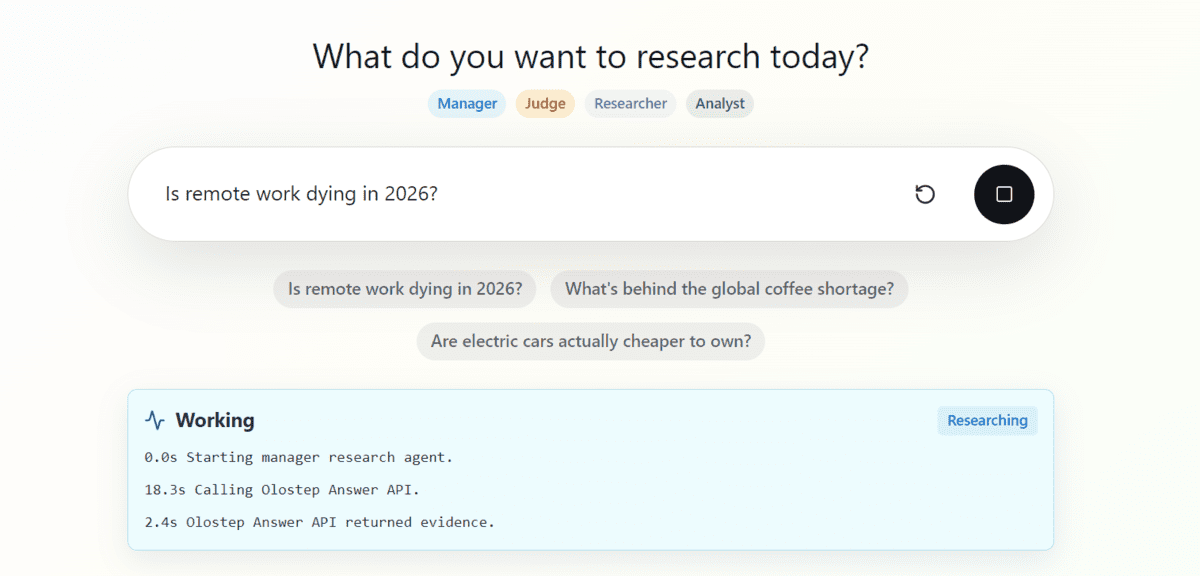
Multi-agent systems represent a significant leap forward in automating these intricate processes. This project showcases the development of a multi-agent research assistant that leverages the collaborative power of specialized AI entities. Instead of relying on a monolithic AI, different agents are assigned distinct roles – for instance, one agent might be dedicated to web scraping and information retrieval, another to critically evaluating source credibility and filtering irrelevant data, a third to extracting specific data points or arguments, and a fourth to synthesizing these findings into a structured, sourced Markdown research report.
This modular approach, often built using tools like the OpenAI Agents SDK and Olostep, offers enhanced control and accuracy over the research process. It mitigates the risk of information overload and potential biases inherent in single-pass AI summaries. Industry analysts project that such systems will become indispensable across academia, journalism, and corporate intelligence, where the demand for rapid, comprehensive, and well-sourced insights continues to grow. The ability to quickly process vast amounts of information and distill it into actionable intelligence can dramatically accelerate discovery and decision-making cycles, transforming how knowledge is acquired and disseminated.
3. Streamlining Financial Intelligence: Automated Investment Research
Investment research is a highly data-intensive and time-critical domain, requiring constant vigilance over company news, financial reports, market commentary, and a multitude of public data sources. The sheer volume and velocity of information can overwhelm human analysts, making timely and comprehensive analysis a significant challenge.
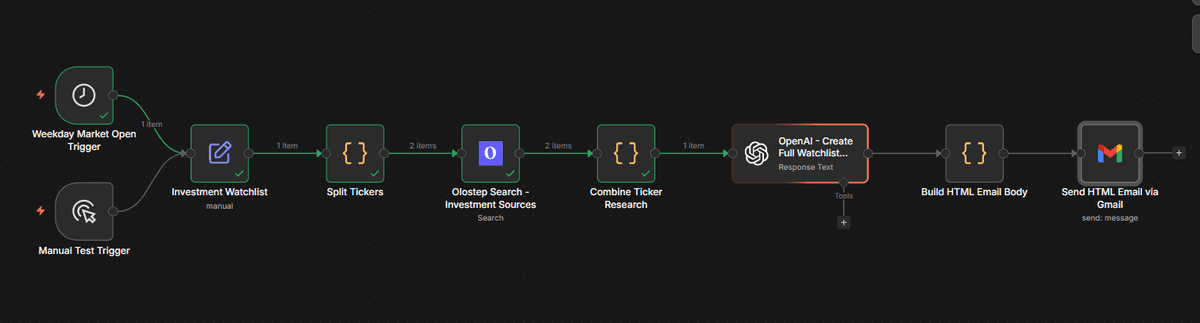
This project outlines an automated workflow designed to transform this arduous process. By integrating AI and automation platforms like Olostep and n8n, developers can construct systems that continuously collect public financial data, analyze specific stock tickers for relevant insights, and generate AI-powered reports. These reports can summarize key developments, identify emerging trends, and highlight potential risks or opportunities.
While the guide emphasizes that such a project is primarily educational and not a substitute for professional financial advice, its implications for democratizing sophisticated research tools are profound. Traditionally, access to high-quality, real-time investment analysis has been limited to institutional investors. AI-driven automation can make advanced analytical capabilities available to a broader audience, enabling more informed decision-making. Financial technology (FinTech) innovators foresee these tools supporting retail investors and smaller firms by providing a robust, automated layer of intelligence. However, ethical considerations are paramount; the design must incorporate robust data validation, transparency in AI reasoning, and clear disclaimers to prevent over-reliance or misinterpretation, particularly given the potential for algorithmic biases or rapid market shifts. The global financial data and analytics market, expected to reach over $300 billion by 2026, represents a significant arena for such AI innovation.
4. Strategic Insights: Agentic Market Research and Trend Analysis
In today’s hyper-competitive and rapidly evolving business environment, staying abreast of competitor activities, industry signals, and emerging market trends is paramount for strategic planning. Manual market research is often a labor-intensive, time-consuming, and reactive process, frequently struggling to keep pace with the dynamic nature of global markets.
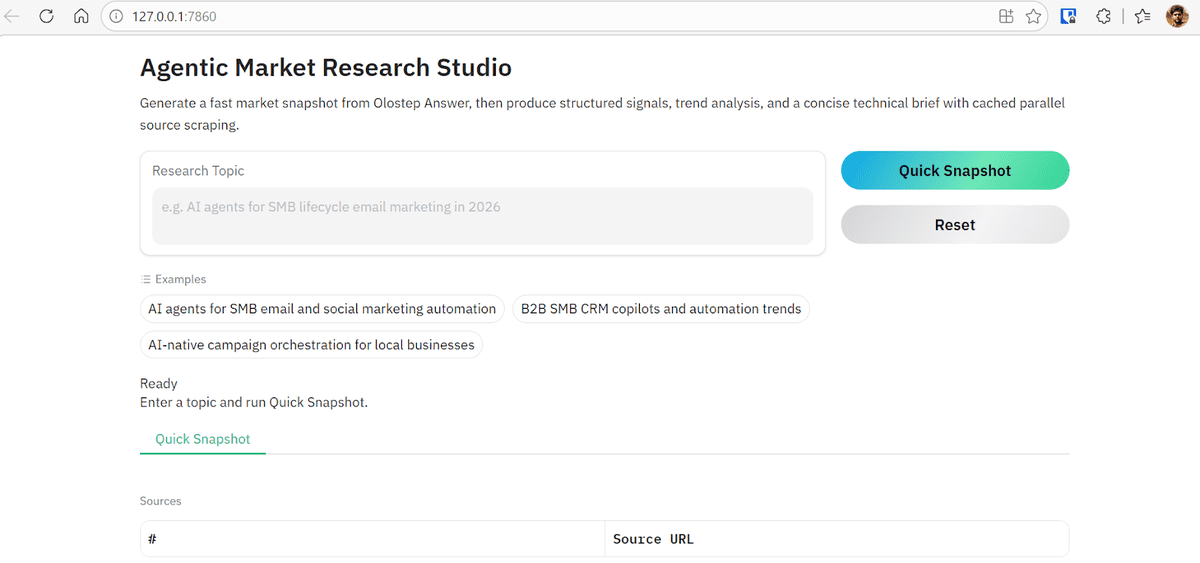
This project introduces an agentic workflow that significantly automates and enhances market research and trend analysis. Utilizing advanced AI frameworks like the OpenAI Agents SDK and Olostep, developers can build an end-to-end system capable of proactively monitoring the market landscape. This system employs specialist AI agents, each designed for a specific function within the research pipeline. For instance, one agent might be tasked with continuously tracking competitor announcements and product launches, another with identifying subtle industry signals and nascent trends from diverse data sources, a third with extracting and structuring key data points, and a fourth with synthesizing all collected intelligence into concise, actionable market briefs.
The impact of such an application is substantial. Businesses can gain a significant competitive advantage by receiving real-time, comprehensive market intelligence, allowing for more agile decision-making, earlier identification of market opportunities, and proactive mitigation of threats. This shifts market research from a reactive, periodic activity to a continuous, intelligent monitoring process. Analysts predict that agentic AI will redefine business intelligence, enabling companies of all sizes to access sophisticated analytical capabilities previously reserved for large corporations with extensive research departments. The global market intelligence software market is projected to grow substantially, driven by the demand for tools that provide deeper, faster insights into complex market dynamics.
5. Operational Efficiency: AI Invoice Processing Pipeline
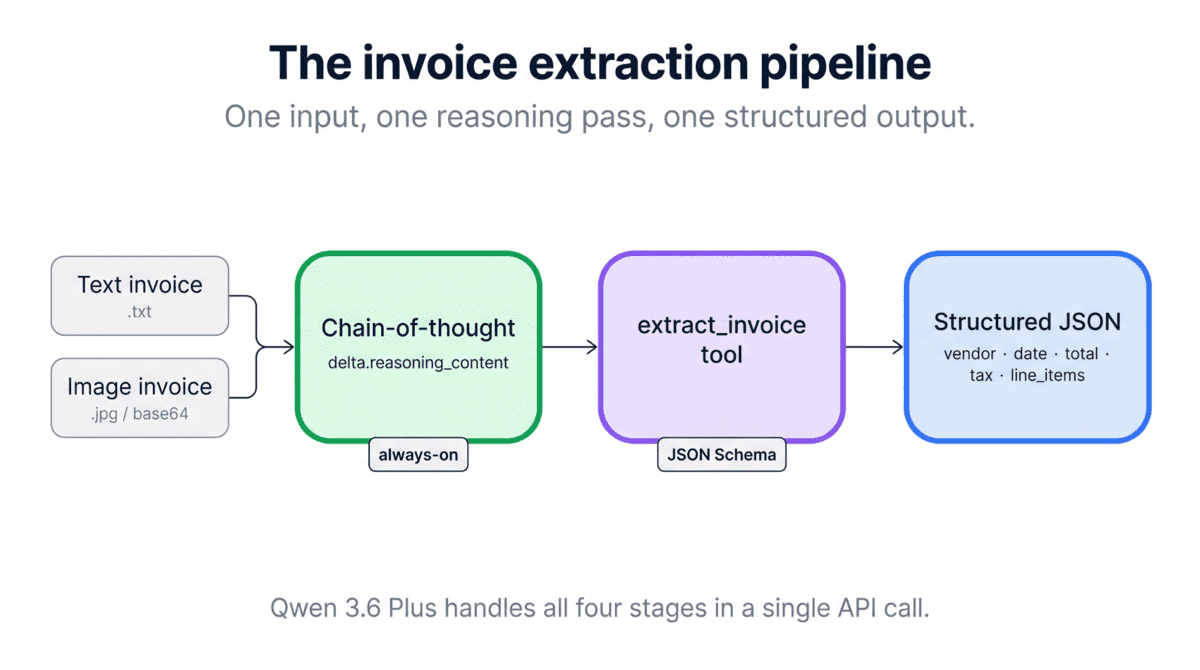
Invoice processing stands out as a particularly strong real-world use case for AI due to its combination of document understanding, structured data extraction, and potential for extensive business automation. Across industries, organizations grapple with the manual handling of invoices, a process prone to human error, delays, and significant administrative costs.
This tutorial demonstrates how to construct an automated invoice processing pipeline using advanced AI models like Qwen 3.6 Plus, integrated with Python and the OpenAI SDK. The core objective is to leverage AI’s capabilities in native vision and tool calling to intelligently interpret invoice documents. This involves the AI system not only reading the text on an invoice but also understanding its layout, identifying key fields such as vendor name, invoice number, date, line items, quantities, prices, and total amounts, even when presented in varying formats. The system then extracts this information and transforms it into structured outputs, such as JSON or CSV files, which can be seamlessly integrated into enterprise resource planning (ERP) systems or accounting software.
The implications for operational efficiency are transformative. Businesses can expect substantial cost savings by reducing the need for manual data entry and minimizing errors that lead to reconciliation issues. The acceleration of invoice processing cycles can improve cash flow management, enhance vendor relationships, and free up human staff to focus on more strategic, value-added tasks rather than repetitive data input. Studies indicate that manual data entry can account for a significant portion of administrative overhead, with error rates potentially reaching 1-3%. AI-powered solutions offer a pathway to drastically reduce these figures, making finance and accounting departments more agile and accurate.
6. Bridging Analog and Digital: Chart Digitizer with Advanced Vision AI
A vast amount of valuable data remains "trapped" within static visual formats—charts embedded in reports, screenshots, scanned documents, and PDFs. Extracting this data for further analysis traditionally requires painstaking manual transcription, a process that is not only time-consuming but also highly susceptible to human error.
This project addresses this challenge by showcasing the development of a chart digitizer utilizing the high-resolution vision capabilities of advanced AI models like Claude Opus 4.7. The tutorial outlines how to build a Python-based system that can ingest an image of a chart, intelligently identify and interpret its visual components (axes, labels, data points, legends), extract the underlying numerical data, and then organize it into a clean, structured format, such as a Pandas DataFrame or a CSV file.
The impact of such a tool is far-reaching. It enables the "unlocking" of legacy data previously inaccessible to modern analytical tools, allowing organizations to integrate historical visual data into their current data pipelines. This accelerates data analysis, facilitates trend identification from archived reports, and significantly enhances interoperability across disparate data sources. The guide also highlights the sophisticated features of Claude Opus 4.7, including its "adaptive thinking" (ability to reason through visual context), "high effort level" (thoroughness in complex tasks), and its capacity for generating structured, tool-based outputs, which are crucial for reliable data extraction. This advancement underscores the growing capability of multimodal AI to bridge the gap between human-interpretable visuals and machine-processable data, making data more accessible and actionable.
7. Personalization and Retention: AI Exercise Trainer with Persistent Memory
A significant limitation of many contemporary AI agents and chatbots is their lack of persistent memory. Each interaction often starts anew, with the agent forgetting previous conversations, user preferences, and historical context once the session concludes. This stateless nature severely hampers the ability to provide truly personalized and engaging experiences, especially for applications requiring long-term interaction and adaptation.
This project offers a solution by demonstrating how to build an AI exercise trainer equipped with persistent memory, leveraging tools like Supermemory. The Python-based trainer is designed to transcend the limitations of stateless agents by remembering user history, logging past workouts, understanding individual preferences, and consequently suggesting personalized exercise sessions across separate runs of the script. For instance, if a user prefers low-impact exercises or has specific fitness goals, the AI trainer remembers these details and tailors future recommendations accordingly, fostering a more engaging and effective user experience.
The implications of persistent memory extend far beyond fitness applications. This capability is critical for developing more sophisticated and user-centric AI agents in diverse fields such as education (remembering learning progress and adapting curriculum), therapy (tracking emotional states and coping mechanisms), customer service (recalling past interactions and preferences for seamless support), and personal assistants (understanding daily routines and anticipating needs). By enabling AI agents to build a long-term understanding of their users, persistent memory fosters greater user engagement, improves the relevance and quality of interactions, and ultimately leads to more effective and impactful AI applications. This advancement marks a crucial step towards creating AI systems that can genuinely learn and grow with their users over time.
Broader Implications and Future Outlook
The development and proliferation of these practical AI projects signify a profound shift in how technology interacts with human workflows. The implications span economic, societal, and technological domains.
Economically, these advancements promise significant productivity gains across industries, streamlining operations, reducing manual errors, and freeing up human capital for more creative and strategic endeavors. While concerns about job displacement are valid, the rise of "AI co-pilots" and intelligent automation is also expected to create new roles and necessitate upskilling, fostering a more collaborative human-AI workforce. New business models built around AI-as-a-service and specialized agentic solutions are also emerging.
Societally, these tools can democratize access to sophisticated capabilities. An AI job assistant can level the playing field for job seekers, automated research can empower smaller organizations, and personalized trainers can promote well-being. However, these advancements also bring critical ethical considerations to the forefront, including potential biases embedded in AI algorithms, data privacy concerns, and the accountability of autonomous systems. Robust ethical frameworks and regulatory oversight will be crucial to ensure responsible AI development and deployment.
Technologically, these projects underscore several key trends: the increasing maturity of agentic AI, which allows for complex, multi-step problem-solving; the growing sophistication of multimodal AI, enabling systems to understand and process diverse data types; and the continuing push towards embedded AI and low-code/no-code platforms, making AI development more accessible to a wider audience. The ability to build these advanced projects for relatively low cost and in short timeframes, as highlighted by the author, further emphasizes the accelerating pace of AI democratization.
Ultimately, these projects teach a fundamental lesson: AI agents are most powerful when given tools, context, and clear goals, allowing them to autonomously navigate complex workflows and augment human intelligence. The future, as envisioned by these developments, is one where AI seamlessly integrates into our professional and personal lives, making workflows not just faster, but genuinely more intelligent and efficient. The era of practical, deployable AI is not just on the horizon; it is already here, offering tangible solutions that promise to redefine productivity and innovation.
This article was informed by the insights and projects developed by Abid Ali Awan, a certified data scientist professional and content creator focused on machine learning and data science technologies. His work emphasizes building practical AI solutions that address real-world problems.