

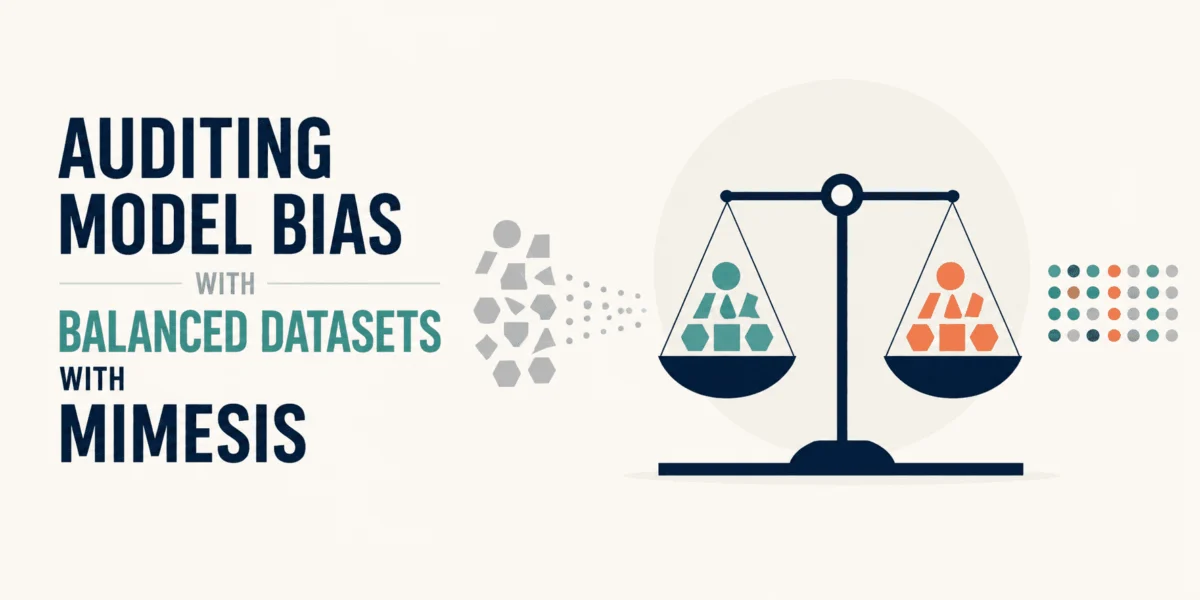
The increasing integration of machine learning solutions into critical societal functions, from financial services to healthcare and criminal justice, has brought to the forefront a pervasive and often insidious risk: algorithmic bias. Whether embedded in well-established classifiers or the cutting-edge capabilities of large language models (LLMs), algorithms possess the capacity to silently absorb and perpetuate prejudices inherent in the historical datasets upon which they are trained. This silent adoption of bias poses significant ethical, legal, and operational challenges, particularly in high-stakes environments or when dealing with sensitive personal information. A fundamental question then arises: how can organizations rigorously audit their models for bias without compromising real-world data privacy or regulatory compliance?
The urgency of this question stems from numerous incidents where biased algorithms have led to discriminatory outcomes. In financial lending, for instance, an algorithm might inadvertently deny loans to qualified individuals from certain demographic groups due to historical lending patterns that reflect societal biases, not actual creditworthiness. Such scenarios not only inflict harm on individuals but also expose institutions to severe reputational damage, legal liabilities, and regulatory penalties. The ethical imperative to ensure fairness and equity in AI systems is increasingly mirrored by a growing body of regulations, such as the European Union’s AI Act, which mandates stringent requirements for high-risk AI systems, including bias detection and mitigation. Therefore, robust methods for identifying and understanding algorithmic bias are no longer merely best practice but a critical necessity for responsible AI development and deployment.
One promising approach to address this complex challenge involves the use of synthetic data generation tools, specifically the open-source Python library Mimesis. This powerful tool provides a controlled environment for testing model behavior by creating perfectly balanced, counterfactual datasets that isolate the impact of specific attributes. This hands-on exploration delves into a practical application of Mimesis to audit a simple classification model designed for "loan approval" that has been intentionally trained on biased data. By leveraging Mimesis, we can construct hypothetical scenarios involving "fake" users with identical financial backgrounds but differing demographic characteristics, thereby unequivocally determining whether the model discriminates against certain groups. This methodology offers a powerful, privacy-preserving pathway to uncover and understand algorithmic bias, paving the way for more equitable and transparent AI systems.
The Genesis of Algorithmic Bias: A Systemic Challenge
Algorithmic bias is not typically an intentional design flaw but rather a byproduct of the data and processes used to build machine learning models. The most common source is historical data bias, where past human decisions, which may have been influenced by societal prejudices, are encoded into the training data. When an algorithm learns from such data, it essentially learns to replicate and often amplify these historical biases. For example, if a bank historically approved fewer loans for women or certain minority groups, even if those groups had comparable financial profiles, a model trained on this data would likely perpetuate that pattern.
Beyond historical data, other sources of bias include:
- Sampling Bias: The training dataset may not accurately represent the real-world population the model will serve, leading to skewed learning.
- Measurement Bias: Inaccuracies or inconsistencies in how data is collected for different groups can introduce bias.
- Feature Selection Bias: The choice of features included in the model, or how they are engineered, can inadvertently embed or amplify biases. For instance, using zip codes as a proxy for socioeconomic status can inadvertently correlate with race or ethnicity, leading to discriminatory outcomes.
- Algorithmic Bias: Even without explicit bias in the data, certain algorithms or their configurations can exacerbate existing biases or create new ones.
The consequences of algorithmic bias extend far beyond mere inconvenience. In high-stakes domains, they can lead to significant societal harm:
- Financial Services: Discriminatory lending, insurance, or credit scoring practices can limit economic opportunities for specific groups.
- Employment: Biased hiring algorithms can screen out qualified candidates based on protected characteristics.
- Criminal Justice: Predictive policing algorithms or recidivism risk assessments can disproportionately target or penalize minority communities.
- Healthcare: Diagnostic or treatment recommendation systems can misdiagnose or provide suboptimal care for certain demographics.
The growing awareness of these risks has fueled a demand for robust auditing mechanisms. However, auditing models with real-world, sensitive data presents its own set of challenges, primarily concerning data privacy and regulatory compliance. This is where synthetic data generation, particularly tools like Mimesis, offers a crucial alternative. By generating realistic but entirely fabricated datasets, auditors can simulate diverse scenarios without ever touching sensitive personal information, thereby mitigating privacy risks while still effectively identifying bias.
Mimesis: A Gateway to Ethical AI Auditing
Mimesis is an open-source Python library designed for the generation of synthetic data. Its core strength lies in its ability to produce diverse, realistic, and consistent data across a wide range of categories, including personal information, addresses, financial details, and much more. For the purpose of AI auditing, Mimesis provides an invaluable capability: the creation of counterfactual datasets. A counterfactual dataset consists of data points that are identical in all aspects except for a single, targeted attribute – often a protected characteristic like gender, race, or age. This precise control allows auditors to isolate the impact of that specific attribute on a model’s decision-making process, providing undeniable evidence of bias if differential treatment occurs.
The traditional method of auditing for bias often involves analyzing real-world data or running the model on a subset of actual customer data. This approach is fraught with difficulties:
- Privacy Concerns: Using real customer data, even anonymized, always carries a risk of re-identification and raises significant privacy concerns, especially under regulations like GDPR or CCPA.
- Data Scarcity: In some cases, real-world data for certain minority groups or specific scenarios might be sparse, making it difficult to construct statistically significant test sets for bias detection.
- Confounding Variables: Real-world data is messy. It’s challenging to find perfectly matched pairs of individuals who differ only in a single protected attribute, making it difficult to isolate the exact cause of a discriminatory outcome. Other variables might unknowingly correlate with the protected attribute, obscuring the true source of bias.
Mimesis overcomes these limitations by offering:
- Privacy by Design: All generated data is synthetic, eliminating the risk of exposing real personal information. This makes it ideal for pre-deployment testing and ongoing monitoring without privacy overheads.
- Statistical Control: Auditors can precisely control the distribution and relationships between features in the synthetic data. This enables the creation of perfectly balanced datasets and counterfactual examples where only one variable is changed, providing clear causal links for any observed bias.
- Scalability and Flexibility: Mimesis can generate vast amounts of data quickly, allowing for comprehensive testing across numerous scenarios and demographic subgroups. Its modular design allows users to combine various data providers to create highly customized datasets relevant to specific domains.
By providing a robust, flexible, and privacy-preserving method for generating controlled test data, Mimesis stands out as an indispensable tool in the arsenal of ethical AI developers and auditors. It empowers organizations to proactively identify and mitigate biases, fostering trust and ensuring fairness in their AI deployments.
Step-by-Step Guide: Unmasking Loan Approval Bias with Mimesis
To illustrate Mimesis in action, we will walk through a practical scenario: training a loan approval model on intentionally biased data and then auditing it using synthetic counterfactual examples.
1. Setting Up the Environment and Simulating Biased Data
The first prerequisite is to ensure the Mimesis library is installed. For those new to Mimesis or working in cloud environments like Google Colab, a simple installation command suffices: pip install mimesis.
Before we can audit a model, we must have one. For demonstration purposes, we will synthetically generate a dataset of 1,000 hypothetical bank customers. This dataset will include two key features: Gender (categorical) and Income (numerical), alongside a binary outcome: Approved (for loan approval). Crucially, the data creation process will be deliberately manipulated to embed gender bias. Specifically, our simulated historical data will reflect a scenario where men are generally approved for loans, while women are approved only if they possess remarkably high incomes. This stark difference ensures that the bias is clear and detectable.
import pandas as pd
import numpy as np
from sklearn.tree import DecisionTreeClassifier

# 1. Simulating biased historical data (1000 instances)
np.random.seed(42) # For reproducibility
n_train = 1000
genders = np.random.choice(['Male', 'Female'], n_train)
incomes = np.random.randint(30000, 120000, n_train)

approvals = []
for gender, income in zip(genders, incomes):
    if gender == 'Male':
        # Historically, males are generally approved
        approvals.append(1)
    else:
        # Only females with significantly high income are approved
        approvals.append(1 if income > 80000 else 0)

train_df = pd.DataFrame('Gender': genders, 'Income': incomes, 'Approved': approvals)

# Converting categorical 'Gender' to numerical 'Gender_Code' for the machine learning model
train_df['Gender_Code'] = train_df['Gender'].map('Male': 1, 'Female': 0)

print("Sample of biased training data:")
print(train_df.head())
print(f"nApproval rates in biased training data:")
print(train_df.groupby('Gender')['Approved'].value_counts(normalize=True))
This code snippet effectively creates a dataset where the approval rate for males is significantly higher, irrespective of income, while for females, approval is heavily contingent on an income exceeding 80,000. This foundational bias will then be learned by our model.
2. Training the Decision Tree Classifier
With the biased training data in hand, the next step is to train a simple machine learning model. A Decision Tree Classifier is chosen here due to its interpretability, making it easy to understand how decisions are made based on the input features. The model will learn the implicit rules from the biased train_df.
# 2. Training a Decision Tree classifier
model = DecisionTreeClassifier(max_depth=3, random_state=42) # Limiting depth for simplicity and interpretability
model.fit(train_df[['Gender_Code', 'Income']], train_df['Approved'])

print("nDecision Tree Classifier trained on biased data.")
The trained model now embodies the gender-based approval patterns present in the synthetic historical data. Any future predictions made by this model on new applicants will likely reflect this learned bias.
3. Generating Counterfactual Test Profiles with Mimesis
This is where Mimesis becomes indispensable. We will use the Generic class from Mimesis to generate a small set of base financial profiles. These profiles will contain unique identifiers (UUIDs) and a moderate income range (e.g., between $40,000 and $70,000). Crucially, at this stage, these base profiles do not include gender information.
from mimesis import Generic

generic = Generic('en')

# Generating 3 base financial profiles with random UUIDs and moderate income
base_profiles = []
for _ in range(3):
    profile =
        'Applicant_ID': generic.cryptographic.uuid(),
        'Income': generic.random.randint(40000, 70000) # Moderate income chosen to fall within the biased approval range for females

    base_profiles.append(profile)

print("nGenerated base financial profiles (without gender):")
for profile in base_profiles:
    print(profile)
A typical output for these base profiles might look like:
['Applicant_ID': '1f1721e1-19af-4bd1-8488-6abf01404ef9', 'Income': 44815,
 'Applicant_ID': '5c862597-7f55-43f4-9d6e-ac9cc0b9083e', 'Income': 47436,
 'Applicant_ID': '3479d4cf-0d9b-4f06-9c43-1c3b7e787830', 'Income': 58194]
4. Constructing the Counterfactual Dataset
The core of our auditing process lies in the creation of a counterfactual set of examples. For each of the three base profiles generated, we will create two "cloned" instances: one male and one female. The critical aspect is that for each pair of test customers, their Applicant_ID and Income will be absolutely identical. The only differentiating factor will be their Gender. This meticulous control ensures that any disparity in the loan approval prediction by our trained decision tree model can be unequivocally attributed to gender bias.
counterfactual_data = []

for profile in base_profiles:
    # Version A: Male Counterfactual (Gender_Code = 1)
    counterfactual_data.append(
        'Applicant_ID': profile['Applicant_ID'],
        'Gender': 'Male',
        'Gender_Code': 1,
        'Income': profile['Income']
    )

    # Version B: Female Counterfactual (Gender_Code = 0)
    counterfactual_data.append(
        'Applicant_ID': profile['Applicant_ID'],
        'Gender': 'Female',
        'Gender_Code': 0,
        'Income': profile['Income']
    )

audit_df = pd.DataFrame(counterfactual_data)

print("nCounterfactual audit dataset:")
print(audit_df)
This process yields perfectly matched pairs, such as:
Applicant_ID                          Gender  Gender_Code  Income
0  1f1721e1-19af-4bd1-8488-6abf01404ef9    Male            1   44815
1  1f1721e1-19af-4bd1-8488-6abf01404ef9  Female            0   44815
2  5c862597-7f55-43f4-9d6e-ac9cc0b9083e    Male            1   47436
3  5c862597-7f55-43f4-9d6e-ac9cc0b9083e  Female            0   47436
4  3479d4cf-0d9b-4f06-9c43-1c3b7e787830    Male            1   58194
5  3479d4cf-0d9b-4f06-9c43-1c3b7e787830  Female            0   58194
This step is pivotal. By using Mimesis, we have instantaneously constructed statistically controlled "clones" of loan applicants. Each pair shares an identical income and applicant ID, with gender being the sole differentiator. This capability underscores Mimesis’s profound value in providing total statistical control, enabling the precise isolation of a protected attribute’s influence on model decisions.
5. Probing the Model and Revealing Bias
The final step is to feed this carefully constructed counterfactual dataset to our trained Decision Tree model and observe its predictions.
# Asking the model to predict approval for our counterfactuals
audit_df['Predicted_Approval'] = model.predict(audit_df[['Gender_Code', 'Income']])

# Formatting the output for readability (1 = Approved, 0 = Denied)
audit_df['Predicted_Approval'] = audit_df['Predicted_Approval'].map(1: 'Approved', 0: 'Denied')

print("n--- Model Audit Results ---")
print(audit_df[['Applicant_ID', 'Gender', 'Income', 'Predicted_Approval']].sort_values('Applicant_ID'))
The decision-making results yielded by our model are stark and unequivocally clear:
--- Model Audit Results ---
                           Applicant_ID  Gender  Income Predicted_Approval
0  1f1721e1-19af-4bd1-8488-6abf01404ef9    Male   44815           Approved
1  1f1721e1-19af-4bd1-8488-6abf01404ef9  Female   44815             Denied
4  3479d4cf-0d9b-4f06-9c43-1c3b7e787830    Male   58194           Approved
5  3479d4cf-0d9b-4f06-9c43-1c3b7e787830  Female   58194             Denied
2  5c862597-7f55-43f4-9d6e-ac9cc0b9083e    Male   47436           Approved
3  5c862597-7f55-43f4-9d6e-ac9cc0b9083e  Female   47436             Denied
The audit results definitively demonstrate the presence of gender bias. For identical Applicant_ID and Income values, male applicants are consistently approved for the loan, while their female counterparts with the exact same financial profile are denied. This outcome directly reflects the bias intentionally embedded in the training data, where moderate-income females were historically denied. The Mimesis functionalities, particularly the ability to generate profiles and create counterfactual clones, proved instrumental in holding all other variables constant, thereby successfully isolating and exposing the model’s discriminatory decision-making based solely on gender.
Implications and the Path Forward for Ethical AI
The demonstration above, while simple, carries profound implications for the development and deployment of AI systems in real-world scenarios. The ability to detect and quantify bias using synthetic data tools like Mimesis is not just a technical achievement but a crucial step towards building more ethical, fair, and trustworthy AI.
Ethical and Legal Ramifications
The discriminatory patterns exposed in our loan approval model highlight the critical ethical responsibilities of AI developers and deployers. Unfair treatment based on protected characteristics like gender is not only ethically reprehensible but also legally actionable under various anti-discrimination laws (e.g., the Equal Credit Opportunity Act in the U.S.). Organizations face significant legal risks, including hefty fines and mandatory remediation, if their AI systems are found to perpetuate or amplify societal biases. Beyond legal compliance, there is a moral imperative to ensure that AI, a powerful tool shaping our future, contributes to a more equitable society rather than exacerbating existing inequalities.
The Regulatory Landscape
Governments and regulatory bodies worldwide are increasingly recognizing the need to govern AI to prevent such harms. The EU AI Act, for instance, categorizes AI systems based on their risk level, with "high-risk" systems (like those used in credit scoring or employment) subject to stringent requirements, including bias detection, risk management systems, and human oversight. Similar initiatives are underway in other jurisdictions, underscoring a global movement towards responsible AI governance. Tools like Mimesis provide a practical mechanism for organizations to meet these evolving regulatory demands by offering a verifiable method for bias detection and transparency.
Beyond Detection: Mitigation Strategies
Detecting bias is the first critical step; the next is mitigation. Once bias is identified, several strategies can be employed:
- Data De-biasing: This involves carefully re-evaluating and pre-processing the training data to reduce or remove existing biases. Techniques include re-sampling, re-weighting, or augmenting data for underrepresented groups.
- Algorithmic Fairness Techniques: Incorporating fairness-aware algorithms or post-processing techniques that adjust model outputs to achieve a more equitable distribution across demographic groups. This might involve methods like adversarial de-biasing or equalized odds.
- Model Re-training and Re-validation: After applying de-biasing techniques, the model must be re-trained and rigorously re-validated using both synthetic and (carefully anonymized) real-world data to ensure the bias has been effectively mitigated without introducing new issues.
- Human Oversight and Intervention: Implementing human-in-the-loop systems where critical decisions are reviewed by human experts, especially for high-risk applications, can act as a safeguard against algorithmic errors and biases.
- Continuous Monitoring: AI systems are not static; their performance and fairness can drift over time. Continuous monitoring for bias in production is essential to catch emergent issues.
The Future of Responsible AI
The case study vividly demonstrates how Mimesis can be instrumental in generating balanced, counterfactual data examples, providing a privacy-preserving method to audit model behavior and identify biases. This methodology is not limited to gender bias or loan approvals; it can be extended to detect discrimination across various protected attributes (e.g., age, race, religion, disability) and in diverse applications, from hiring algorithms to medical diagnosis.
As AI continues to proliferate, the tools and methodologies for ensuring its fairness, transparency, and accountability will become paramount. Mimesis, by empowering developers and auditors with the ability to construct controlled, synthetic testing environments, contributes significantly to the vision of a future where AI systems are not only intelligent but also equitable and just. The journey towards truly responsible AI is ongoing, and solutions like Mimesis represent a vital stride in that direction, fostering a culture of rigorous ethical scrutiny in AI development and deployment.
Iván Palomares Carrascosa is a leader, writer, speaker, and adviser in AI, machine learning, deep learning & LLMs. He trains and guides others in harnessing AI in the real world.
















Leave a Reply