The landscape of artificial intelligence has been fundamentally reshaped by the advent of large language models (LLMs), powerful AI systems capable of understanding, generating, and processing human language with unprecedented fluency. While these models, often dubbed "foundation models," arrive with a vast general understanding of language gleaned from immense datasets, their true utility for specialized tasks often hinges on a crucial subsequent process: fine-tuning. This technique, a long-standing practice in traditional machine learning, has surged in prominence with LLMs, enabling individuals and organizations to tailor these massive, general-purpose models to their unique needs, specific tasks, and desired communicative tones. This adaptation process is not merely a technical tweak but a pivotal step in democratizing advanced AI capabilities, transforming a general intelligence into a specialized expert. Understanding fine-tuning necessitates first grasping its prerequisite: pretraining, the foundational phase that imbues models with their initial, broad intelligence.
The Foundation: Unpacking Pretraining
Imagine attempting to teach a toddler advanced biology before they have even mastered basic language or fundamental scientific concepts. This analogy aptly describes the futility of trying to train a freshly initialized neural network—comprising millions or billions of randomly assigned parameters—directly on a highly specific task, such as classifying movies into genres. Such an endeavor would require the model to simultaneously learn the entire English language, grammar, semantics, and world knowledge from scratch, alongside the specific classification rules, all from a typically limited task-specific dataset. This monumental undertaking is impractical and computationally prohibitive for most users.
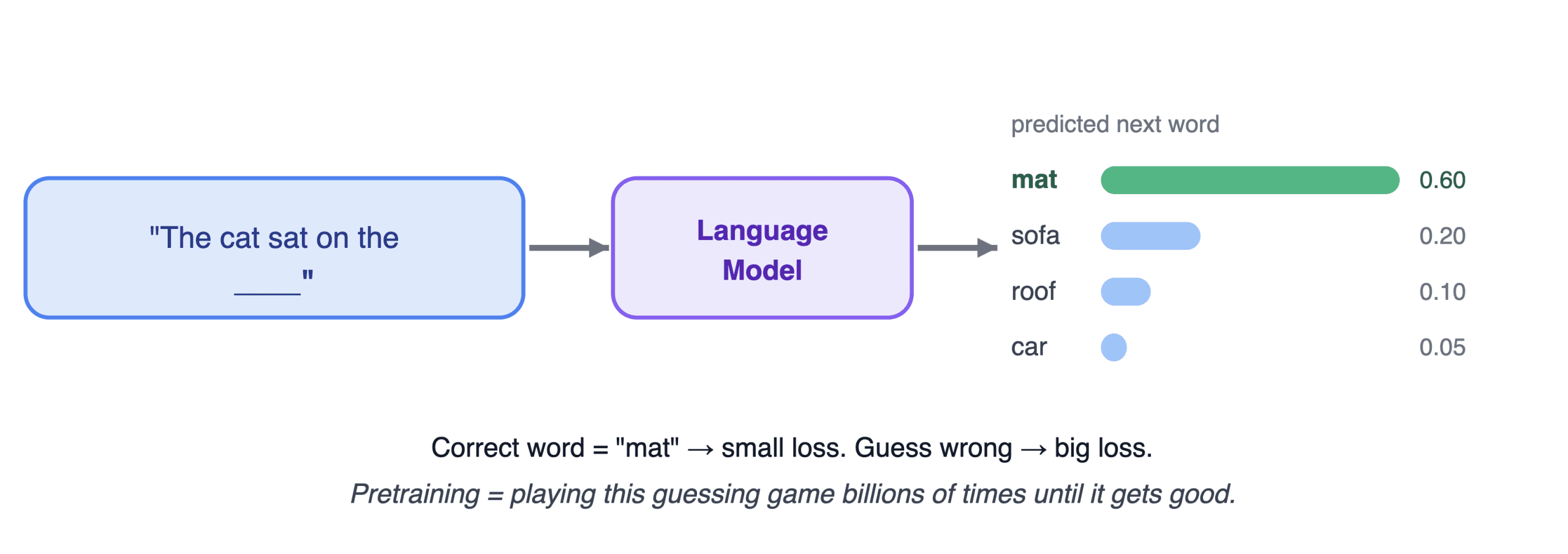
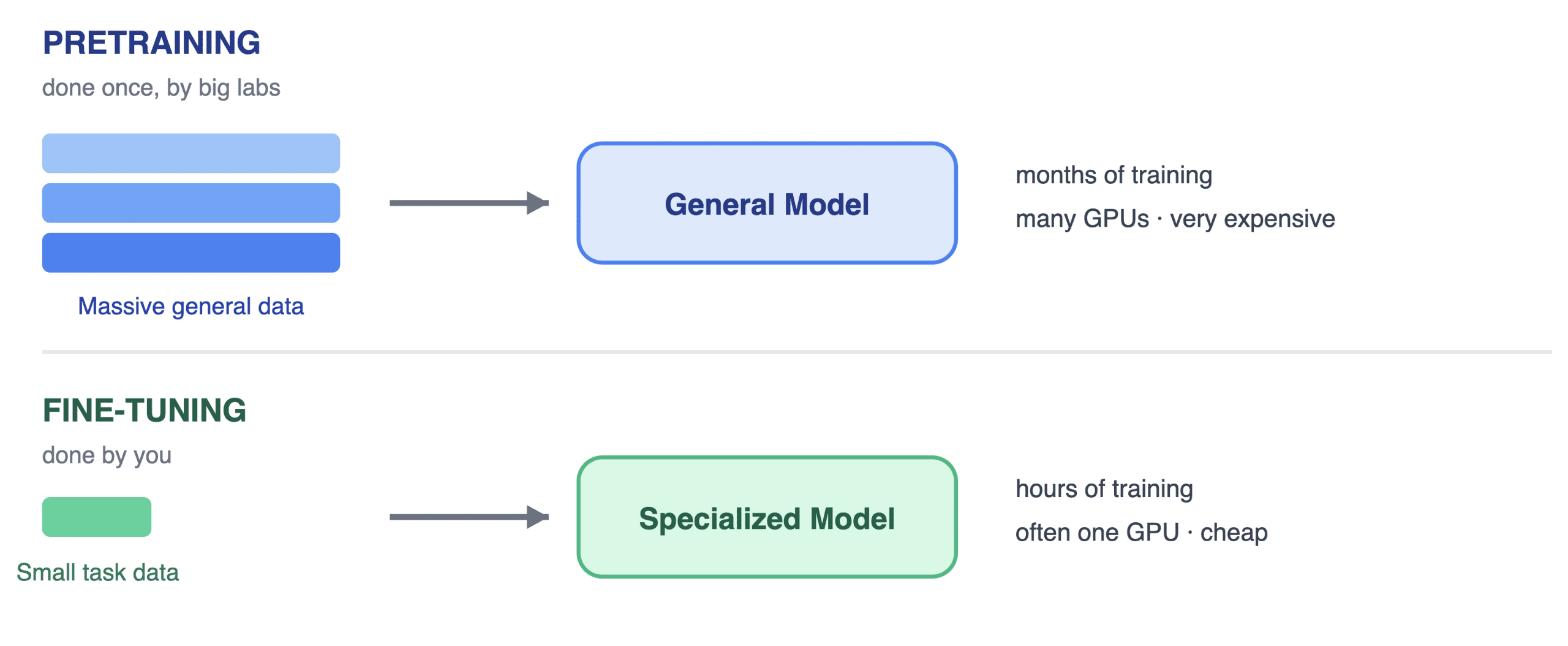
Pretraining serves as the solution to this foundational problem. It is the initial, resource-intensive phase where a model learns general, fundamental knowledge from an enormous and diverse corpus of data. This stage demands immense computational power and vast datasets, often spanning petabytes of text and code gathered from the internet, books, and scientific articles. During pretraining, the model is not taught a specific end task but rather a very simple, yet profoundly effective, self-supervised skill: predicting the next word in a sequence. For instance, given the sentence fragment "The cat sat on the ____", the model learns, through repeated exposure to billions of similar examples, that "mat" is a far more probable continuation than "car." By continuously refining its predictions, the model gradually absorbs intricate patterns of grammar, syntax, semantics, factual knowledge, and even rudimentary reasoning capabilities inherent in the language.
This rigorous training process, repeated across vast swaths of human-generated text, forces the model to develop a robust internal representation of language. The outcome is a "pretrained model" that possesses a deep, general understanding of how language works. These models are often referred to as "foundation models" because they provide a stable, intelligent base upon which a multitude of specialized applications can be built, eliminating the need to start from zero for every new task. Prominent examples of such foundation models, made accessible by leading AI research labs, include Meta’s Llama series, Mistral AI’s models, and Alibaba Cloud’s Qwen family, among others. Crucially, the immense scale and cost associated with pretraining mean that almost no individual or small team undertakes this process themselves. Instead, developers and researchers download these finished, pretrained models and build upon their pre-existing intelligence, leading directly to the necessity and popularity of fine-tuning.
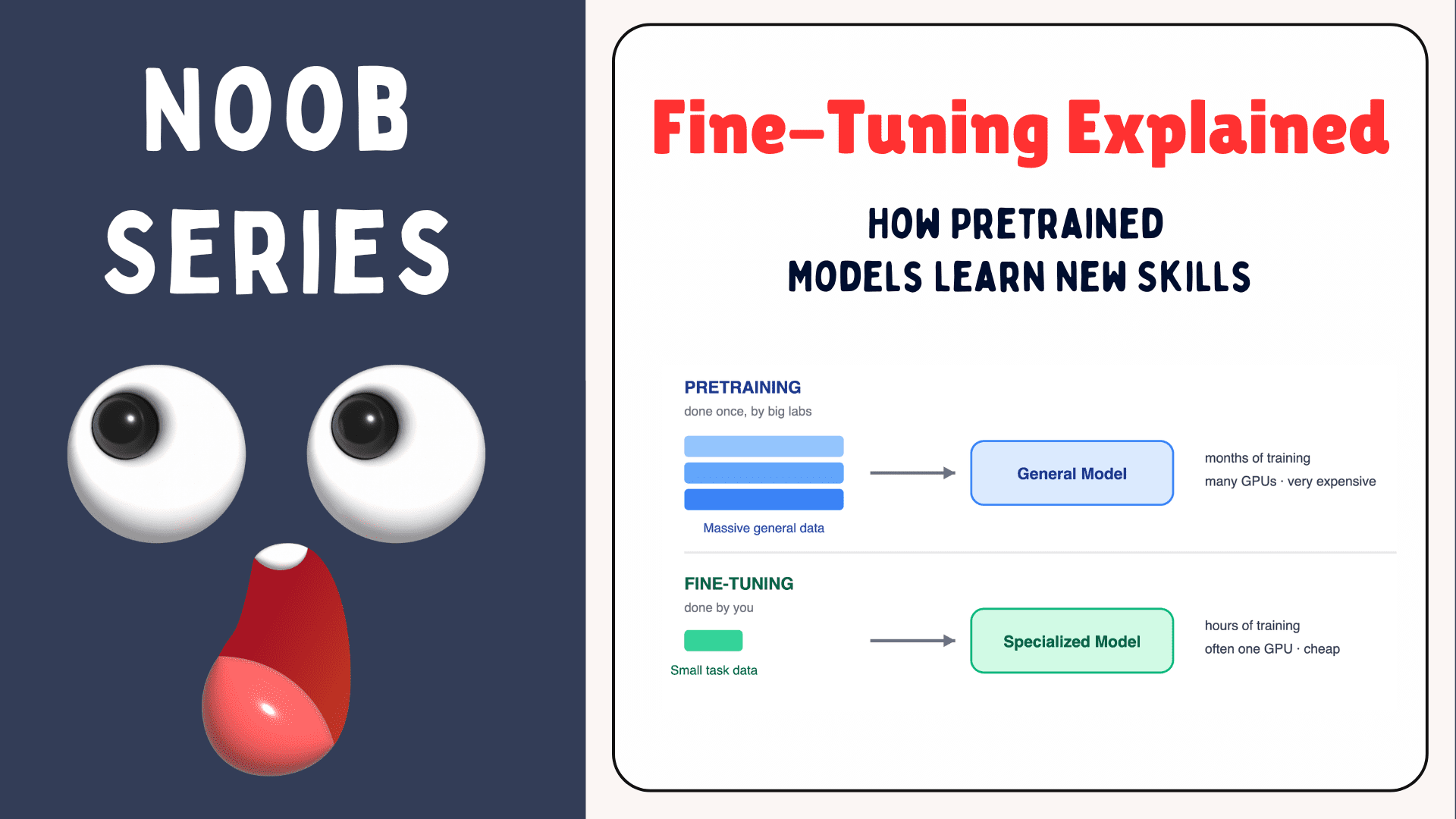
Fine-Tuning: Specializing General Intelligence
Once a model has undergone pretraining, its internal parameters (weights) are no longer random but have been optimized to encode a sophisticated understanding of language and general reasoning. While these "good values" allow the model to perform well on a wide array of general tasks, they are not inherently optimized for your specific requirements. This is where fine-tuning enters the picture. Fine-tuning is the process of taking a pretrained model and further training it on a smaller, task-specific dataset to adapt its general intelligence to a particular downstream application.
Consider the analogy of culinary training: aspiring chefs attend a prestigious culinary school (pretraining) where they learn fundamental cooking techniques, ingredients, and general gastronomic principles. Upon graduating, they possess a broad culinary understanding. However, when a chef joins a specific restaurant (fine-tuning), they must adapt their general skills to the restaurant’s unique menu, signature dishes, specific kitchen workflows, and desired culinary style. They don’t relearn how to chop vegetables or sauté from scratch; instead, they refine and specialize their existing knowledge to excel in that particular establishment. Similarly, fine-tuning leverages the vast general knowledge embedded in a pretrained LLM and refines it for a specific niche, whether it’s generating marketing copy, answering customer support queries, or summarizing legal documents.
The data requirements for fine-tuning are significantly lower than for pretraining. Instead of petabytes of diverse text, fine-tuning typically utilizes hundreds or thousands of high-quality, task-specific examples. This reduced data volume, coupled with the model’s already intelligent starting point, makes fine-tuning far less computationally expensive and faster than pretraining a model from scratch. It allows for the creation of highly specialized AI agents without the prohibitive investment required for foundational model development.
The Mechanics of Fine-Tuning
The operational loop of fine-tuning closely mirrors the iterative optimization process of pretraining, albeit with critical differences. The process involves presenting the pretrained model with examples from the task-specific dataset. For instance, if the goal is to categorize movies, the model is shown a movie description and asked to predict its genre. The model’s guess is then compared to the actual, "ideal" genre label. Based on the discrepancy between the prediction and the ground truth, the model’s internal parameters (weights) are slightly adjusted through backpropagation and gradient descent. This process is repeated over many examples and multiple epochs until the model consistently improves its performance on the target task.
Key distinctions in the fine-tuning process compared to pretraining include:
- Reduced Learning Rate: To prevent "catastrophic forgetting," where the model might overwrite its valuable general knowledge learned during pretraining, a significantly smaller learning rate is typically used during fine-tuning. This ensures that parameter adjustments are gradual, allowing the model to adapt without losing its foundational understanding.
- Task-Specific Loss Function: While pretraining often uses a next-token prediction loss, fine-tuning employs a loss function specifically tailored to the downstream task. For classification, it might be cross-entropy loss; for generation, it could be a sequence-to-sequence loss that measures the quality of the generated output against a target.
- Smaller Dataset and Fewer Epochs: Fine-tuning datasets are much smaller, and the training typically runs for fewer epochs. The goal is not to learn general language anew but to specialize existing capabilities, requiring less data and training time.
- Targeted Optimization: The objective shifts from broad language modeling to optimizing performance on a very specific metric relevant to the desired application.
Varieties of Fine-Tuning: Efficiency and Scale
The field of fine-tuning has evolved to encompass various strategies, primarily differentiated by the extent to which a model’s parameters are updated. Broadly, these fall into two main categories:
-
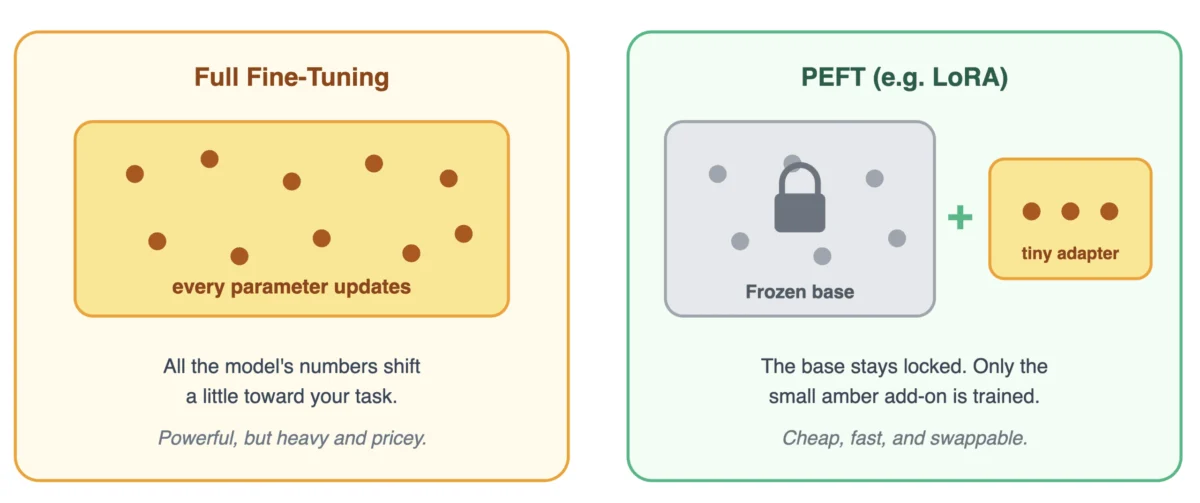
Full Fine-Tuning: In this approach, all, or nearly all, of the pretrained model’s millions or billions of parameters are updated during the fine-tuning process.
- Advantages: Can potentially achieve the highest performance on the target task, as the entire model is allowed to adapt.
- Disadvantages: Extremely computationally intensive, requiring significant GPU memory (VRAM) and training time, especially for very large models. It also results in a unique, large model checkpoint for each fine-tuned task, increasing storage requirements. Furthermore, with small datasets, there’s a higher risk of overfitting and catastrophic forgetting, where the model might unlearn its general knowledge. For example, fine-tuning a 70-billion parameter model fully requires hundreds of gigabytes of VRAM and substantial cloud computing costs.
-
Parameter-Efficient Fine-Tuning (PEFT): Recognizing the limitations of full fine-tuning, especially for massive LLMs, PEFT methods aim to adapt models while updating only a small fraction of their parameters or by introducing a few new, trainable parameters. This drastically reduces computational cost, memory footprint, and storage.
- Low-Rank Adaptation (LoRA): A prominent PEFT technique, LoRA works by injecting small, trainable low-rank matrices into the existing layers of a pretrained model. During fine-tuning, only these newly added low-rank matrices are updated, while the vast majority of the original pretrained weights remain frozen.
- Benefits: Significantly reduces the number of trainable parameters (often by orders of magnitude), leading to much lower VRAM requirements, faster training, and smaller checkpoint sizes (often megabytes instead of hundreds of gigabytes). Multiple LoRA adapters can be swapped in and out of a single base model, allowing for efficient multi-task adaptation. For example, a 70B parameter model might only require updating a few million parameters with LoRA, drastically cutting training time and GPU memory.
- QLoRA: An extension of LoRA that quantizes the pretrained model’s weights to 4-bit precision, further reducing the memory footprint during training while still achieving comparable performance. This makes fine-tuning very large models possible even on consumer-grade GPUs.
- Prompt Tuning/Prefix Tuning: These methods involve adding a small, trainable sequence of "soft prompts" or "prefixes" to the input of the model, rather than modifying the model’s internal weights. The model learns to condition its output on these learned prefixes, guiding its behavior for specific tasks.
- Adapter Layers: Small neural network modules are inserted between the layers of the pretrained model. Only these adapter layers are trained, acting as bottlenecks that learn task-specific transformations.
- Low-Rank Adaptation (LoRA): A prominent PEFT technique, LoRA works by injecting small, trainable low-rank matrices into the existing layers of a pretrained model. During fine-tuning, only these newly added low-rank matrices are updated, while the vast majority of the original pretrained weights remain frozen.
PEFT techniques represent a significant step towards democratizing access to advanced LLM capabilities, making specialized AI more accessible to researchers and developers with limited computational resources.
Beyond Fine-Tuning: Complementary AI Strategies
While fine-tuning is a powerful tool for specializing LLMs, it is not a universal panacea. In the rapidly evolving AI landscape, it often works in conjunction with, or as an alternative to, other techniques.
- Prompt Engineering: Often the first and simplest approach, prompt engineering involves crafting precise and effective textual instructions or examples to guide a general-purpose LLM to perform a desired task without any further training. Techniques like zero-shot prompting (providing no examples), few-shot prompting (providing a few examples), and chain-of-thought prompting (instructing the model to "think step-by-step") can dramatically improve model performance for many tasks. A well-engineered prompt can sometimes solve a problem that might otherwise be considered for fine-tuning, particularly for tasks that fall within the model’s existing general knowledge.
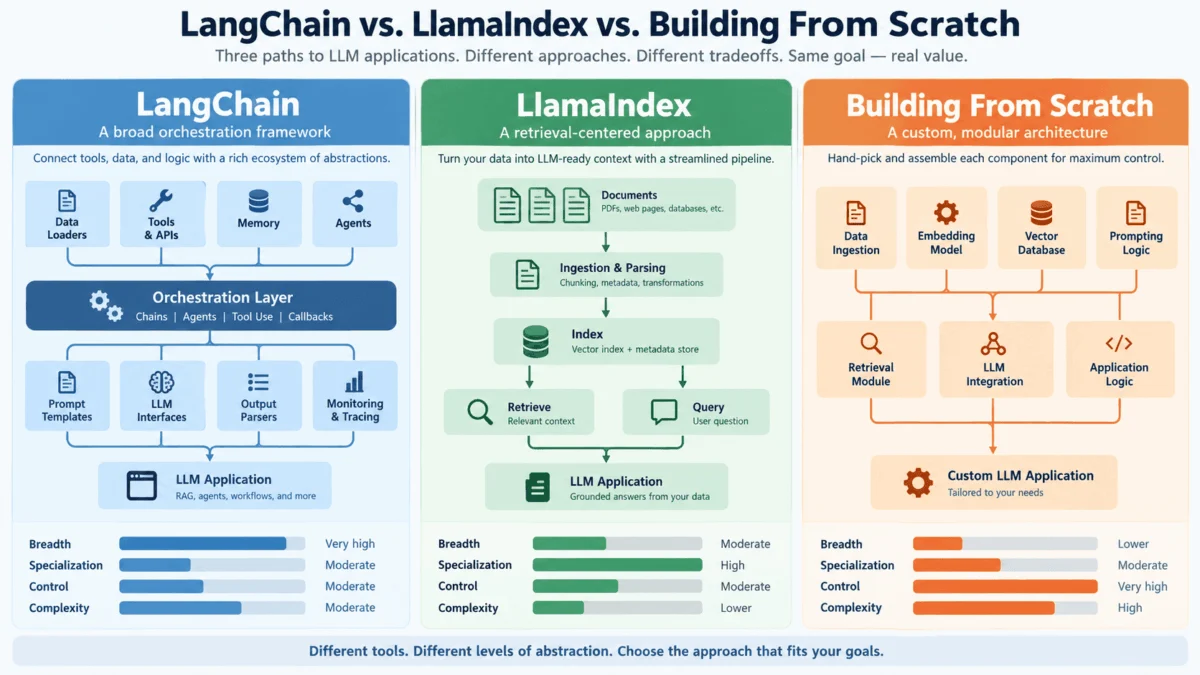
- Retrieval-Augmented Generation (RAG): When the core challenge is to provide up-to-date, factual, or domain-specific information that was not part of the model’s original training data, RAG often proves superior to fine-tuning. RAG systems work by first retrieving relevant information from an external, up-to-date knowledge base (like a company’s internal documents, a live database, or the internet) in response to a user’s query. This retrieved information is then provided to the LLM as context, enabling it to generate an accurate and grounded response.
- Benefits: Ensures factual accuracy, provides access to dynamic and proprietary information, reduces the likelihood of "hallucinations" (generating incorrect information), and makes responses explainable by citing sources.
- When to use RAG: Ideal for tasks requiring access to constantly changing data, specific organizational knowledge, or verifiable facts that need to be kept separate from the model’s core learned parameters.
It is crucial to understand that these approaches are not rivals but often complementary components within sophisticated AI systems. For instance, a fine-tuned LLM, specialized in customer service tone and behavior, might still leverage RAG to access real-time product information or customer history. The strategic choice between fine-tuning, prompt engineering, and RAG depends on the specific use case, data availability, computational resources, and performance requirements. Before embarking on a costly fine-tuning run, evaluating whether a simpler prompt or a RAG-based solution could achieve the desired outcome is a prudent first step.
Broader Implications and the Future of AI Specialization
The rise of fine-tuning, particularly with efficient techniques like LoRA, carries significant implications across various sectors. Economically, it democratizes access to advanced AI, allowing startups and smaller enterprises to develop highly specialized solutions without the prohibitive costs associated with training foundation models. This fosters innovation and creates new market opportunities for bespoke AI applications in areas such as legal tech, medical diagnostics, creative content generation, and personalized education.
From a research perspective, fine-tuning allows scientists to rapidly iterate on experimental AI models, exploring new behaviors and capabilities with reduced turnaround times. It facilitates the development of models tailored for specific scientific domains, accelerating discovery and analysis.

Ethically, fine-tuning offers a pathway to address concerns such as model bias and safety. While foundation models may inherit biases from their vast training data, fine-tuning on carefully curated, debiased datasets or alignment objectives (e.g., teaching models to be more helpful, harmless, and honest) can mitigate these issues, leading to more equitable and responsible AI systems. However, it also introduces new challenges, such as ensuring the quality and fairness of fine-tuning datasets and preventing malicious actors from fine-tuning models for harmful purposes.
The ongoing innovation in fine-tuning techniques, coupled with advancements in model architectures and hardware, points towards a future where AI systems are not just powerful but also highly adaptable and accessible. The ability to efficiently specialize general-purpose AI is transforming it from a niche academic pursuit into a ubiquitous tool, driving productivity, innovation, and specialized intelligence across countless applications. As AI continues to evolve, fine-tuning will remain a cornerstone technique, enabling the continuous adaptation and refinement of intelligent systems to meet the ever-changing demands of the real world.