For the past two years, the prevailing wisdom in the burgeoning field of agentic artificial intelligence hinged on a simple tenet: larger models inherently equated to superior agents. This belief was rooted in the perceived advantages of expansive context windows, increased parameter counts, and the promise of sharper, more general reasoning capabilities offered by frontier-level Large Language Models (LLMs). However, a profound re-evaluation initiated by NVIDIA’s research team in 2025 has fundamentally altered this perspective, catalyzing a significant architectural shift in how production-grade AI agents are being designed and deployed in 2026. This transformative period has seen Small Language Models (SLMs) evolve from a niche consideration to a cornerstone of agent development, particularly for tasks that demand specialized, repetitive execution rather than broad, creative, or novel reasoning.
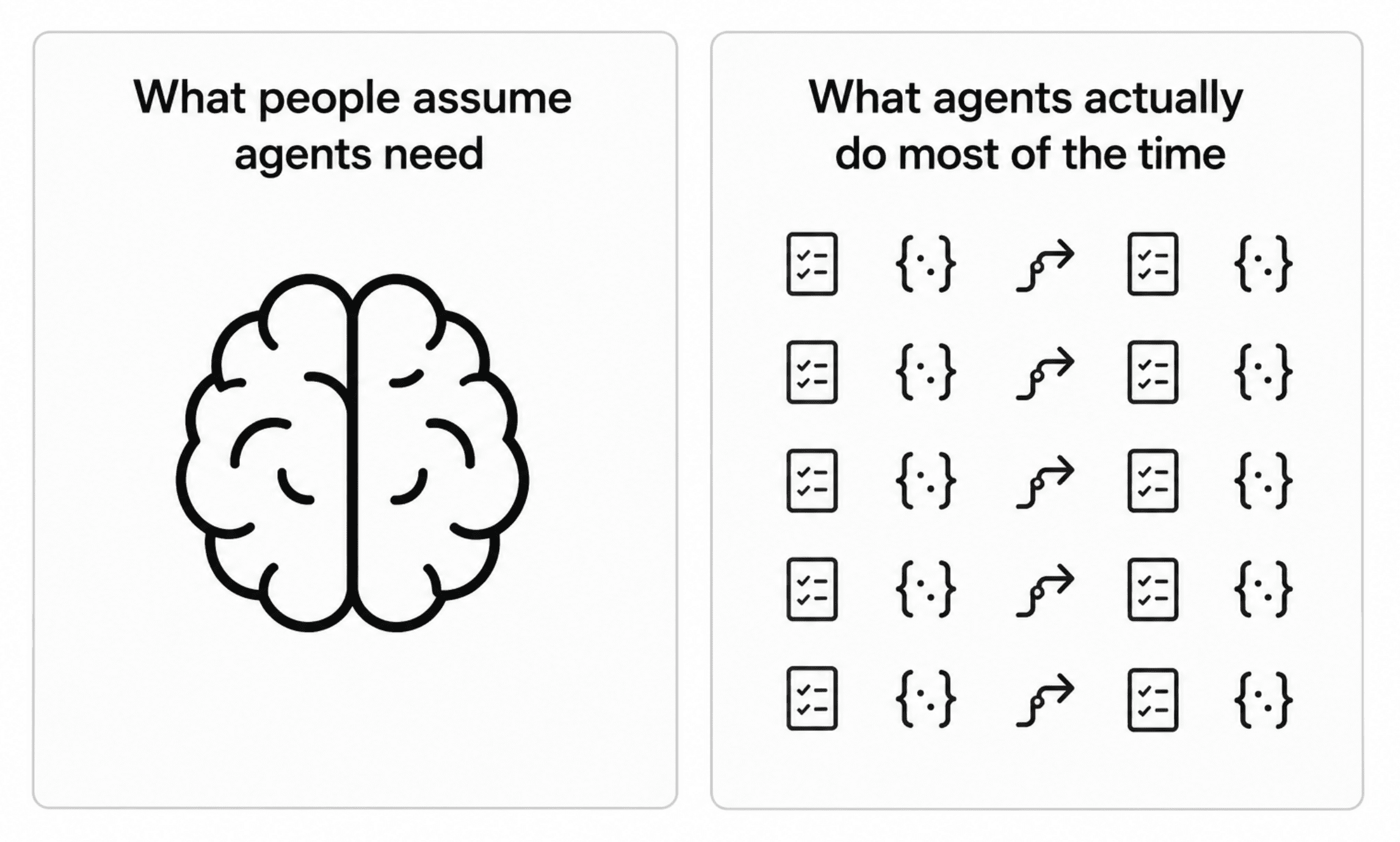
The initial era of agentic AI, characterized by a rapid exploration of LLM capabilities, often overlooked the practical realities of most agent operations. A vast majority of tasks performed by AI agents in real-world scenarios are not open-ended philosophical debates or complex creative endeavors. Instead, they involve a finite set of specialized functions, executed repeatedly with minimal variation, such as parsing specific commands, intelligently selecting appropriate tools, or formatting output into predefined structures like JSON. For such narrow applications, a generalist LLM, designed to excel across an immense spectrum of linguistic and cognitive tasks, proved to be a costly and often inefficient overkill. This realization created an opportune opening for SLMs, models explicitly trained or fine-tuned for specific purposes, to demonstrate their inherent suitability, efficiency, and economy in agentic systems. This article delves into five concrete ways SLMs are currently reshaping next-generation agent architectures, from foundational research and technological advancements to practical implementation strategies and compelling performance metrics.
The Foundational Shift: Specialization Over Generalization in Agentic AI
The most significant intellectual catalyst for the SLM movement in agentic AI originates from a landmark paper by NVIDIA Research, titled "Small Language Models are the Future of Agentic AI." Published amidst the peak of the "bigger is better" fervor in early 2025, this widely discussed research offered a compelling counter-narrative. Its central thesis posits that while large language models are undeniably valuable for general conversation and complex, abstract reasoning, their utility in agentic systems primarily revolves around performing a constrained set of specialized tasks repetitively. These tasks include the meticulous parsing of user commands, the judicious selection of external tools, and the consistent generation of results in fixed data formats. Such functions, the authors argued, represent a fundamentally different operational profile compared to engaging in open-ended dialogue, and therefore do not necessitate the comprehensive, resource-intensive capabilities of a general-purpose model.
The paper’s core assertion is direct and impactful: SLMs are not only sufficiently powerful for these agentic invocations but are also inherently more suitable and demonstrably more economical. This is not merely an opinion but a conclusion backed by robust reasoning focused on the core requirements of agents. Unlike human-computer interaction, where creativity and adaptability are often prized, agents primarily value reliability and predictability. A small model, meticulously fine-tuned to consistently adhere to a specific output format or field order, frequently outperforms a larger, general-purpose model tasked with the same operation on the fly. The latter, despite its vast knowledge, may occasionally introduce variations or "hallucinations" in its output, compromising the agent’s deterministic behavior. Consequently, while large models retain their critical role in genuinely novel problem-solving or ambiguous reasoning, they have ceased to be the default choice for every intermediate step within an agent’s workflow. This strategic unbundling of tasks—delegating routine, specialized functions to SLMs and reserving LLMs for high-level cognitive demands—marks a pivotal moment in the evolution of AI agent design.
Edge Computing and Real-time Responsiveness: Bringing AI On-Device
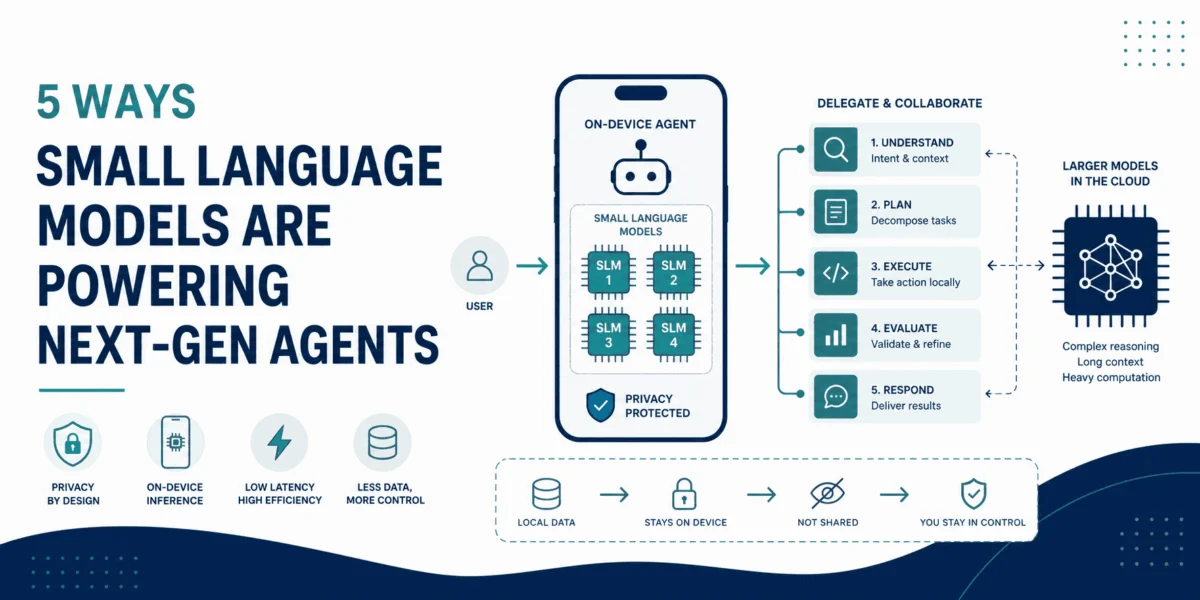
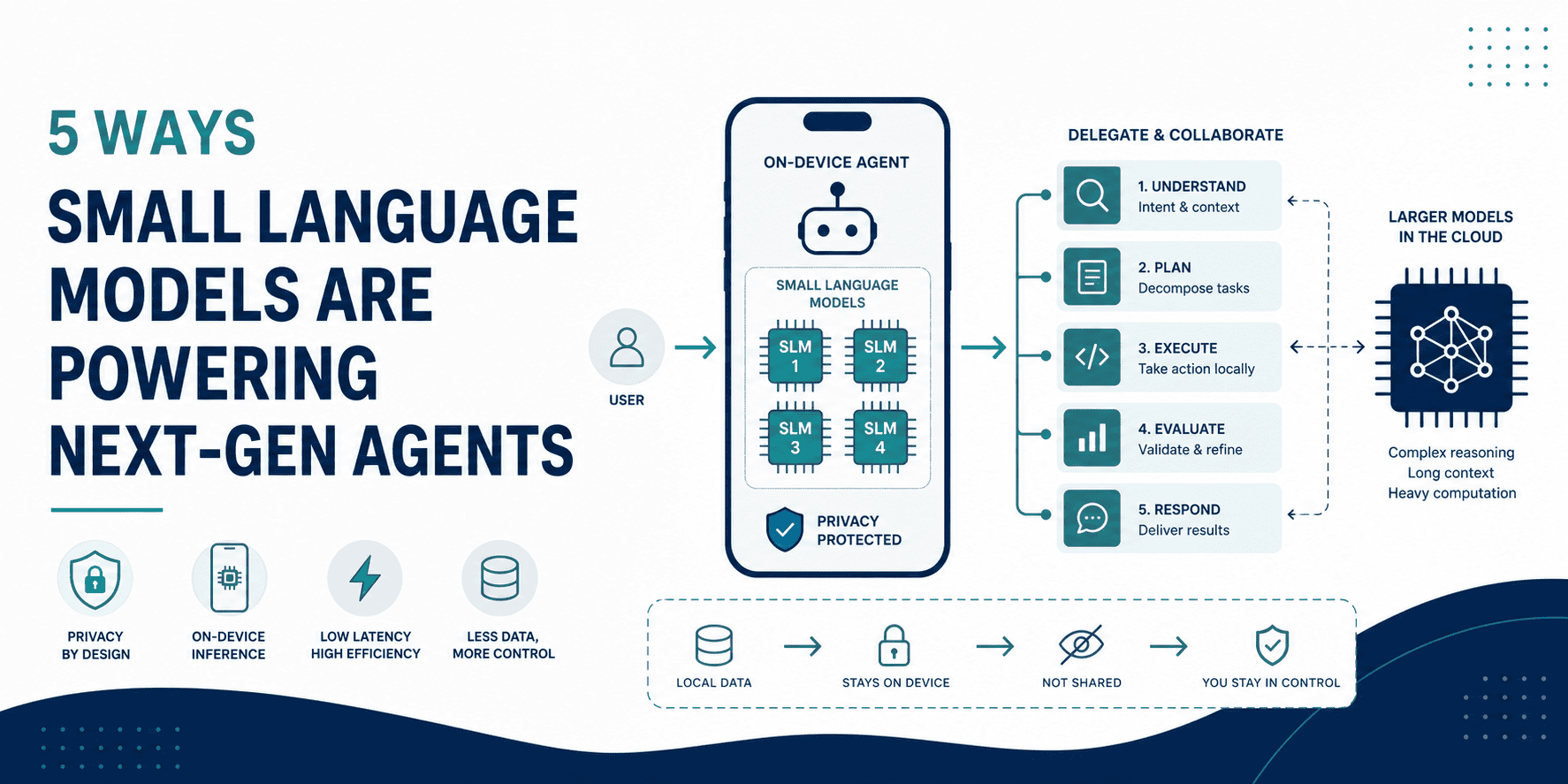
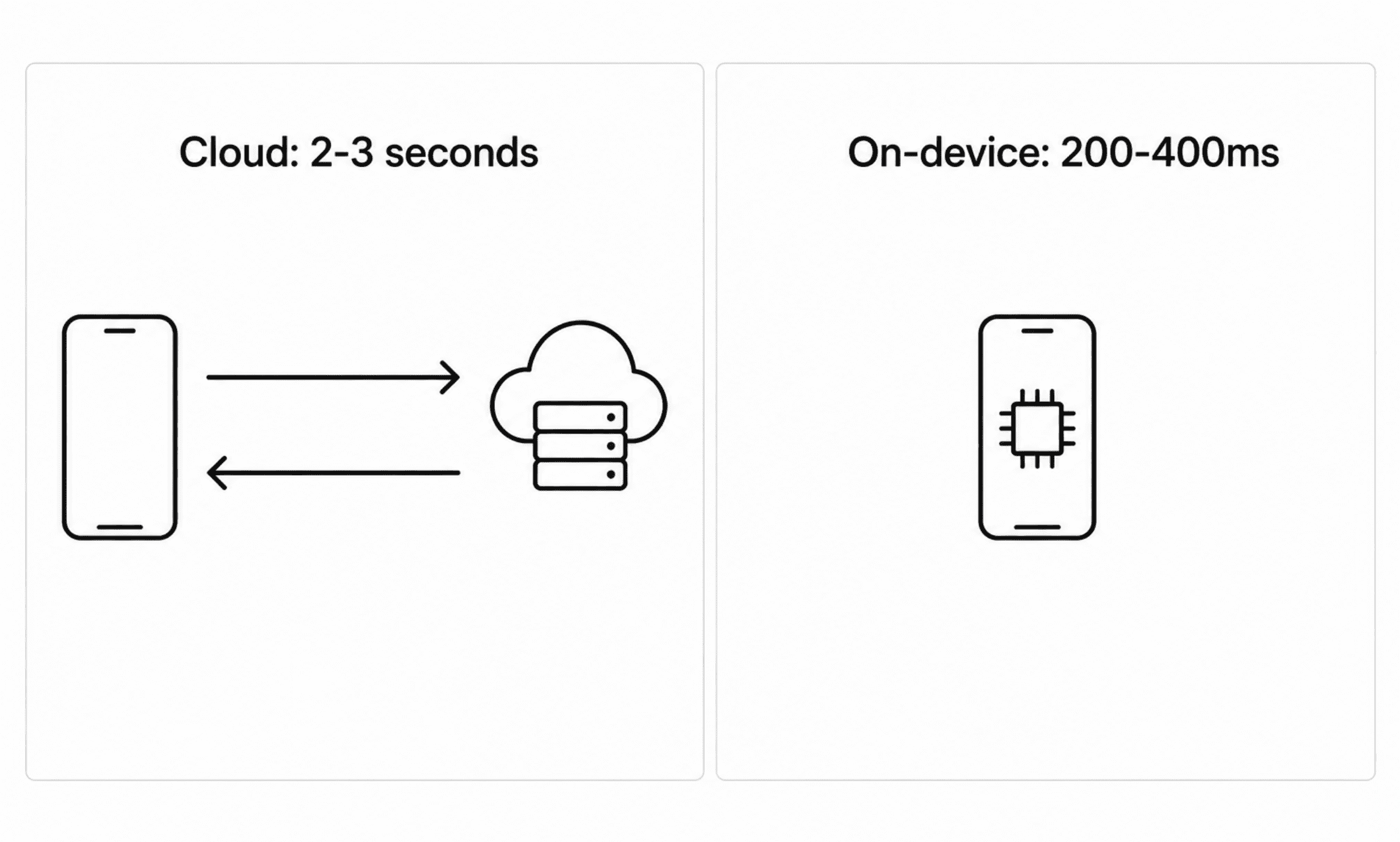
One of the most immediate and practical benefits unlocked by the rise of SLMs is the ability to execute AI models directly on local hardware, eliminating the need for constant cloud connectivity. This paradigm shift, known as edge inference, allows models to run on devices such as smartphones, laptops, and even specialized industrial equipment, fundamentally altering the latency profile and user experience of AI agents. The conventional method of sending a request to a remote data center, processing it with a cloud-hosted LLM, and receiving a response typically incurs latency in the hundreds of milliseconds. In contrast, edge inference can reduce this to mere tens of milliseconds. For an agent designed to interact responsively and feel instantaneous, this reduction is the critical differentiator between a seamless experience and one that feels perceptibly delayed.
The rapid advancements in consumer hardware have played a crucial role in enabling this transition. By late 2025 and into 2026, processors like Apple’s A19 Pro, with its enhanced neural accelerators, have provided the iPhone 17 Pro with sufficient combined AI throughput to efficiently run 8-billion-parameter models at speeds exceeding 20 tokens per second. This remarkable performance is fast enough to support real-time, fluid conversation, bringing sophisticated AI directly to users’ pockets. Similarly, Apple’s M5 Max chip has demonstrated the capability to handle models up to 30 billion parameters with acceptable latency, pushing the boundaries of what is possible on a desktop or laptop.
A key technological enabler for this on-device capability is quantization. This process reduces the precision of a model’s weights and activations (e.g., from 32-bit floating point to 4-bit integer), significantly shrinking its memory footprint and computational requirements without a proportional loss in performance. For instance, a Phi-4-Mini model, which might occupy 7.6 GB of memory in full precision, can be compressed to roughly 1.2 GB when quantized to 4-bit precision, while retaining over 95% of its benchmark performance. This efficiency gain is monumental, allowing complex models to fit comfortably within the limited RAM of consumer devices, such as a smartphone with 8 GB of memory. Tools like Ollama for local model serving and Microsoft’s innovative Phi model family have become standard starting points for developers creating on-device agents, particularly for use cases where continuous network connectivity cannot be guaranteed, or where immediate, low-latency responses are paramount. This move to the edge not only enhances performance but also democratizes access to advanced AI capabilities, making them accessible in diverse environments from smart homes to remote industrial sites.
Precision Tool-Calling: The Specialist’s Advantage Through Fine-Tuning
One of the initial challenges in deploying AI agents was their unreliable interaction with external tools. A generic small model, straight out of the box, often struggles with tool invocation, frequently "hallucinating" non-existent function names, incorrectly specifying parameters, or failing to adhere to expected output formats. This unreliability made general-purpose models impractical for tasks requiring precise interaction with APIs or other software components. The solution, however, proved not to be a larger, more complex model, but rather a more focused one. The strategy of fine-tuning a small language model on a specific tool schema has emerged as a highly effective approach, yielding accuracy rates above 90% at virtually zero per-query cost once deployed. This efficacy stems from the model ceasing to function as a generalist and instead becoming an expert in one highly specific, narrow job: correctly invoking a particular tool.
Research strongly supports this approach. A fine-tuned SLM achieved a remarkable 77.55% pass rate on the challenging ToolBench evaluation, significantly outperforming baseline methods that utilized much larger models combined with sophisticated chain-of-thought reasoning prompts. This demonstrates that specialized training can overcome the inherent limitations of size when the task is clearly defined. Furthermore, achieving such high accuracy does not necessitate extensive training data or prohibitive computational resources. In practical applications, a dataset of 1,000 to 5,000 high-quality examples per tool is typically sufficient to achieve 95% or greater accuracy on a well-defined schema. This amount of data is realistically obtainable for even small development teams to produce in-house, making the fine-tuning of SLMs for tool-calling a highly accessible and cost-effective strategy.
The industry has quickly recognized the value of this specialization. Leading AI publications, such as KDnuggets, have compiled lists of specific small, open-weight models designed explicitly for agentic tool calling. These models, often ranging from a few billion parameters, are engineered to run efficiently without the need for a distant data center, further reinforcing the trend towards localized and specialized AI capabilities. The ability of fine-tuned SLMs to accurately and reliably interact with external tools is transforming agent design, enabling more robust, predictable, and performant automated systems across a multitude of applications.
The Hybrid Model: Orchestrating Intelligence with Heterogeneous Architectures
Perhaps the most architecturally innovative application of SLMs is not their outright replacement of large models, but rather their synergistic pairing within heterogeneous systems. This sophisticated pattern, which has become a standard in 2026, positions a high-reasoning frontier model in a supervisory role, acting as the "planner" or "executive." In this capacity, the LLM handles complex strategic decisions, resolves ambiguities, and performs genuinely novel reasoning. Beneath this strategic layer, a network of domain-specific SLMs functions as "workers," each meticulously fine-tuned for a single, atomic task. These specialized SLMs efficiently manage routine operations such as parsing inputs, classifying data, summarizing content, or executing specific tool calls. This architectural approach is sometimes referred to as the executive-worker model or heterogeneous model routing, but its core principle remains consistent: judiciously allocate expensive reasoning capabilities only where they are genuinely needed, allowing cheaper, specialized models to handle the high volume of routine tasks.
The economic advantages of this hybrid architecture are substantial and difficult to overlook. Consider a scenario where a frontier model, priced around $15 per million tokens, handles approximately 30% of the agent’s tasks—typically the more complex, reasoning-intensive ones. This is paired with an SLM, priced at a mere $0.15 per million tokens, which efficiently processes the remaining 70% of routine operations. Such a configuration results in operational costs that are roughly ten times lower than routing all tasks through the frontier model alone. This dramatic cost reduction significantly improves the scalability and financial viability of complex agentic systems.
Empirical research further validates the efficacy of this hybrid approach. One comprehensive study compared a homogeneous setup, where all agent components were powered by 7-billion-parameter models, against a heterogeneous configuration. In the latter, smaller 3-billion-parameter models managed lower-level tasks, while a 7-billion-parameter model served as a high-level verifier or planner. The study found that the heterogeneous system maintained nearly identical performance levels to the all-7B baseline, yet simultaneously reduced latency by a remarkable 31.6% and cut total API costs by 41.8%. These figures underscore the efficiency gains achievable by intelligently distributing tasks across models of varying capabilities and costs. Recognizing this powerful trend, NVIDIA has integrated tooling to facilitate the construction of such heterogeneous systems into its NeMo platform. NeMo is specifically designed to empower development teams to seamlessly combine fine-tuned SLMs for routine operations with occasional, strategic calls to larger models for the genuinely challenging, high-stakes decisions, thereby optimizing both performance and cost.
Fortifying Data Privacy and Security with Local Inference
Beyond considerations of speed and cost, a pivotal shift enabled by SLMs pertains to data governance: where sensitive information is permitted to reside and be processed. An AI agent running entirely on local hardware, leveraging SLMs for its core functions, eliminates the necessity of transmitting a user’s conversations, proprietary documents, or behavioral data to a third-party cloud API for processing. This capability is of paramount importance in sectors governed by stringent compliance regulations, such as healthcare (e.g., HIPAA), finance (e.g., GDPR, CCPA), or government and defense. In these environments, the fundamental requirement that data must not leave the local network or designated secure perimeters effectively precludes the use of cloud-hosted frontier models, regardless of their advanced capabilities.
Small language models directly address this constraint by operating precisely where the data already resides, typically on the edge device itself. This "on-device" deployment strategy, often utilizing hardware like Apple Silicon or Qualcomm chips, incurs only the initial cost of the device hardware. For hosting a private SLM serving approximately 10,000 daily queries, the typical monthly operational cost ranges from $500 to $2,000. This stands in stark contrast to the equivalent volume processed through a large model API, which can cost anywhere from $5,000 to $50,000 per month. The significant cost difference, coupled with unparalleled data security, presents a compelling argument for SLM adoption in regulated industries.
Furthermore, local SLM deployment represents the only realistic option for fully air-gapped environments. These are highly secure systems intentionally designed with no internet connection, typically found in critical infrastructure, military applications, or highly sensitive research facilities. In such scenarios, a cloud-dependent agent is inherently non-functional, irrespective of budgetary allowances. For agents developed for heavily regulated industries or for products designed with an offline-first mandate, the ability of SLMs to process data locally is not merely a desirable feature; it is the foundational reason these agents can exist and operate within such restrictive yet crucial environments. This aspect positions SLMs as critical enablers for expanding AI agent capabilities into domains previously inaccessible due to privacy and security concerns, fostering greater trust and adoption in sensitive applications.
A Balanced Future: Right-Sizing Intelligence for Next-Gen Agents
The emergence and widespread adoption of Small Language Models in agentic AI do not signal the obsolescence of frontier models. On the contrary, large language models continue to hold an irreplaceable position for tasks demanding genuinely novel reasoning, processing exceptionally long and open-ended contexts, and tackling problems that have no predefined solutions or precedents. These domains, which leverage the LLMs’ capacity for broad knowledge, complex inference, and creative generation, will remain the purview of the largest and most advanced models for the foreseeable future.
What has fundamentally shifted, however, is the pervasive assumption that every single computational call an AI agent makes requires the immense horsepower and generalist capabilities of a frontier model. The practical reality of agent operations reveals that a substantial portion of an agent’s day-to-day work—including essential functions such as input parsing, intelligent routing of tasks, meticulous data formatting, and precise tool invocations—is sufficiently narrow and specialized. For these routine yet critical tasks, a small, fine-tuned language model can perform with equal, if not superior, reliability and accuracy. Crucially, SLMs accomplish these tasks significantly faster and at a mere fraction of the operational cost compared to their larger counterparts.
The most scalable and efficient AI agents emerging in 2026 are not those built exclusively on the single largest model available. Instead, they are meticulously engineered systems that strategically employ the "right-sized" model for each specific piece of the job. This architectural philosophy allocates frontier intelligence where its advanced reasoning is truly earned and indispensable, while deploying agile, specialized Small Language Models everywhere else. This nuanced approach promises to unlock new levels of efficiency, cost-effectiveness, and data security, driving the next wave of innovation in agentic AI and broadening its applicability across industries and use cases previously deemed impractical or too sensitive for AI deployment. The future of AI agents is thus not defined by monolithic power, but by intelligent, heterogeneous specialization.