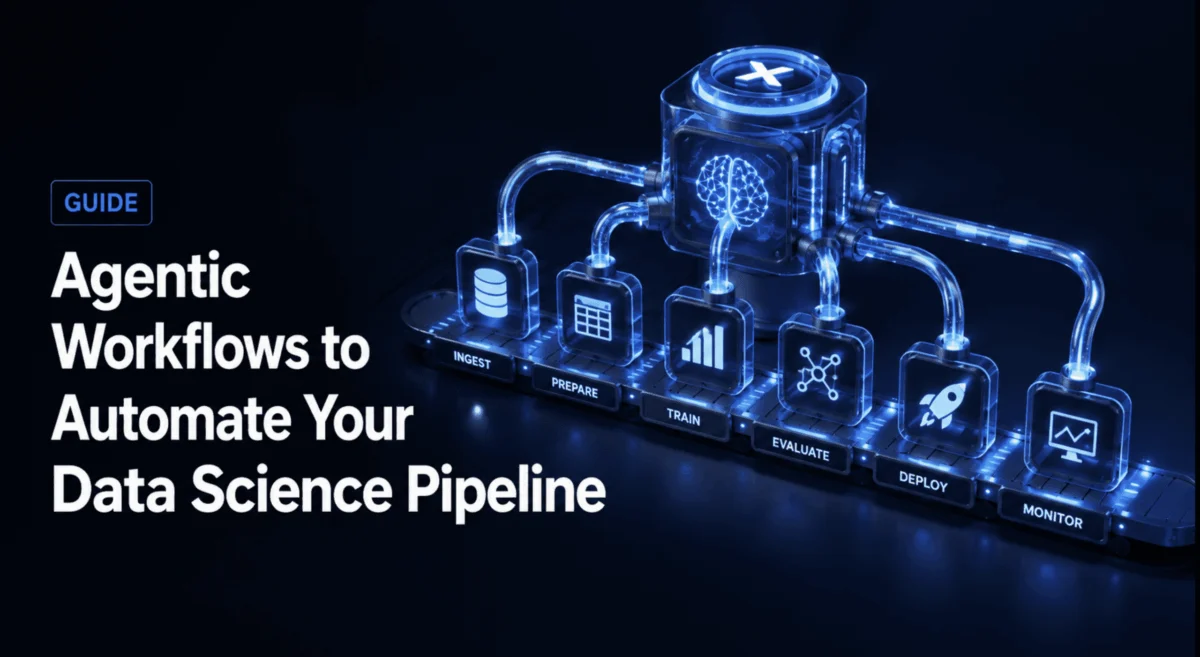
The modern data science landscape is undergoing a significant transformation, driven by the imperative to increase efficiency and strategic impact. Industry surveys consistently reveal that data scientists spend a disproportionate amount of their working hours—estimated at roughly 45%—on repetitive, procedural tasks such as data preparation, cleaning, exploratory data analysis (EDA) scripting, hyperparameter grid-searching, and monitoring checks. These tasks, while critical, are largely formulaic and rule-based, consuming valuable time that could otherwise be dedicated to high-value activities requiring genuine judgment, such as model interpretation, feature innovation, and strategic insight generation. The emergence of agentic workflows, powered by advanced large language models (LLMs) and sophisticated tool-calling capabilities, offers a compelling solution to this challenge, promising to automate these mundane processes and redefine the role of the data scientist.
The Evolving Landscape of Data Science and the Automation Imperative
For years, the data science profession has grappled with the operational overhead of managing complex data pipelines. From the initial stages of data ingestion and transformation to model deployment and continuous monitoring, each phase has traditionally demanded significant manual effort. The "45% problem," a statistic that has appeared consistently across various industry reports, including those published by KDNuggets and other prominent data science platforms, underscores a fundamental inefficiency. Data scientists, often highly skilled professionals with advanced degrees, find themselves bogged down in what amounts to digital janitorial work. Tasks like profiling columns, identifying null values, running standard EDA scripts, and implementing routine monitoring checks are prime candidates for automation because they follow explicit, repeatable rules.
The sheer scale of data generated and processed today further amplifies this need for automation. Companies are collecting petabytes of information daily, and the complexity of modern machine learning models, coupled with the rapid iteration cycles required for competitive advantage, renders purely manual approaches unsustainable. This has fueled the rise of MLOps (Machine Learning Operations), a discipline focused on streamlining the entire machine learning lifecycle. Agentic workflows represent the next frontier in MLOps, moving beyond mere scripting to intelligent, context-aware automation that can reason, act, and even self-correct. Platforms like Databricks are already integrating these advanced capabilities into their core infrastructure, with frameworks explicitly designed to "compress the time from question to insight," signaling a clear direction for production data teams.
Understanding Agentic AI: Beyond Simple Automation
Agentic AI distinguishes itself from traditional automation by leveraging large language models not just for text generation, but as reasoning engines capable of planning, executing, and refining actions through a process often described as a "Reasoning and Acting" (ReAct) loop. An AI agent, in this context, is an autonomous entity that can perceive its environment (e.g., analyze data profiles), reason about its goals (e.g., optimize a model), choose appropriate tools (e.g., call a data profiling function, train a model), execute actions, and learn from the outcomes to adapt its future behavior.
This paradigm shift is crucial. Unlike a simple script that executes a predefined sequence of commands, an agent can dynamically decide which tools to call, in what sequence, and how to interpret their outputs to achieve a broader objective. For instance, if an initial data profiling reveals severe data quality issues, an agent might prioritize data cleaning tools before proceeding to feature engineering. This adaptive, intelligent behavior is what unlocks unprecedented levels of automation in complex data science pipelines. The underlying technology typically relies on LLMs (such as OpenAI’s models or local serving endpoints like Ollama or vLLM) for their natural language understanding and generation capabilities, combined with robust Python libraries like pandas, scikit-learn, LightGBM, SHAP, and Pydantic for data manipulation, model building, and structured output validation.
Revolutionizing the Data Pipeline: Five Core Applications
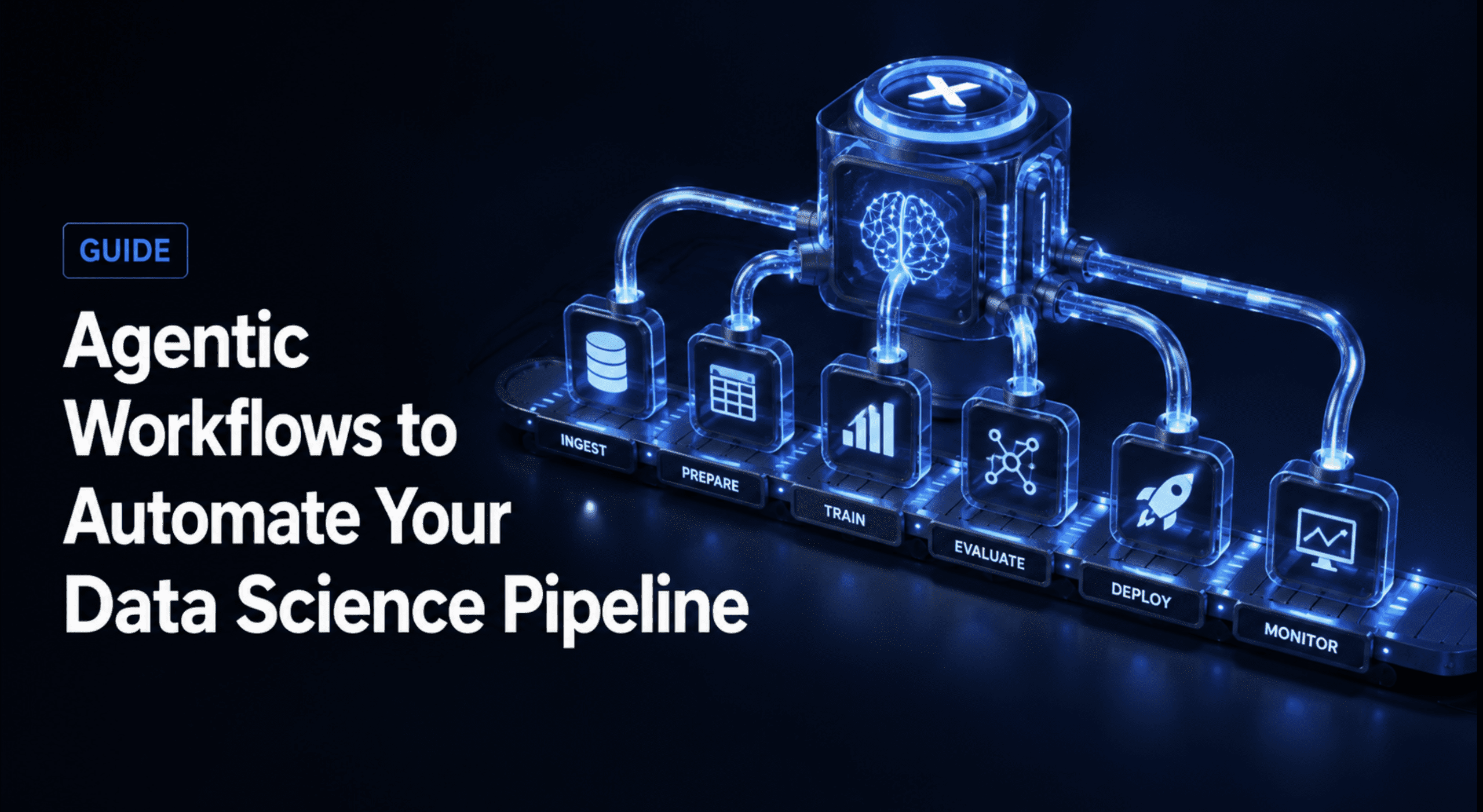
The application of agentic workflows spans the entire data science lifecycle, from initial data exploration to robust production monitoring and pipeline maintenance. Here, we examine five concrete examples that illustrate their transformative potential.
1. Streamlining Data Understanding: Automated Exploratory Data Analysis (EDA) Agent
The Problem: Manually loading data, computing summary statistics, visualizing distributions, inspecting nulls, and detecting outliers is a time-consuming and repetitive process. Every new dataset, every time, requires essentially the same diagnostic script, albeit with different column names. This creates a bottleneck at the very beginning of a project.
The Agentic Solution: An EDA agent automates this entire process. It loads the dataset, performs a comprehensive profile (e.g., using a tool like profile_dataset which, in production, could be swapped for a richer library like ydata-profiling), flags data quality issues by severity (e.g., high null rates, extreme skewness, miscoded data types), and synthesizes these findings into a structured, actionable Markdown report. The human data scientist then reviews this prioritized report, focusing on decision-making rather than manual diagnostics. For instance, in a real-world scenario involving retail transaction data with 5,000 rows and 8 columns, an EDA agent might flag revenue as high-priority due to extreme right skew (7.3), session_count for a 22% null rate, and created_at as a medium-priority issue because it’s stored as a string instead of a datetime object. Within seconds, the agent recommends a log transform for revenue, a null indicator feature for session_count, and parsing created_at for hour-of-day and day-of-week features. This drastically reduces the time from data ingestion to actionable insights.
2. Accelerating Model Development: Intelligent Feature Engineering and Selection
The Problem: Crafting effective features often involves extensive brainstorming, manual coding of transformations, iterative evaluation with baseline models, and painstaking pruning of non-contributing features. This process is highly experimental and prone to human bias and oversight.
The Agentic Solution: An agentic feature engineering and selection system operates in two phases. The generation phase leverages an LLM to propose candidate features based on a structured description of the dataset and the prediction task, complete with formulas (e.g., pandas expressions) and rationales. The selection phase then evaluates each candidate. A fast baseline model, such as a LightGBM classifier, is trained with 5-fold cross-validation, and feature importance is computed using SHapley Additive exPlanations (SHAP). Features falling below a configurable importance threshold are pruned. Critically, the agent reasons about these importance scores, identifying cases where a feature might appear weak globally but holds a significant signal for a specific data segment. In a customer churn prediction scenario with 12 input columns (e.g., days_since_login, plan_tier, support_tickets_90d, monthly_spend), an agent might propose 15 candidates like spend_per_day or tickets_per_spend_ratio. After evaluation, it could identify tickets_per_spend_ratio as having the highest importance (0.18), leading to the insight that "customers spending more who are also raising support tickets are a particularly high churn risk"—a finding directly shareable with product teams without manual exploration.
3. Accelerating Model Development: Adaptive Hyperparameter Optimization
The Problem: Hyperparameter tuning is a critical but often inefficient step in model development. Traditional methods like grid search are exhaustive and wasteful, while random search, though more efficient, is unintelligent. Manual Bayesian optimization setups, while powerful, often involve significant boilerplate code and expert knowledge. These approaches treat tuning as a search problem, whereas an agent treats it as a reasoning problem.
The Agentic Solution: An agentic hyperparameter optimization system uses a single tool, train_and_evaluate, which takes a Pydantic-validated hyperparameter configuration, trains a model with 5-fold cross-validation, and returns metrics like AUC, training time, and the overfitting gap. The agent, supplied with the full trial history at each step, reasons about performance trends, identifies influential parameters, and intelligently adjusts its search direction. Convergence is detected when metrics stabilize (e.g., the last three AUC scores span less than 0.005). This LLM-guided search has been shown in published research to outperform traditional Bayesian optimization on mid-sized classification tasks by 5-12% in fewer iterations. For a Census Income classification dataset (UCI, 48,842 rows), a default RandomForest model might yield an AUC of 0.87. After 15 agent-guided iterations, the agent could converge on a configuration like max_depth=12, n_estimators=350, min_samples_split=8, max_features=0.4, achieving an AUC of 0.91. The agent’s reasoning log provides transparency, noting, for example, that "max_depth appears to be the dominant driver, increasing it from 8 to 12 gave +0.019 AUC, while n_estimators beyond 200 shows diminishing returns."
4. Ensuring Production Robustness: Automated Model Monitoring and Drift Detection
The Problem: In production, models are susceptible to data drift, where the distribution of incoming data shifts away from the data the model was trained on, leading to degraded performance. Manually checking feature distributions, setting static thresholds, and maintaining dashboard alerts are reactive and often lead to late detection.
The Agentic Solution: A scheduled monitoring agent runs against incoming batch data. It computes drift statistics per feature using established metrics like Population Stability Index (PSI) and the Kolmogorov-Smirnov (KS) test. PSI, a standard metric in production ML systems and financial risk modeling for decades, classifies drift severity: below 0.1 is stable, 0.1-0.25 is mild drift, and above 0.25 is severe drift. Based on this classification, a language model call decides the appropriate response: logging a pass for stable features, drafting an alert for the data science team for mild drift, or, for severe drift, drafting an alert and triggering a retraining pipeline (e.g., via Slack or an Airflow REST API). In an e-commerce recommendation model scenario, a promotional event might cause session_duration_s to jump from a mean of 180s to 310s, and cart_add_rate to triple. The agent, running at midnight, detects PSI > 0.25 on all features, classifies the event as severe drift, and automatically triggers the retraining pipeline, sending a concise alert to the data science team.
5. Ensuring Production Robustness: Agentic Pipeline Orchestration and Self-Healing
The Problem: Pipeline failures are an inevitable part of MLOps. Manually debugging these failures—reading logs, interpreting tracebacks, identifying the root cause (code change, config change, transient error), applying a fix, and retriggering—is a labor-intensive and error-prone process that consumes engineering hours and delays data delivery.
The Agentic Solution: A meta-agent wraps the existing orchestration layer (e.g., Airflow). Upon a task failure, the orchestrator sends the task ID, error log, and task definition to the agent. The agent uses a tool, parse_pipeline_error, to deterministically classify the failure type (e.g., schema mismatch, null violation, timeout). A subsequent language model call determines if the error is auto-fixable. If so, it drafts a detailed fix description and re-triggers the task. If not, it escalates to a human with a fully structured incident report. For example, a daily feature pipeline failing at 2 am due to an upstream CRM system renaming transaction_date to txn_date_utc and adding new columns would be caught. The agent identifies the KeyError as a schema_mismatch, produces an auto-fix (rename the column, add new nullable columns), logs the fix, re-triggers the task, and sends a summary to the on-call engineer: "Schema fix applied automatically. Source renamed transaction_date → txn_date_utc. Three new nullable columns were added to the schema. Task retriggered at 02:14." The engineer can review the change in the morning, rather than being woken up to resolve it.
Strategic Deployment and Human-Agent Collaboration
These five agentic workflows are not isolated tools but interconnected components of a more intelligent data science pipeline. A recommended deployment strategy would be to start with monitoring, as it provides immediate value on existing pipelines without requiring changes to core modeling code. The EDA agent follows, proving invaluable for new datasets. Feature engineering and hyperparameter optimization agents come next, once a baseline model is established and needs improvement. Finally, the self-healing agent acts as an overarching protective layer for the entire system.
Crucially, none of these workflows operate autonomously without human oversight. The agents handle the procedural weight, freeing data scientists to focus on the evaluative weight. The EDA agent flags issues; humans decide the remediation. The feature agent proposes candidates; humans set the importance thresholds and review the rationale. The hyperparameter agent optimizes; humans define parameter bounds and convergence criteria. The monitoring agent detects drift; humans determine the severity thresholds that trigger retraining. The self-healing agent applies fixes; humans review them before they are permanently merged into production. This division of labor shifts the data scientist’s role from a tactical executor to a strategic architect, problem-solver, and critical reviewer.
Challenges and Future Outlook
While the promise of agentic workflows is immense, challenges remain. The cost of LLM API calls, especially for high-frequency operations, needs careful consideration. Ensuring the interpretability and trustworthiness of agent decisions is paramount, requiring robust logging and transparent reasoning outputs. Governance, security, and ethical implications, particularly as agents gain more autonomy, will also need to be addressed. However, the trajectory is clear: agentic AI will make data science pipelines faster, more consistent, and inherently more resilient. The parts of the pipeline that traditionally break are now detected and often repaired before human intervention is required, paving the way for data scientists to focus their expertise on innovation and impactful strategic decisions, ultimately driving greater business value.
Shittu Olumide is a software engineer and technical writer passionate about leveraging cutting-edge technologies to craft compelling narratives, with a keen eye for detail and a knack for simplifying complex concepts. You can also find Shittu on Twitter.