For decades, the quest for life beyond Earth has been defined by a singular, monumental challenge: identifying the definitive molecular fingerprints of biology on distant planets and moons. Scientists have meticulously scoured the cosmos for specific molecules, hoping to find definitive proof of extraterrestrial existence. However, groundbreaking new research published in the prestigious journal Nature Astronomy suggests that the key to unlocking this cosmic mystery may not lie in the molecules themselves, but rather in the subtle, underlying patterns that connect them. This innovative approach, borrowing principles from ecological science, offers a fresh perspective on astrobiology, potentially revolutionizing how we search for life in the universe.
The study, spearheaded by a team of international researchers, posits that life leaves behind a discernible statistical signature, an "organizational principle" that can be detected through careful analysis of chemical data. "We’re showing that life does not only produce molecules," explained Fabian Klenner, an assistant professor of planetary sciences at UC Riverside and a co-author of the study. "Life also produces an organizational principle that we can see by applying statistics." This revelation marks a significant departure from the traditional focus on identifying specific, pre-defined biosignatures.
Unveiling the Statistical Signature of Life
The research team’s pivotal discovery centers on the statistical distribution and variation of certain organic molecules, particularly amino acids and fatty acids. Their findings indicate that amino acids, the building blocks of proteins, found in living systems tend to exhibit both greater diversity (richness) and a more uniform distribution (evenness) compared to amino acids formed through nonbiological, or abiotic, processes. Conversely, fatty acids, crucial components of cell membranes, show an opposite trend: nonliving chemical processes tend to produce more even distributions of fatty acids than biological ones.
This distinction is crucial. Many molecules considered potential biosignatures, such as amino acids and fatty acids, can and do form naturally without the intervention of life. They have been detected in meteorites, suggesting their formation through geological and chemical processes in space. They can also be synthesized in laboratory experiments designed to mimic the harsh conditions of extraterrestrial environments. Therefore, simply detecting the presence of these compounds has historically not been considered sufficient evidence to definitively confirm life. The new research proposes a method that moves beyond mere detection to analyzing the organization of these molecules.
According to the study’s authors, this marks the first time that such an underlying signature of life has been demonstrably detected through statistical analysis alone, without relying on any single, specialized instrument. This has profound implications for current and future space missions. It suggests that the approach could be applied to existing data already collected by ongoing and planned exploratory missions, potentially yielding new insights without the need for entirely new, costly instrumentation.
A New Era of Planetary Exploration and Interpretation Challenges
The timing of this research is particularly opportune, coinciding with a rapid acceleration in planetary exploration. Missions to Mars, the icy moons of Jupiter and Saturn like Europa and Enceladus, and other celestial bodies are generating an unprecedented volume of data on organic chemistry. These missions are equipped with increasingly sophisticated instruments capable of detecting a wide array of organic molecules. However, the interpretation of these complex chemical signals remains a formidable challenge. The ability to distinguish between molecules that have a biological origin and those that have formed through abiotic processes is the crux of astrobiological interpretation.
Gideon Yoffe, a postdoctoral researcher at the Weizmann Institute of Science in Israel and the first author of the study, underscored the inherent difficulty of astrobiology. "Astrobiology is fundamentally a forensic science," Yoffe stated. "We’re trying to infer processes from incomplete clues, often with very limited data collected by missions that are extraordinarily expensive and infrequent." This new statistical approach offers a powerful new tool to aid in this inferential process, providing a more robust method for interpreting the chemical evidence gathered from these costly and infrequent missions.
Borrowing a Powerful Tool from Ecology
The ingenuity of the research lies in its multidisciplinary approach, adapting a statistical method widely employed in the field of ecology. Ecologists routinely use diversity metrics to understand the complexity of ecosystems. Two key concepts are central to this: richness, which quantifies the number of different species present in an area, and evenness, which measures how uniformly those species are distributed. For example, a forest with 10 different tree species, each represented by a similar number of individual trees, would have high richness and high evenness. Conversely, a forest dominated by a single species, with only a few individuals of other species, would have high richness but low evenness.
Yoffe first encountered this ecological framework during his doctoral studies in statistics and data science, where these diversity metrics were utilized to unravel patterns within complex datasets, including research on ancient human cultures. Recognizing the parallels between the statistical challenges in ecology and the chemical interpretation challenges in astrobiology, the team decided to apply the same statistical logic to the chemistry associated with potential extraterrestrial life.
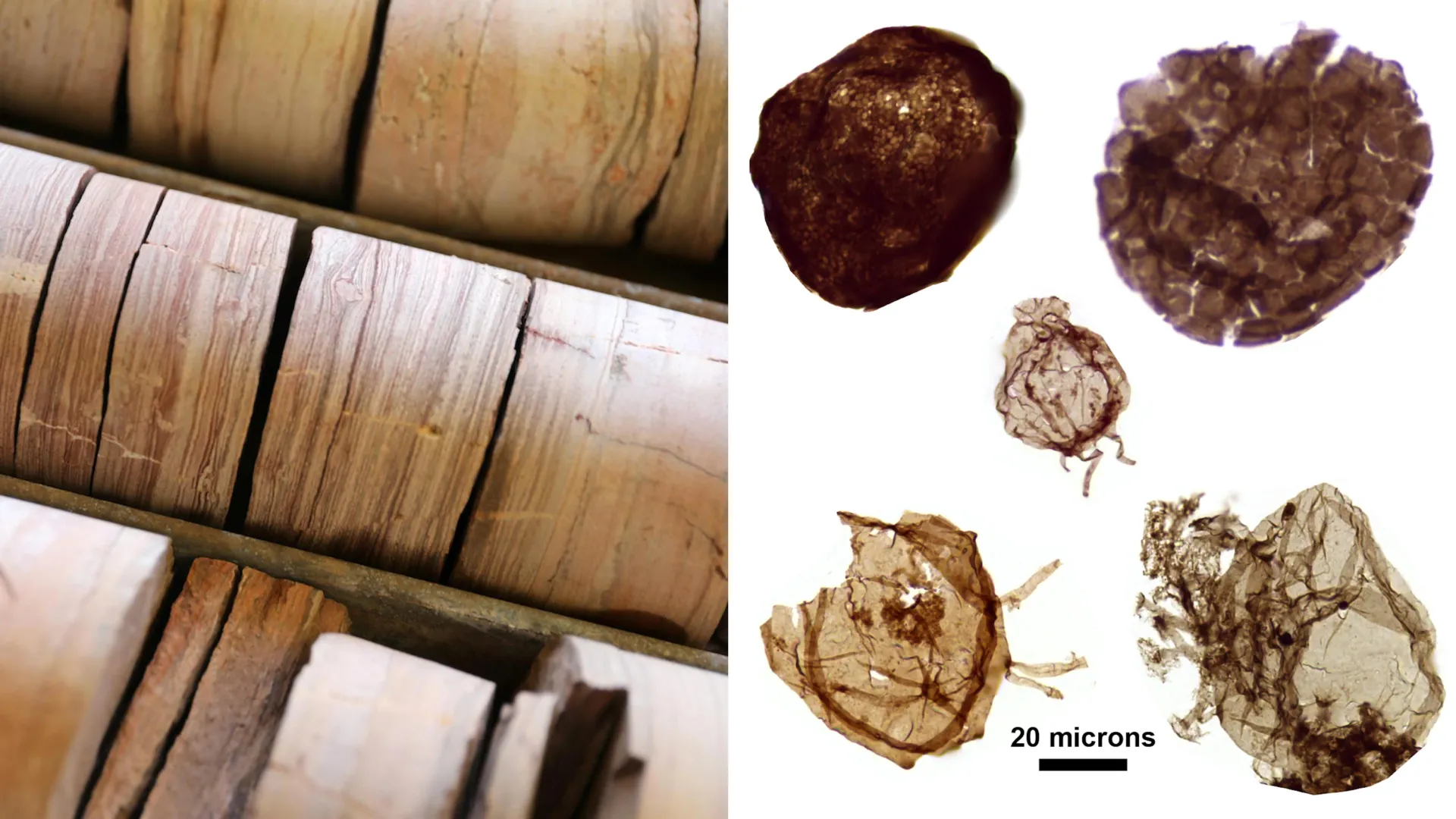
The researchers meticulously compiled and analyzed approximately 100 existing datasets. These datasets encompassed a wide range of organic matter, including samples from microbes, soils, fossilized remains, meteorites, asteroids, and synthetic laboratory samples created under simulated extraterrestrial conditions. The rigorous application of the adapted ecological statistical metrics consistently revealed distinct organizational patterns in biological materials that reliably separated them from purely abiotic chemistry.
Enduring Signatures: Fossils and Degraded Samples
One of the most surprising and significant findings of the study was the remarkable effectiveness of this statistical method, even in its apparent simplicity. By analyzing samples through this statistical lens, the researchers could reliably distinguish between biological and abiotic origins. Furthermore, the study revealed that biological materials formed a continuum based on their degree of preservation and alteration. This means the method could not only differentiate between life and nonlife but also provide insights into the extent to which a sample had been degraded or modified over time.
"That was genuinely surprising," Klenner remarked. "The method captured not only the distinction between life and nonlife, but also degrees of preservation and alteration." This ability to gauge the state of preservation is invaluable in astrobiology. Many potential biosignatures might be significantly degraded due to long periods of exposure to radiation, geological processes, or atmospheric conditions. The fact that this statistical signature persists even in heavily degraded samples suggests its robustness as a biosignature indicator.
Illustrating this point, the study included fossilized dinosaur eggshells in its analysis. Despite the immense age and significant degradation of these samples, they still exhibited detectable statistical patterns linked to ancient biological activity. This finding suggests that even ancient life, leaving behind fossilized remains, might retain this subtle statistical imprint, making it detectable for potentially billions of years.
A New Paradigm for Future Space Missions
While the findings are highly promising, the researchers are quick to emphasize that no single technique will likely ever be sufficient to definitively prove the existence of extraterrestrial life. The history of scientific discovery, particularly in fields as complex as astrobiology, underscores the need for multiple, independent lines of evidence.
"Any future claim of having found life would require multiple independent lines of evidence, interpreted within the geological and chemical context of a planetary environment," Klenner cautioned. This approach aligns with the established scientific principle of corroboration, where a conclusion is strengthened by converging evidence from different sources.
Nevertheless, the research team firmly believes that this statistical framework has the potential to become an indispensable tool in the arsenal of future planetary missions. By providing a novel way to assess the likelihood of biological origin for detected organic molecules, it can guide further investigation and interpretation. "Our approach is one more way to assess whether life may have been there," Klenner stated. "And if different techniques all point in the same direction, then that becomes very powerful."
The implications for future exploration are vast. Missions to ocean worlds like Europa and Enceladus, which are believed to harbor subsurface oceans that could potentially support life, could benefit immensely from this method. Analyzing the plumes of water vapor ejected from these moons, or the samples returned from future lander missions, using this statistical approach could help scientists distinguish between biologically produced organic matter and that formed through geological processes. Similarly, the ongoing search for evidence of past or present life on Mars, where evidence of ancient water and organic molecules has been found, could be significantly enhanced. This new statistical method offers a way to scrutinize the complex organic chemistry found on the Red Planet with greater discernment.
The broader impact of this research extends beyond the immediate search for extraterrestrial life. It deepens our understanding of the fundamental principles that govern the origin and evolution of life itself, both on Earth and potentially elsewhere. By identifying a unique organizational characteristic of biological systems, scientists are gaining new insights into what truly defines life at a molecular level. This could lead to a more universal definition of life, one that is not solely reliant on Earth-centric examples, and could help us identify life in forms and environments we have not yet imagined. As humanity continues to push the boundaries of exploration, this innovative statistical approach offers a beacon of hope, illuminating a new path in the timeless quest to answer the profound question: Are we alone in the universe?