Python continues to solidify its position as an indispensable programming language, particularly as 2026 approaches, driven by explosive growth in artificial intelligence, automation, robust API development, sophisticated data dashboards, and advanced data applications. The demand for developers capable of translating theoretical knowledge into practical, real-world solutions is at an all-time high. This article delves into seven meticulously designed Python projects, each addressing a tangible problem and offering a comprehensive guide for developers aiming to build portfolio-ready applications. These projects, personally created, tested, and documented by Abid Ali Awan, a certified data scientist and prolific technical writer, serve as a blueprint for mastering practical Python development in an AI-driven era.
The Enduring Relevance of Python in a Data-Driven World
Python’s remarkable versatility, coupled with its extensive libraries and frameworks, has cemented its status as a cornerstone of modern software development. Its clean syntax and powerful ecosystem make it the language of choice for diverse applications, from web development and scientific computing to machine learning and data analysis. As industries increasingly pivot towards data-centric strategies and AI-powered automation, the ability to develop practical Python applications becomes a critical skill. The projects highlighted here are not merely academic exercises; they are engineered to tackle contemporary challenges, ranging from enhancing digital safety and streamlining research workflows to deploying machine learning models and generating insightful data reports. Each project is accompanied by essential resources, including full guides, GitHub repositories, live demos, notebooks, datasets, and API documentation, ensuring reproducibility and facilitating hands-on learning for developers at all stages.
Addressing Contemporary Challenges: A Project Overview
The curated selection of projects reflects current technological trends and real-world pain points. They demonstrate how Python can be leveraged to create impactful solutions across various domains:
- AI Scam and Notice Checker: A crucial tool for digital safety, combating the proliferation of sophisticated scam messages and fraudulent notices.
- Multi-Agent Research Report Generator: Revolutionizing information gathering and synthesis for students, analysts, and writers.
- Breast Cancer Prediction API with FastAPI: Bridging the gap between machine learning model development and real-world deployment in healthcare.
- Agentic Market Research Dashboard: Automating and enhancing market intelligence for businesses and strategists.
- Recycling Impact Data Analysis Notebook: Utilizing data science for environmental insights and sustainability efforts.
- AI Job Match and Resume Analyzer: Streamlining the job search process for candidates and recruiters alike.
- AI Data Analysis Report Generator: Automating the generation of comprehensive insights from raw datasets.
These projects collectively underscore Python’s capacity to drive innovation and efficiency across critical sectors.
Deep Dive into Practical Python Applications

1. AI Scam and Notice Checker: Fortifying Digital Defenses
The Challenge: In an increasingly interconnected world, the threat of digital fraud—encompassing fake payment alerts, suspicious courier notifications, and deceptive official notices—has escalated dramatically. Scammers employ increasingly sophisticated tactics, making it challenging for individuals to discern legitimate communications from malicious ones. This pervasive issue costs individuals and economies billions annually and erodes trust in digital platforms.
The Solution: The "Pakistan Notice Helper" project directly confronts this challenge by providing a bilingual AI safety application designed to detect and flag suspicious messages and images. Users can input text or screenshots of various communications, including SMS messages, bank alerts, bills, challans (official fine notices), courier updates, and customs messages. The application then processes this input, returning a clear risk label, a detailed explanation of potential threats, identified red flags, and actionable safe next steps. Unlike generic chatbots, this is a highly focused Python application tailored to a specific, critical user problem.
Key Technologies and Implications: Built using advanced natural language processing (NLP) and computer vision techniques, this project showcases the power of AI in enhancing cybersecurity and consumer protection. Developers learning from this project gain invaluable experience in building robust classification models, handling multilingual data, and developing user-friendly interfaces for critical applications. The modular design allows for adaptation to other regions or industries, enabling the creation of tools like phishing email checkers, rental scam detectors, or fake job offer analyzers, thereby demonstrating Python’s utility in creating scalable, impactful safety solutions.
- Guide: https://huggingface.co/blog/build-small-hackathon/building-pakistan-notice-helper
- GitHub: https://github.com/kingabzpro/pakistan-notice-helper
- Live App: https://build-small-hackathon-pakistan-notice-helper.hf.space/
- Dataset: https://huggingface.co/datasets/build-small-hackathon/pakistan-notice-helper-traces
2. Multi-Agent Research Report Generator: Automating Knowledge Discovery
The Challenge: The research process—whether for academic pursuits, market analysis, or content creation—is notoriously time-consuming and labor-intensive. It typically involves sifting through vast amounts of information from multiple sources, discerning credible claims, extracting relevant data points, synthesizing findings, and structuring them into a coherent report. This manual workflow often leads to bottlenecks and inefficiencies.
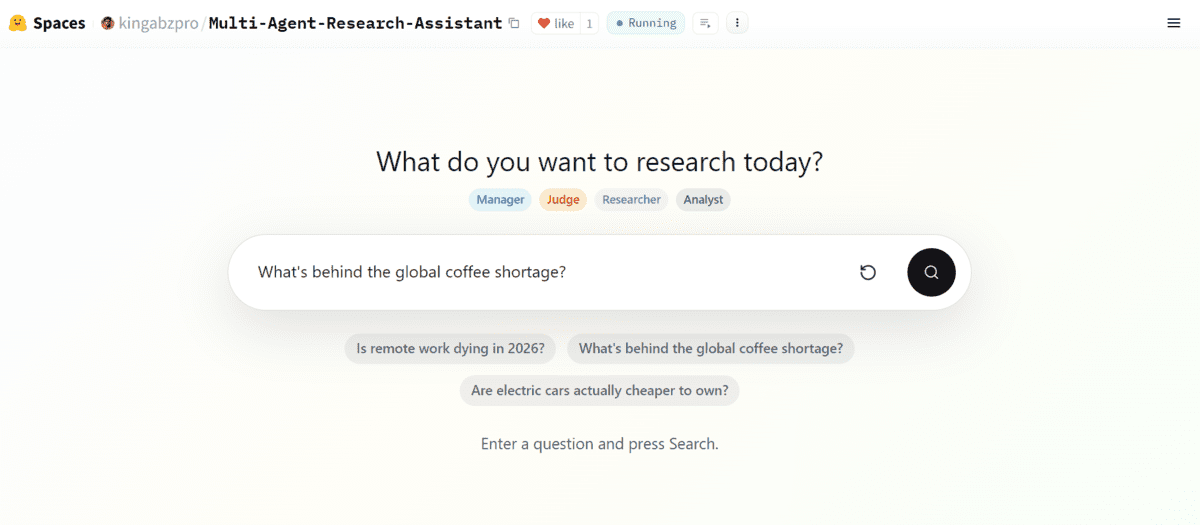
The Solution: This innovative project demonstrates the construction of a multi-agent research assistant in Python, designed to automate and streamline complex research tasks. Instead of relying on a single, monolithic AI prompt, the system orchestrates a workflow across several specialized agents. For instance, one agent might be responsible for comprehensive web searching, another for analyzing the retrieved results, a third for evaluating the quality and relevance of information, and a final agent for generating the structured research report. This modular approach mirrors the collaborative nature of human research teams.
Key Technologies and Implications: The project highlights a significant paradigm shift in AI application development: the move from simple prompt-response models to sophisticated, structured, agentic workflows. Developers learn to design and implement multi-agent systems, manage inter-agent communication, and leverage advanced AI models for tasks like information retrieval, summarization, and report generation. This capability is invaluable for enhancing productivity in fields such as journalism, academic research, competitive intelligence, and strategic consulting, showcasing Python’s role in building advanced AI orchestration layers.
- Guide: https://machinelearningmastery.com/how-to-build-a-multi-agent-research-assistant-in-python/
- GitHub: https://github.com/kingabzpro/Multi-Agent-Research-Assistant
- Hugging Face Space: https://huggingface.co/spaces/kingabzpro/Multi-Agent-Research-Assistant
3. Breast Cancer Prediction API with FastAPI: Productionizing ML Models
The Challenge: A common hurdle in machine learning development is the transition from a functional model within a Jupyter Notebook to a deployable, production-ready service. While training models is crucial, their true utility in real-world applications often lies in their ability to serve predictions on demand to other systems. Many valuable models remain confined to development environments due to the complexities of deployment.
The Solution: This project provides a clear pathway to operationalizing machine learning models. It guides developers through the process of training a Scikit-learn breast cancer classification model, serving it as a robust API using FastAPI, and subsequently deploying it to a cloud environment like FastAPI Cloud. The outcome is a fully functional prediction API, complete with interactive documentation, allowing other applications to seamlessly send patient data and receive accurate predictions.

Key Technologies and Implications: This project is foundational for aspiring MLOps engineers and data scientists. It demystifies the critical steps involved in moving from model training (using Scikit-learn) to model serving (with FastAPI) and deployment. Developers gain practical experience with API design, serialization, and containerization concepts, which are indispensable for building scalable and maintainable ML systems. The specific application—breast cancer prediction—underscores the profound impact of machine learning in healthcare, offering a tangible example of how Python can contribute to life-saving technologies.
- Guide: https://machinelearningmastery.com/train-serve-and-deploy-a-scikit-learn-model-with-fastapi/
- Live API Docs: https://sklearn-fastapi-app.fastapicloud.dev/docs
4. Agentic Market Research Dashboard: Intelligent Business Insights
The Challenge: Traditional market research is an inherently slow and often fragmented process. It demands extensive web searches, manual extraction of data from disparate sources, qualitative comparison of findings, identification of nascent trends, and the laborious compilation of concise, actionable reports. This manual effort can hinder rapid decision-making in dynamic market environments.
The Solution: The "Agentic Market Research" project offers a significant leap forward by automating this entire workflow using Python, leveraging the Olostep platform and sophisticated AI agents. Beginning with a plain-language research topic, the system autonomously navigates the web, constructs a web-grounded market snapshot, identifies structured market signals, conducts trend analysis, and generates a concise technical brief. This intelligent automation dramatically reduces the time and resources traditionally required for comprehensive market analysis.
Key Technologies and Implications: This project is highly relevant for business analysts, marketers, product managers, and entrepreneurs. It provides hands-on experience in building agentic systems for complex information retrieval and synthesis, integrating with external platforms like Olostep, and developing interactive dashboards for presenting insights. It showcases Python’s capability in creating intelligent automation solutions that deliver competitive intelligence rapidly, enabling faster, more informed strategic decisions in business environments.

- Guide: https://www.olostep.com/blog/agentic-market-research-olostep
- GitHub: https://github.com/kingabzpro/agentic-market-research-olostep
- Notebook: https://github.com/kingabzpro/agentic-market-research-olostep/blob/main/notebook.ipynb
5. Recycling Impact Data Analysis Notebook: Quantifying Environmental Efforts
The Challenge: While AI applications dominate much of the current tech discourse, the fundamental value of robust data analysis remains paramount. Understanding environmental impact, for instance, requires careful collection, processing, and interpretation of real-world data. Many sustainability initiatives lack clear, quantifiable metrics to demonstrate their effectiveness, making it difficult to assess progress and inform policy.
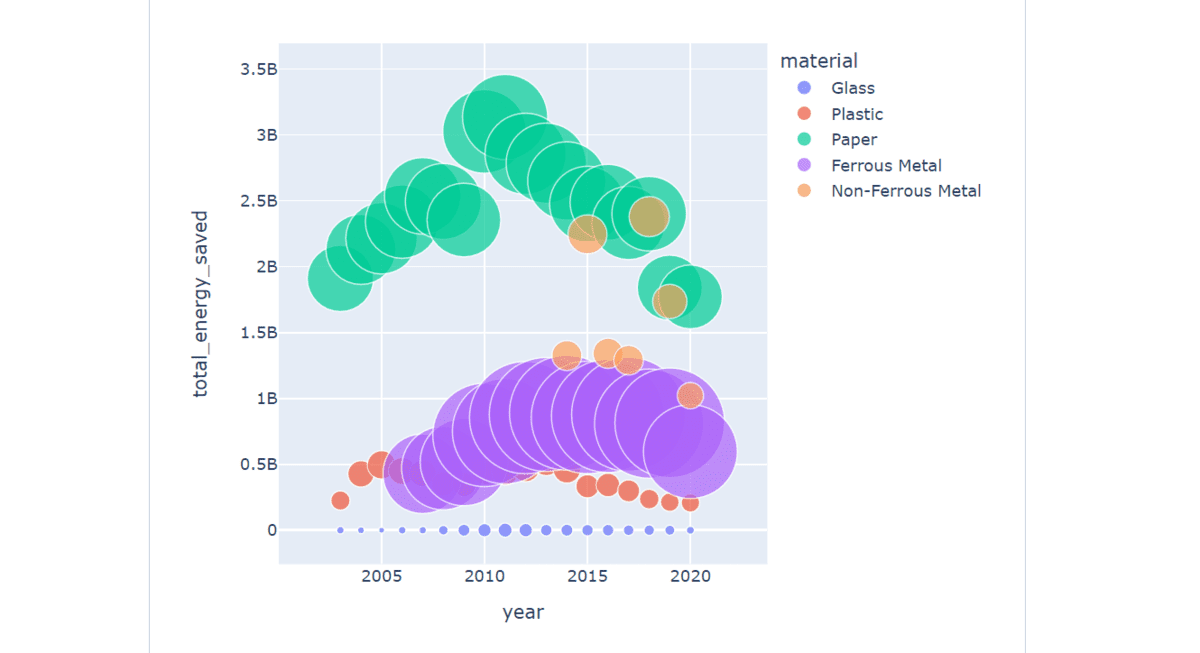
The Solution: This project focuses on a strong data analysis application, demonstrating how Python can be used to quantify environmental benefits. It analyzes waste and recycling data from Singapore to calculate the significant energy savings achieved through the recycling of various materials, including plastic, paper, glass, ferrous metal, and non-ferrous metal. The output provides clear, visualizable insights into the positive ecological impact of recycling efforts.
Key Technologies and Implications: This project serves as an excellent example of using Python for environmental data science. Developers gain practical skills in data cleaning, transformation, statistical analysis, and data visualization using libraries like Pandas, Matplotlib, and Seaborn. It underscores the importance of data-driven insights in promoting sustainability and informing public policy. For a portfolio, it demonstrates the ability to extract meaningful conclusions from raw data and communicate them effectively, showcasing a commitment to social and environmental responsibility through technical skills.
- Guide: https://towardsdatascience.com/annual-recycled-energy-saved-in-singapore-2d6bad49bfb2/
- Kaggle Notebook: https://www.kaggle.com/code/kingabzpro/singapore-recycling-and-waste-management
- Kaggle Dataset: https://www.kaggle.com/datasets/kingabzpro/singapore-waste-management
6. AI Job Match and Resume Analyzer: Optimizing Career Navigation
The Challenge: The modern job search is often a tedious and time-consuming endeavor. Candidates spend hours manually sifting through job descriptions, cross-referencing requirements with their resumes, assessing fit, and deciding whether to apply. This repetitive process is inefficient and often leads to missed opportunities or applications for unsuitable roles.
The Solution: This project introduces an AI-powered job search assistant built with Python to automate and enhance this critical process. The application reads a user’s curriculum vitae (CV), intelligently searches job listings from various sources, analyzes individual job pages, and then generates a ranked job-fit report. This report clearly highlights which jobs align best with the candidate’s profile and identifies any missing skills or qualifications, empowering users to make more strategic application decisions.
Key Technologies and Implications: This is a highly practical project that combines multiple advanced Python capabilities. Developers gain experience in document parsing (for CVs), web scraping (for job listings), natural language processing (for understanding job descriptions and resumes), AI reasoning (for matching and analysis), and report generation. It demonstrates the ability to build a comprehensive, full-stack application that solves a significant personal and professional problem. For a portfolio, it showcases proficiency in AI-driven automation, text analysis, and the creation of valuable decision-support tools.
- Guide: https://www.datacamp.com/tutorial/kimi-k2-6-api-tutorial
- GitHub: https://github.com/kingabzpro/JobFit-AI
7. AI Data Analysis Report Generator: Streamlining Insight Extraction
The Challenge: Data analysis, while crucial for informed decision-making, involves a series of often repetitive and manual steps: loading datasets, inspecting columns, handling missing values, generating visualizations, identifying patterns, and finally, compiling a coherent report. This workflow can be time-consuming, especially for initial exploratory analyses or when dealing with numerous datasets.
The Solution: This project demonstrates how to automate the entire data analysis workflow using Python and AI. The core idea is to construct an AI data analyst capable of ingesting a raw dataset (e.g., CSV or Excel), autonomously analyzing it, extracting meaningful insights, and producing a polished, comprehensive report. Instead of manually scripting each analysis step, the system orchestrates a workflow that intelligently coordinates the entire process, from data understanding to insight generation and presentation.

Key Technologies and Implications: This project is invaluable for data analysts, consultants, students, and business teams seeking rapid first-pass reports from various data sources. It provides hands-on experience with AI orchestration frameworks, data manipulation libraries (like Pandas), and visualization tools, all integrated into an automated reporting pipeline. It highlights Python’s role in building intelligent systems that can democratize data analysis, making insights more accessible and accelerating decision cycles across organizations.
Conclusion: The Future of Python Development is Practical and AI-Driven
As Abid Ali Awan, the architect of these projects, emphasizes, the most impactful Python projects in 2026 transcend mere code construction. They represent the fusion of technical proficiency with a problem-solving mindset, leveraging AI to create practical, deployable solutions. The current technological landscape demands developers who can build systems that automate tasks, enhance efficiency, and reduce manual intervention across diverse industries.
The projects outlined here—from bolstering digital security and streamlining complex research to deploying machine learning models in production, generating market intelligence, analyzing environmental impact, optimizing job searches, and automating data reporting—are not just theoretical concepts. They are tangible examples of how Python, empowered by AI, is shaping the future of software development. Developers are encouraged to utilize these comprehensive guides as foundational starting points, customizing them with unique data, innovative interfaces, novel deployment strategies, and further enhancements. This iterative process of building, adapting, and refining is what transforms a tutorial into a robust, portfolio-worthy real-world project, distinguishing skilled practitioners in a rapidly evolving technological domain.