In a significant leap for neurotechnology and bio-integrated electronics, researchers at Cornell University, in collaboration with international partners, have successfully developed a neural implant so small it can rest comfortably on a single grain of salt. This device, despite its microscopic dimensions, represents a breakthrough in long-term medical monitoring, demonstrating the ability to wirelessly transmit brain activity data from a living subject for a period exceeding one year. The research, which was recently published in the journal Nature Electronics, provides a blueprint for the next generation of microelectronic systems that can operate at a scale previously thought impossible for complex biological interfacing.
The development of this device, known as a Microscale Optoelectronic Tetherless Electrode (MOTE), addresses one of the most persistent challenges in neuroscience: how to monitor the brain’s intricate electrical signals over long durations without causing significant tissue damage or relying on bulky, invasive wiring. By leveraging advanced semiconductor materials and innovative optical communication methods, the Cornell-led team has created a platform that could fundamentally change the landscape of brain-computer interfaces (BCIs), spinal cord rehabilitation, and chronic disease management.
The Architecture of the MOTE Device
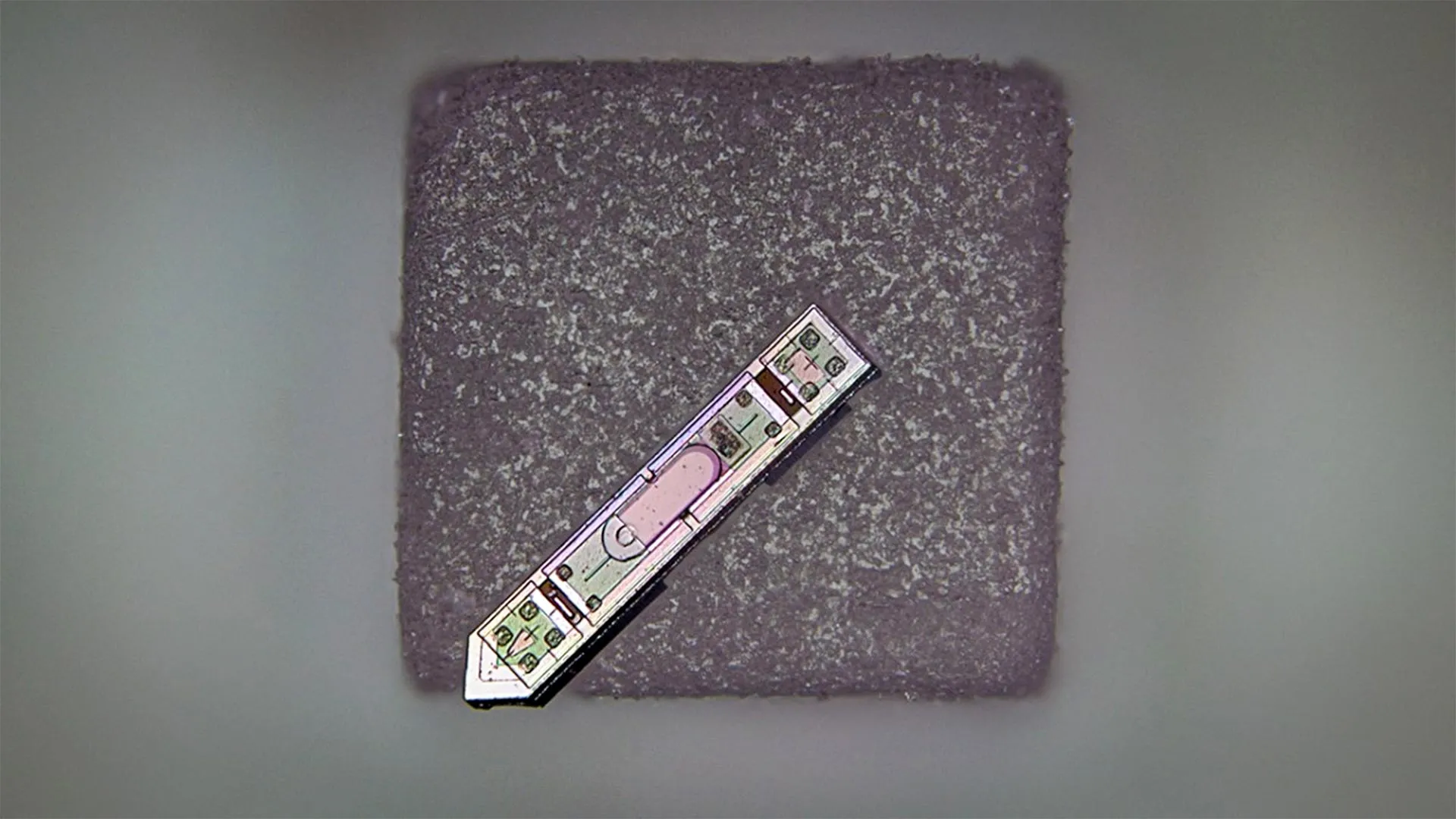
The MOTE device is a marvel of modern microfabrication, measuring approximately 300 microns in length and 70 microns in width. To put this in perspective, a standard human hair is roughly 50 to 100 microns wide, meaning the device is only slightly wider than a few strands of hair and significantly smaller than the "Utah Array" or other traditional electrodes currently used in clinical and research settings.
The project was spearheaded by Alyosha Molnar, a professor in the School of Electrical and Computer Engineering at Cornell, alongside Sunwoo Lee, an assistant professor at Nanyang Technological University (NTU) in Singapore. Lee’s involvement with the technology began during his tenure as a postdoctoral researcher in Molnar’s lab, highlighting a multi-year development cycle that moved from theoretical design to successful long-term animal testing.
At the heart of the MOTE’s functionality is a specialized semiconductor diode constructed from aluminum gallium arsenide (AlGaAs). This material choice is critical; AlGaAs is a compound semiconductor that allows for the efficient conversion of light into electricity and vice versa. This dual-purpose component enables the device to solve two problems simultaneously: power delivery and data transmission. Because the device is too small to house a conventional battery, it relies on external light sources to function, essentially "harvesting" energy from laser beams directed at the implantation site.
Mechanics of Optical Power and Data Transmission
Traditional neural implants often rely on radiofrequency (RF) waves for wireless communication. However, RF signals face limitations when scaled down to the micron level, as the antennas required to capture these signals must be of a certain size to remain efficient. Furthermore, RF energy can sometimes cause localized heating in sensitive brain tissue.
The MOTE sidesteps these issues by utilizing the "optical window" of biological tissue. The device operates using red and infrared laser beams. These specific wavelengths are chosen because they can penetrate several millimeters into biological tissue with minimal absorption and scattering, ensuring that the light reaches the implant safely.
When the external red laser hits the MOTE’s integrated AlGaAs diode, it generates a small electrical current that powers the device’s internal circuitry. This circuitry includes a high-precision, low-noise amplifier and an optical encoder. The amplifier is responsible for picking up the faint electrical "spikes" or action potentials generated by neurons in the immediate vicinity of the implant.
Once the neural signals are amplified, the optical encoder converts the analog electrical data into a digital format. This data is then transmitted back to an external receiver through tiny pulses of infrared light emitted by the same diode system. This bidirectional use of light allows for a completely "tetherless" experience, removing the need for wires that protrude through the skull—a common source of infection and mechanical failure in older implant designs.
Innovations in Data Encoding: Pulse Position Modulation
A key factor in the MOTE’s success is its extreme power efficiency. Transmitting data wirelessly usually requires a significant energy budget, which is a luxury a micron-scale device does not have. To overcome this, the research team utilized Pulse Position Modulation (PPM).
PPM is a form of signal modulation where message information is encoded in the timing of bits rather than the strength of the signal. This is the same sophisticated coding method used in deep-space optical communications, such as those used by satellites to transmit data over vast distances. By using PPM, the MOTE can transmit high-fidelity neural data using very little power.
"As far as we know, this is the smallest neural implant that will measure electrical activity in the brain and then report it out wirelessly," stated Professor Molnar. He emphasized that the use of PPM was instrumental in achieving the device’s goals, noting that the team could use "very, very little power to communicate and still successfully get the data back out optically." This efficiency is what allows the device to remain functional for over a year without overheating the surrounding tissue or exhausting its power supply.
A Timeline of Development and Durability Testing
The journey toward the MOTE began several years ago in the Cornell cleanrooms, where researchers experimented with different semiconductor geometries to find the optimal balance between size and signal clarity. The primary hurdle was not just making the device small, but ensuring it could survive the harsh, corrosive environment of the living brain.
Biological environments are notoriously difficult for electronics. The body’s immune system often identifies foreign objects and surrounds them with glial scars—a process known as encapsulation—which can insulate an electrode and prevent it from "hearing" neurons. Furthermore, the salty, fluid-filled environment can cause electronic components to short-circuit or degrade.
The Cornell team addressed these issues by using biocompatible coatings and ensuring that the AlGaAs structure was robust enough to withstand long-term exposure. The durability of the MOTE was proven in a longitudinal study involving animal models. For more than 12 months, the device remained implanted and continued to provide clear, actionable data regarding the subject’s brain activity. This one-year milestone is significant because many experimental micro-implants fail within weeks or months due to mechanical displacement or electronic degradation.
Comparative Analysis: MOTE vs. Existing Technologies
To understand the impact of the MOTE, it is necessary to compare it to existing neural interface technologies. The "gold standard" for decades has been the Utah Array, a grid of 100 silicon needles. While effective, the Utah Array is massive compared to the MOTE, measuring several millimeters across. Its size causes a "displacement effect," where the insertion of the device damages the very neurons it is intended to monitor.
In contrast, the MOTE’s 300-micron footprint is small enough that it displaces a negligible amount of tissue. This leads to a much milder immune response and better long-term integration with the brain’s neural architecture. Furthermore, while companies like Neuralink have made strides in miniaturizing the "threads" used for recording, those systems still require a central processing hub and a battery unit implanted in the skull. The MOTE is entirely self-contained at the micro-scale, requiring no secondary internal components.
| Feature | Traditional Arrays (Utah) | Modern Thread-Based (Neuralink) | Cornell MOTE |
|---|---|---|---|
| Size | ~4mm x 4mm | ~50 microns (thread width) | 300 x 70 microns |
| Power Source | Wired / Induction | Internal Battery | Optical (Laser) |
| Data Link | Wired / RF | Bluetooth/RF | Optical (Infrared) |
| Biocompatibility | Low (Heavy scarring) | Medium | High (Minimal displacement) |
| MRI Compatible | No | No | Potential (Non-metallic) |
Future Applications: MRI Compatibility and Beyond
One of the most promising implications of the MOTE technology is its potential for use during Magnetic Resonance Imaging (MRI) scans. Currently, patients with neural implants are often barred from receiving MRIs because the metal components in the implants can react to the machine’s powerful magnets, causing heating, vibration, or significant image distortion (artifacts).
Because the MOTE is constructed primarily from semiconductor materials and utilizes optical rather than electrical or magnetic links for power and data, it is significantly more "MRI-friendly." Professor Molnar noted that the materials used in the MOTE could eventually allow researchers to record brain activity while a subject is inside an MRI machine. This would provide a dual-stream of data: the high-resolution structural and blood-flow images from the MRI, combined with the real-time electrical "spiking" data from the MOTE. Such a capability would be a "holy grail" for clinical neuroscience, offering an unprecedented look at how different brain regions communicate during specific tasks or disease states.
The researchers also envision applications beyond the brain. The device’s small size and wireless nature make it an ideal candidate for monitoring the spinal cord, where space is extremely limited and mechanical flexibility is paramount. It could also be used in "bio-integrated sensors" throughout the body to monitor organ function, glucose levels, or even the healing process of internal wounds.
Broader Impact on the Medical and Technological Landscape
The successful demonstration of the MOTE device signals a shift in the philosophy of medical implants. We are moving away from "macro-implants" that require invasive surgery and toward "swarm" technologies—where dozens or even hundreds of microscopic sensors could be distributed throughout a target area to provide a high-resolution map of biological activity.
In the long term, Molnar and his team suggest that this technology could be integrated with other future innovations, such as artificial skull plates embedded with opto-electronics. In such a scenario, the "skull plate" would act as the power source and receiver, communicating with MOTEs distributed throughout the brain, effectively creating a permanent, high-bandwidth bridge between the human mind and external computers.
While the technology is currently in the research and animal-testing phase, the implications for human health are profound. For individuals with paralysis, these micro-implants could provide a more stable, long-term solution for controlling prosthetic limbs. For patients with epilepsy, a network of MOTEs could detect the onset of a seizure at the single-neuron level and trigger preventative measures.
The Cornell MOTE stands as a testament to the power of interdisciplinary collaboration, merging the fields of semiconductor physics, optical engineering, and neurobiology. As the team continues to refine the device—potentially making it even smaller or adding the capability to stimulate neurons as well as record them—the boundary between biological systems and digital interfaces continues to blur, promising a future of "invisible" medicine that is as unobtrusive as it is revolutionary.