In a significant advancement for the field of organic chemistry, a research team at Nagoya University’s Graduate School of Engineering has successfully developed a highly efficient iron-based photocatalyst that facilitates the construction of complex molecular structures with unprecedented precision and sustainability. This breakthrough, published in the Journal of the American Chemical Society, addresses a long-standing challenge in chemical synthesis: the reliance on expensive, scarce noble metals for driving light-activated reactions. By refining the molecular architecture of their catalyst, the team—led by Professor Kazuaki Ishihara, Assistant Professor Shuhei Ohmura, and graduate student Hayato Akao—has not only reduced the cost of chemical production but also achieved the first total asymmetric synthesis of (+)-heitziamide A, a naturally occurring compound with significant medicinal potential.
Photocatalysis represents a cornerstone of modern green chemistry. These materials function by absorbing light energy and converting it into chemical energy, allowing reactions to proceed under milder conditions than traditional thermal methods. In the realm of organic synthesis, metal-based photocatalysts are particularly prized for their durability and the ease with which their properties can be "tuned" by modifying the ligands—organic molecules—attached to the central metal atom. However, the industry has historically leaned heavily on precious metals such as ruthenium and iridium. While effective, these metals are rare, subject to volatile market pricing, and carry a heavy environmental footprint due to the intensive mining processes required for their extraction.
The Evolution of Iron-Based Photocatalysis
The shift toward iron as a catalytic center is driven by both economic and environmental imperatives. Iron is one of the most abundant elements in the Earth’s crust, making it an ideal candidate for large-scale industrial applications. Despite its abundance, iron-based photocatalysts have historically struggled to match the performance and selectivity of their noble metal counterparts. A primary hurdle has been "enantioselectivity"—the ability to produce a specific "handedness" or three-dimensional arrangement of a molecule. Many biological molecules exist as enantiomers, or mirror images of one another, and in the pharmaceutical world, the specific shape of a molecule often determines its efficacy and safety.
In 2023, the Nagoya University team took a major step forward by introducing an iron-based substitute for iridium catalysts. While functional, that earlier iteration possessed a significant drawback: it required large quantities of expensive chiral ligands. Chiral ligands serve as the spatial templates that dictate the final shape of the chemical product. In the 2023 model, the system required three chiral ligands for every iron atom. Critically, the researchers discovered that only one of these three ligands was actually involved in determining the enantioselectivity of the reaction. This meant that two-thirds of the costly chiral material was essentially being wasted, serving merely as structural filler rather than functional guidance.
A Strategic Redesign for Maximum Efficiency
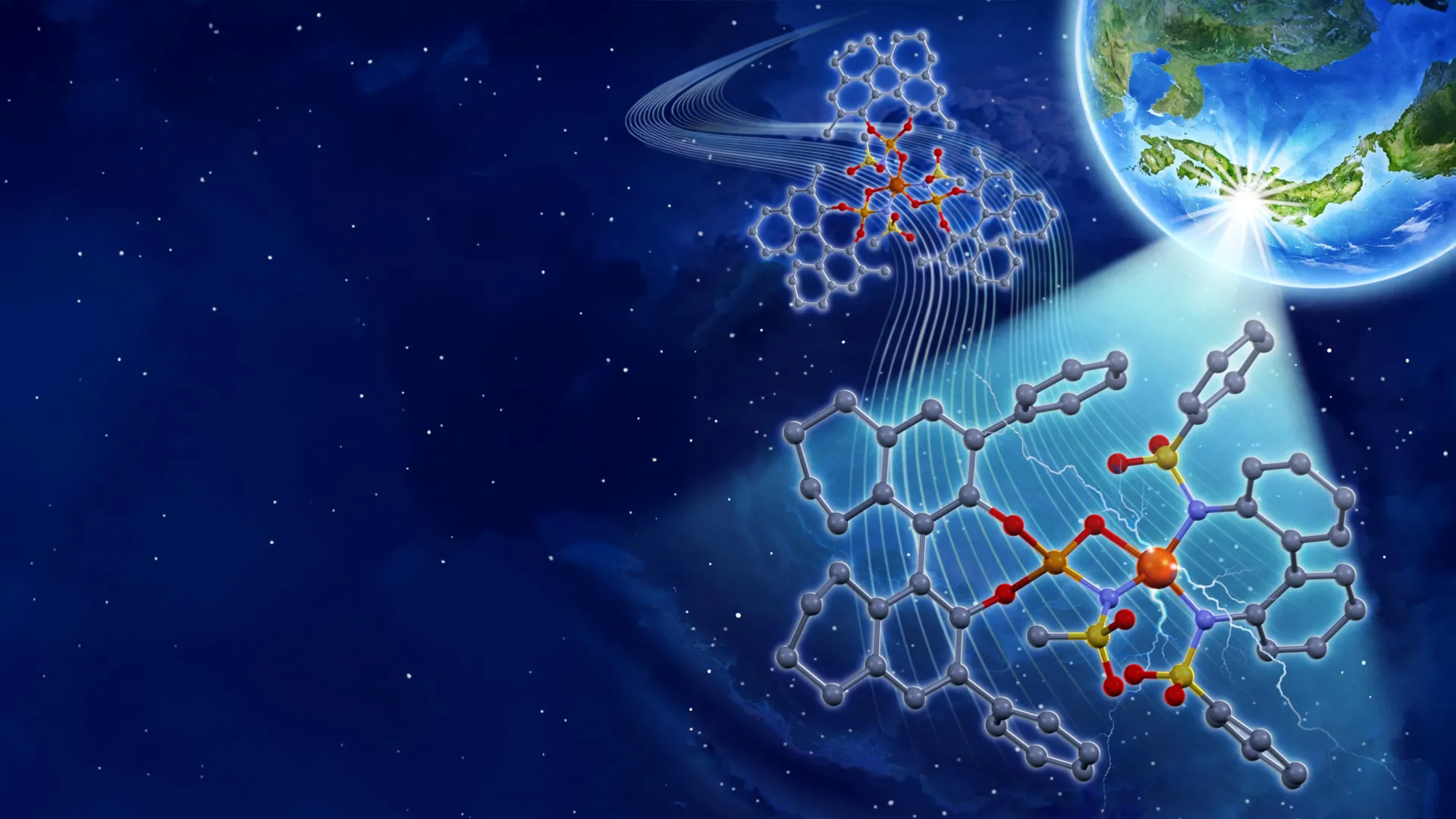
Recognizing this inefficiency, the research team embarked on a mission to redesign the catalyst from the ground up. The objective was to create a "smarter" iron(III) salt structure that could maintain high performance while drastically reducing the need for expensive components. The resulting catalyst is a hybrid system that strategically combines affordable, achiral bidentate ligands with a single chiral ligand.
This new configuration represents a paradigm shift in iron(III) photoredox catalysis. By using achiral ligands—which do not possess "handedness" and are significantly cheaper to produce—to handle the bulk of the catalytic performance, the researchers were able to reserve the expensive chiral ligand for the sole task of directing the three-dimensional configuration of the product. This optimization reduced the chiral ligand requirement by two-thirds without sacrificing the quality of the output.
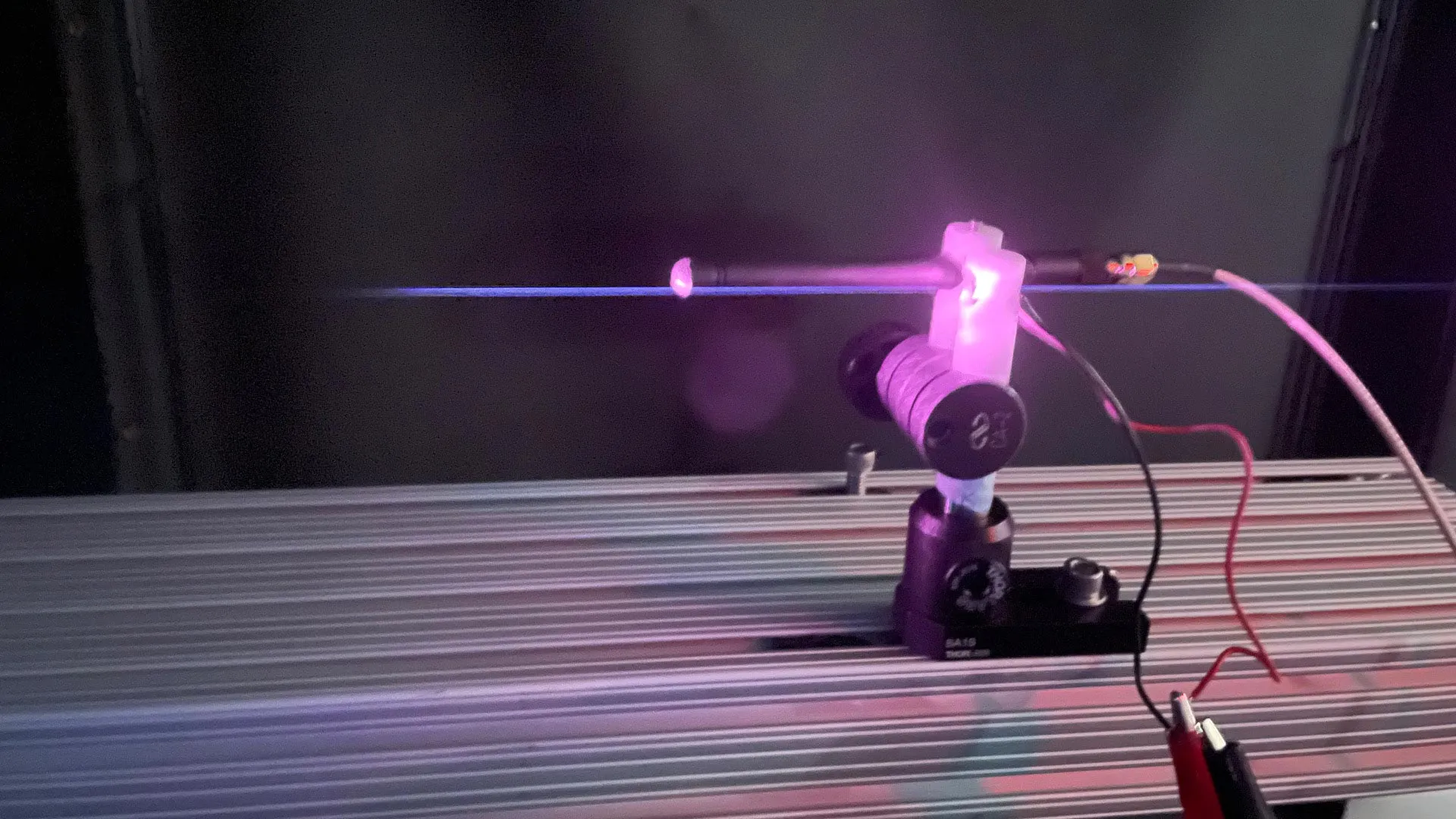
Furthermore, the team optimized the catalyst to respond to blue LED light. Blue light is an energy-efficient source that is increasingly favored in laboratory and industrial settings because it provides sufficient energy to drive photoredox cycles without the harshness or safety concerns associated with ultraviolet (UV) radiation. This makes the reaction conditions more practical for commercial scale-up and aligns with the global push for more sustainable manufacturing processes.
Achieving the First Total Asymmetric Synthesis of (+)-Heitziamide A
To demonstrate the power of their new catalyst, the researchers targeted the total synthesis of (+)-heitziamide A. Found in medicinal plants such as Fagara heitzii, this natural compound is of high interest to the medical community for its ability to suppress respiratory bursts—a process in which white blood cells release reactive oxygen species. While this process is part of the immune response, an overactive respiratory burst can lead to tissue damage and chronic inflammation.
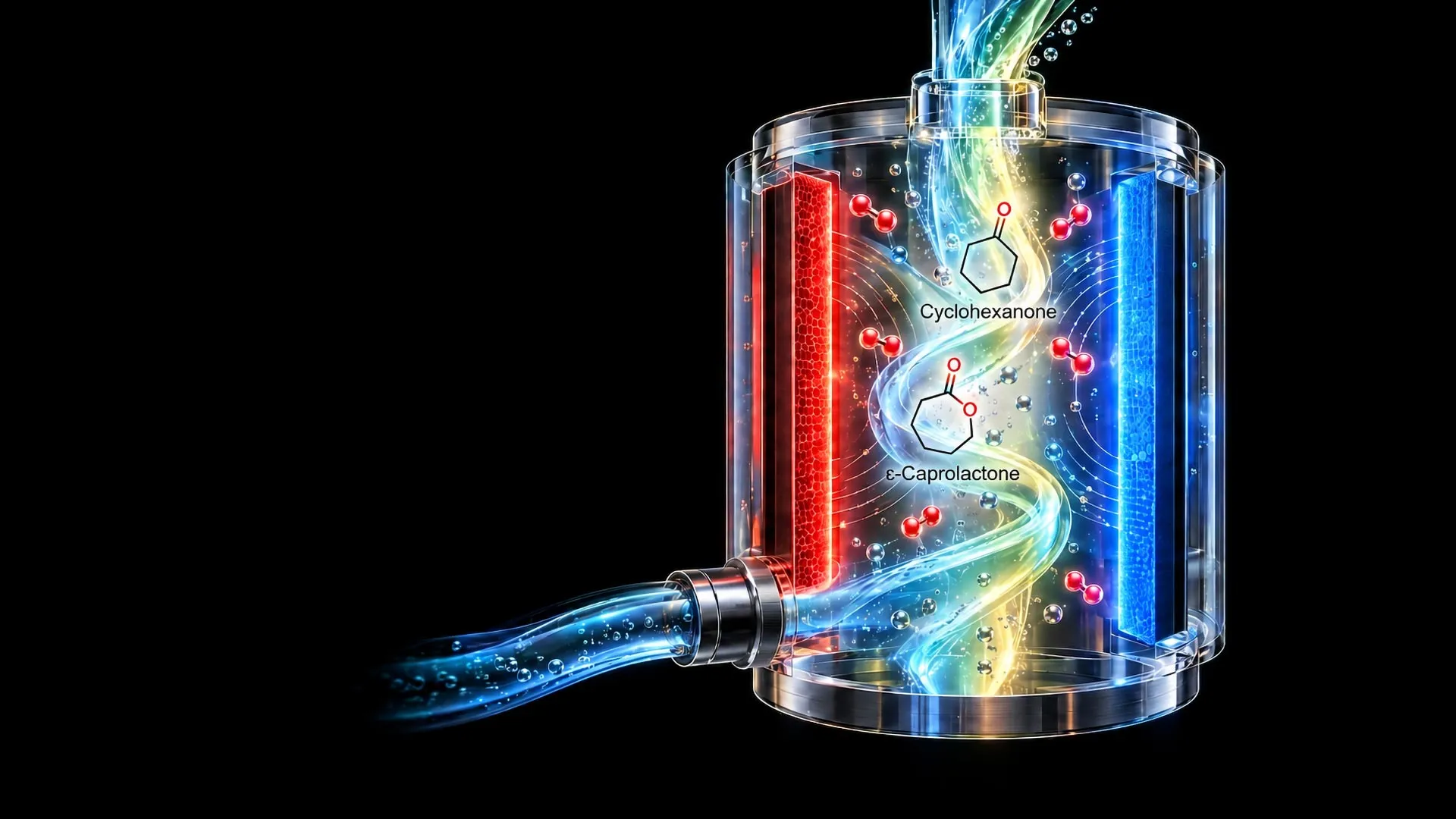
Prior to this study, chemists had managed to synthesize heitziamide A in the laboratory, but they had not achieved the total asymmetric synthesis of its naturally occurring form. This meant they could produce a mixture of the compound and its mirror image, but they could not selectively create only the (+)-enantiomer found in nature. Using their refined iron catalyst, the Nagoya team successfully performed a highly controlled radical cation (4 + 2) cyclization.
In this complex reaction, two molecular components are joined to form a six-membered ring, creating a 1,2,3,5-substituted adduct. This specific structural motif is a common building block in many natural products and pharmaceuticals. By precisely controlling the formation of this ring under blue light, the team achieved the world’s first total asymmetric synthesis of (+)-heitziamide A. Crucially, the researchers noted that by simply switching to the mirror-image version of their catalyst, they could also produce (-)-heitziamide A, providing full selective access to both versions of the molecule.
Technical Data and Reaction Performance
The performance data of the new catalyst indicates a high degree of robustness. In experimental trials, the iron(III) system demonstrated high yields and excellent enantiomeric excess (ee), a standard measure of how purely one mirror-image version of a molecule is produced over the other. The ability to achieve high "ee" values using an iron-based system is a major technical milestone, as iron typically undergoes rapid electronic transitions that can interfere with the slow, controlled process required for enantioselective synthesis.
The team’s success lies in the specific coordination chemistry of the iron(III) center. The achiral bidentate ligands stabilize the iron atom in its active state, while the chiral ligand creates a "chiral pocket" that only allows the reacting molecules to approach from a specific direction. This mechanical precision at the molecular level ensures that the radical cation (4 + 2) cycloaddition proceeds with the intended geometry.
Official Responses and Industry Outlook
The researchers expressed high confidence in the versatility of their new design. "The new catalyst design represents the definitive form of chiral iron(III) photoredox catalysts," stated Assistant Professor Shuhei Ohmura. "We believe this achievement marks a significant milestone in advancing iron-based photocatalysis, moving it from a theoretical alternative to a practical tool for complex synthesis."
Professor Kazuaki Ishihara emphasized the broader implications for the pharmaceutical industry. "Achieving the first-ever asymmetric total synthesis of (+)-heitziamide A using this catalytic reaction is a remarkable accomplishment," Ishihara said. He further noted that heitziamide A is just the beginning. "Several additional bioactive substances can be accessed through total synthesis, with enantioselective radical cation (4 + 2) cycloaddition serving as a key step. We intend to publish follow-up papers on the asymmetric total synthesis of these compounds in the near future."
From an industry perspective, the reduction in cost and the move away from rare metals could lower the barrier to entry for the production of specialized drugs. Analysts in the chemical sector suggest that as sustainability regulations tighten globally, the ability to replace iridium and ruthenium—which are often sourced from politically volatile regions—with iron will be a major strategic advantage for pharmaceutical manufacturers.
Broader Impact: Sustainability and Green Chemistry
The implications of this research extend far beyond the synthesis of a single medicinal compound. The Nagoya University study contributes to the growing field of "Green Chemistry," a framework aimed at designing chemical products and processes that reduce or eliminate the use and generation of hazardous substances.
- Resource Abundance: By utilizing iron, the team is leveraging a metal that is 1,000 times more abundant than the noble metals typically used in photocatalysis. This ensures a stable supply chain for the future of chemical manufacturing.
- Energy Efficiency: The use of blue LEDs reduces the energy consumption of the reaction compared to high-heat thermal reactions or UV-driven processes.
- Waste Reduction: The strategic use of achiral ligands to replace two-thirds of the chiral ligand requirement significantly reduces the chemical waste and high costs associated with synthesizing complex organic "guides."
- Pharmaceutical Precision: The ability to selectively synthesize specific enantiomers is critical for drug safety. The Nagoya team’s method provides a reliable pathway to high-purity compounds, reducing the risk of side effects caused by the "wrong" mirror-image version of a drug molecule.
As the scientific community continues to seek ways to balance industrial progress with environmental stewardship, the work of Ishihara, Ohmura, and Akao provides a clear roadmap. Their refined iron catalyst demonstrates that with smarter molecular design, it is possible to achieve high-end chemical results without the high-end price tag or the environmental cost of traditional precious metal catalysis. The upcoming follow-up studies promised by the team are expected to further expand the library of bioactive compounds accessible through this sustainable method, potentially ushering in a new era of "iron-age" organic chemistry.