In a landmark development for green chemistry and industrial sustainability, a research team at ETH Zurich has unveiled a highly efficient catalytic system that transforms carbon dioxide into methanol with unprecedented precision. By utilizing a "single-atom architecture," the scientists have managed to maximize the utility of rare metals, significantly lowering the energy barriers that have historically hindered the large-scale conversion of greenhouse gases into valuable chemical feedstock. This breakthrough, led by Javier Pérez-Ramírez, Professor of Catalysis Engineering at ETH Zurich, represents a fundamental shift in how catalysts are designed, moving away from the traditional nanoparticle approach toward a more deliberate, atom-by-atom engineering strategy.
The Challenge of Catalytic Energy Barriers
Every chemical reaction, whether occurring in a laboratory beaker or a massive industrial reactor, must overcome a specific energy threshold known as activation energy. This hurdle dictates the speed and efficiency of a reaction. In the context of global climate goals, the conversion of carbon dioxide (CO2) into useful products is one of the most critical yet energetically demanding processes in modern science. CO2 is a highly stable molecule; breaking its bonds to form new substances requires a significant initial input of energy.
To mitigate these energy requirements and reduce operational costs, the chemical industry relies on catalysts—substances that facilitate reactions without being consumed in the process. While effective, the most potent catalysts often involve noble or rare metals, such as platinum, palladium, or indium. In conventional catalytic systems, these metals are clustered into nanoparticles. However, this structure is inherently inefficient: only the atoms on the outer surface of the particle interact with the reactants, while the atoms buried in the core remain dormant, effectively wasting expensive materials.
A Paradigm Shift: Single-Atom Catalysis
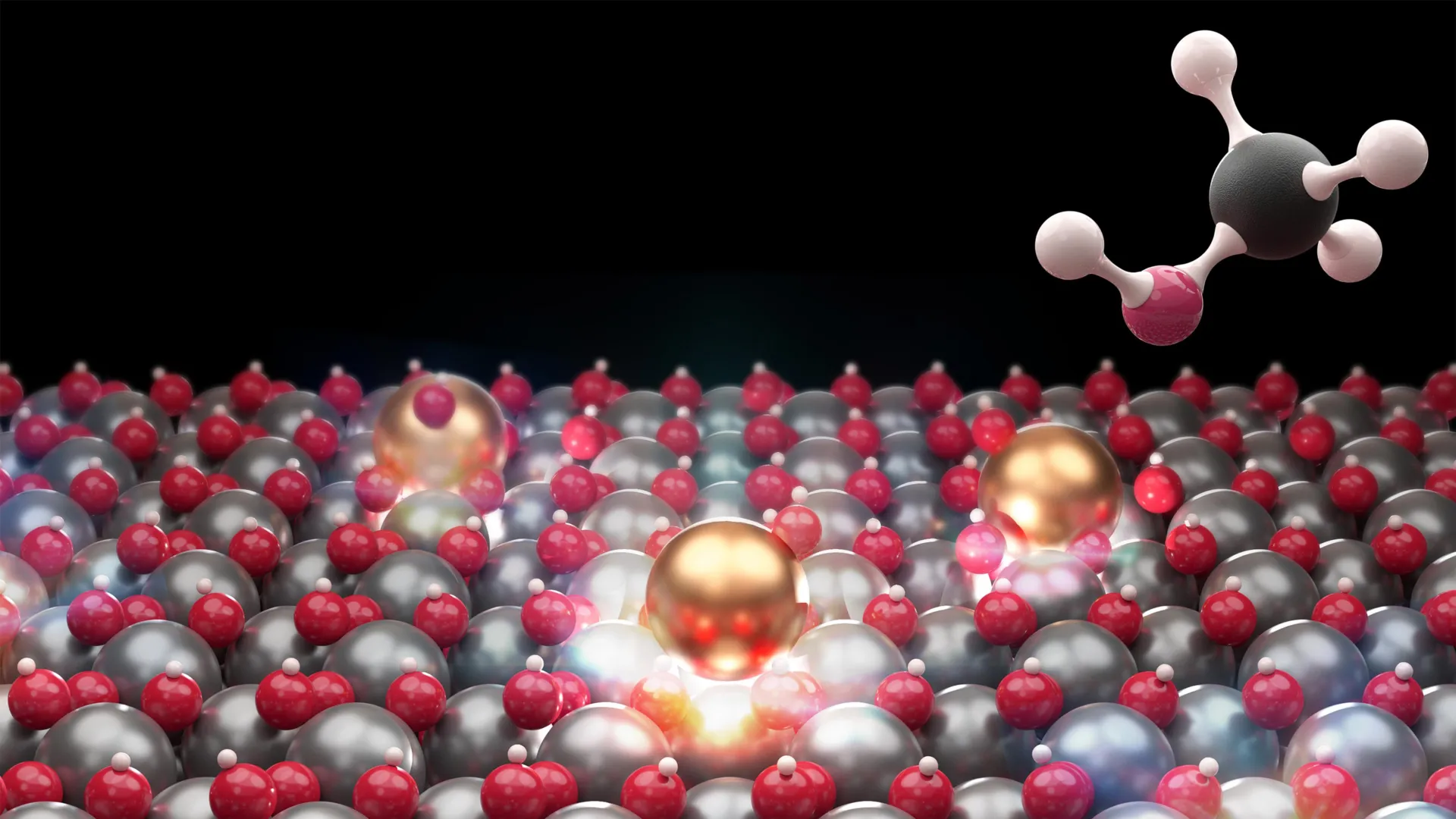
The ETH Zurich team has addressed this inefficiency by developing a catalyst where each individual indium atom acts as an independent active site. In this single-atom architecture, isolated metal atoms are anchored onto a specially engineered support material—hafnium oxide (HfO2). By dispersing the metal at the atomic level, the researchers ensure that every single atom of indium is utilized in the reaction, dramatically increasing the material’s efficiency and reducing the amount of metal required.
"Our new catalyst has a single atom architecture, in which isolated active metal atoms are anchored on the surface of a specially developed support material," explains Professor Pérez-Ramírez. This approach not only conserves resources but also alters the fundamental behavior of the catalyst. While indium has been used in CO2-to-methanol conversion for over a decade, the ETH study demonstrates that isolated indium atoms on hafnium oxide outperform traditional indium nanoparticles. This heightened performance is attributed to the unique electronic environment created when a single metal atom interacts with its support structure, allowing for more effective binding and transformation of CO2 and hydrogen (H2) molecules.
The Strategic Importance of Methanol
Methanol (CH3OH) occupies a central position in the global chemical economy. Often described as the "Swiss army knife of chemistry," it serves as a primary precursor for a vast array of products, including plastics, resins, adhesives, and synthetic fibers. Beyond its role as a building block for materials, methanol is increasingly viewed as a vital energy carrier. It can be used as a clean-burning fuel for shipping and heavy transport or as a medium for long-term hydrogen storage.
The global methanol market is substantial, with annual production exceeding 110 million metric tons. Currently, the vast majority of methanol is derived from fossil fuels, specifically natural gas and coal. The transition to "green methanol"—produced from captured CO2 and renewable hydrogen—is a cornerstone of the "Power-to-X" strategy, which aims to decarbonize the industrial sector. By making the CO2-to-methanol conversion process more energy-efficient and cost-effective, the ETH Zurich breakthrough provides a viable pathway for industries to move away from carbon-intensive production methods.
Engineering and Stability Under Extreme Conditions
Creating a stable single-atom catalyst is an immense engineering challenge. At high temperatures, isolated atoms have a natural tendency to migrate across the surface of a support material and clump together into particles, a process known as sintering. To prevent this and maintain the "single-atom" state, the ETH team developed innovative synthesis methods in collaboration with other Swiss research institutions.
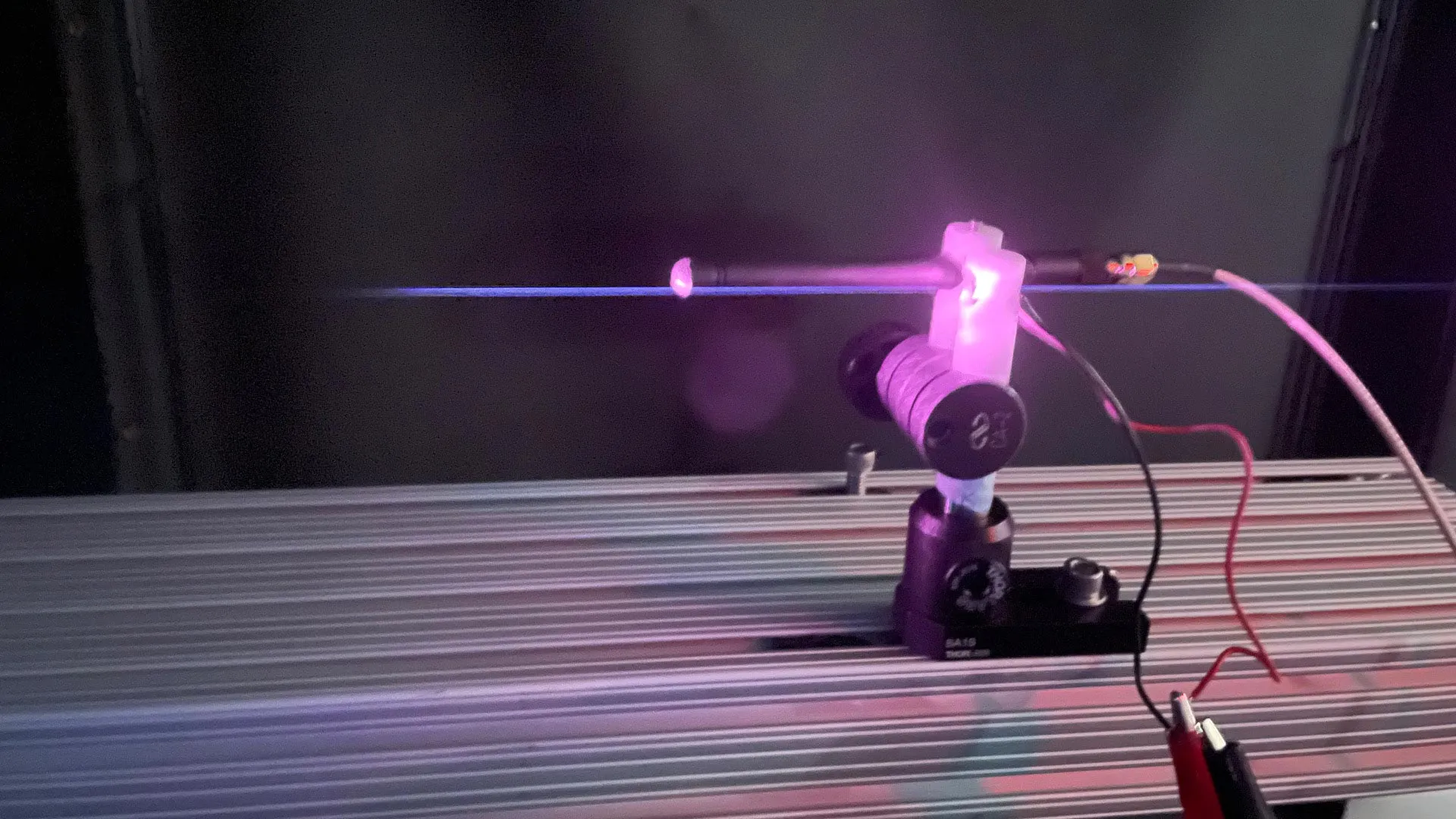
One of the most effective techniques employed was Flame Spray Pyrolysis (FSP). This process involves burning the precursor materials in a high-temperature flame reaching between 2,000 and 3,000°C. The resulting vapors are then rapidly cooled, causing the indium atoms to become firmly embedded and "quenched" into the surface of the hafnium oxide support. This rapid cooling locks the atoms in place, preventing them from clustering.
The durability of this system was a primary focus of the research. Industrial methanol synthesis typically occurs under demanding conditions, requiring temperatures of approximately 300°C and pressures up to 50 bar (50 times atmospheric pressure). The ETH researchers demonstrated that their single-atom indium catalyst remained stable and highly active under these rigorous parameters, proving its potential for real-world industrial application.
Scientific Precision and the End of Trial-and-Error
Historically, the development of catalysts has been characterized by a degree of "trial and error." Because traditional nanoparticle catalysts are complex and non-uniform, it is difficult for scientists to determine exactly which part of the catalyst is responsible for the reaction. Measurements often pick up "background noise" from the inactive atoms inside the nanoparticles, obscuring the mechanisms at play.
The single-atom approach removes this ambiguity. Because every active site is identical—a single atom on a uniform support—scientists can observe the reaction mechanisms with extreme clarity. This level of precision allows for the "deliberate design" of catalysts. By understanding exactly how the CO2 molecule interacts with the single indium atom, researchers can further optimize the catalyst’s structure to enhance selectivity and yield.
This scientific clarity also facilitates better collaboration with industry. Professor Pérez-Ramírez, who has been working on CO2-based methanol production since 2010, holds several patents in the field and works closely with industrial partners to scale these technologies. The ability to provide a clear mechanical explanation for a catalyst’s performance is a significant advantage when moving from the laboratory to the factory floor.
Chronology of Research and Collaborative Efforts
The development of this catalyst is the result of over a decade of dedicated research into CO2 utilization.
- 2010: Professor Pérez-Ramírez begins focusing on the catalytic conversion of CO2 into methanol, identifying indium-based systems as high-potential candidates.
- 2015-2018: Research shifts toward understanding the limitations of nanoparticles and exploring the stabilization of smaller metal clusters.
- 2020-2023: The team focuses on the "Single-Atom Catalysis" (SAC) frontier, experimenting with various support materials like zirconium oxide and hafnium oxide.
- 2024: The ETH Zurich team publishes their findings on the indium-on-hafnium-oxide system, demonstrating superior stability and efficiency compared to all previous iterations.
This success was not achieved in isolation. The project relied on a multidisciplinary network of Swiss research expertise, including advanced imaging from the Paul Scherrer Institute (PSI) and computational modeling to predict atomic interactions. "The development of the methanol catalyst and the detailed analysis of the mechanism would not have been possible without this interdisciplinary expertise," Pérez-Ramírez noted.
Broader Implications for the Chemical Industry
The implications of this research extend far beyond methanol production. The success of the single-atom indium catalyst provides a blueprint for the more efficient use of other scarce and expensive metals in various industrial processes. As the world moves toward a circular carbon economy, the ability to turn waste CO2 into a valuable raw material is essential.
If the hydrogen used in this process is produced via electrolysis powered by wind or solar energy, the resulting methanol is carbon-neutral. This creates a closed-loop system where CO2 emitted by industrial plants is captured, converted into methanol, and then used to create products that lock the carbon away in materials like plastics or high-performance polymers.
Furthermore, the increased efficiency of single-atom catalysts could lower the financial barriers for developing nations to adopt green chemical technologies. By reducing the reliance on large quantities of expensive metals and lowering the energy input required for synthesis, the ETH Zurich design makes sustainable chemistry more economically accessible.
As global regulations on carbon emissions tighten and the "carbon border adjustment mechanisms" begin to impact international trade, technologies that enable the profitable utilization of CO2 will become the gold standard of the chemical industry. The work of Pérez-Ramírez and his team at ETH Zurich marks a decisive step toward an era where chemical production is no longer a contributor to climate change, but a key part of the solution.