In a significant move to democratize access to cutting-edge artificial intelligence education, Google and Kaggle have collaborated to offer a comprehensive, intensive five-day generative AI (GenAI) course. This initiative, designed to move beyond superficial theoretical knowledge, dives deep into foundational models, embeddings, AI agents, domain-specific large language models (LLMs), and machine learning operations (MLOps). The program’s second iteration garnered an astounding interest, attracting over 280,000 signups globally and earning a Guinness World Record for the largest virtual AI conference ever held in a single week. All course materials are now permanently available as a self-paced Kaggle Learn Guide, completely free of charge, providing an invaluable resource for data professionals and aspiring AI practitioners worldwide.
The Genesis of a Record-Breaking Initiative: Addressing the AI Skills Gap
The collaboration between Google, a global leader in AI research and development, and Kaggle, the world’s largest community for data scientists and machine learning engineers, emerges at a pivotal moment in technological history. The rapid advancements in generative AI, exemplified by the widespread adoption of tools like ChatGPT, Midjourney, and Stable Diffusion, have unleashed unprecedented potential across industries. From automating content creation and code generation to accelerating scientific discovery and enhancing customer experiences, GenAI is reshaping business landscapes and human-computer interaction.
This technological revolution, however, has also highlighted a critical global skills gap. Enterprises worldwide are scrambling to integrate AI into their operations, but the scarcity of qualified professionals capable of developing, deploying, and managing these complex systems remains a significant hurdle. Reports from various industry analysts, including LinkedIn’s "Future of Skills" and the World Economic Forum’s "Future of Jobs," consistently identify AI and Machine Learning as top emerging skills, with demand far outstripping supply. Google, with its vested interest in fostering an ecosystem around its AI platforms and tools like the Gemini API, Vertex AI, and NotebookLM, recognized the strategic importance of equipping a broad base of developers with these essential capabilities. Kaggle, renowned for its hands-on learning environment and vibrant community, provided the ideal platform for delivering such a practical and scalable educational experience.
The initial success of the program underscores the immense hunger for high-quality, accessible AI education. The first iteration, while successful, laid the groundwork for the more ambitious second event. The subsequent announcement of its availability as a permanent, self-paced resource ensures that the impact of this initiative will extend far beyond the initial live conference, continuously empowering learners to acquire in-demand skills without financial barriers.
A Deep Dive into the Curriculum: Bridging Theory and Practice
The course distinguishes itself through a multi-channel learning format designed to cater to diverse learning styles and ensure deep conceptual understanding coupled with immediate practical application. Each of the five days is meticulously structured around a specific GenAI topic, leveraging whitepapers penned by Google machine learning researchers and engineers, AI-generated summary podcasts created with NotebookLM, and highly interactive code labs run directly on Kaggle notebooks. The original live version further enhanced this experience with YouTube livestreams featuring expert Q&A sessions and a thriving Discord community of over 160,000 learners, fostering real-time interaction and collaborative problem-solving. This robust methodology ensures that participants gain both the theoretical depth from foundational research and the practical proficiency through hands-on coding using industry-standard tools like the Gemini API, LangGraph, and Vertex AI.
Day 1: Exploring Foundational Models and Prompt Engineering
The educational journey commences with the bedrock of generative AI: large language models. Participants delve into the historical evolution of LLMs, tracing their lineage from the seminal Transformer architecture to contemporary advancements in fine-tuning, knowledge distillation, and inference acceleration techniques. This foundational understanding is crucial for appreciating the capabilities and limitations of modern AI. The course then transitions to prompt engineering, a discipline rapidly emerging as vital for effective AI interaction. Moving beyond elementary instructional tips, the curriculum explores sophisticated methods for guiding model behavior, including few-shot prompting, chain-of-thought prompting, and self-consistency techniques, which are critical for eliciting precise and relevant outputs from LLMs.
The accompanying code lab provides immediate practical application, challenging learners to work directly with the Gemini API in Python. Here, they experiment with various prompt engineering techniques, observing the nuances of parameters like temperature settings, which control the randomness of model outputs, and top-p sampling, influencing the diversity of generated text. For many who have utilized LLMs superficially, this segment serves to demystify the underlying mechanics, transforming abstract concepts into tangible skills for optimizing AI performance. The mastery of prompt engineering is increasingly recognized as a core competency for anyone working with generative AI, enabling users to unlock the full potential of these powerful models.
Day 2: Implementing Embeddings and Vector Databases
Day two shifts focus to embeddings, a fundamental concept for enabling LLMs to understand and process semantic meaning. The course elucidates the geometric techniques employed to represent textual data as numerical vectors, allowing for sophisticated classification, comparison, and retrieval based on meaning rather than mere keyword matching. This abstract concept is quickly grounded in practical applications. Learners are introduced to vector stores and databases, the specialized infrastructure essential for efficient semantic search and Retrieval-Augmented Generation (RAG) at scale. RAG architectures are pivotal for enhancing the factual accuracy of LLMs by grounding their outputs in external, up-to-date, and authoritative data sources, thereby significantly mitigating the problem of hallucinations—a common challenge with purely generative models.
The hands-on segment involves building a functional RAG question-answering system. This practical exercise demonstrates how organizations can integrate embeddings into a production pipeline to retrieve relevant information from a vast corpus of documents and then use an LLM to synthesize an accurate and contextually appropriate answer. This session is particularly valuable as it showcases a robust method for ensuring that LLM responses are not only coherent but also factually sound, a non-negotiable requirement for enterprise-level AI deployments. The ability to implement RAG systems is now a highly sought-after skill, critical for building reliable and trustworthy AI applications.
Day 3: Developing Generative Artificial Intelligence Agents
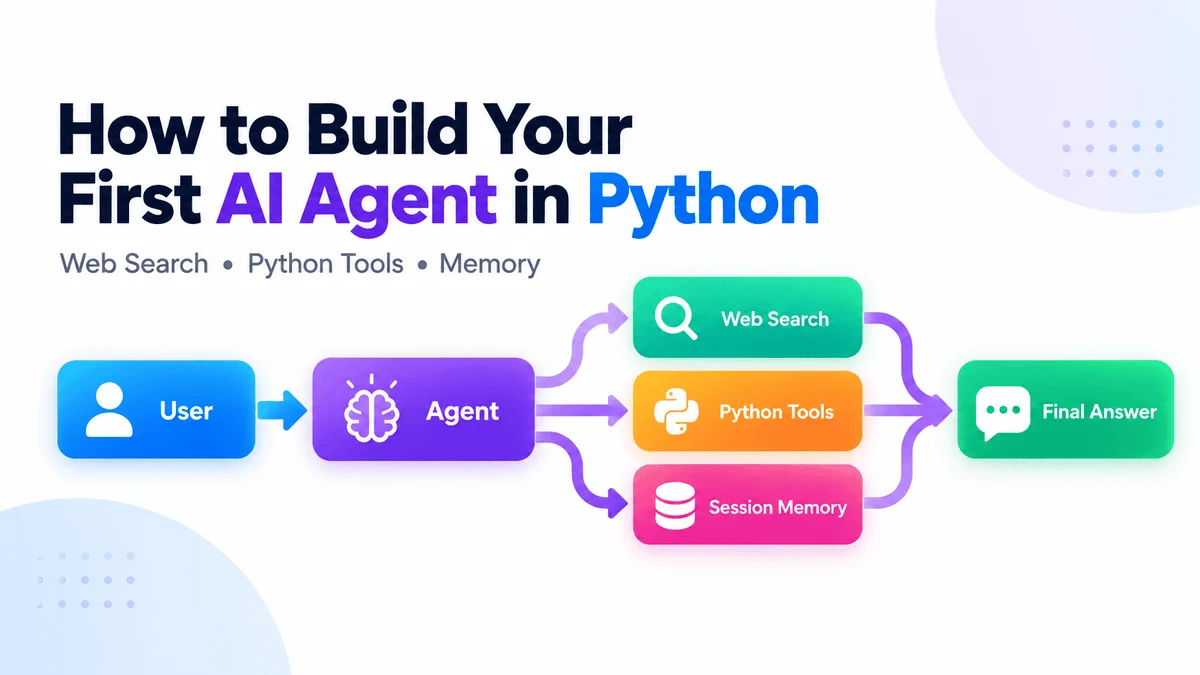
The third day delves into the cutting-edge realm of AI agents—systems that transcend simple prompt-response cycles by endowing LLMs with the ability to interact autonomously with external tools, databases, and real-world workflows. Participants learn the core components of an agentic system, including planning, memory, and tool-use capabilities, as well as the iterative development process involved in designing and refining these intelligent entities. A key focus is on function calling, where LLMs are programmed to invoke specific external functions or APIs based on user prompts, enabling them to perform actions like querying a database, sending an email, or interacting with a web service.
The code labs provide an immersive experience in building such systems. Learners interact with a database through function calling, demonstrating how an AI agent can interpret natural language queries and translate them into executable database operations. A more complex exercise involves constructing an agentic ordering system using LangGraph, a library designed for building robust, stateful multi-actor applications with LLMs. As agentic workflows are rapidly becoming the standard for sophisticated, production-grade AI applications that can automate complex, multi-step tasks, this section provides the essential technical foundation for architecting and integrating these advanced systems into real-world business processes.
Day 4: Analyzing Domain-Specific Large Language Models
Day four explores the critical need for specialization in the age of general-purpose LLMs. While models like Gemini are incredibly powerful, their broad training can sometimes lack the precision and nuanced understanding required for specific industries. This section highlights the development and application of specialized models adapted for particular domains. Examples such as Google’s SecLM for cybersecurity and Med-PaLM for healthcare are discussed, with particular attention paid to the meticulous processes involving patient data usage, privacy safeguards, and regulatory compliance that underpin their development. This demonstrates how fine-tuning a foundation model for a particular domain is often imperative when high accuracy, specificity, and adherence to industry standards are required.
The practical exercises are highly relevant for modern AI development. Participants learn to ground models with real-time Google Search data, enhancing their factual basis and currency. More importantly, they engage in fine-tuning a Gemini model for a custom task using labeled data. This hands-on experience is particularly valuable as it equips learners with the skill to adapt and customize powerful foundation models to meet bespoke organizational needs, a capability that is increasingly critical as businesses seek to build proprietary AI solutions that leverage their unique datasets and expertise.
Day 5: Mastering Machine Learning Operations for Generative Artificial Intelligence
The concluding day addresses the crucial aspect of deploying and maintaining GenAI models in production environments. It explores how traditional Machine Learning Operations (MLOps) practices, which encompass everything from data management and model training to deployment, monitoring, and governance, must be adapted for the unique challenges posed by GenAI workloads. These challenges include managing large-scale inference, monitoring for model drift in generative outputs, ensuring ethical AI use, and handling the complexities of prompt engineering in production. The course demonstrates the robust capabilities of Vertex AI, Google Cloud’s unified platform for machine learning development, for managing foundation models and GenAI applications at scale.
While there isn’t an interactive code lab on the final day, the course provides a thorough code walkthrough and a live demo of Google Cloud’s GenAI resources within Vertex AI. This practical demonstration covers essential aspects like model deployment, versioning, monitoring of key metrics, and setting up continuous integration/continuous delivery (CI/CD) pipelines for GenAI models. This session provides essential context and practical insights for anyone planning to transition GenAI models from a development notebook to a stable, scalable, and reliable production environment for real-world users, emphasizing the importance of robust operational frameworks for successful AI integration.
Statements and Reactions: A Testament to Accessibility and Quality
While specific individual statements from Google or Kaggle spokespersons were not provided in the original text, the initiative itself serves as a powerful statement of their commitment to democratizing AI education. The sheer scale of participation—over 280,000 signups and a Discord community exceeding 160,000 members—is a testament to the immense demand for such resources and the trust placed in these platforms. The Guinness World Record status not only highlights the massive reach but also signifies the collective global aspiration to engage with and master generative AI.
From a learner’s perspective, the availability of a free, high-quality course from industry leaders like Google and Kaggle is transformative. Many participants have lauded the program for its practical approach, the depth of its content, and the accessibility of its format. The ability to learn cutting-edge skills without the burden of tuition fees removes a significant barrier for individuals in developing nations or those facing economic constraints, fostering a more inclusive global AI talent pool. This initiative empowers individuals to upskill, pivot careers, and contribute to the rapidly evolving AI landscape, thereby driving innovation from diverse backgrounds.
Broader Impact and Implications: Shaping the Future of AI Talent
The Kaggle and Google GenAI course carries significant implications for the future of AI education, workforce development, and technological innovation.
Firstly, it represents a monumental step towards the democratization of AI education. By offering such a comprehensive and high-quality program for free, Google and Kaggle are dismantling financial barriers that often prevent aspiring data scientists and developers from accessing advanced training. This enables a broader, more diverse demographic to acquire critical AI skills, fostering a more inclusive and equitable tech industry.
Secondly, the initiative directly addresses the pressing global AI talent gap. With the demand for skilled AI professionals consistently outstripping supply, programs like this are crucial for upskilling the existing workforce and training new entrants. The practical, hands-on nature of the course ensures that learners are not just theoretically aware but also practically proficient, ready to contribute to real-world AI projects.
Thirdly, it strategically bolsters Google’s AI ecosystem. By training hundreds of thousands of individuals on the Gemini API, LangGraph, and Vertex AI, the program cultivates a vast community of developers familiar with and proficient in Google’s proprietary AI tools. This long-term investment helps solidify Google’s position as a leading provider of AI infrastructure and services.
Finally, the success of this course sets a new benchmark for high-quality online learning in rapidly evolving tech fields. The blend of expert-written content, AI-generated summaries, interactive code labs, and community engagement provides a robust model for effective digital education. As AI continues to evolve at an unprecedented pace, such flexible, accessible, and comprehensive learning pathways will be indispensable for continuous professional development.
In conclusion, the collaboration between Google and Kaggle has not merely launched another online course; it has created a landmark educational resource that has set a global record and continues to empower hundreds of thousands. By combining rigorous conceptual depth with immediate practical application, this free GenAI course offers an unparalleled opportunity for data professionals and developers to master the tools and techniques shaping the future of artificial intelligence. Whether the goal is to build a robust RAG pipeline, develop sophisticated AI agents, or deploy scalable GenAI solutions in production, this program delivers the essential framework and practical code required to succeed in the dynamic world of generative AI.