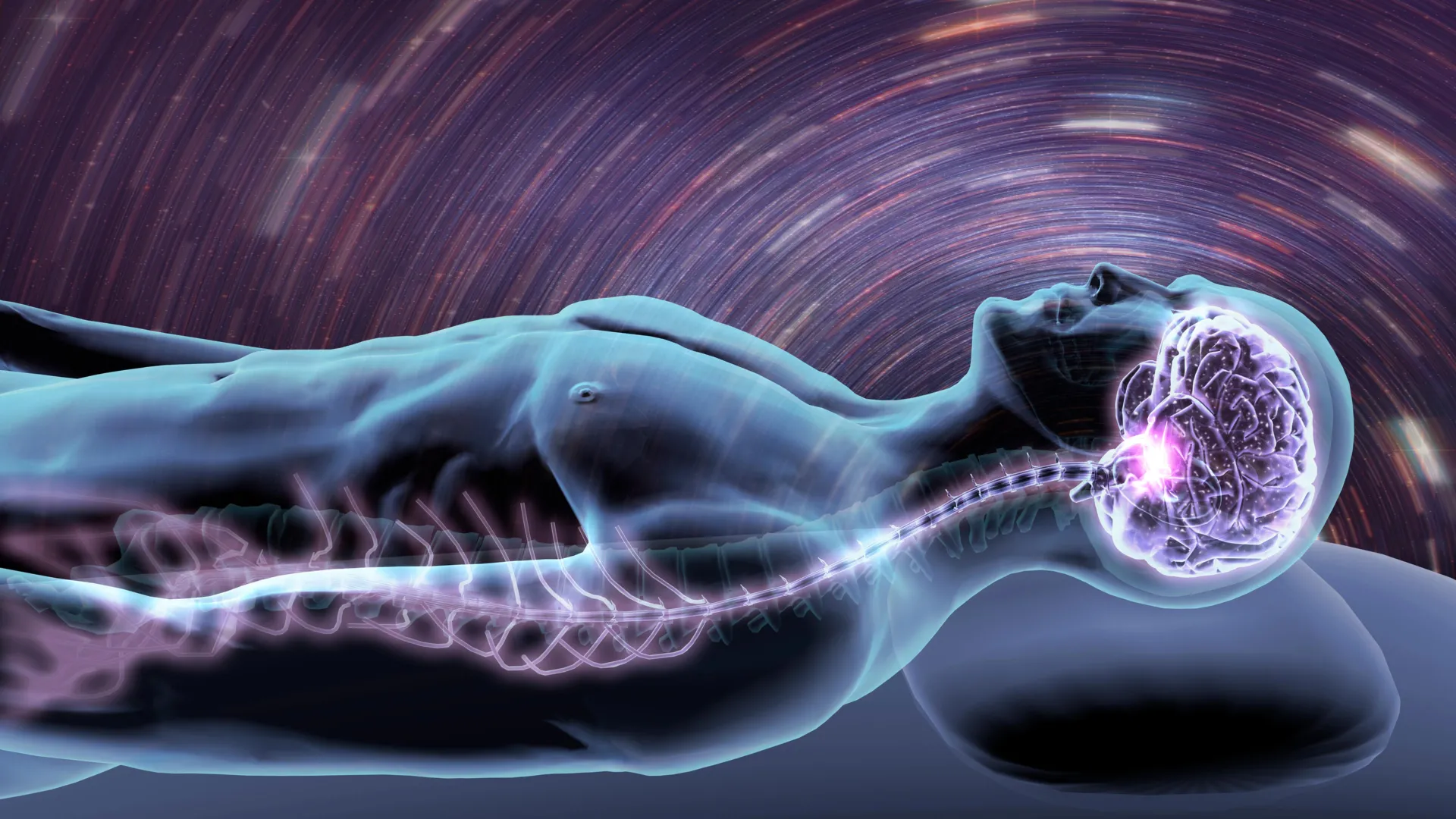
The subjective sensation of waking up refreshed has long been one of the most elusive mysteries in neuroscience, often defying the objective measurements recorded by medical equipment. A groundbreaking study conducted by researchers at the IMT School for Advanced Studies Lucca, recently published in the prestigious journal PLOS Biology, has provided a significant breakthrough in understanding this phenomenon. The research suggests that the vivid, immersive dreams occurring during sleep are not merely a byproduct of neural activity but may be the very mechanism that allows the brain to perceive sleep as deep and restorative. By challenging the traditional dichotomy between "quiet" deep sleep and "active" dreaming sleep, the study proposes that the intensity and quality of one’s dream life are primary drivers of how rested an individual feels upon waking. This finding recalibrates decades of sleep science, suggesting that a busy mind during the night might actually be the hallmark of a more profound state of rest than previously believed.
The Traditional Paradigm of Sleep Architecture
For much of the 20th century, sleep was categorized into distinct stages defined by the level of electrical activity in the brain. Under the traditional framework established by the American Academy of Sleep Medicine (AASM), sleep is divided into Non-Rapid Eye Movement (NREM) and Rapid Eye Movement (REM) stages. NREM sleep is further subdivided into three stages: N1 (light sleep), N2 (intermediate sleep), and N3 (slow-wave or deep sleep). Historically, N3 was viewed as the "gold standard" of rest—a period characterized by high-amplitude, slow-frequency delta waves, where the brain was thought to be largely "offline," performing metabolic maintenance and memory consolidation while remaining detached from conscious experience.
In contrast, REM sleep, characterized by rapid eye movements and brain waves that closely resemble wakefulness, was often seen as a "paradoxical" state. While it is the primary stage for vivid dreaming, it was frequently hypothesized to be a lighter form of sleep, closer to the threshold of awakening. The Lucca study, however, addresses a persistent contradiction in this model: many individuals report feeling most deeply asleep during REM cycles or periods of intense dreaming, despite the high levels of cortical activation. This "paradox of depth" suggests that the physiological metrics of sleep—brain wave frequency and muscle atonia—do not tell the full story of the human experience of rest.
Methodology: High-Density EEG and the Serial Awakening Protocol
To investigate the disconnect between objective brain activity and subjective sleep depth, the research team at the IMT School for Advanced Studies Lucca utilized a sophisticated experimental design. The study analyzed 196 overnight recordings from a cohort of 44 healthy adult participants. Unlike standard clinical sleep studies that use a limited number of electrodes, this research employed high-density electroencephalography (EEG), featuring 256 sensors placed across the scalp. This allowed the scientists to map brain activity with high spatial resolution, capturing subtle shifts in neural oscillations that traditional equipment might miss.
The study was part of a larger initiative funded by a European Research Council (ERC) Starting Grant, designed to explore how sensory stimulation and internal mental states interact during the sleep-wake cycle. Over the course of four nights in a controlled laboratory environment, researchers utilized a "serial awakening" protocol. Participants were awakened at various intervals throughout the night—more than 1,000 times in total across the group—and immediately asked to provide a detailed report of their mental state. They rated the "depth" of their sleep on a Likert scale and described the content of their dreams, focusing on how immersive, vivid, or fragmented the experiences were.
The Findings: Immersion as a Metric of Depth
The data revealed a striking correlation between the nature of dream experiences and the perceived quality of rest. Participants reported the highest levels of "deep sleep" in two specific scenarios: when they had no conscious experience at all (the traditional view of deep sleep) and, crucially, when they emerged from vivid, highly immersive dreams. Conversely, sleep was rated as "shallow" when the mental activity was fragmented, vague, or lacked a narrative structure—even if the EEG readings suggested the person was in a technically "deep" stage of sleep.
Professor Giulio Bernardi, a neuroscientist at the IMT School and the study’s senior author, noted that the quality of the internal experience appears to be the deciding factor in how the brain interprets its own state of rest. "In other words, not all mental activity during sleep feels the same: the quality of the experience, especially how immersive it is, appears to be crucial," Bernardi explained. This suggests that the brain uses the "story" of the dream as a signal that it is successfully disconnected from the outside world. An immersive dream creates a self-contained reality that buffers the sleeper against external stimuli, thereby reinforcing the subjective feeling of being "deeply" under.
Chronological Shifts: The Changing Nature of Sleep Across the Night
A secondary and equally surprising finding of the study involved the timeline of sleep perception throughout the night. Generally, "sleep pressure"—the biological drive to sleep caused by the accumulation of adenosine in the brain—is highest at the beginning of the night and gradually dissipates toward morning. One would expect that sleep would feel shallower as the night progresses and the body’s need for rest is partially met.
However, the participants reported the opposite: their perceived sleep depth actually increased as the night went on. This trend closely mirrored the increasing complexity and immersion of their dreams. As the morning approached, dreams typically became longer, more narrative-driven, and more vivid. The researchers concluded that this increase in dream immersion compensated for the physiological decline in sleep pressure. This suggests that the brain’s ability to generate rich, internal narratives may be a compensatory mechanism designed to keep the individual asleep and protected from the increasing likelihood of awakening as the sun rises and the environment becomes noisier.
Historical Echoes: Dreams as "Guardians of Sleep"
The concept of dreams acting as a protective barrier is not entirely new, though the Lucca study provides the first robust neuroscientific evidence for it. The findings echo a hypothesis famously proposed by Sigmund Freud in his 1900 work, The Interpretation of Dreams. Freud suggested that dreams function as the "guardians of sleep," transforming internal and external stimuli that might otherwise wake the sleeper into components of a dream narrative, thereby allowing sleep to continue.
While modern neuroscience has moved away from many of Freud’s psychoanalytic interpretations, the Lucca study validates the core biological premise. By creating a vivid internal simulation, the brain effectively "ignores" the external environment. This creates a state of sensory isolation that is essential for the restorative functions of sleep. When dreams are fragmented or "thin," the barrier is weakened, leading to the sensation of shallow or non-restorative rest, even if the sleeper remains technically unconscious.
Implications for Sleep Disorders and Mental Health
The findings of this study have profound implications for the clinical treatment of sleep disorders, particularly insomnia. A significant subset of patients suffers from what is known as "paradoxical insomnia" or "sleep state misperception." These individuals often report being awake all night, yet their clinical sleep studies (polysomnography) show normal sleep patterns and brain wave activity.
The Lucca research suggests that these patients may not be misperceiving their sleep, but rather experiencing a lack of "immersive" dream activity. If their brain activity is fragmented or if they lack the narrative buffering provided by vivid dreams, their subjective experience will be one of wakefulness or light sleep, regardless of what the EEG indicates. "Understanding how dreams contribute to the feeling of deep sleep opens new perspectives on sleep health and mental well-being," said Bernardi. By focusing on the quality of dreaming rather than just the duration of sleep stages, clinicians may be able to develop new therapies aimed at enhancing dream immersion to improve perceived sleep quality.
A New Multidisciplinary Hub for Sleep Science
The study represents a milestone for the newly established sleep laboratory in Tuscany, a collaborative effort between the IMT School for Advanced Studies Lucca, the Scuola Superiore Sant’Anna in Pisa, and the Fondazione Gabriele Monasterio. This facility was designed to integrate high-level neuroscience with clinical medical expertise, allowing for a more holistic approach to the study of the sleep-wake cycle.
By combining the resources of these three institutions, researchers can examine the interactions between brain activity and bodily processes, such as heart rate variability and metabolic shifts, in real-time. The facility is expected to become a leading center for studying how brain-body dynamics shape the human experience of rest. This study is viewed as an initial step in a broader research agenda that will investigate how sensory stimulation—such as sound or temperature—can be used to modulate dream immersion and, by extension, the restorative power of sleep.
Conclusion: Redefining the Restorative Experience
The Lucca study fundamentally shifts the conversation from "how long" we sleep to "how" we sleep. By identifying immersive dreams as a key component of perceived sleep depth, the research highlights the importance of the sleeping mind’s active life. Far from being a sign of a restless brain, a night filled with vivid, cinematic dreams may be the very thing that allows us to feel truly disconnected and profoundly rested.
As research continues, the focus will likely turn toward how we can protect and enhance this "dream buffer." In an era characterized by high stress and environmental distractions, understanding the "guardians of sleep" could be the key to solving the modern epidemic of exhaustion. The work of the IMT School for Advanced Studies Lucca serves as a reminder that even in our most passive moments, the brain is working tirelessly to construct the experiences that allow us to recover, heal, and face the waking world.