An international consortium of leading scientific institutions has unveiled a groundbreaking molecular mechanism employed by a specific lineage of land plants, a discovery poised to revolutionize agricultural productivity. The research, spearheaded by scientists from the Boyce Thompson Institute (BTI), Cornell University, and the University of Edinburgh, identifies a sophisticated strategy in hornworts that could pave the way for genetically engineered crops like wheat and rice to convert sunlight into sustenance with unprecedented efficiency. This breakthrough addresses a fundamental bottleneck in plant biology and agricultural science: the enzyme Rubisco.
The Ubiquitous Challenge of Rubisco
At the heart of photosynthesis, the process by which plants harness light energy to create their own food, lies the enzyme Ribulose-1,5-bisphosphate carboxylase/oxygenase, commonly known as Rubisco. This enzyme is an evolutionary marvel, responsible for fixing atmospheric carbon dioxide into organic compounds, forming the foundational carbon source for nearly all life on Earth. However, despite its indispensable role, Rubisco is notoriously inefficient. Its primary limitation stems from its dual nature: it can bind to either carbon dioxide (CO2) or oxygen (O2). When it binds to oxygen, a process known as photorespiration, it initiates a wasteful metabolic pathway that consumes energy and releases previously fixed carbon, significantly diminishing photosynthetic output and plant growth rates.
"Rubisco is arguably the most important enzyme on the planet because it’s the entry point for nearly all carbon in the food we eat," explained BTI Associate Professor Fay-Wei Li, a senior author on the study and a pivotal figure in this research. "However, its inherent slowness and susceptibility to binding with oxygen represent a major evolutionary hurdle for plant productivity. This inefficiency directly translates to limitations in crop yields, impacting global food security."
The sluggishness and oxygen-binding propensity of Rubisco mean that plants expend significant energy on a process that ultimately hinders their own growth. Scientists have long sought to mitigate these limitations, recognizing that even a modest improvement in Rubisco’s efficiency could have profound implications for agriculture. Globally, it is estimated that Rubisco’s inefficiency costs the world’s agricultural output billions of dollars annually, as crops are unable to reach their full potential biomass under current photosynthetic limitations.
Evolutionary Adaptations: Algae and the Pyrenoid System
Nature, however, has a remarkable capacity for adaptation. Over geological timescales, various organisms have evolved ingenious mechanisms to circumvent Rubisco’s inherent flaws. A prime example is found in many types of algae. These aquatic photosynthetic powerhouses have developed specialized cellular compartments called pyrenoids. Within these dense, proteinaceous structures, Rubisco is highly concentrated. Crucially, pyrenoids also facilitate a mechanism that elevates the local concentration of CO2 around Rubisco, effectively "outcompeting" oxygen for the enzyme’s active site. This CO2-concentrating mechanism (CCM) dramatically enhances Rubisco’s carboxylation activity, leading to far more efficient photosynthesis than is typically observed in terrestrial plants.
The prospect of introducing such a CCM into staple food crops has been a long-standing aspiration for plant scientists and agricultural innovators. The potential to boost yields in vital crops like rice, wheat, and maize—which feed billions worldwide—by enhancing their photosynthetic machinery is immense. However, the complexity of the algal pyrenoid system, involving numerous proteins and intricate cellular organization, has rendered its transfer into land plants an exceptionally challenging endeavor. Previous attempts to replicate this system in terrestrial plants have met with limited success, often due to incompatibilities in cellular environments and the intricate genetic engineering required.
Hornworts: A Surprising Evolutionary Link
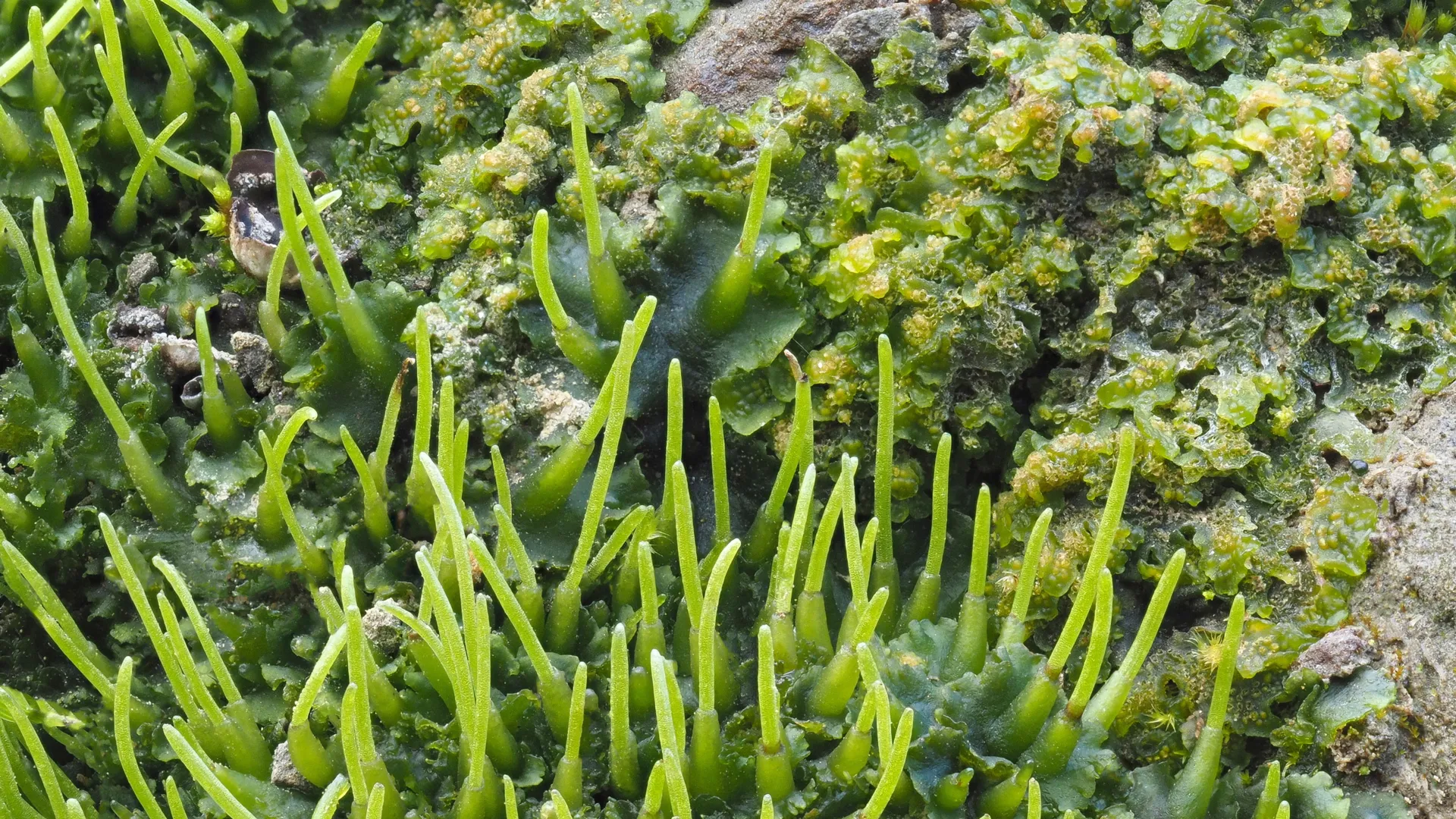
The paradigm began to shift with the investigation of hornworts, a small and ancient group of bryophytes. Hornworts hold a unique position in the plant kingdom: they are the only known land plants that possess cellular structures remarkably similar to the pyrenoids found in algae. This anatomical similarity, coupled with hornworts’ closer evolutionary relationship to crop plants than to algae, fueled the hypothesis that their molecular tools for carbon concentration might be more readily transferable to agricultural species.
The research team, comprising experts in plant physiology, molecular biology, and evolutionary genomics, focused their attention on these intriguing hornwort structures. Their initial expectations were that hornworts would employ a strategy analogous to that of algae, likely involving a dedicated protein complex that would aggregate Rubisco. This expectation was rooted in the established understanding of algal CCMs, which often rely on specific scaffolding proteins to organize Rubisco.
However, the investigation yielded a discovery that defied these long-held assumptions. Instead of finding a separate protein scaffolding system, the scientists uncovered a fundamentally different, yet elegantly simple, approach.
"We assumed hornworts would use something similar to what algae use — a separate protein that gathers Rubisco together," stated Tanner Robison, a graduate student at BTI who co-led the research and is a co-first author of the published paper. "Instead, we discovered they’ve modified Rubisco itself to do the job. This was a significant departure from our initial hypotheses and opened up an entirely new avenue of investigation."
The RbcS-STAR Module: Nature’s Molecular Velcro
The key to this novel strategy lies within a specific protein component of Rubisco. Rubisco is a large enzyme composed of eight large subunits (rbcL) and eight small subunits (rbcS). In hornworts, a particular variant of the small subunit, designated RbcS-STAR, incorporates an extraordinary extra segment known as the STAR (Signal Transduction Activator of Transcription) region. This STAR region, previously identified in other biological contexts for its role in protein-protein interactions, functions like a microscopic piece of molecular Velcro.
When RbcS-STAR is present, its STAR tail acts as an adhesive, prompting the Rubisco proteins to self-assemble and cluster together within the cell. These clusters form discrete structures, functionally analogous to pyrenoids, which effectively concentrate Rubisco and, by extension, CO2. This ingenious modification bypasses the need for an external scaffolding system, making the process more streamlined and potentially easier to engineer in other plant species.
To ascertain the universality of this mechanism, the researchers conducted a series of pivotal experiments. First, they introduced the RbcS-STAR component into a hornwort species that does not naturally possess these carbon-concentrating compartments. The results were striking: Rubisco, which was previously dispersed throughout the cell, began to aggregate into concentrated structures, mirroring the appearance of pyrenoids.
Emboldened by this success, the team then moved to a model plant system widely utilized in plant research: Arabidopsis thaliana. This plant, while not a crop, shares fundamental genetic and cellular pathways with many agricultural species, making it an ideal testbed for gene function. Introducing the RbcS-STAR component into Arabidopsis chloroplasts triggered the same Rubisco clustering phenomenon. The enzyme began to form dense aggregations within the chloroplasts, the cellular factories where photosynthesis occurs.
Professor Alistair McCormick of the University of Edinburgh, a co-leader of the study, highlighted the significance of these findings: "We even tried attaching just the STAR tail to Arabidopsis‘s native Rubisco, and it triggered the same clustering effect. That tells us STAR is truly the driving force. It’s a modular tool that can work across different plant systems." This finding is crucial, as it demonstrates that the STAR region’s self-assembly property is not specific to hornworts but possesses a broad applicability within the plant kingdom.
Implications for Agricultural Innovation and Sustainable Food Production
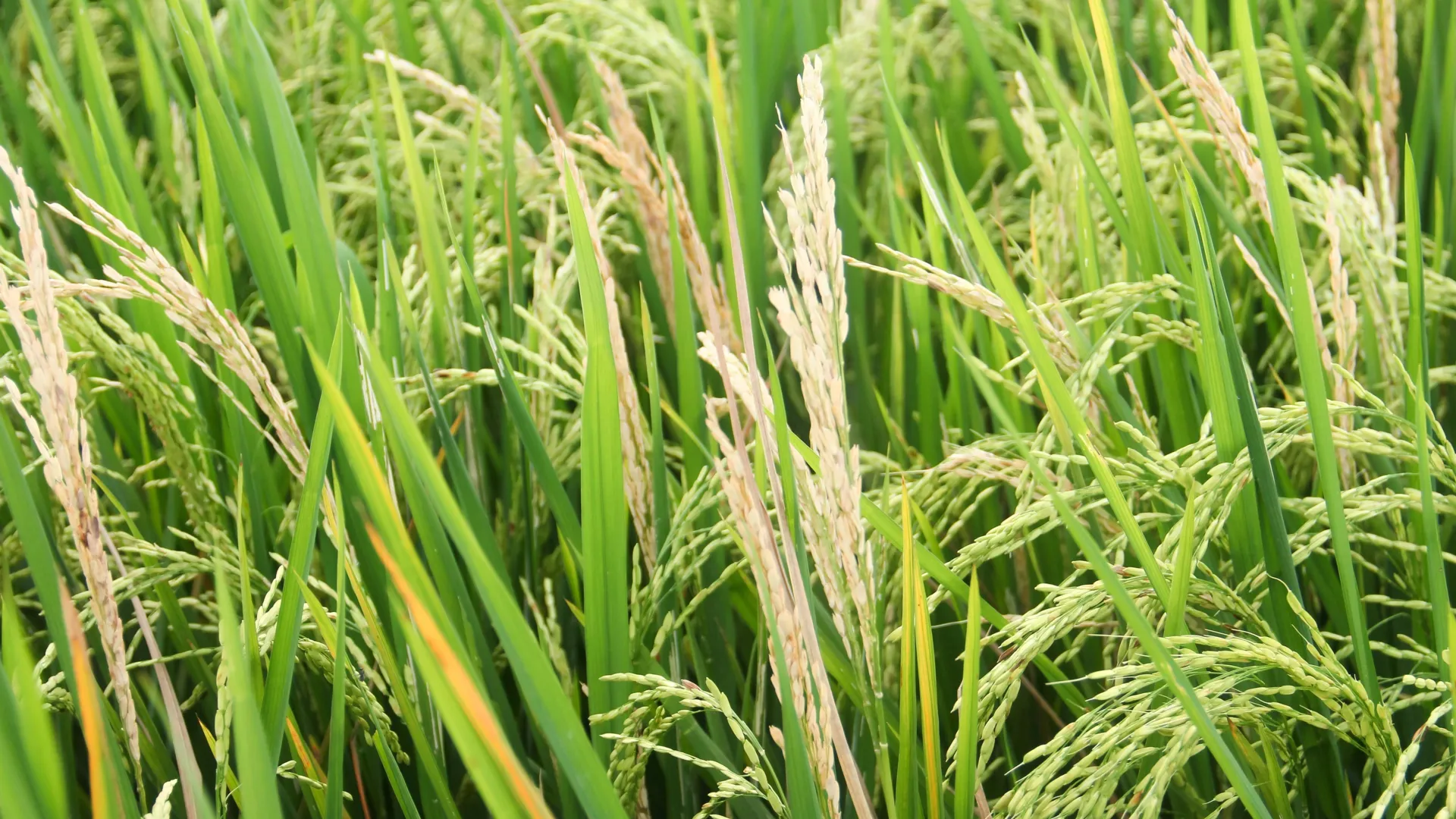
The discovery that the RbcS-STAR module can effectively induce Rubisco clustering across different plant species carries immense implications for the future of agriculture. This inherent modularity suggests a potential pathway for engineering enhanced photosynthetic efficiency in crucial food crops. By introducing this "velcro" component, scientists may be able to trigger the formation of Rubisco-rich compartments in crops like wheat, rice, and maize, thereby overcoming Rubisco’s natural limitations.
The potential benefits are substantial. An increase in photosynthetic efficiency, even by a few percentage points, could lead to significant improvements in crop yields. This could translate to more food produced on the same amount of land, a critical factor in feeding a burgeoning global population projected to reach nearly 10 billion by 2050. Furthermore, higher yields can reduce the pressure to convert natural habitats into farmland, contributing to biodiversity conservation and environmental sustainability.
However, the researchers are quick to temper expectations with a dose of scientific realism. While the clustering of Rubisco is a vital step, it is not the sole determinant of photosynthetic efficiency. The effective delivery of CO2 to these clustered Rubisco sites remains a critical component.
"We have built a Rubisco house, but it won’t be an efficient house unless we update the HVAC," explained Laura Gunn, an assistant professor at Cornell University and a co-leader of the research, using an analogy to emphasize the remaining challenges. The team is actively engaged in research to address this aspect, aiming to ensure that the CO2 supply can keep pace with the enzyme’s enhanced activity within the newly formed compartments. This involves understanding and potentially engineering the transport mechanisms for CO2 within the plant cells.
The journey from this fundamental discovery to commercially viable, enhanced crops will likely involve several years of further research and development. This includes extensive field trials, regulatory approvals, and ensuring that the genetic modifications are stable and do not have unintended consequences. Nevertheless, the foundational understanding gained from studying hornworts represents a significant leap forward.
This research, published in the prestigious journal Science, is a testament to the power of exploring diverse biological systems to find novel solutions to global challenges. The contributions of four early-career scientists – Tanner A. Robison, Yuwei Mao, Zhen Guo Oh, and Warren S.L. Ang – were recognized with equal authorship, underscoring the collaborative spirit and the crucial roles they played. The corresponding authors, Laura H. Gunn, Alistair J. McCormick, and Fay-Wei Li, have provided leadership and vision throughout this ambitious project.
"This research shows that nature has already tested solutions we can learn from," Professor Li concluded. "Our job is to understand those solutions well enough to apply them where they’re needed most — in the crops that feed the world." The discovery of the RbcS-STAR module in hornworts offers a tangible and exciting prospect for achieving that goal, paving the way for a more sustainable and food-secure future. The scientific community will undoubtedly be watching closely as this research progresses, anticipating the potential for a new era in agricultural productivity.