

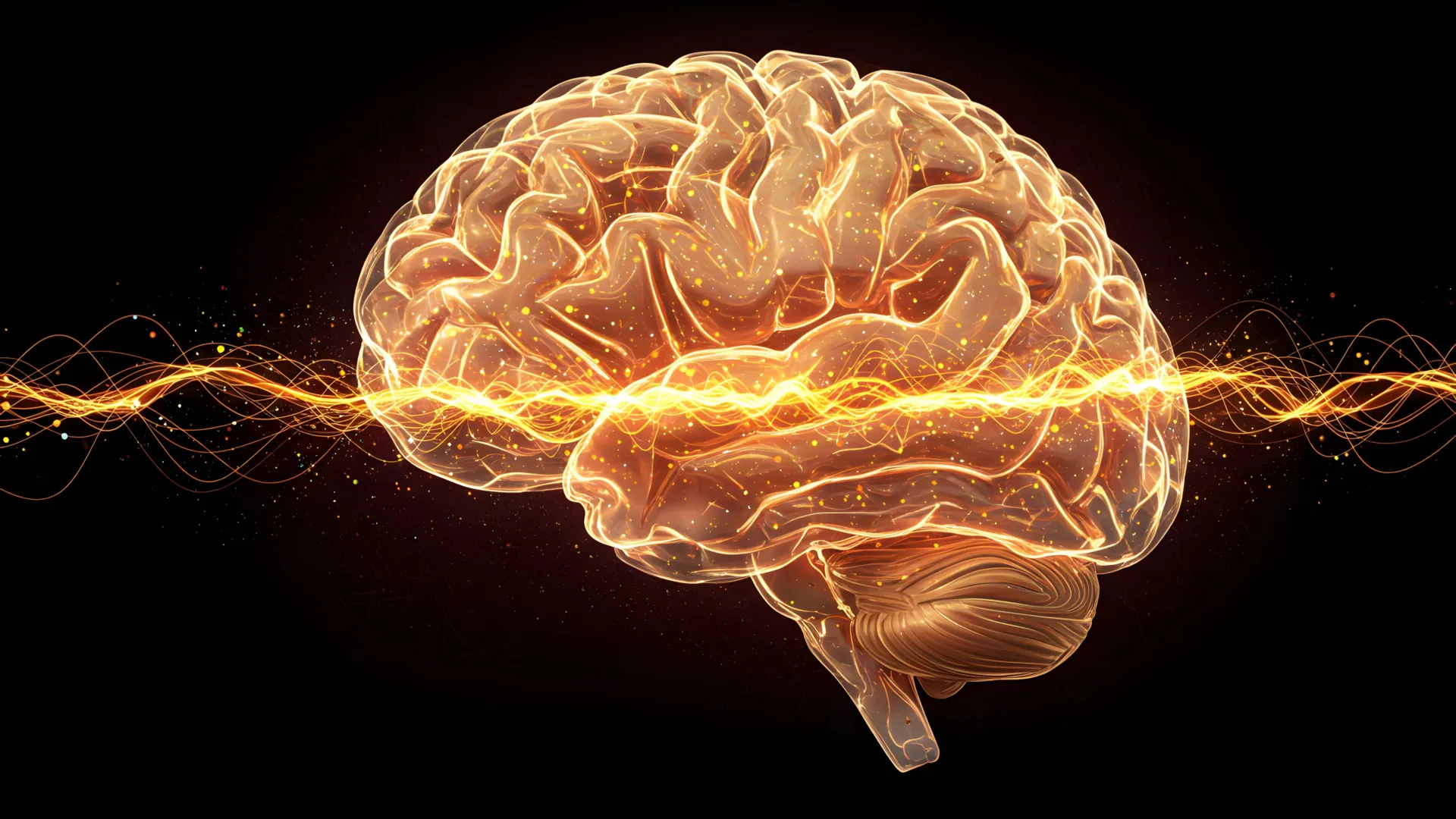
A breakthrough study led by neuroscientists at the University of Colorado Boulder has identified a specific neural pathway in the brain that acts as a primary "decision-maker" in the development of chronic pain. The research, published in the Journal of Neuroscience, suggests that a little-known circuit within the brain’s insular cortex determines whether the physical sensation of an injury will naturally fade away or solidify into a long-term, debilitating condition. By isolating and manipulating this circuit in animal models, researchers were able to prevent the onset of chronic pain and, perhaps more significantly, reverse it once it had already become established.
The discovery centers on the caudal granular insular cortex (CGIC), a region deep within the brain involved in processing sensory and emotional information. The study’s findings indicate that the CGIC serves as a command center that instructs the spinal cord to maintain pain signals long after the initial physical trauma has healed. This mechanism effectively creates a "false alarm" system, where the body remains in a state of high alert, perceiving even harmless stimuli as painful. The ability to "silence" this specific circuit represents a significant shift in the understanding of pain management, moving away from systemic medications toward targeted neurological interventions.
The Biological Switch: Understanding the CGIC and Pain Persistence
Chronic pain is fundamentally different from acute pain. While acute pain serves as an essential survival mechanism—alerting the body to immediate injury like a burn or a fracture—chronic pain is often considered a disease of the nervous system itself. In many cases, the original injury heals, but the pain persists for months or years. Senior author Linda Watkins, a distinguished professor of behavioral neuroscience at CU Boulder, describes the CGIC as the crucial arbiter in this process. According to Watkins, the brain circuit decides whether to allow pain to resolve or to issue instructions to the spinal cord to keep the pain active.
The research utilized state-of-the-art chemogenetic tools to observe and control neural activity. By using fluorescent proteins to track active neurons in rats with sciatic nerve injuries, the team identified that the CGIC becomes hyperactive during the transition from acute to chronic pain. When the researchers intervened to shut down this circuit shortly after an injury, the animals recovered normally, experiencing only the expected short-term discomfort. However, the most striking result occurred when the researchers silenced the circuit in animals that had already been suffering from chronic pain for an extended period. In these instances, the chronic pain "melted away," suggesting that the brain requires constant input from this circuit to maintain the chronic state.
The Chronic Pain Epidemic: Context and Socioeconomic Impact
The implications of this research are vast, given the current scale of the chronic pain crisis. Data from the Centers for Disease Control and Prevention (CDC) indicates that approximately 20.9% of U.S. adults—roughly 51.6 million people—suffer from chronic pain. Furthermore, 6.9% of adults experience "high-impact chronic pain," defined as pain that frequently limits life or work activities. The economic burden is equally staggering; conservative estimates suggest that chronic pain costs the United States between $560 billion and $635 billion annually in medical expenses and lost productivity, a figure that exceeds the annual costs of heart disease, cancer, and diabetes.
One of the most distressing manifestations of chronic pain is allodynia, a condition where non-painful stimuli, such as the touch of clothing or a light breeze, are perceived as agonizing. The CU Boulder study provides a mechanical explanation for this phenomenon. The researchers found that the CGIC communicates directly with the somatosensory cortex, which then sends descending signals to the spinal cord. This pathway effectively "re-wires" the spinal cord’s processing of touch, causing it to relay those signals to the brain through pain channels rather than standard sensory channels.
A Chronology of Discovery: From 2011 to the "Gold Rush of Neuroscience"
The recent findings are the culmination of over a decade of targeted research. In 2011, Watkins’ lab published foundational work identifying the CGIC as a key player in pain sensitivity. At that time, however, the tools available to scientists were relatively blunt. To affect a brain region, researchers often had to resort to permanent lesions or broad pharmacological suppression, which made it impossible to distinguish between different types of cells or specific pathways.
The landscape changed with the advent of "chemogenetics" and "optogenetics." First author Jayson Ball, who completed his doctorate in Watkins’ lab and now works for the neural technology company Neuralink, describes the current era as a "gold rush of neuroscience." These new tools allow scientists to insert "designer receptors" into specific populations of neurons. These receptors can then be activated or deactivated by a specific, otherwise inert drug. This level of precision allowed the CU Boulder team to isolate the CGIC-to-somatosensory pathway without affecting other vital brain functions, providing the first definitive proof of its role in sustaining chronic pain.
Mechanistic Insights: How the Brain Keeps Pain Alive
The study’s anatomical mapping revealed a complex loop between the brain and the periphery. When a peripheral nerve is injured, it sends signals to the CGIC. If the CGIC becomes overactive, it engages the somatosensory cortex—the part of the brain responsible for mapping where on the body a sensation is occurring. The somatosensory cortex then sends instructions down to the dorsal horn of the spinal cord.
This descending pathway acts like an amplifier. It tells the spinal cord to increase its sensitivity, ensuring that every signal coming from the injured area (and eventually, surrounding areas) is treated as a high-priority pain message. By silencing the CGIC, the CU Boulder team essentially turned off the amplifier. Without the "instruction" from the brain to stay sensitized, the spinal cord returned to its normal baseline, and the perception of pain ceased. This suggests that chronic pain is not merely a passive lingering of an injury, but an active, brain-driven process that requires constant reinforcement.
Industry Implications and the Move Toward Precision Medicine
The transition of Jayson Ball from academia to Neuralink highlights the growing intersection between traditional neuroscience and the burgeoning field of brain-machine interfaces (BMIs). As the pharmaceutical industry struggles to develop non-addictive alternatives to opioids, the focus has shifted toward technological and localized biological interventions.
The opioid crisis, which has claimed hundreds of thousands of lives in North America over the last two decades, was driven in large part by the lack of effective treatments for chronic pain. Systemic drugs like oxycodone affect the entire body and brain, leading to side effects, tolerance, and addiction. The CU Boulder research points toward a future of "precision pain medicine." Ball envisions a clinical setting where, instead of a pill, a patient might receive a targeted micro-infusion to the CGIC or utilize a BMI to modulate the circuit’s activity.
"Now that we have access to tools that allow you to manipulate the brain, not based just on a general region but on specific sub-populations of cells, the quest for new treatments is moving much faster," Ball stated. The prospect of using implanted or wearable devices to "tune" brain circuits could revolutionize the treatment of refractory pain that does not respond to surgery or medication.
Scientific Reaction and Future Research Trajectories
While the scientific community has reacted to the CU Boulder study with optimism, experts note that the transition from animal models to human application remains a significant hurdle. Human brains are far more complex than those of rats, and the CGIC—while present in humans—is integrated into a much denser network of emotional and cognitive processing centers.
The next phase of research will likely involve identifying the "trigger" that causes the CGIC to become hyperactive in the first place. Not everyone who suffers an injury develops chronic pain; researchers are now eager to understand why some brains successfully resolve pain while others fall into the chronic loop. Potential factors include genetic predisposition, prior trauma, and the presence of neuroinflammation.
Furthermore, the role of glial cells—non-neuronal cells in the brain and spinal cord—remains a key area of interest. Linda Watkins has long been a pioneer in studying how glia contribute to pain by releasing inflammatory cytokines. Integrating the CGIC circuit discovery with glial research could provide a holistic view of how the nervous system’s "immune system" and its "electrical system" interact to produce chronic pain.
Conclusion: A New Paradigm for Pain Management
The University of Colorado Boulder’s identification of the CGIC circuit marks a turning point in the study of pain. By demonstrating that chronic pain is a state maintained by specific brain instructions, the research shifts the focus of treatment from the site of the injury to the neural architecture of the brain itself.
As the "gold rush of neuroscience" continues, the mapping of these circuits provides a blueprint for the next generation of medical interventions. For the millions of people living with the daily burden of chronic pain, the discovery of a biological "off-switch" offers more than just a scientific milestone; it offers the tangible hope of a future where pain is a temporary warning rather than a permanent sentence. The work of Watkins, Ball, and their colleagues ensures that the "decision" to remain in pain may one day be a choice that doctors can help the brain reverse.












Leave a Reply