

BioTechniques, a leading journal in life science methods and innovation, has officially opened submissions for its highly anticipated 2026 Image Competition. This annual event serves as a vibrant platform for researchers worldwide to showcase the intrinsic beauty and profound complexity captured through their scientific endeavors, emphasizing the critical role of creativity at the core of scientific advancement. The competition invites scientists, researchers, and students to submit their most compelling scientific images and illustrations, offering a unique opportunity for global recognition and the chance to grace the cover of the prestigious journal. The deadline for entries is firmly set for June 2, 2026, at 18:00 BST (13:00 EDT/10:00 PDT), marking a crucial window for participants to prepare and submit their visual narratives.
A Legacy of Scientific Vision and Artistic Expression
The BioTechniques Image Competition has consistently highlighted the extraordinary visual output generated by cutting-edge life science research. Each year, the editorial team and the scientific community are reminded that the pursuit of knowledge is not solely confined to quantitative data and textual reports but extends into a realm of breathtaking visual artistry. This sentiment was powerfully exemplified by the winner of the 2025 competition, Bruno Cisterna, whose captivating image, "Human neurons reprogrammed from skin cells", secured its place on the cover of BioTechniques. Cisterna’s winning entry not only demonstrated exceptional technical skill in cellular imaging but also conveyed a profound scientific narrative, illustrating the transformative potential of reprogramming somatic cells into neural lineages – a field with immense implications for regenerative medicine and neurological disease modeling. His work, like many previous winners, underscores the competition’s commitment to celebrating images that are both scientifically informative and aesthetically striking, bridging the often-perceived gap between rigorous scientific inquiry and artistic expression. The competition serves as a testament to the power of visual communication in science, making complex research accessible and engaging to a broader audience, including fellow scientists, students, and the general public.
The Call for 2026: Illuminating Life Science Research
For the 2026 iteration, BioTechniques extends an open invitation to researchers across all disciplines within the life sciences. Participants are encouraged to delve into their archives or capture new perspectives to select up to ten scientific images or illustrations that they have personally taken or created during their research. The scope of eligible entries is remarkably broad, encompassing microscopic structures that reveal the intricate dance of cellular life, compelling ecological findings that capture the majesty of biodiversity, or any other visual discovery encountered throughout one’s life-science investigations. This expansive definition ensures a diverse pool of submissions, from the nanoscale intricacies observed through electron microscopy to the macroscopic patterns of ecosystems studied in environmental biology.
Beyond the visual impact, a cornerstone of the BioTechniques competition is the requirement for entrants to provide a detailed explanation of the methodology used to create their images. This crucial aspect moves beyond mere aesthetic appreciation, transforming the competition into an educational platform. By sharing the techniques and research protocols behind their visuals, participants contribute to a collective understanding of advanced imaging modalities. This focus on methodology is particularly vital in an era where reproducibility and transparency in scientific research are paramount. It highlights the sophisticated imaging techniques, such as confocal microscopy, super-resolution imaging, cryo-electron microscopy, or advanced computational rendering, that are producing images not only for their beauty but for their informative, creative, and insightful contributions to scientific learning and advancement. The insights gleaned from these methodological descriptions foster best practices, inspire innovative approaches, and ultimately accelerate the pace of discovery in the life sciences.
For those seeking inspiration or a benchmark for quality, BioTechniques actively encourages prospective entrants to review the top 10 finalists from the previous year’s competition. These past entries serve as excellent examples of the caliber and diversity of submissions, offering valuable insights into what constitutes a winning image in terms of both scientific merit and visual appeal. The gallery of previous finalists demonstrates the blend of technical precision, scientific relevance, and artistic composition that the judges typically seek.
Prizes and Prestige: A Platform for Global Recognition

While the full roster of prizes for the 2026 competition will be announced, the paramount recognition for the overall winner is the unparalleled opportunity to have their image featured prominently on the cover of BioTechniques journal. This prestigious placement offers global visibility, placing the winning research and the contributing scientist directly in the spotlight of the international scientific community. Beyond the cover feature, winners and shortlisted entries gain extensive exposure through BioTechniques‘ digital platforms, social media channels, and promotional materials. This widespread dissemination not only celebrates the individual achievement but also highlights the broader impact of visual science in engaging both specialist and general audiences. Such recognition can significantly boost a researcher’s profile, fostering collaborations, attracting funding opportunities, and inspiring future generations of scientists. The intrinsic value of contributing to scientific discourse through compelling visuals, coupled with the potential for career advancement, makes participation in the BioTechniques Image Competition a highly coveted opportunity.
Navigating the Submission Process: A Step-by-Step Guide
Entering the 2026 BioTechniques Image Competition is designed to be straightforward, yet meticulous attention to detail is required to ensure eligibility. The primary gateway for submissions is the dedicated online entry form. This form collects essential information about the entrant and their work. Crucially, each submission must be accompanied by a signed copyright form. This form is a mandatory requirement, ensuring proper intellectual property management and granting BioTechniques the necessary permissions for competition-related use. Entrants will have the option to upload their signed copyright form directly as part of their entry, or they may send it separately via email to the designated address: [email protected]. It is imperative to note that submissions will only be considered complete and eligible for judging once the copyright form has been successfully received by the BioTechniques team. This legal formality safeguards both the entrant’s rights and the journal’s ability to promote the winning images ethically and effectively.
Key Dates and Chronology:
- Competition Opens: Ongoing, as of the announcement.
- Submission Deadline: June 2, 2026, 18:00 BST (13:00 EDT/10:00 PDT). This is a hard deadline, and late submissions will not be accepted.
- Judging Period: Expected to commence shortly after the submission deadline, typically throughout June and July 2026, where an expert panel evaluates all eligible entries.
- Shortlist Announcement: Anticipated in late July 2026, where up to ten finalists will be publicly unveiled.
- Public Voting Period: Following the shortlist announcement, the scientific community and general public will be invited to cast their votes for the overall winner, typically spanning late July into early August 2026.
- Winner Announcement: The overall winner, determined by public vote from the shortlist, will be announced in early August 2026, along with details of their featured publication.
Defining the Visuals: Images vs. Illustrations
To ensure clarity and guide participants, BioTechniques provides precise definitions for the two primary categories of submissions: ‘Image’ and ‘Illustration’.
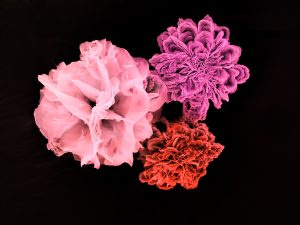
An ‘Image’ is defined as a picture that fulfills the competition’s outlined requirements. This category is broad, encompassing visuals captured using any type of camera or microscope, from conventional photographic equipment to highly specialized scientific instruments like electron microscopes or atomic force microscopes. A key aspect of this definition is the allowance for editing or processing, provided that a detailed, transparent explanation of how the image was manipulated is supplied. This ensures scientific integrity while acknowledging the necessary post-processing often involved in scientific imaging to enhance clarity or highlight specific features. An illustrative example of a compelling image is Petit bouquet by David Talens-Perales, a submission to the 2023 BioTechniques Image Competition, which demonstrated both scientific detail and artistic composition.
An ‘Illustration’, conversely, refers to a digital composition that adheres to the competition’s guidelines. Unlike a pure drawing, an illustration must integrate at least one photographic image, forming an artistic interpretation of a classic scientific visual. This category encourages creative freedom while maintaining a foundation in empirical data. As with images, illustrations demand a detailed explanation of their creation process, particularly concerning how the original scientific image was edited or processed to achieve the final illustrated form. Furthermore, strict adherence to copyright is essential: contributors must own the copyright for any original images used within their illustration, and their original source must be meticulously noted where possible. An example provided is a heavily edited version of Talens-Perales’ original scientific image, demonstrating the transformative potential of digital illustration when grounded in scientific photography.
Adherence to Competition Rules: Ensuring Fairness and Integrity
Participation in the BioTechniques Image Competition signifies an explicit acceptance of the Competition Rules and the broader Taylor & Francis Terms and Conditions. These rules are meticulously designed to ensure fairness, maintain scientific integrity, and protect the intellectual property rights of all involved.
- Eligibility and Deadline: The competition is free to enter and open to all members of the public, reflecting BioTechniques‘ commitment to broad scientific engagement. All entries must be submitted by the strict deadline of June 2, 2026, 18:00 BST/13:00 EDT/10:00 PDT.
- Data Privacy: Entrants acknowledge that BioTechniques will receive and process their registration data in accordance with its Privacy Policy, ensuring the responsible handling of personal information.
- Submission Requirements: A complete entry necessitates both the filled-out online entry form and a signed copyright form, which can be uploaded with the submission or emailed separately. Submissions without a valid copyright form will not be considered.
- Originality: A critical rule emphasizes that submissions must be original works that have not previously won any other image competition and are not resubmissions to BioTechniques‘ own competition. This encourages fresh perspectives and new discoveries.
- Entry Limits and Quality: Each entrant may submit up to ten images free of charge. Judging focuses on the merit of each individual image rather than a series. Submitted images must be a minimum of 300dpi, of the highest possible quality, and saved as JPEG or JPG files. Entrants must be prepared to supply high-resolution versions suitable for enlargement and printing if requested. Very large files should only be sent via WeTransfer if explicitly requested by the organizers.
- File Naming: For organizational efficiency, images must be saved in the format ‘PhotographerInitialsImage#.jpeg’ and accompanied by a clear image title and sufficient descriptive information.
- Judging Process: A shortlist of up to ten photographs will be selected by an expert panel of judges. The ultimate winner will then be determined by public vote and announced in early August. The decision of the judging committee regarding the shortlist is final and not subject to negotiation.
- Disqualification Criteria: BioTechniques reserves the right to disqualify any entry that fails to comply with the stated requirements. Entrants warrant that they are the sole owner and author of their submissions, possess the right to make the entry available, and that the entry contains no infringing, threatening, false, misleading, abusive, harassing, libelous, defamatory, vulgar, obscene, scandalous, inflammatory, pornographic, or profane content. Furthermore, entries must not infringe upon the copyrights, trademarks, contract rights, or any other intellectual property rights of any third person or entity, nor violate any person’s rights of privacy or publicity. Importantly, images captured in public spaces do not require release forms from background individuals or subjects.
- Usage Rights and Publicity: By entering, participants grant BioTechniques and its partners a non-exclusive, irrevocable license to use submitted images across all media for marketing and promotional purposes related to the author, BioTechniques, Taylor & Francis entities, and the Image Competition itself. Entrants also agree to participate in related publicity and to the use of their name and likeness for advertising, promotion, and publicity without additional compensation. These terms are standard for major competitions, ensuring the journal can effectively promote the winning science and the competition itself.
Best Practices in Scientific Imaging: Ensuring Rigor and Transparency
Recognizing the technical complexities and ethical considerations inherent in scientific imaging, BioTechniques provides valuable guidance to entrants, particularly those working with microscopy. The journal points to authoritative resources that outline best practices for reporting microscopy images, thereby promoting reproducibility and data integrity.
Entrants are encouraged to refer to Montero Llopis et al., 2021 and Schmied et al., 2023, both published in Nature Methods. These seminal articles provide comprehensive frameworks and recommendations for the acquisition, processing, and reporting of microscopy data. They address crucial aspects such as image resolution, signal-to-noise ratio, experimental controls, and appropriate image manipulation techniques. By consulting these guidelines, researchers can ensure their submissions adhere to the highest standards of scientific rigor, a factor that undoubtedly influences the judges’ evaluation.
Further enhancing transparency and reproducibility, BioTechniques highlights the MicCheck tool. This interactive web-based application generates a tailored checklist of details pertinent to reporting microscopy images. Researchers can input specific parameters of their imaging experiments, and MicCheck will provide a customized list of information that should be included in their submission or associated scientific publication. This tool is invaluable for ensuring that all critical metadata – from microscope model and objective lens specifications to fluorophore details and image processing steps – are systematically documented. Adherence to these reporting standards not only strengthens the scientific validity of the images but also aids peer review and facilitates the broader scientific community’s ability to interpret, reproduce, and build upon the presented research. In an era where trust in scientific data is paramount, such tools and guidelines play a pivotal role in fostering an environment of accountability and excellence in visual scientific communication.
The Broader Impact: Fostering Scientific Literacy and Innovation
The BioTechniques Image Competition transcends the mere act of awarding a prize; it actively cultivates a culture where scientific discovery is celebrated through its visual manifestations. In an increasingly visually driven world, the ability to communicate complex scientific concepts through compelling imagery is more important than ever. Competitions like this serve as powerful tools for public engagement, demystifying science and making it accessible and exciting to non-specialist audiences. A stunning image of cellular processes or ecological phenomena can spark curiosity, inspire future generations of scientists, and foster a deeper appreciation for the natural world and the research dedicated to understanding it.
Furthermore, by emphasizing the methodologies behind the images, the competition indirectly promotes technological innovation in imaging science. Researchers are challenged not only to capture beautiful images but also to refine their techniques, push the boundaries of current instrumentation, and develop novel approaches to visualize biological processes. This continuous drive for improvement in imaging directly contributes to advancements in various fields, from diagnostics and drug discovery to environmental monitoring and basic biological research. The competition thus functions as a nexus where scientific rigor, technological prowess, and artistic vision converge, collectively enriching the scientific landscape and reinforcing BioTechniques‘ enduring commitment to excellence in life science methods and innovation.












Leave a Reply