


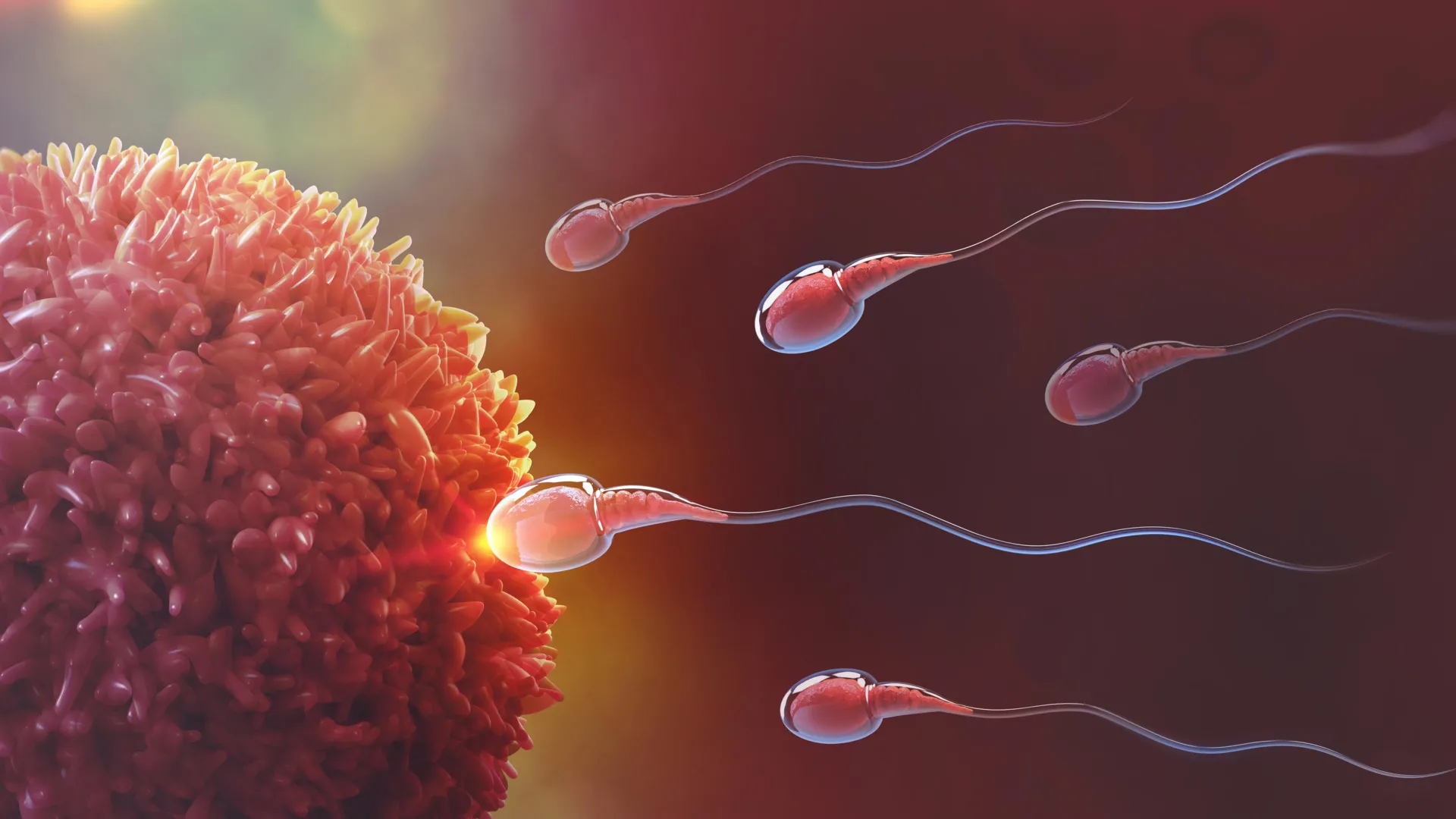
A multidisciplinary research team led by Yale University has successfully mapped the high-resolution structural mechanics of a naturally occurring biological process that prevents sperm from bonding with an egg, a breakthrough that carries profound implications for both the treatment of infertility and the development of next-generation contraceptives. The study, published in the journal Proceedings of the National Academy of Sciences (PNAS), provides the first detailed look at how specific antibodies can physically obstruct the molecular "handshake" required for human life to begin. By identifying the precise atomic interactions between sperm proteins and neutralizing antibodies, the researchers have opened a new chapter in reproductive immunology, offering hope to millions of couples struggling with unexplained infertility while simultaneously providing a blueprint for non-hormonal birth control.
The Molecular Architecture of Fertilization
At the heart of the discovery lies the intricate relationship between two primary proteins: IZUMO1, located on the surface of the sperm, and JUNO, a receptor located on the egg’s plasma membrane. For decades, the exact nature of how these two entities recognize one another remained one of the great mysteries of biology. It was not until 2005 that the IZUMO1 protein was identified and named after a Japanese shrine dedicated to marriage, and not until 2014 that its counterpart, JUNO, was discovered and named after the Roman goddess of fertility and childbirth.
Under normal circumstances, fertilization occurs when IZUMO1 and JUNO bind together, creating a bridge that allows the sperm and egg to fuse their genetic material. However, this process can be interrupted by the immune system. The Yale-led team focused their efforts on a specific sperm antibody known as OBF13. This antibody, which occurs naturally in some individuals, was first identified 40 years ago by researchers at Osaka University in Japan. While it has long been known that OBF13 can effectively block fertilization by "recognizing" and attaching to IZUMO1, the exact physical mechanism of this disruption remained a "black box" until now.
Through the use of advanced X-ray crystallography conducted at the SLAC National Accelerator Laboratory in California, the researchers were able to visualize the crystal structure of IZUMO1 as it was bound by the OBF13 antibody. They discovered that OBF13 does not simply sit on the protein; it reconfigures the spatial orientation of the sperm’s surface. By binding to a specific site on IZUMO1, the antibody creates a physical barrier and a conformational shift that prevents the protein from ever reaching its JUNO receptor on the egg.
A Chronology of Reproductive Discovery
The journey to this discovery spans four decades of international collaboration, primarily between institutions in the United States and Japan. The timeline reflects the slow but steady progression of molecular biology in the field of reproduction:
- 1984: Researchers at Osaka University identify the OBF13 antibody in rodent models and observe its ability to inhibit fertilization. However, the technology of the era is insufficient to map the molecular structure of the interaction.
- 2005: The discovery of IZUMO1 provides the first half of the molecular puzzle, identifying the "key" on the sperm cell.
- 2014: The discovery of JUNO identifies the "lock" on the egg cell, completing the understanding of the essential protein pair required for mammalian fusion.
- 2018–2022: Steven Tang and his team at Yale, in collaboration with the original discovery team at Osaka, begin utilizing high-resolution imaging and X-ray diffraction to study the OBF13-IZUMO1 complex.
- 2024: The team publishes their findings in PNAS, revealing the first-ever anti-sperm antibody-antigen complex structure at a near-atomic level.
This chronology highlights the persistence required in basic science, moving from the observation of a biological phenomenon to the precise understanding of its chemical and physical drivers.
Addressing the Crisis of Infertility
The implications for infertility are immediate and significant. According to data from the Centers for Disease Control and Prevention (CDC), approximately 9% of men and 11% of women of reproductive age in the United States experience fertility problems. While many cases are attributed to hormonal imbalances or structural issues in the reproductive tract, a significant subset of patients suffers from "immuno-infertility."
In these cases, the body’s immune system mistakenly identifies sperm as a foreign invader, producing anti-sperm antibodies (ASAs) that coat the sperm and prevent them from swimming or, as this study clarifies, from bonding with the egg. By identifying the "high-affinity" variants of OBF13 that bond most tightly to sperm, the Yale researchers have provided a target for new diagnostic tools.
"This work provides high-resolution information that will open avenues for discovering IZUMO1 regulators," said Steven Tang, an assistant professor of molecular biophysics and biochemistry at Yale and the study’s corresponding author. For patients with high levels of these antibodies, understanding the "sites" where the antibodies bind could lead to treatments that "mask" those sites or provide decoy molecules to soak up the antibodies, thereby freeing the sperm to interact with the egg naturally.
Furthermore, the research identified specific amino acid sites on the JUNO receptor that are essential for binding. The team found that even when OBF13 is present, certain modifications or conditions can allow the JUNO-IZUMO1 connection to persist. This suggests that future fertility treatments could involve "strengthening" the egg’s receptivity to overcome immune interference.
The Future of Non-Hormonal Contraception
While the study offers hope for those wanting to conceive, it also provides a potential breakthrough for those seeking to prevent pregnancy. The current landscape of contraception is heavily reliant on hormonal methods for women, which can carry side effects ranging from mood changes to increased risks of blood clots. For men, options are largely limited to barrier methods like condoms or permanent procedures like vasectomies.
The discovery of how OBF13 potently blocks fertilization offers a path toward "immuno-contraception." By designing small-molecule inhibitors or synthetic antibodies that mimic the action of OBF13, scientists could develop a reversible, non-hormonal contraceptive for either men or women.
"We are reporting the first anti-sperm antibody-antigen complex structure," Tang noted. "This will guide antibody and small-molecule inhibitor design, and support drug screening for contraceptive development."
Because IZUMO1 and JUNO are highly specific to the reproductive process and are not found in other tissues of the body, a drug targeting this interaction would likely have a very high safety profile with minimal off-target effects. This is a primary goal for organizations like the Male Contraception Initiative, which helped fund the study. A "male pill" or an injectable that temporarily introduces OBF13-like blockers into the reproductive tract could revolutionize family planning by shifting the burden of contraception and providing more choices.
Supporting Data and Technical Analysis
The technical success of the study relied on the ability to produce a "high-affinity variant" of the OBF13 antibody. In laboratory trials, this variant demonstrated a near-total blockade of sperm-egg fusion in rodent models. The researchers used the SLAC National Accelerator Laboratory’s synchrotron radiation to bounce X-rays off the crystallized proteins. The resulting diffraction patterns allowed them to calculate the position of every atom in the IZUMO1-OBF13 complex.
Key data points from the study include:
- Binding Affinity: The OBF13 variant showed a "tight-bonding" capability that was several orders of magnitude stronger than typical protein interactions, explaining why it is such an effective inhibitor.
- Structural Reconfiguration: The analysis showed that OBF13 binds to the "N-terminal domain" of IZUMO1, which is the exact region that needs to be flexible to "dock" with the JUNO receptor.
- Conservation Across Species: While the study used rodent models, the IZUMO1 and JUNO proteins are highly conserved across mammals, including humans, suggesting that the molecular mechanics observed are directly applicable to human reproductive biology.
Institutional Support and Collaborative Effort
The research was a global effort, highlighting the necessity of international cooperation in solving complex biological puzzles. The study’s first author, Yonggang Lu, and co-author Masahito Ikawa, are both based at Osaka University, where the OBF13 antibody was first discovered. This collaboration bridged the gap between the original immunological discovery in Japan and the cutting-edge structural biology expertise at Yale.
The work received substantial financial and infrastructure support from several major entities, reflecting its perceived importance to public health:
- The National Institutes of Health (NIH): Provided foundational funding for reproductive research.
- The David Sokal Innovation Award of Male Contraception Initiative: Specifically targeted the contraceptive applications of the work.
- The Japan Society for the Promotion of Science and the Japan Agency for Medical Research and Development: Supported the Japanese contingent of the research team.
- The Takeda Science Foundation: Provided grants for the molecular analysis.
- The U.S. Department of Energy’s Office of Science: Provided access to the SLAC National Accelerator Laboratory.
Broader Impact on Reproductive Science
Beyond the immediate applications in fertility and birth control, this research advances the broader field of structural biology. It demonstrates how antibodies—often thought of simply as "tags" for the immune system—can act as sophisticated mechanical tools that reconfigure the shape of proteins to alter their function.
The ability to visualize these "complexes" at a high resolution allows drug developers to move away from "trial and error" and toward "rational drug design." Instead of testing thousands of random chemicals to see if they stop fertilization, scientists can now use computer modeling to design a molecule that fits perfectly into the "grooves" identified by the Yale team on the IZUMO1 protein.
As the global population faces shifting demographic trends—with some regions experiencing sharp declines in birth rates and others seeking better family planning resources—the mastery of the molecular mechanics of fertilization is more than just a scientific achievement. It is a necessary step toward providing individuals with greater control over their reproductive health. The work of Tang, Lu, Ikawa, and their colleagues ensures that the "molecular handshake" of life is no longer a mystery, but a process that can be understood, repaired, and managed for the benefit of human health.











Leave a Reply