

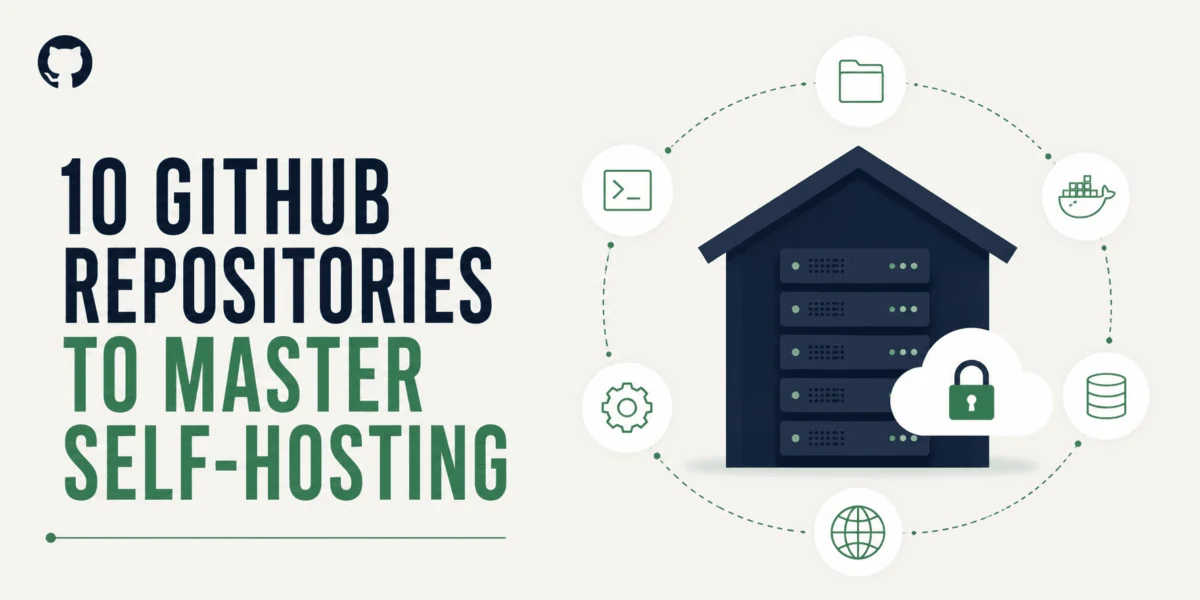
The increasing demand for digital autonomy and control over personal data has propelled self-hosting from a niche hobby into a significant trend among tech enthusiasts, developers, and privacy-conscious individuals. Instead of relying solely on third-party cloud services for everything from file storage to application deployment, a growing number of users are opting to host their own tools and services on private servers. This shift not only offers enhanced data sovereignty and often greater cost efficiency but also serves as an invaluable practical education in modern infrastructure management, encompassing deployment, networking, storage, monitoring, backups, and system reliability.
The journey into self-hosting typically begins with a straightforward objective, such as running a personal media server or a collaborative document editor on one’s own hardware. However, it quickly evolves into a deeper exploration of infrastructure principles, transforming users from consumers of digital services into active managers of their own digital ecosystems. The open-source community, particularly active on platforms like GitHub, has become a cornerstone of this movement, providing a rich array of tools, documentation, and real-world deployment examples that demystify complex technical processes. These repositories often serve as de facto educational platforms, offering insights into how robust, production-grade services are structured and operated outside of hyperscale cloud environments.
This article delves into ten pivotal GitHub repositories that collectively offer a multifaceted approach to mastering self-hosting. These resources span the entire spectrum of self-hosting, from initial discovery of suitable tools to advanced infrastructure management, secure network access, and comprehensive operational oversight. Together, they form a practical curriculum for anyone looking to understand, deploy, operate, and scale their own self-hosted services, fostering a deeper understanding of the underlying technologies that power the digital world.
The Rise of Self-Hosting: Context and Drivers
The resurgence of interest in self-hosting is not merely a nostalgic return to personal servers but a response to several contemporary digital challenges. One of the primary drivers is the escalating concern over data privacy and security. In an era marked by frequent data breaches and evolving privacy regulations, individuals and small organizations are increasingly wary of entrusting their sensitive information to large corporate entities. Self-hosting offers a tangible way to maintain full control over data, ensuring it resides on hardware managed by the user, thereby mitigating risks associated with third-party data handling.
Another significant factor is vendor lock-in and the desire for greater flexibility and control. Cloud services, while convenient, often come with proprietary ecosystems that can make it difficult and costly to migrate data or services to alternative providers. Self-hosting, particularly when leveraging open-source software, provides unparalleled freedom to customize, modify, and integrate tools according to specific needs, unburdened by commercial constraints.
Cost efficiency also plays a role, especially for personal use or small-scale operations. While initial hardware investments may be required, the ongoing operational costs for self-hosted solutions can often be lower than subscription fees for equivalent cloud services, particularly for long-term usage or when data storage requirements are substantial. Furthermore, the educational value of self-hosting is immense. It compels users to confront real-world infrastructure challenges, fostering practical skills in Linux administration, networking, containerization, and security – competencies highly valued in the modern IT landscape.
Navigating the Self-Hosting Ecosystem: A Structured Learning Path
The journey to mastering self-hosting can be overwhelming due to the sheer volume of available tools and technologies. The selected GitHub repositories provide a structured pathway, addressing different facets of this complex domain.
1. Awesome Selfhosted: The Gateway to Discovery
The awesome-selfhosted/awesome-selfhosted repository stands as an indispensable first stop for anyone embarking on their self-hosting journey. Far from being just another list, it is a meticulously curated compendium of free and open-source applications specifically designed for self-deployment. Organized intuitively across a multitude of categories—including file storage, password management, media servers, monitoring tools, note-taking applications, automation platforms, and developer utilities—it provides an unparalleled overview of the self-hosting landscape.
This repository’s strength lies in its ability to reveal the vast breadth of the open-source ecosystem. It doesn’t teach a specific tool but rather educates users about the possibilities of self-hosting, showcasing the diverse range of services that can be brought under personal control. For beginners, it demystifies the notion that self-hosting is limited to highly technical applications, presenting a spectrum of user-friendly options. For experienced users, it serves as a valuable reference for discovering new and emerging tools that align with their privacy and control objectives. The repository acts as a critical discovery layer, enabling users to identify solutions that replace proprietary cloud services and align with their unique infrastructure goals.
2. Coolify: Modern Deployment for the Self-Host Enthusiast
The coollabsio/coolify repository offers a practical masterclass in modern application deployment and infrastructure management. Coolify is a self-hosted, open-source Platform-as-a-Service (PaaS) solution, designed to emulate the streamlined deployment workflows found in commercial cloud platforms like Heroku or Vercel, but entirely on your own servers. This project empowers users to deploy web applications, APIs, databases, and full-stack solutions with remarkable ease.
What distinguishes Coolify as a learning tool is its comprehensive approach. Beyond the core platform, the repository includes extensive documentation and a dedicated coolify-examples repository. These resources provide real-world, deployable applications, allowing users to not only understand how the platform functions but also to grasp the architectural patterns of production-ready applications. Working with Coolify exposes users to critical concepts such as Git integration for continuous deployment, container orchestration (often via Docker or similar technologies), database provisioning, and environment configuration—skills directly transferable to professional cloud environments. It bridges the gap between basic server administration and sophisticated application delivery.
3. n8n: Automating Your Self-Hosted World
The n8n-io/n8n repository demonstrates how self-hosting extends beyond static applications into dynamic workflow automation infrastructure. n8n is an open-source workflow automation platform that enables users to construct intricate automated processes by visually connecting various APIs, databases, and services. It provides a powerful alternative to commercial integration platforms, ensuring data sovereignty for critical business and personal workflows.
The project’s educational value is embedded in its design. It features extensive documentation, hundreds of pre-built integrations with popular services (both cloud and self-hosted), and example workflows that illustrate practical automation scenarios. Crucially, n8n also provides guides for building AI-powered automations using frameworks like LangChain, positioning it at the forefront of modern, intelligent automation. Through n8n, users learn about API consumption, data transformation, event-driven architectures, and the principles of creating resilient automated systems, all while keeping their workflows and sensitive data securely under their own control. This repository is invaluable for those looking to replace SaaS automation platforms with a robust, customizable, and privacy-respecting self-hosted alternative.
4. Uptime Kuma: Ensuring Reliability and Visibility
The louislam/uptime-kuma repository is a fundamental resource for understanding the critical monitoring and reliability aspects of self-hosting. Uptime Kuma is a sleek, self-hosted monitoring system that allows users to track the operational status of websites, APIs, and various services through customizable uptime checks, intuitive status dashboards, and configurable alerting systems. In any self-hosted environment, knowing when services are down or experiencing issues is paramount.
Beyond its functional utility, Uptime Kuma serves as an excellent educational tool. Its documentation, configuration guides, and examples for notifications (via various channels like Discord, Telegram, email) and status pages provide insights into the operational side of managing services. Users learn about different monitoring protocols (HTTP(S), TCP, Ping, DNS), the importance of proactive alerting, and how to construct public-facing status pages to communicate service health. Working with Uptime Kuma imparts foundational knowledge in Site Reliability Engineering (SRE) principles, teaching users how to maintain visibility and ensure the continuous availability of their deployed services.
5. Nextcloud Server: The Private Cloud Imperative
The nextcloud/server repository epitomizes the concept of self-hosting for absolute data ownership. Nextcloud is a comprehensive self-hosted file sync and share platform, designed as a direct, privacy-centric alternative to commercial cloud storage giants like Google Drive or Dropbox. Its official documentation is exhaustive, covering everything from initial installation and server configuration to advanced file management, user administration, and seamless synchronization across desktop and mobile clients.
Nextcloud’s utility extends far beyond simple file hosting. Engaging with this platform educates users about persistent storage mechanisms, granular user access controls, versioning, and the intricacies of running a service that people depend on daily for critical data. It introduces concepts like command-line administration via occ (Nextcloud’s CLI tool), database management, and the operational responsibilities associated with maintaining a secure, highly available private cloud. The detailed admin and user manuals bridge the gap between product functionality and the underlying infrastructure concepts, making it an essential learning resource for those aspiring to build their own robust private cloud infrastructure.
6. Immich: Modern Media Management Under Your Control
The immich-app/immich repository showcases how self-hosting can deliver a high-quality, modern user experience for personal media, directly challenging consumer cloud services like Google Photos. Immich is a self-hosted photo and video backup platform that allows users to manage, browse, and access their media collections while retaining full control over their data and privacy.
The project’s clear documentation, setup guides, and configuration instructions make it an excellent learning resource for understanding the complexities of media-heavy applications. By deploying and managing Immich, users gain practical experience in critical areas such as large-scale storage management, implementing robust backup strategies for irreplaceable data, optimizing performance for media streaming and indexing, and ensuring the service can support real-world, everyday usage patterns. It highlights the technical considerations involved in handling vast amounts of multimedia, from metadata management to thumbnail generation and efficient data retrieval, all within a self-controlled environment.
7. Memos: Simplicity in Self-Hosted Note-Taking
The usememos/memos repository illustrates the power of self-hosting in providing lightweight, focused alternatives to feature-rich, often privacy-invasive, commercial cloud services. Memos is an open-source, self-hosted note-taking tool distinguished by its timeline-first interface, optimized for rapid capture and organization of thoughts. Its design emphasizes simplicity, storing notes in portable Markdown format, featuring zero telemetry, and ensuring data remains under the user’s explicit control.
Memos is an ideal starting point for self-hosting beginners due to its radical simplicity and minimal operational overhead. The entire application is packaged as a single Go binary, often distributed within a compact Docker image (approximately 20MB). This allows for deployment with a single command against various database backends like SQLite, MySQL, or PostgreSQL. Working with Memos introduces core self-hosting concepts—containerized deployment, persistent volume mounting for data storage, and the fundamental process of running a real service on personal infrastructure—without the daunting complexity often associated with heavier platforms. It provides an accessible entry point to build confidence in managing self-hosted applications.
8. Proxmox VE Helper Scripts: Mastering the Infrastructure Layer
The community-scripts/ProxmoxVE repository shifts the focus from individual applications to the foundational infrastructure layer of self-hosting. This project is a community-driven collection of scripts designed to streamline the creation and configuration of LXC containers and virtual machines on Proxmox VE (PVE). Proxmox VE is a powerful open-source virtualization management platform, widely adopted in homelabs and small businesses, making these scripts invaluable for learning how self-hosters organize and manage the underlying platforms that host their services.
The educational value of this repository extends beyond simple script execution. The project maintains a dedicated website and wiki, replete with hundreds of scripts, detailed guides, and practical examples for efficiently managing Proxmox environments. Engaging with these resources provides hands-on experience with virtualization technologies (KVM), containerization (LXC), and the architecture of a robust homelab. Users learn about resource allocation, network bridging, storage management within a hypervisor context, and effectively partitioning hardware resources to host multiple isolated services. It offers a practical pathway to understanding how to build a serious, scalable self-hosting environment.
9. Awesome Tunneling: Securing External Access
The anderspitman/awesome-tunneling repository addresses one of the most challenging aspects of self-hosting: securely exposing local services to the internet. This curated list compiles a variety of tunneling solutions tailored for self-hosters and developers, specifically for use cases such as exposing a local web server via a public domain with automatic HTTPS, even when operating behind Network Address Translation (NAT) or other restrictive network configurations.
Exploring these tools provides critical insights into networking fundamentals and security best practices for external access. Users learn about different tunneling techniques (e.g., reverse SSH tunnels, VPNs, specialized tunneling services), the importance of encrypting traffic with HTTPS, and strategies for bypassing common network restrictions. It introduces concepts like reverse proxies, dynamic DNS, and firewall configurations. This repository is particularly valuable for beginners who often encounter significant hurdles when attempting to transition their local self-hosted experiments into publicly accessible services, offering solutions to establish secure and reliable connectivity.
10. Self-Hosting Guide: The Holistic Overview
The mikeroyal/Self-Hosting-Guide repository serves as a macro-level reference, connecting the disparate threads of the self-hosting ecosystem into a cohesive understanding. Rather than focusing on a single application or technology, it provides a broad, comprehensive guide to the devices, software, hardware, and ancillary tools involved in running services on one’s own infrastructure.
This guide helps readers explore the various categories, fundamental concepts, and supporting technologies that underpin self-hosting. It consolidates information on server hardware choices, operating system selection, networking considerations, security best practices, and a wide array of software solutions. For those who have engaged in scattered self-hosting experiments, this repository is instrumental in transforming fragmented knowledge into a clearer, more organized mental model of the entire self-hosting space. It encourages a holistic perspective, emphasizing the interdependencies between different components and fostering a deeper appreciation for the architectural considerations of a personal infrastructure.
Broader Implications and Future Outlook
The growing adoption of self-hosting, facilitated by accessible open-source projects, carries significant implications across the digital landscape. It challenges the prevailing model of centralized cloud computing, offering a decentralized alternative that emphasizes user control and data sovereignty. This trend could foster greater innovation in open-source software development, as communities continue to build robust and user-friendly tools that rival commercial offerings.
However, self-hosting is not without its challenges. The responsibility for security, maintenance, and backups falls squarely on the user. This necessitates a continuous learning curve and a commitment to ongoing operational tasks, which can be demanding. Furthermore, initial setup complexity and the need for a certain level of technical proficiency can still be barriers to entry for some.
Despite these challenges, the trajectory for self-hosting appears strong. As concerns about digital privacy intensify and the desire for technological independence grows, the resources provided by the open-source community on platforms like GitHub will remain crucial. These repositories empower individuals to not only host their own services but also to develop invaluable technical skills, contribute to a vibrant open-source ecosystem, and ultimately shape a more decentralized and user-controlled digital future. The movement represents a fundamental reassertion of individual agency in the digital age, transforming users from passive consumers into active architects of their own digital worlds.















Leave a Reply