

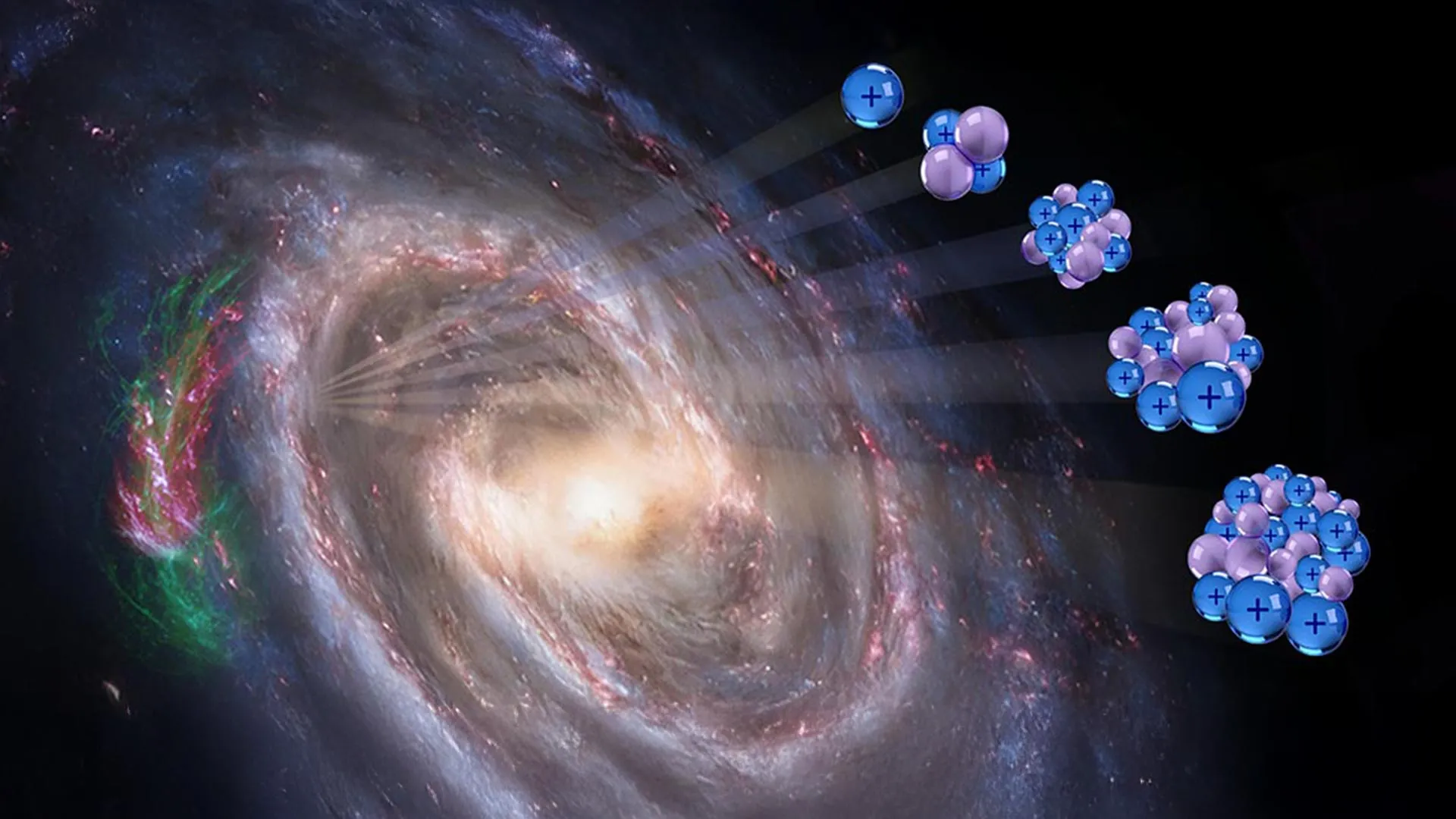
The scientific community has reached a significant milestone in the century-long quest to decipher the origins of cosmic rays, following the release of groundbreaking data from the Dark Matter Particle Explorer (DAMPE). In a comprehensive study published in the journal Nature, an international team of researchers has identified a "universal" spectral feature shared across various species of cosmic ray nuclei. This discovery, characterized by a distinct "softening" or slowing of the particle flux at a specific magnetic rigidity, provides the most definitive evidence to date regarding how these high-energy particles are accelerated and propagated through the Milky Way galaxy. By utilizing high-precision measurements of protons, helium, carbon, oxygen, and iron nuclei, the DAMPE collaboration has effectively ruled out long-standing alternative theories with a confidence level exceeding 99.999%, signaling a paradigm shift in high-energy astrophysics.
A Century of Mystery: The Context of Cosmic Ray Research
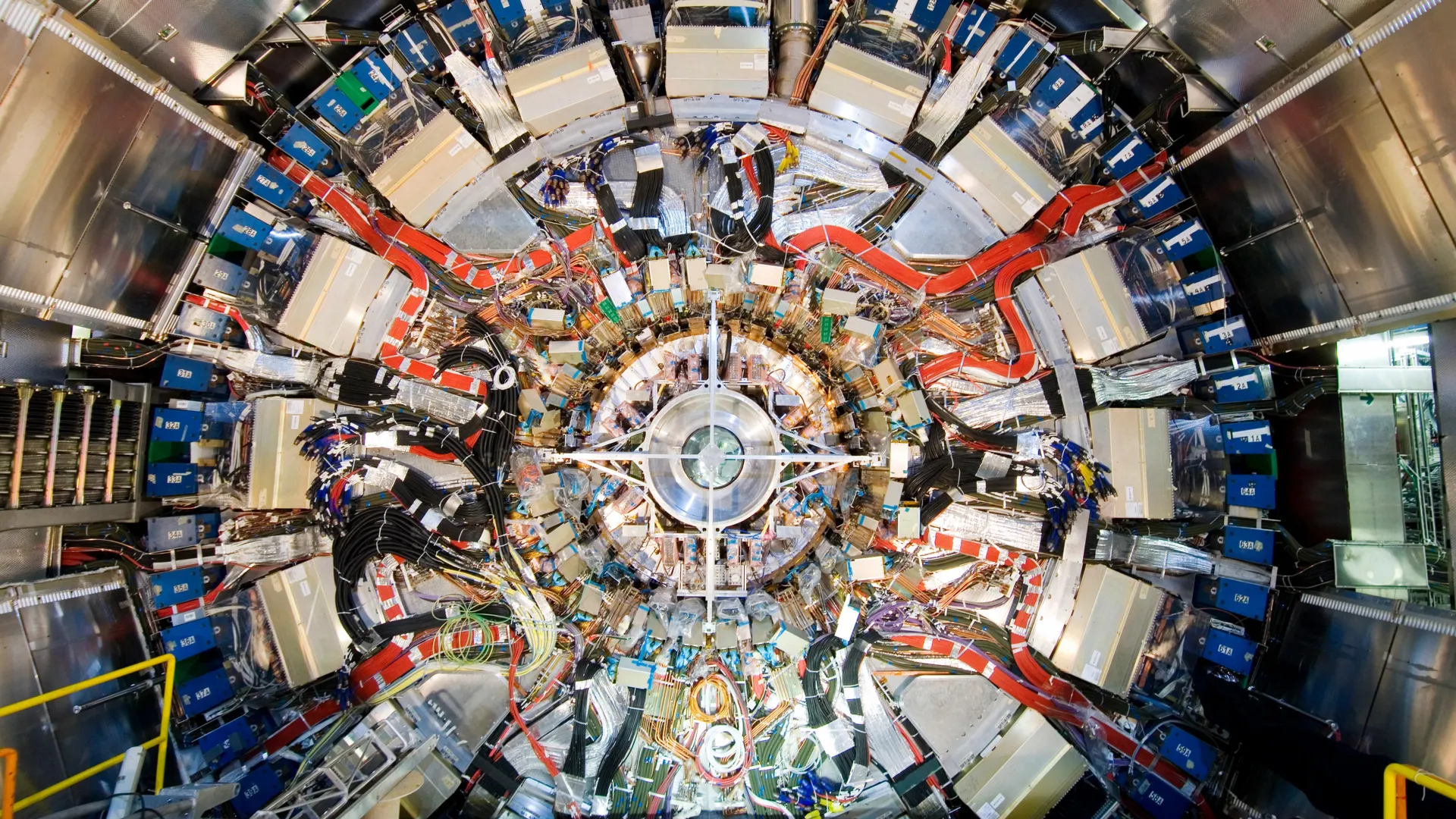
Cosmic rays were first discovered in 1912 by Victor Hess, who took an ionization chamber into the sky via a hot-air balloon to prove that radiation was entering Earth’s atmosphere from outer space. For over 110 years, these particles—primarily the nuclei of atoms stripped of their electrons—have fascinated and frustrated scientists. They represent the most energetic matter observed in the universe, often carrying kinetic energies millions of times greater than what can be achieved by the Large Hadron Collider (LHC) at CERN.
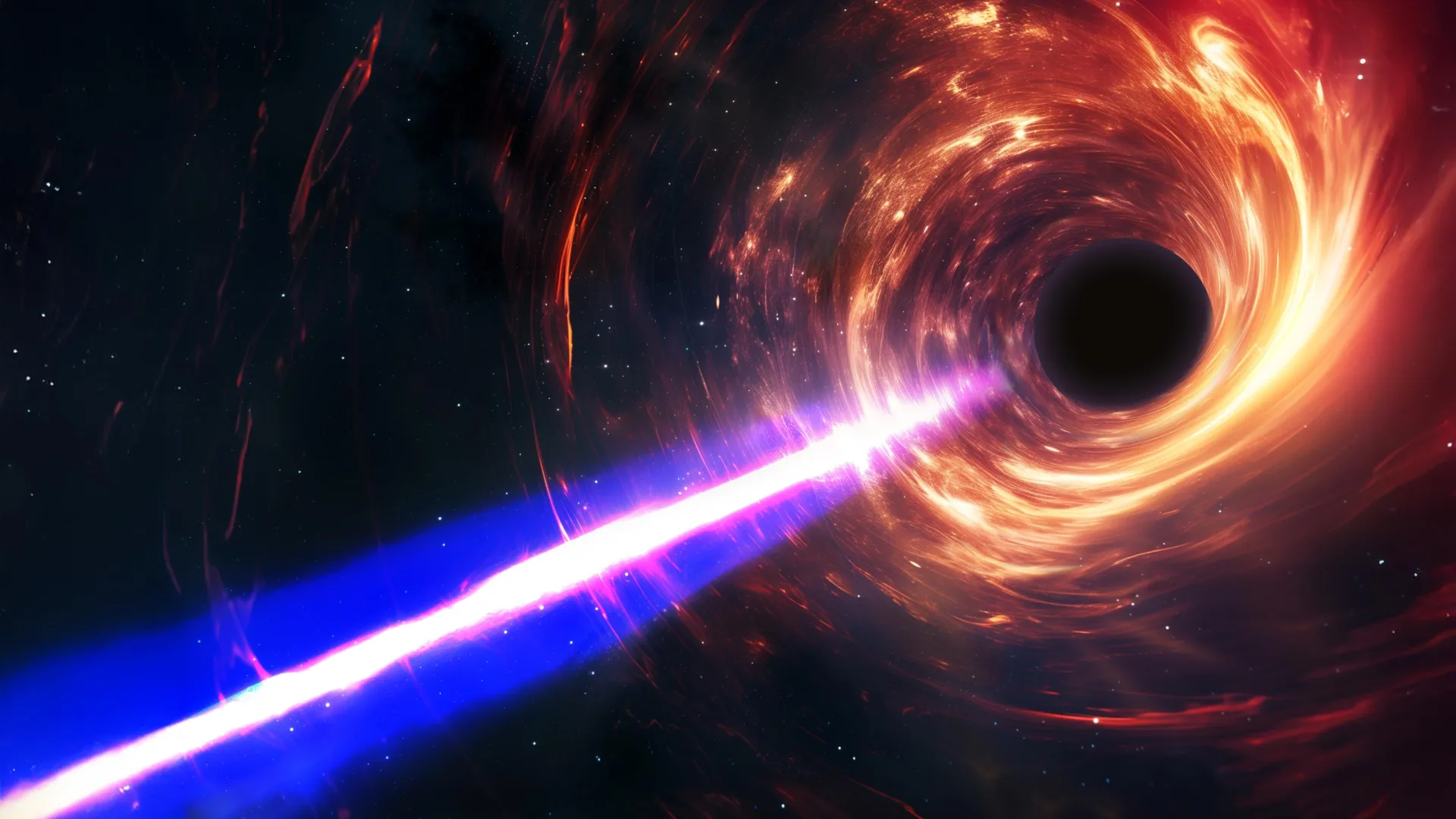
While it is widely accepted that these particles originate from cataclysmic events such as supernova explosions, the environments surrounding pulsars, and the relativistic jets of black holes, the specific mechanisms that accelerate them to near-light speeds have remained elusive. The primary challenge lies in the fact that cosmic rays are electrically charged. As they travel through the cosmos, their paths are bent and twisted by interstellar magnetic fields, effectively erasing any memory of their point of origin by the time they reach Earth-bound or orbital detectors.
To solve this puzzle, scientists look for patterns in the "energy spectrum"—a measurement of how many particles arrive at specific energy levels. Historically, this spectrum was thought to follow a relatively smooth power law. However, the precision of the DAMPE satellite has revealed that this "smoothness" is an oversimplification, uncovering a hidden structure that points toward a singular, underlying physical process.
The DAMPE Mission and the Role of International Collaboration
Launched in December 2015 from the Jiuquan Satellite Launch Center in China, the DAMPE satellite (also known as "Wukong" or the "Monkey King") was designed for a three-year mission to observe high-energy electrons and gamma rays. However, the satellite has far exceeded its expected lifespan, continuing to provide high-quality data nearly a decade later. The mission is a collaborative triumph involving the Chinese Academy of Sciences (CAS), the National Institute for Nuclear Physics (INFN) in Italy, and the University of Geneva (UNIGE) in Switzerland.
The University of Geneva’s Department of Nuclear and Particle Physics (DPNC) has been instrumental in the mission’s success. The Geneva group led the development of the Silicon-Tungsten Tracker (STK), a vital component of the telescope. The STK acts as the "eyes" of the detector, allowing scientists to reconstruct the precise trajectories of incoming particles and determine their electrical charge. Without the spatial resolution provided by the STK, distinguishing between different types of nuclei—such as lightweight protons and heavy iron nuclei—would be impossible at the extreme energy levels DAMPE monitors.
Unveiling the 15 TV Rigidity Threshold
The core of the recent Nature publication lies in the observation of "spectral softening." In astrophysical terms, this refers to a point in the energy spectrum where the number of detected particles begins to decrease more rapidly than predicted by standard models.
The DAMPE data reveals that for all studied nuclei, this softening occurs at a consistent "rigidity" of approximately 15 teravolts (TV). Rigidity is a physical property that measures a particle’s momentum divided by its charge. It essentially describes how difficult it is for a magnetic field to deflect the particle.
"Cosmic rays are primarily composed of protons, but also of helium, carbon, oxygen, and iron nuclei," explained Andrii Tykhonov, associate professor at the DPNC and a lead co-author of the study. "These particles are categorized by their energy: low, up to a few billion electron-volts; intermediate, from a few billion to several hundred billion; and high, from 1,000 billion electron-volts (1 TeV) and beyond. What we have found is a universal feature that appears regardless of the particle’s mass, provided we look at it through the lens of rigidity."
The significance of this discovery cannot be overstated. If the softening occurred at different rigidity levels for different nuclei, it would suggest that the acceleration process depends on the specific internal structure of the atom. However, because the feature is identical across the board, it confirms that the limit of acceleration (or the efficiency of the particle’s escape from the galaxy) is dictated purely by the particle’s interaction with magnetic fields.
Advanced Methodology: AI and the Silicon-Tungsten Tracker
The precision required to identify this 15 TV threshold necessitated a leap in data processing technology. The Geneva team developed sophisticated artificial intelligence and machine learning algorithms to filter through the "noise" of the vast amounts of data collected by DAMPE. These AI models were trained to reconstruct "particle events"—the specific signatures left behind as a cosmic ray passes through the detector’s layers.
The DAMPE detector consists of four main sub-systems:
- The Plastic Scintillator Detector (PSD): Measures the charge of the particles.
- The Silicon-Tungsten Tracker (STK): Traces the path and measures charge with high precision.
- The BGO Calorimeter: Measures the energy of the particles by stopping them and recording the light produced by the resulting "shower."
- The Neutron Detector (NUD): Helps distinguish between different types of cosmic rays (e.g., protons vs. electrons).
By combining the STK’s tracking capabilities with AI-driven analysis, researchers were able to measure the flux of protons, helium, and heavier nuclei with unprecedented accuracy. This allowed them to compare competing theories: those based on "rigidity" versus those based on "energy per nucleon." The DAMPE data showed a 5-sigma level of confidence (99.999%) in favor of rigidity-dependent models, effectively settling a decades-long debate in the field.
Chronology of Key Milestones in the DAMPE Discovery
The journey to the current findings has been a steady progression of data releases and technical refinements:
- December 2015: DAMPE is launched into a sun-synchronous orbit at an altitude of 500 kilometers.
- 2017: The collaboration publishes its first major results in Nature, detailing a break in the high-energy electron spectrum, which sparked discussions about potential dark matter signatures.
- 2019: DAMPE releases precise measurements of the cosmic ray proton spectrum, revealing the first hints of spectral softening at the TeV scale.
- 2021: The team extends its analysis to helium nuclei, finding a similar softening pattern, which suggested the feature might be universal.
- 2023-2024: Comprehensive analysis of heavier nuclei (carbon, oxygen, iron) is completed. The data from these heavier elements is synthesized with the proton and helium data.
- Present: The study is published in Nature, confirming the universal 15 TV rigidity softening and providing a new constraint for all future astrophysical models.
Implications for the Future of Astrophysics and Dark Matter
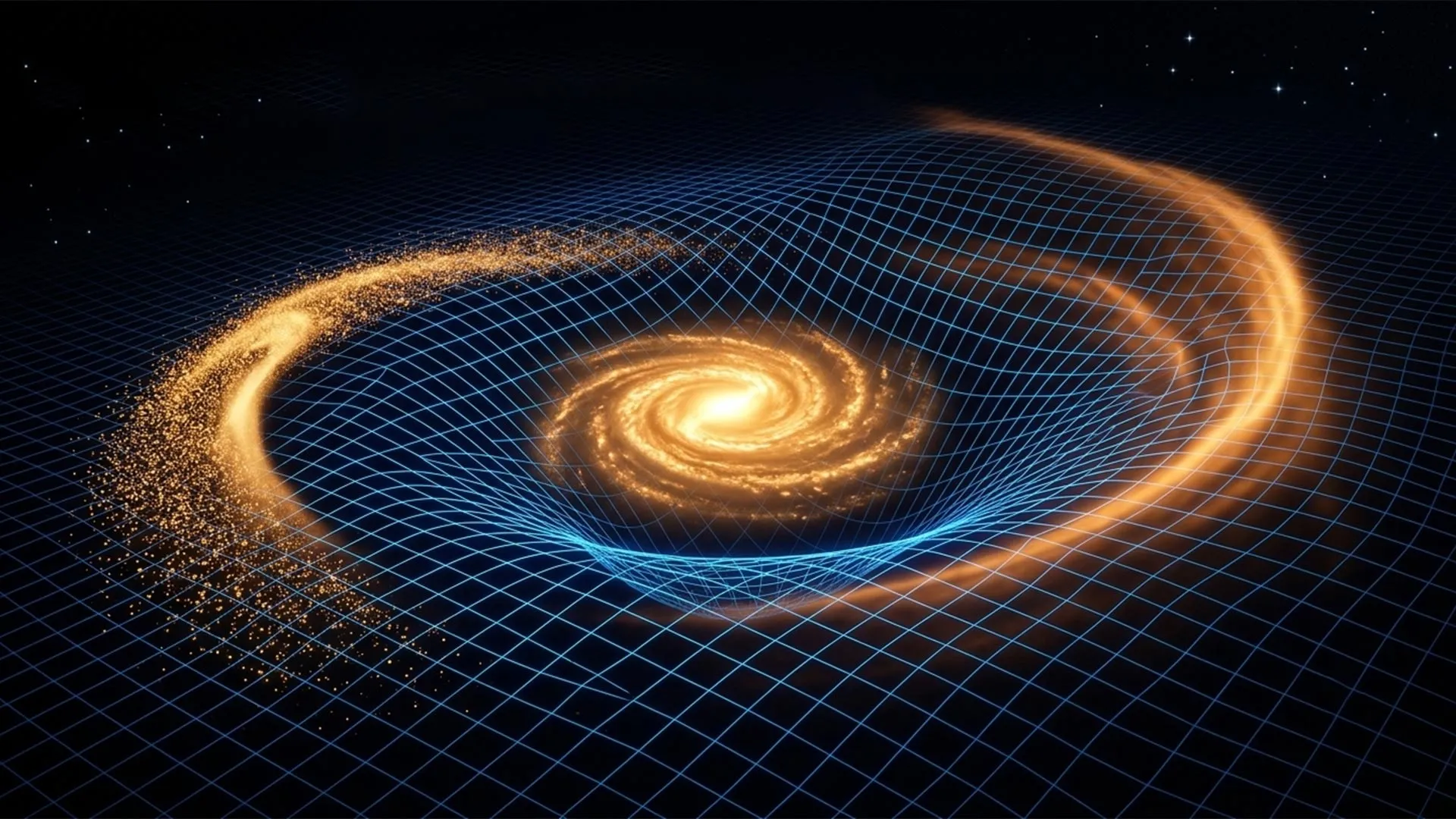
The discovery of a universal rigidity-dependent softening has profound implications for our understanding of the "Local Bubble"—the region of the galaxy where our solar system resides. One theory suggests that the 15 TV threshold represents the maximum acceleration limit of a nearby, relatively recent supernova remnant. Another possibility is that it reflects a change in how cosmic rays diffuse through the turbulent magnetic fields of the interstellar medium.
Furthermore, these findings are critical for the ongoing search for dark matter. One way scientists look for dark matter is by searching for "anomalies" in cosmic ray data—excesses of particles that cannot be explained by known astrophysical sources. To identify an anomaly, one must first have a perfect understanding of the "background" (the standard cosmic rays). By providing a precise map of how normal cosmic rays behave, DAMPE has given dark matter hunters a much cleaner "baseline" to work from.
Expert Reactions and Broader Scientific Impact
While the DAMPE team celebrates this achievement, the broader scientific community views this as a foundational step toward even more ambitious missions. Independent researchers have noted that the 15 TV feature provides a "standard candle" for cosmic ray physics, allowing for the calibration of future experiments.
The success of the DAMPE mission has already paved the way for the next generation of orbital observatories. Plans are currently underway for the High Energy cosmic-Radiation Detection (HERD) facility, which is proposed to be installed on the Chinese Space Station. HERD will be significantly larger than DAMPE and will aim to extend these measurements to even higher energies, potentially reaching the "knee" of the cosmic ray spectrum (approximately $10^15$ electron-volts), where the origin of cosmic rays is expected to shift from galactic to extra-galactic sources.
In the final analysis, the DAMPE discovery does more than just answer a technical question about particle physics; it refines our view of the high-energy universe. It confirms that despite the chaotic and violent nature of the cosmos, there are fundamental, universal laws—likely governed by the interplay of magnetic fields and charged particles—that dictate the behavior of matter at its most extreme limits. As DAMPE continues its orbit, its data will remain a cornerstone of astrophysical research for years to come, guiding the development of new theories and the design of future voyages into the electromagnetic unknown.













Leave a Reply