In a significant stride toward a viable green hydrogen economy, a research team at the McKelvey School of Engineering at Washington University in St. Louis has announced the development of a novel, high-performance catalyst that eliminates the need for expensive platinum-group metals (PGMs). Led by Gang Wu, a professor of energy, environmental, and chemical engineering, the team has engineered a composite material that demonstrates exceptional durability and efficiency within anion-exchange membrane water electrolyzers (AEMWE). This breakthrough addresses one of the primary bottlenecks in renewable energy storage: the high capital cost and limited lifespan of current hydrogen production technologies. By utilizing earth-abundant materials, the research offers a blueprint for scaling clean hydrogen production to meet industrial demands while significantly lowering the carbon footprint of the global energy sector.
The Challenge of Decarbonization and the Role of Hydrogen
The global transition toward net-zero emissions necessitates a fundamental shift in how energy is generated, stored, and utilized. While solar and wind power have seen dramatic cost reductions over the last decade, their intermittent nature presents a challenge for grid stability and industrial applications that require a constant energy supply. Hydrogen has long been identified as a "universal energy carrier" capable of bridging this gap. It can be produced during periods of excess renewable generation, stored for long durations, and then used in fuel cells for electricity or as a clean feedstock for heavy industries such as steel manufacturing, chemical processing, and long-haul shipping.
However, the "green hydrogen" sector—hydrogen produced via electrolysis powered by renewables—currently accounts for less than 1% of global production. The majority of hydrogen is still produced through steam methane reforming (SMR), a process that relies on natural gas and releases significant amounts of carbon dioxide. The primary barrier to green hydrogen adoption is the cost of electrolysis. Proton-exchange membrane (PEM) electrolyzers, the current industry standard for high-performance applications, require catalysts made of iridium and platinum. These metals are among the rarest and most expensive elements on Earth, with supply chains concentrated in a few geographic regions, leading to price volatility and scalability concerns.
Technical Breakthrough: Synergistic Phosphide Engineering
To circumvent the limitations of PGM-based systems, Professor Gang Wu and his team focused on Anion-Exchange Membrane Water Electrolyzers (AEMWE). Unlike PEM systems, which operate in highly acidic environments requiring noble metals to resist corrosion, AEMWEs operate in alkaline conditions. This chemical environment theoretically allows for the use of more abundant transition metals. Despite this potential, finding a non-platinum catalyst that can match the efficiency and durability of noble metals has remained an elusive goal for materials scientists.
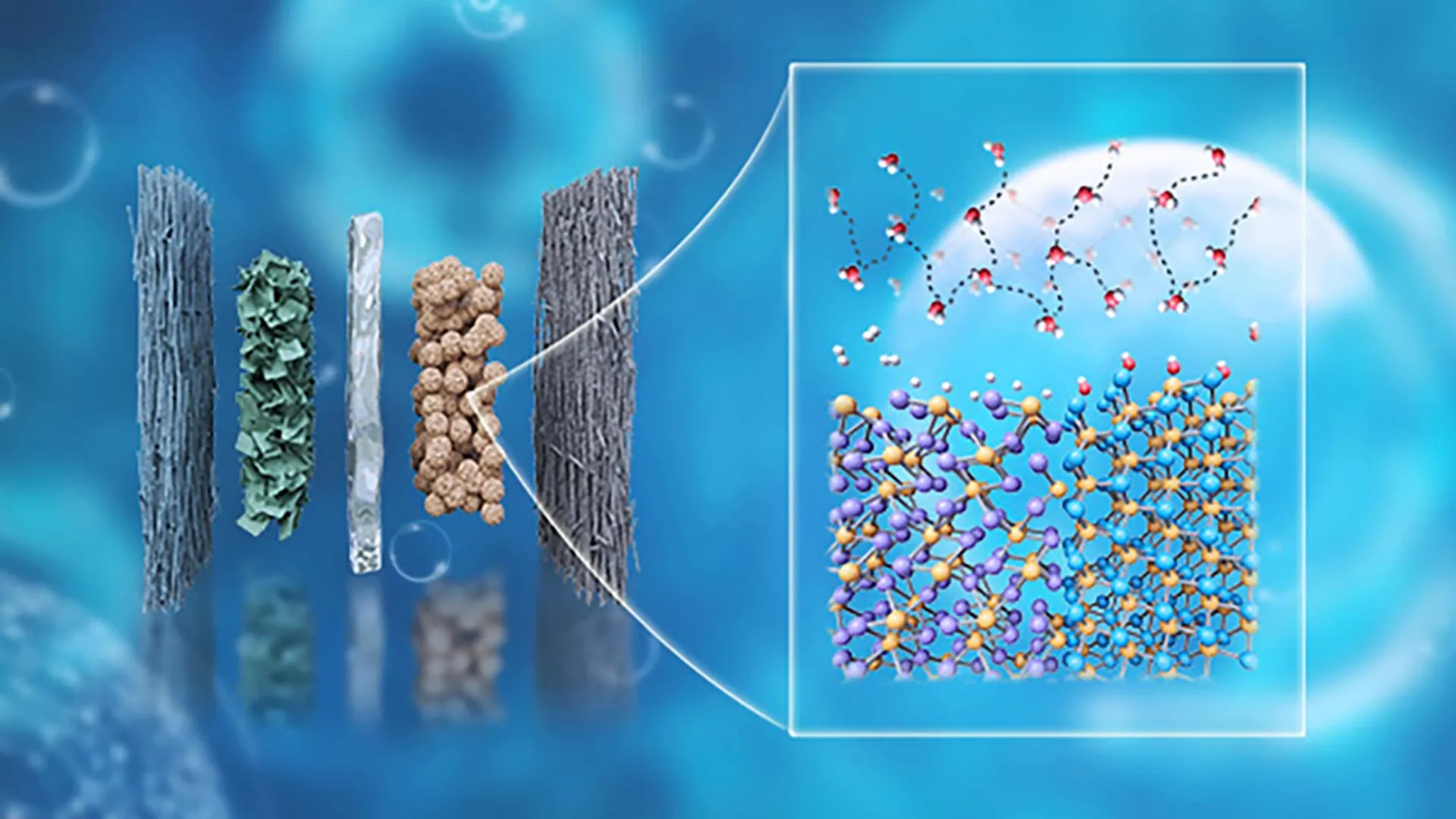
The Washington University team developed a composite catalyst by combining rhenium phosphide (Re2P) and molybdenum phosphide (MoP). The synthesis involves a precise engineering approach that optimizes the catalyst’s surface properties to facilitate the hydrogen evolution reaction (HER). In the electrochemical process of splitting water, the catalyst must perform two critical tasks: it must facilitate the breaking of water molecules (H2O) into hydrogen and oxygen, and it must allow the resulting hydrogen atoms to bond and then release as hydrogen gas (H2).
The research revealed a synergistic effect between the two materials. The rhenium component was found to be exceptionally effective at managing the adsorption and desorption of hydrogen atoms. If a catalyst binds hydrogen too tightly, the gas cannot be released; if it binds too loosely, the reaction never begins. Rhenium provides the "Goldilocks" level of binding energy. Meanwhile, the molybdenum component focuses on the initial step of the process—accelerating the dissociation of water molecules in the alkaline electrolyte. By combining these two functionalities into a single composite, the team created a surface that outperforms traditional single-metal catalysts.
Benchmarking Performance and Industrial Durability
One of the most notable aspects of the study is the catalyst’s performance under industry-standard conditions. Many laboratory breakthroughs fail to translate to the real world because they cannot withstand high electrical currents or degrade rapidly over time. The McKelvey School of Engineering team tested their catalyst at current densities of 1 and 2 amperes per square centimeter (A/cm²). These figures represent the high-intensity throughput required for commercial hydrogen plants.
The results showed that the rhenium-molybdenum phosphide catalyst maintained stable operation for over 1,000 hours. In the field of platinum-free AEMWE research, this level of durability is considered a major milestone. When paired with a nickel-iron (NiFe) anode—another cost-effective material used for the oxygen evolution reaction—the complete system exhibited lower resistance and faster reaction kinetics than several state-of-the-art cathodes, including those containing precious metals.
"Our catalyst showed the lowest resistance across the studied potential range," Professor Wu stated. "This suggests the fastest hydrogen adsorption kinetics among the studied catalysts. This newly achieved performance and durability metrics make our catalyst one of the most promising membrane electrode assemblies for practical anion-exchange membrane water electrolyzers."
Chronology of Development and Research Context
The development of this catalyst is part of a broader, multi-year effort within the scientific community to refine AEMWE technology. The timeline of this specific project began with the identification of phosphide-based materials as potential candidates for alkaline electrolysis.
- Phase I: Material Selection: The team analyzed the electronic structures of various transition metal phosphides, seeking a combination that could emulate the catalytic properties of platinum.
- Phase II: Synthesis and Interface Engineering: The researchers focused on the "hydrogen-bond network" at the interface where the catalyst meets the electrolyte. They discovered that by engineering this interface, they could reduce the energy barrier required for water molecules to reach the active sites on the catalyst.
- Phase III: Laboratory Testing: Initial tests were conducted in small-scale electrochemical cells to verify the chemical activity of the Re2P-MoP composite.
- Phase IV: MEA Integration: The catalyst was integrated into a Membrane Electrode Assembly (MEA), the core component of a functional electrolyzer, to test its performance in a simulated industrial environment.
- Phase V: Long-term Stability Trials: The system was subjected to 1,000 hours of continuous operation to monitor for degradation, leading to the current findings.
Economic and Strategic Implications for the Hydrogen Economy
The transition to a platinum-free catalyst system has profound economic implications. Platinum currently trades at approximately $900 to $1,100 per ounce, while iridium—used in the anodes of PEM electrolyzers—can exceed $4,500 per ounce. In contrast, molybdenum and phosphorus are abundant and significantly cheaper. While rhenium is a rare metal, it is used in much smaller quantities and in a more stable configuration in this catalyst, offering a more sustainable path than current PGM-heavy designs.
By reducing the "Green Premium"—the additional cost of choosing a clean technology over a fossil-fuel-based one—this research supports the U.S. Department of Energy’s (DOE) "Hydrogen Shot" initiative. This program aims to reduce the cost of clean hydrogen to $1 per 1 kilogram in one decade (1-1-1). Achieving this price point would make green hydrogen competitive with natural gas, potentially revolutionizing sectors like heavy-duty trucking and industrial heating.
Furthermore, the reliance on PGMs creates a geopolitical vulnerability. Much of the world’s platinum and iridium supply is concentrated in South Africa and Russia. Developing high-performance catalysts from a wider variety of materials allows for more resilient and localized supply chains, enabling countries to produce their own energy-harvesting equipment without total dependence on volatile foreign mineral markets.
Industry Reactions and Broader Scientific Impact
While the research was conducted at a laboratory scale at Washington University, it has drawn attention from the broader energy research community. Analysts suggest that the focus on the "hydrogen-bond network" is a particularly insightful contribution to the field. By understanding how water molecules physically arrange themselves near the catalyst surface, engineers can design more efficient interfaces not just for hydrogen production, but for other electrochemical processes such as carbon dioxide reduction and nitrogen fixation for fertilizers.
Experts in the field of membrane science note that while the catalyst is a breakthrough, the total efficiency of AEMWE systems also depends on the durability of the membranes themselves. The fact that Wu’s catalyst operated for 1,000 hours suggests that the chemical compatibility between the new catalyst and existing commercial membranes is high, which is a positive sign for future integration.
Future Outlook: Scaling for Industrial Use
The next phase for Professor Wu and his team involves exploring the scalability of the Re2P-MoP catalyst. Transitioning from a laboratory-scale MEA to a multi-megawatt industrial electrolyzer involves significant engineering challenges, including thermal management and maintaining uniform current distribution across larger surface areas.
The researchers plan to continue studying the fundamental mechanisms of the catalyst to see if even more abundant materials, such as cobalt or nickel-based phosphides, can be further optimized using the same interface-engineering principles. As the work was supported by Professor Wu’s startup fund at Washington University, the team is well-positioned to pursue further grants or industry partnerships to move toward pilot-plant demonstrations.
If successful, this technology could serve as a cornerstone for the next generation of electrolyzers. By making clean hydrogen production both durable and affordable, the McKelvey School of Engineering has provided a critical piece of the puzzle in the global effort to mitigate climate change and establish a truly sustainable energy infrastructure. The move toward a "hydrogen society" depends on such fundamental shifts in material science, turning laboratory discoveries into the industrial engines of tomorrow.