For more than sixty years, the international physics community has been captivated by a persistent anomaly in the behavior of a subatomic particle known as the muon. This discrepancy, which appeared to suggest that the muon’s magnetic properties did not align with the predictions of the Standard Model of particle physics, fueled intense speculation that scientists were on the brink of discovering a "fifth force" of nature or previously unknown particles. However, a landmark study led by researchers at Penn State and published in the journal Nature suggests that the mystery has finally been resolved. The findings indicate that the supposed gap between theory and experiment was not a sign of new physics, but rather a reflection of the extreme difficulty in calculating the effects of the strong nuclear force.
The research, led by Zoltan Fodor, a distinguished professor of physics at Penn State, represents one of the most sophisticated and precise computational efforts in the history of particle physics. By utilizing advanced supercomputing techniques and a refined mathematical approach, the team demonstrated that the muon’s behavior is entirely consistent with the existing Standard Model. While the result provides a triumphant validation of current physical laws, it also serves as a sobering moment for those who hoped the muon would be the gateway to a revolutionary era of "New Physics."
The Muon and the Standard Model Framework
To understand the significance of this discovery, one must first understand the muon and its role in the Standard Model. The Standard Model is the theoretical framework that describes three of the four fundamental forces of nature—electromagnetism, the weak nuclear force, and the strong nuclear force—leaving only gravity outside its scope. It also categorizes all known subatomic particles, including quarks, leptons, and bosons.
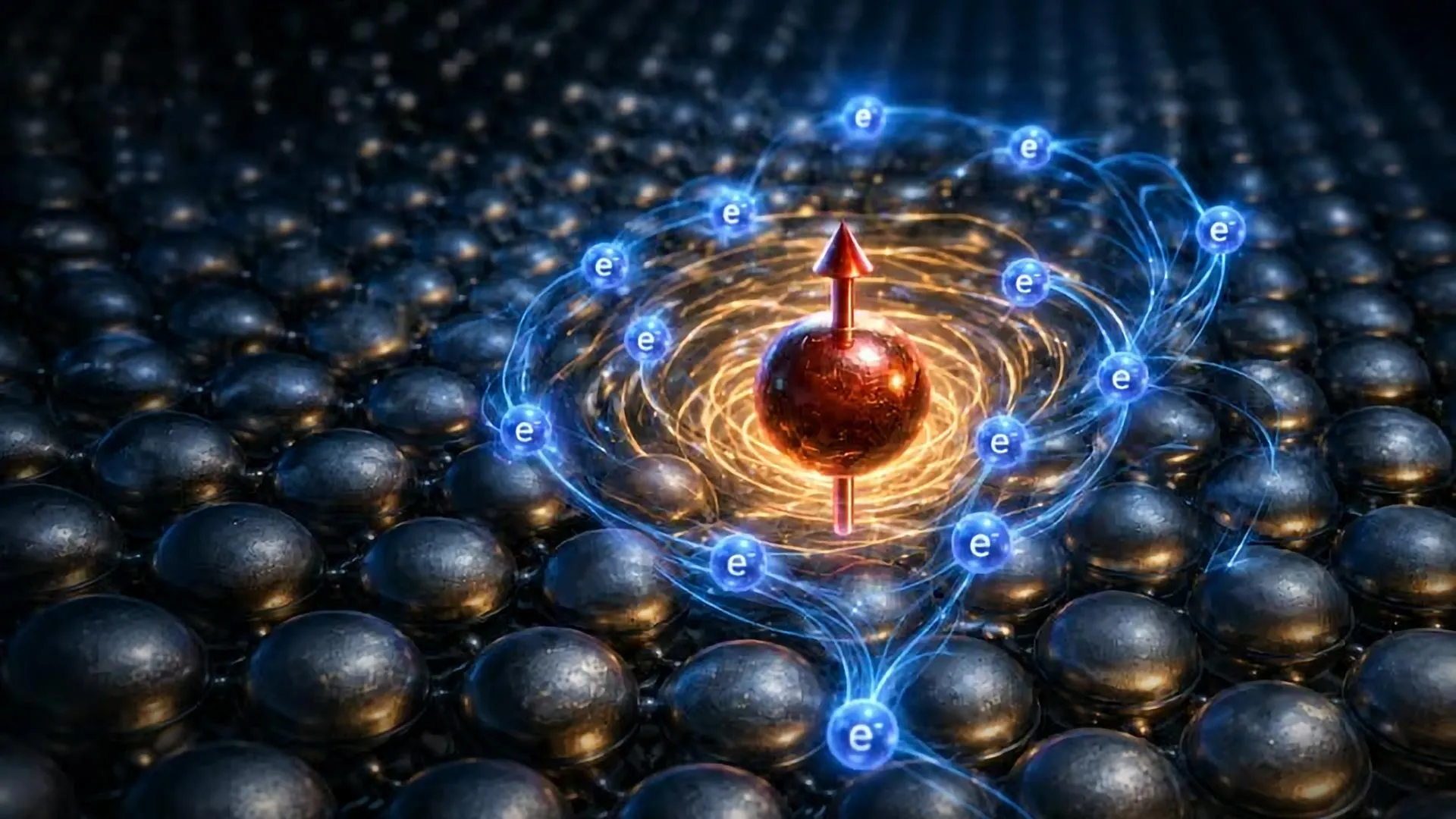
The muon is a member of the lepton family, making it a close relative of the electron. It carries the same negative electrical charge and spin as an electron, but it is approximately 200 times more massive. Because of this greater mass, the muon is significantly more sensitive to the "quantum foam" of the vacuum—a phenomenon where virtual particles constantly pop in and out of existence. This sensitivity makes the muon an ideal laboratory for testing the limits of the Standard Model.
The focus of the decades-long mystery is the muon’s "magnetic moment," a measure of the strength and direction of its magnetic field. In a simplified quantum world, the value of this magnetic moment (represented by the letter "g") should be exactly 2. However, the interactions between the muon and the surrounding sea of virtual particles cause a slight deviation from this integer. This deviation is known as the "anomalous magnetic moment," or g-2. For decades, experimental measurements of g-2 at facilities like Brookhaven National Laboratory and Fermi National Accelerator Laboratory (Fermilab) appeared to be slightly higher than the values predicted by theoretical calculations, leading to a statistical discrepancy that suggested the presence of an unknown force or particle pushing on the muon.
A Chronology of the Muon g-2 Discrepancy
The quest to measure the muon’s magnetic moment began in the late 1950s at CERN, the European Organization for Nuclear Research. Early experiments provided basic measurements, but as technology improved, the precision of these tests increased. By the 1970s, CERN experiments had reached a level of accuracy that began to hint at the complexity of the muon’s interactions.
The mystery deepened in the late 1990s and early 2000s during the E821 experiment at Brookhaven National Laboratory in New York. The Brookhaven results showed a clear, albeit tiny, gap between the experimental data and the theoretical consensus of the time. This gap was roughly 3.7 standard deviations—a level of statistical significance that suggested there was only a 1 in 40,000 chance the result was a fluke.
In 2021, the scientific world held its breath as Fermilab released the first results from its "Muon g-2" experiment, which utilized a massive 50-foot-wide superconducting magnetic storage ring transported from Brookhaven to Illinois. The Fermilab results confirmed the Brookhaven findings with even greater precision, increasing the tension between theory and experiment to 4.2 standard deviations. At this point, many physicists believed they were on the cusp of a "5-sigma" discovery—the gold standard in physics for claiming a definitive discovery of new phenomena.
The Challenge of the Strong Force
The primary obstacle in reconciling the muon’s behavior with theory has always been the strong nuclear force. While the contributions of electromagnetism and the weak force to the muon’s magnetic moment are relatively straightforward to calculate, the strong force—governed by the theory of Quantum Chromodynamics (QCD)—is notoriously difficult to model.
The strong force is what binds quarks together to form protons and neutrons. Unlike electromagnetism, which weakens as particles move apart, the strong force behaves like a rubber band: the farther you pull particles apart, the stronger the force becomes. This "confinement" makes it impossible to use standard perturbative mathematical techniques for low-energy interactions, which are precisely the types of interactions that influence the muon g-2 value.
Historically, theorists relied on a "data-driven" approach to account for the strong force’s contribution, known as Hadronic Vacuum Polarization (HVP). This method involved using experimental data from electron-positron collider experiments to infer how the strong force would affect the muon. It was this traditional calculation method that consistently produced a discrepancy with the direct muon measurements.
Lattice QCD: A Computational Breakthrough
Zoltan Fodor and his international team, known as the BMW (Budapest-Marseille-Wuppertal) collaboration, took a different path. Instead of relying on external experimental data from colliders, they used a technique called Lattice Quantum Chromodynamics (Lattice QCD).
Lattice QCD involves defining space and time as a four-dimensional grid or "lattice" of points. By placing quarks and gluons on these points and using massive supercomputers to solve the fundamental equations of QCD from first principles, researchers can simulate the strong force without the need for outside data.
"The old methodology involved collecting thousands of experimental results and reinterpreting them to get the single number," Fodor explained. "Our approach was completely different. We divided space-time into very small cells, a lattice, and then we solved the equations of the Standard Model on that."
The computational requirements for this feat were staggering. The team utilized some of the world’s most powerful supercomputers to perform trillions of calculations, refining their lattice until the spacing between points was small enough to capture the nuances of particle interactions. Over a decade of work, the team improved the precision of their lattice calculations, eventually reaching a point where they could determine the muon’s magnetic moment to 11 decimal places.
Reconciling Theory and Experiment
The results published in Nature show that when Lattice QCD is used to calculate the strong force’s contribution, the theoretical prediction for the muon g-2 shifts. This new theoretical value aligns almost perfectly with the experimental measurements from Fermilab and Brookhaven.
The discrepancy, which once stood at a tantalizing 4.2 standard deviations, has effectively vanished, falling to less than half a standard deviation. This suggests that the "missing physics" was actually "missing precision" in the earlier theoretical models. The Standard Model, it appears, is even more robust than previously thought.
"People ask me how it feels to make this discovery and, to be honest, I feel somewhat sad," said Fodor. "When we started to calculate this quantity, we thought we were going to have a good and trustworthy calculation for a new fifth force. Instead, we found there is no fifth force. We did find a very precise proof of not just the Standard Model, but also of quantum field theory."
Implications for the Future of Particle Physics
The resolution of the muon mystery has profound implications for the trajectory of modern physics. For years, the g-2 discrepancy was cited as one of the most promising leads for finding physics "Beyond the Standard Model" (BSM). BSM physics is sought to explain mysteries the Standard Model cannot address, such as the nature of dark matter, the matter-antimatter asymmetry in the universe, and the integration of gravity into the quantum world.
By closing this gap, the Penn State-led research effectively removes one of the primary signposts pointing toward a fifth force. While this is a victory for the accuracy of current theory, it leaves physicists with fewer clues on where to look next for the next great breakthrough.
However, the scientific community remains divided. Some theorists who favor the traditional "data-driven" R-ratio method argue that the discrepancy between the two theoretical methods—Lattice QCD and the R-ratio—is itself a new mystery that needs to be solved. If the Lattice QCD results are correct, it implies that there might be issues with the electron-positron collider data used in the old calculations.
Conclusion and Official Support
The study’s success is a testament to the power of international collaboration and high-performance computing. The Penn State portion of the research received significant support from the U.S. Department of Energy and the European Research Council, reflecting the global importance of the work.
As experimentalists at Fermilab continue to analyze their final batches of data, they will now have a much more accurate theoretical baseline to compare against. While the hope for a "fifth force" in the muon’s wobble has dimmed, the precision achieved by Fodor and his colleagues has provided humanity with its deepest understanding yet of the subatomic world. The Standard Model remains the most successful theory in the history of science, withstanding yet another attempt to find its breaking point.